ZEPATIER Drug Patent Profile
✉ Email this page to a colleague
When do Zepatier patents expire, and what generic alternatives are available?
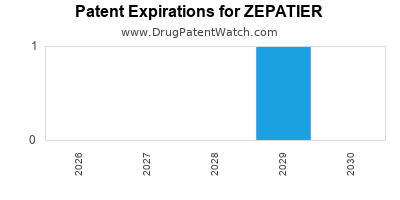
Zepatier is a drug marketed by Msd Sub Merck and is included in one NDA. There are two patents protecting this drug.
The generic ingredient in ZEPATIER is elbasvir; grazoprevir. There is one drug master file entry for this compound. One supplier is listed for this compound. Additional details are available on the elbasvir; grazoprevir profile page.
DrugPatentWatch® Generic Entry Outlook for Zepatier
Zepatier was eligible for patent challenges on January 28, 2020.
By analyzing the patents and regulatory protections it appears that the earliest date
for generic entry will be July 24, 2029. This may change due to patent challenges or generic licensing.
Indicators of Generic Entry
AI Deep Research
Questions you can ask:
- What is the 5 year forecast for ZEPATIER?
- What are the global sales for ZEPATIER?
- What is Average Wholesale Price for ZEPATIER?
Summary for ZEPATIER
| US Patents: | 2 |
| Applicants: | 1 |
| NDAs: | 1 |
| Finished Product Suppliers / Packagers: | 1 |
| Raw Ingredient (Bulk) Api Vendors: | 1 |
| Clinical Trials: | 25 |
| Patent Applications: | 118 |
| Drug Prices: | Drug price information for ZEPATIER |
| What excipients (inactive ingredients) are in ZEPATIER? | ZEPATIER excipients list |
| DailyMed Link: | ZEPATIER at DailyMed |

DrugPatentWatch® Estimated Loss of Exclusivity (LOE) Date for ZEPATIER
Generic Entry Date for ZEPATIER*:
Constraining patent/regulatory exclusivity:
NDA:
Dosage:
TABLET;ORAL |
*The generic entry opportunity date is the latter of the last compound-claiming patent and the last regulatory exclusivity protection. Many factors can influence early or later generic entry. This date is provided as a rough estimate of generic entry potential and should not be used as an independent source.
Recent Clinical Trials for ZEPATIER
Identify potential brand extensions & 505(b)(2) entrants
| Sponsor | Phase |
|---|---|
| University of Pennsylvania | Phase 4 |
| Radboud University | Phase 1 |
| King's College Hospital NHS Trust | Phase 4 |
Pharmacology for ZEPATIER
US Patents and Regulatory Information for ZEPATIER
ZEPATIER is protected by two US patents.
Based on analysis by DrugPatentWatch, the earliest date for a generic version of ZEPATIER is ⤷ Start Trial.
This potential generic entry date is based on patent ⤷ Start Trial.
Generics may enter earlier, or later, based on new patent filings, patent extensions, patent invalidation, early generic licensing, generic entry preferences, and other factors.
| Applicant | Tradename | Generic Name | Dosage | NDA | Approval Date | TE | Type | RLD | RS | Patent No. | Patent Expiration | Product | Substance | Delist Req. | Exclusivity Expiration |
|---|---|---|---|---|---|---|---|---|---|---|---|---|---|---|---|
| Msd Sub Merck | ZEPATIER | elbasvir; grazoprevir | TABLET;ORAL | 208261-001 | Jan 28, 2016 | DISCN | Yes | No | ⤷ Start Trial | ⤷ Start Trial | Y | Y | ⤷ Start Trial | ||
| Msd Sub Merck | ZEPATIER | elbasvir; grazoprevir | TABLET;ORAL | 208261-001 | Jan 28, 2016 | DISCN | Yes | No | ⤷ Start Trial | ⤷ Start Trial | Y | Y | ⤷ Start Trial | ||
| >Applicant | >Tradename | >Generic Name | >Dosage | >NDA | >Approval Date | >TE | >Type | >RLD | >RS | >Patent No. | >Patent Expiration | >Product | >Substance | >Delist Req. | >Exclusivity Expiration |
EU/EMA Drug Approvals for ZEPATIER
| Company | Drugname | Inn | Product Number / Indication | Status | Generic | Biosimilar | Orphan | Marketing Authorisation | Marketing Refusal |
|---|---|---|---|---|---|---|---|---|---|
| Merck Sharp & Dohme B.V. | Zepatier | elbasvir, grazoprevir | EMEA/H/C/004126ZEPATIER is indicated for the treatment of chronic hepatitis C (CHC) in adult and paediatric patients 12 years of age and older who weigh at least 30 kg (see sections 4.2, 4.4 and 5.1).For hepatitis C virus (HCV) genotype-specific activity see sections 4.4 and 5.1. | Authorised | no | no | no | 2016-07-22 | |
| >Company | >Drugname | >Inn | >Product Number / Indication | >Status | >Generic | >Biosimilar | >Orphan | >Marketing Authorisation | >Marketing Refusal |
International Patents for ZEPATIER
When does loss-of-exclusivity occur for ZEPATIER?
Based on analysis by DrugPatentWatch, the following patents block generic entry in the countries listed below:
Argentina
Patent: 2588
Estimated Expiration: ⤷ Start Trial
Australia
Patent: 09274190
Estimated Expiration: ⤷ Start Trial
Brazil
Patent: 0916235
Estimated Expiration: ⤷ Start Trial
Canada
Patent: 31177
Estimated Expiration: ⤷ Start Trial
Chile
Patent: 11000145
Estimated Expiration: ⤷ Start Trial
China
Patent: 2159285
Estimated Expiration: ⤷ Start Trial
Colombia
Patent: 51757
Estimated Expiration: ⤷ Start Trial
Costa Rica
Patent: 110089
Estimated Expiration: ⤷ Start Trial
Croatia
Patent: 0120866
Estimated Expiration: ⤷ Start Trial
Patent: 0140693
Estimated Expiration: ⤷ Start Trial
Cyprus
Patent: 13752
Estimated Expiration: ⤷ Start Trial
Patent: 15503
Estimated Expiration: ⤷ Start Trial
Patent: 17005
Estimated Expiration: ⤷ Start Trial
Denmark
Patent: 10095
Estimated Expiration: ⤷ Start Trial
Patent: 40350
Estimated Expiration: ⤷ Start Trial
Dominican Republic
Patent: 011000023
Estimated Expiration: ⤷ Start Trial
Ecuador
Patent: 11010777
Estimated Expiration: ⤷ Start Trial
El Salvador
Patent: 11003813
Patent: COMPUESTOS MACROCICLICOS DE QUINOXALINA COMO INHIBIDORES DE LA PROTEASA NS3 DE HCV
Estimated Expiration: ⤷ Start Trial
Eurasian Patent Organization
Patent: 9327
Estimated Expiration: ⤷ Start Trial
Patent: 1170241
Estimated Expiration: ⤷ Start Trial
European Patent Office
Patent: 10095
Estimated Expiration: ⤷ Start Trial
Patent: 40349
Estimated Expiration: ⤷ Start Trial
Patent: 40350
Estimated Expiration: ⤷ Start Trial
France
Patent: C1027
Estimated Expiration: ⤷ Start Trial
Honduras
Patent: 11000209
Estimated Expiration: ⤷ Start Trial
Hong Kong
Patent: 73402
Estimated Expiration: ⤷ Start Trial
Patent: 73403
Estimated Expiration: ⤷ Start Trial
Hungary
Patent: 700001
Estimated Expiration: ⤷ Start Trial
Israel
Patent: 0580
Estimated Expiration: ⤷ Start Trial
Japan
Patent: 20797
Estimated Expiration: ⤷ Start Trial
Patent: 11528713
Estimated Expiration: ⤷ Start Trial
Lithuania
Patent: 310095
Estimated Expiration: ⤷ Start Trial
Patent: 2016049
Estimated Expiration: ⤷ Start Trial
Luxembourg
Patent: 0002
Estimated Expiration: ⤷ Start Trial
Malaysia
Patent: 2070
Patent: MACROCYCLIC QUINXALINE COMPOUNDS AS HCV NS3 PROTEASE INHIBITORS
Estimated Expiration: ⤷ Start Trial
Mexico
Patent: 11000826
Estimated Expiration: ⤷ Start Trial
Montenegro
Patent: 024
Estimated Expiration: ⤷ Start Trial
Patent: 132
Estimated Expiration: ⤷ Start Trial
Morocco
Patent: 502
Estimated Expiration: ⤷ Start Trial
Netherlands
Patent: 0857
Estimated Expiration: ⤷ Start Trial
New Zealand
Patent: 0638
Patent: MACROCYCLIC QUINOXALINE COMPOUNDS AS Hepatitis C Virus NS3 PROTEASE INHIBITORS
Estimated Expiration: ⤷ Start Trial
Nicaragua
Patent: 1100023
Patent: COMPUESTOS MACROCÍCLICOS DE QUINOXALINA COMO INHIBIDORES DE LA PROTEASA NS3 DE VHC.
Estimated Expiration: ⤷ Start Trial
Norway
Patent: 17004
Estimated Expiration: ⤷ Start Trial
Peru
Patent: 110212
Estimated Expiration: ⤷ Start Trial
Poland
Patent: 10095
Estimated Expiration: ⤷ Start Trial
Patent: 40350
Estimated Expiration: ⤷ Start Trial
Portugal
Patent: 10095
Estimated Expiration: ⤷ Start Trial
Patent: 40350
Estimated Expiration: ⤷ Start Trial
Serbia
Patent: 534
Patent: MAKROCIKLIČNA JEDINJENJA HINOKSALINA KAO INHIBITORI HCV NS3 PROTEAZE (MACROCYCLIC QUINOXALINE COMPOUNDS AS HCV NS3 PROTEASE INHIBITORS)
Estimated Expiration: ⤷ Start Trial
Patent: 420
Patent: KOMBINACIJE MAKROCIKLIČNOG JEDINJENJA HINOKSALINA KOJE JE INHIBITOR HCV NS3 PROTEAZE SA DRUGIM HCV SREDSTVIMA (COMBINATIONS OF A MACROCYCLIC QUINOXALINE COMPOUND WHICH IS AN HCV NS3 PROTEASE INHIBITOR WITH OTHER HCV AGENTS)
Estimated Expiration: ⤷ Start Trial
Slovenia
Patent: 10095
Estimated Expiration: ⤷ Start Trial
Patent: 40350
Estimated Expiration: ⤷ Start Trial
South Korea
Patent: 1313675
Estimated Expiration: ⤷ Start Trial
Patent: 110036627
Estimated Expiration: ⤷ Start Trial
Spain
Patent: 92611
Estimated Expiration: ⤷ Start Trial
Patent: 91090
Estimated Expiration: ⤷ Start Trial
Taiwan
Patent: 1023860
Patent: Macrocyclic quinoxaline compounds as HCV NS3 protease inhibitors
Estimated Expiration: ⤷ Start Trial
Patent: 41638
Estimated Expiration: ⤷ Start Trial
Tunisia
Patent: 11000014
Patent: MACROCYCLIC QUINOXALINE COMPOUNDS AS HCV NS3 PROTEASE INHIBITORS
Estimated Expiration: ⤷ Start Trial
Ukraine
Patent: 0436
Patent: MACROCYCLIC QUINOXALINE COMPOUNDS AS HCV NS3 PROTEASE INHIBITORS
Estimated Expiration: ⤷ Start Trial
Generics may enter earlier, or later, based on new patent filings, patent extensions, patent invalidation, early generic licensing, generic entry preferences, and other factors.
See the table below for additional patents covering ZEPATIER around the world.
| Country | Patent Number | Title | Estimated Expiration |
|---|---|---|---|
| Argentina | 072588 | ⤷ Start Trial | |
| Australia | 2009274190 | ⤷ Start Trial | |
| Brazil | PI0916235 | ⤷ Start Trial | |
| Canada | 2731177 | ⤷ Start Trial | |
| Chile | 2011000145 | ⤷ Start Trial | |
| >Country | >Patent Number | >Title | >Estimated Expiration |
Supplementary Protection Certificates for ZEPATIER
| Patent Number | Supplementary Protection Certificate | SPC Country | SPC Expiration | SPC Description |
|---|---|---|---|---|
| 2310095 | 300857 | Netherlands | ⤷ Start Trial | DETAILS ASSIGNMENT: CHANGE OF OWNER(S), MERGE |
| 2310095 | CA 2016 00070 | Denmark | ⤷ Start Trial | PRODUCT NAME: GRAZOPREVIR OR A PHARMACEUTICALLY ACCEPTABLE SALT THEREOF; REG. NO/DATE: EU/1/16/1119 20160726 |
| 2310095 | PA2016049 | Lithuania | ⤷ Start Trial | PRODUCT NAME: GRAZOPREVIRAS ARBA JO FARMACISKAI PRIIMTINOS DRUSKOS; NAT. REGISTRATION NO/DATE: CH/65861 01 20160401; FIRST REGISTRATION: EU/1/16/1119 20160722 |
| 2410844 | 300858 | Netherlands | ⤷ Start Trial | DETAILS ASSIGNMENT: CHANGE OF OWNER(S), MERGE |
| 2410844 | CA 2016 00069 | Denmark | ⤷ Start Trial | PRODUCT NAME: ELBASVIR OR A PHARMACEUTICALLY ACCEPTABLE SALT THEREOF; REG. NO/DATE: EU/1/16/1119 20160726 |
| >Patent Number | >Supplementary Protection Certificate | >SPC Country | >SPC Expiration | >SPC Description |
Market Dynamics and Financial Trajectory for ZEPATIER
More… ↓
Make Better Decisions: Try a trial or see plans & pricing
Drugs may be covered by multiple patents or regulatory protections. All trademarks and applicant names are the property of their respective owners or licensors. Although great care is taken in the proper and correct provision of this service, thinkBiotech LLC does not accept any responsibility for possible consequences of errors or omissions in the provided data. The data presented herein is for information purposes only. There is no warranty that the data contained herein is error free. We do not provide individual investment advice. This service is not registered with any financial regulatory agency. The information we publish is educational only and based on our opinions plus our models. By using DrugPatentWatch you acknowledge that we do not provide personalized recommendations or advice. thinkBiotech performs no independent verification of facts as provided by public sources nor are attempts made to provide legal or investing advice. Any reliance on data provided herein is done solely at the discretion of the user. Users of this service are advised to seek professional advice and independent confirmation before considering acting on any of the provided information. thinkBiotech LLC reserves the right to amend, extend or withdraw any part or all of the offered service without notice.
ISSN: 2162-2639

Privacy and Cookies
Terms & Conditions
Site Map
DrugPatentWatch Alternatives
LOE / Major Patent Expirations 2026 - 2027
NCE-1 Patent Challenge Dates 2026 - 2027
Friedman, Yali. "DrugPatentWatch" DrugPatentWatch, thinkBiotech, 2026, www.DrugPatentWatch.com.
See Primary Research Papers Citing DrugPatentWatch