Last updated: August 25, 2026
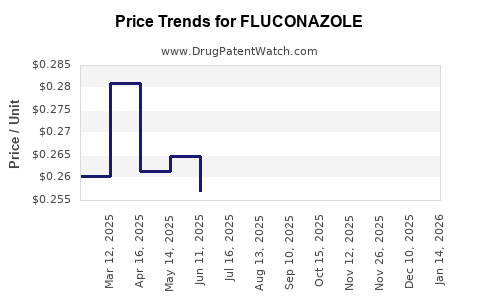
Fluconazole is a mature, globally genericized antifungal with low unit prices, broad regulatory availability, and limited remaining patent value. Pfizer’s Diflucan brand created substantial commercial value before U.S. generic entry, but the product’s financial profile changed sharply after loss of exclusivity. Current economics are driven by manufacturing scale, hospital tenders, retail volume, supply reliability, and resistance patterns rather than proprietary pricing.
What is the current market position of fluconazole?
Fluconazole is a triazole antifungal used to treat candidiasis, cryptococcal meningitis, vaginal candidiasis, dermatomycoses, and selected systemic fungal infections. It is available in oral tablets, oral suspension, and intravenous formulations. The FDA approved Diflucan, the original Pfizer product, in 1990. [1]
The product is now supplied by numerous generic manufacturers, including major U.S. and international pharmaceutical companies. Generic fluconazole is listed across multiple strengths, including 50 mg, 100 mg, 150 mg, and 200 mg oral dosage forms, as well as injectable products.
| Market factor |
Current position |
| Originator brand |
Diflucan, Pfizer |
| Active ingredient |
Fluconazole |
| U.S. approval |
1990 |
| Regulatory category |
Small-molecule prescription drug |
| Main dosage forms |
Tablets, capsules, oral suspension, injection |
| U.S. patent status |
Historical protection expired; no meaningful active composition-of-matter exclusivity |
| Generic competition |
Extensive |
| Biosimilar exposure |
None |
| Commercial model |
High-volume, low-price generic supply |
| Primary demand centers |
Hospitals, outpatient infectious disease, gynecology, HIV care, transplant medicine |
Fluconazole remains clinically important because it is orally bioavailable, generally well tolerated, available in multiple dosage forms, and inexpensive. Its use is constrained by resistance in some Candida species, drug interactions, hepatic toxicity concerns, and the availability of newer antifungals.
When did fluconazole lose patent exclusivity?
Fluconazole lost meaningful U.S. market exclusivity in the early 2000s, with generic competition entering the U.S. market around 2004 after expiration of Pfizer’s historical patent protection. The product has therefore operated as a genericized medicine for roughly two decades.
The original fluconazole patent estate covered the active triazole compound and related antifungal use. Patent-term calculations were affected by the historic U.S. patent regime, regulatory review, and patent-term adjustment or extension rules applicable at the time. The commercial consequence was clear: after generic entry, Pfizer no longer controlled the U.S. market through composition-of-matter exclusivity.
| Milestone |
Approximate timing |
| Original fluconazole patent family filed |
Late 1970s |
| FDA approval of Diflucan |
1990 |
| Broad Pfizer commercial expansion |
1990s |
| U.S. loss of practical exclusivity |
Early 2000s |
| U.S. generic launch period |
Around 2004 |
| Current status |
Mature multi-source generic market |
The historical patent expiration should not be confused with the expiration of every patent ever associated with a fluconazole product. Formulation, manufacturing, labeling, and use patents can have different terms. Those secondary rights did not preserve a durable, broad U.S. monopoly for Diflucan.
What patents protect fluconazole today?
No active U.S. composition-of-matter patent is expected to block generic fluconazole supply. The original active-ingredient rights are expired, and fluconazole is widely available from multiple abbreviated new drug application, or ANDA, holders.
The relevant patent categories are:
| Patent category |
Historical relevance |
Current commercial effect |
| Composition-of-matter patents |
Protected fluconazole itself |
Expired |
| Formulation patents |
Covered selected dosage forms or excipients |
Limited and generally expired or non-blocking |
| Manufacturing patents |
Could cover process conditions or intermediates |
May affect individual manufacturers, not the molecule broadly |
| Method-of-use patents |
Could cover specific therapeutic applications |
Existing claims would need to be active, valid, and enforceable |
| Pediatric exclusivity |
Temporarily extended regulatory protection |
Expired |
| Orphan-drug exclusivity |
Could apply to a specific indication |
No current broad fluconazole monopoly |
| Trademark rights |
Protect the Diflucan name |
Do not block generic fluconazole |
The FDA Orange Book remains the key U.S. source for patents and regulatory exclusivity associated with approved drug products. Current Orange Book analysis should focus on the active listings for the specific Diflucan or generic application, not on historical patent records alone. [2]
What is the Orange Book status of Diflucan and generic fluconazole?
Diflucan is a legacy reference-listed drug. Its commercial value is no longer protected by active broad patent rights. Generic fluconazole products are approved through ANDA pathways and are therapeutically equivalent to the relevant reference products where listed by the FDA.
The practical Orange Book conclusions are:
- Fluconazole has no current broad patent barrier comparable to a live composition-of-matter patent.
- Generic manufacturers can compete across common strengths and dosage forms.
- Any remaining patent listing must be evaluated at the application and dosage-form level.
- A historical patent number does not establish a current launch barrier.
- Labeling differences and limited-use patents can affect individual products without restoring originator exclusivity.
Because fluconazole is a small molecule, it is subject to ordinary generic substitution principles rather than the biosimilar framework used for biologics.
Which companies are challenging fluconazole exclusivity?
Fluconazole was challenged by generic manufacturers during the pre- and post-expiry period rather than through a current, high-value Paragraph IV campaign. The relevant competitive event was broad generic entry following patent expiry.
Generic suppliers have included companies such as Teva, Sandoz, Mylan, Hikma, Cipla, and other regional manufacturers, depending on product, market, and time period. Manufacturer participation changes as firms enter, exit, acquire products, or discontinue low-margin presentations.
A Paragraph IV certification is most commercially important before patent expiry, when a generic applicant seeks approval by asserting that listed patents are invalid, unenforceable, or not infringed. For fluconazole, the principal U.S. exclusivity event has already passed. Current entrants generally face commercial competition, FDA approval requirements, manufacturing validation, and supply-chain economics rather than a central originator patent lawsuit.
What formulations of fluconazole are protected?
Fluconazole has been commercialized in several formulations:
- Oral tablets and capsules
- Oral powder for suspension
- Intravenous solution
- Hospital-use injectable presentations
- Different package sizes and strengths
The formulation landscape does not currently support a broad premium franchise. Oral fluconazole is particularly exposed to generic price competition because the dosage forms are technically established and relatively straightforward to manufacture.
Intravenous fluconazole can have somewhat different economics because hospital purchasing, sterile manufacturing, injectable capacity, and shortage management affect supplier selection. Those factors are operational barriers, not strong molecule-level intellectual-property barriers.
A manufacturer may obtain protection for a particular delivery system, excipient combination, container, or manufacturing process. Such rights generally have narrower scope than a composition patent and may not prevent competing tablets, capsules, suspensions, or injections.
How strong is the fluconazole patent estate?
The current fluconazole patent estate is weak from an originator-defense perspective and moderate only at the product-process level.
| Dimension |
Assessment |
| Composition-of-matter protection |
Expired |
| Secondary formulation protection |
Narrow or historical |
| Method-of-use protection |
Limited practical value for established indications |
| Manufacturing know-how |
Relevant to cost, yield, and quality |
| Regulatory exclusivity |
Expired |
| Generic substitution barrier |
Low |
| Litigation leverage |
Low |
| Supply-chain leverage |
More important than patent leverage |
Manufacturing know-how can still matter. Fluconazole producers compete on raw-material sourcing, impurity control, batch yield, regulatory compliance, sterile filling, and inventory continuity. These capabilities influence market share, but they do not create durable legal exclusivity unless supported by enforceable process or trade-secret rights.
What was the financial trajectory of Diflucan?
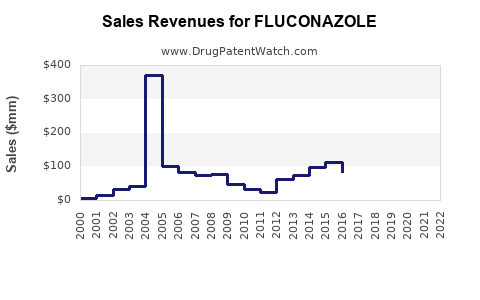
Diflucan was a major Pfizer product during the 1990s and early 2000s. Its revenue base was supported by use in HIV-associated infections, oncology, transplant medicine, gynecology, intensive care, and general outpatient practice.
Pfizer’s historical annual reports reported Diflucan as a significant product before generic erosion. After generic entry, sales declined as lower-priced suppliers captured volume and pharmacy substitution reduced branded demand. Pfizer’s later financial reporting no longer treated Diflucan as a major standalone growth driver.
| Financial phase |
Commercial characteristics |
| Launch and adoption |
Rapid uptake in systemic and mucosal fungal infections |
| Peak brand period |
High branded pricing and broad physician familiarity |
| Pre-generic period |
Strong cash generation with mature clinical demand |
| Generic entry |
Rapid price compression and share loss |
| Mature generic period |
Low unit pricing, fragmented supply, volume-led demand |
Public company reporting does not provide a reliable current standalone global revenue series for all fluconazole sales because generic manufacturers typically report the product within broader portfolios. Pfizer’s reporting similarly shifted away from presenting Diflucan as a principal growth product after genericization. [3]
The financial trajectory therefore has two distinct components:
- Originator economics: high-margin branded sales before loss of exclusivity.
- Generic economics: lower margins, high volume, and dependence on manufacturing efficiency.
Current market value is distributed among many suppliers. No single company is likely to capture the historic branded revenue pool without a differentiated formulation, supply advantage, geographic concentration, or new clinical positioning.
What is the global market dynamic for fluconazole?
Global demand is sustained by the prevalence of Candida infections, HIV-associated fungal disease, immunosuppression, cancer treatment, transplantation, and routine outpatient treatment of vulvovaginal candidiasis. Fluconazole is included in major treatment guidelines, although its role varies by infection, species, severity, susceptibility, and patient condition. [4]
Demand differs by geography:
| Region |
Market dynamics |
| United States |
Mature generic market; low prices; hospital and retail procurement dominate |
| Europe |
Generic substitution and national reimbursement controls compress prices |
| Emerging markets |
High volume potential, variable quality controls, fragmented distribution |
| Low-income countries |
Access and affordability are major advantages; procurement programs influence demand |
| Hospital markets |
Injectable supply, tenders, and shortage risk affect supplier position |
The main demand risk is resistance. Candida auris and fluconazole-resistant Candida glabrata can reduce reliance on fluconazole in hospitals. The CDC identifies Candida auris as an emerging public-health threat with frequent antifungal resistance, including resistance to fluconazole in many isolates. [5]
The principal substitution threats include echinocandins, liposomal amphotericin B, itraconazole, voriconazole, posaconazole, and isavuconazole. These products may be preferred in invasive disease, resistant infections, or high-risk patients, but they generally do not eliminate fluconazole’s role in susceptible infections and step-down therapy.
What generic entry risks exist for fluconazole?
Generic entry risk is already realized rather than prospective. The relevant risks for remaining branded or differentiated fluconazole products are:
- Rapid pharmacy substitution
- Tender-driven price erosion
- Multiple approved suppliers
- Low switching costs
- Limited prescriber attachment to the brand
- Hospital purchasing pressure
- Raw-material and sterile-injection supply disruption
- Therapeutic substitution where resistance is present
A new oral fluconazole entrant would need a cost or supply advantage. A conventional tablet product is unlikely to support premium pricing. An injectable product may have better commercial value if it improves availability, packaging, storage, or hospital workflow, but those advantages would need to offset competition from established suppliers.
What patent litigation and settlement agreements affect fluconazole?
The material litigation period was associated with historic generic challenges to Diflucan patent protection. Following broad generic entry, fluconazole has not maintained the type of active, high-value patent litigation seen in newer antifungal products.
No current settlement agreement is known to create a meaningful market-wide restriction on U.S. generic fluconazole. Any historical agreement would need to be reviewed against its expiration date, product scope, and jurisdiction. Settlement terms do not extend an expired composition patent or block unrelated ANDA applicants after the relevant rights have ended.
For current diligence, the important legal questions are product-specific:
- Whether a manufacturer has an active Orange Book listing
- Whether a listed patent covers the approved label
- Whether a patent is enforceable against the proposed product
- Whether the product is an oral or injectable presentation
- Whether the litigation concerns a manufacturing process rather than the active ingredient
How does fluconazole compare with newer antifungal drugs?
| Product class |
Representative drugs |
Patent strength |
Typical commercial position |
| Older triazole |
Fluconazole |
Expired |
Low-cost, high-volume generic |
| Newer triazoles |
Posaconazole, isavuconazole |
Stronger or more recent estates |
Premium branded or specialty products |
| Echinocandins |
Micafungin, caspofungin, anidulafungin |
Mostly mature or genericized |
Hospital-focused |
| Polyenes |
Liposomal amphotericin B |
Formulation and manufacturing complexity |
High-acuity use |
| Novel agents |
Ibrexafungerp and other newer products |
Active commercial patent estates |
Targeted use and premium pricing |
Fluconazole has the strongest affordability position but a weaker resistance profile and lower commercial differentiation. Newer drugs command higher prices when they address resistant organisms, improve safety, or offer an alternative mechanism of action.
What is the FDA regulatory status of fluconazole?
Fluconazole is an FDA-approved prescription antifungal available through both the original NDA and numerous ANDAs. The drug is approved in oral and injectable forms for specified fungal infections. [1]
The regulatory risks are established rather than novel:
- Hepatotoxicity and liver-function monitoring
- QT prolongation and cardiac interaction concerns
- Drug-drug interactions through cytochrome P450 inhibition
- Dose adjustment in renal impairment
- Pregnancy-related safety considerations
- Species-specific resistance
- Label compliance for invasive fungal disease
Regulatory value lies in established approval, broad clinical familiarity, and therapeutic equivalence. It does not lie in exclusivity.
Key Takeaways
- Fluconazole is a mature, globally genericized antifungal.
- Diflucan was historically valuable to Pfizer but lost practical U.S. exclusivity around 2004.
- The original composition-of-matter patent protection is expired.
- Current Orange Book rights do not create a broad market barrier for generic fluconazole.
- Biosimilar risk does not apply because fluconazole is a small molecule.
- Commercial competition is based on price, manufacturing quality, sterile capacity, tenders, and supply reliability.
- Resistance, especially involving Candida auris and Candida glabrata, is the principal clinical demand risk.
- Injectable supply and hospital procurement can produce better economics than standard oral tablets.
- A new entrant would require a manufacturing, formulation, geographic, or supply-chain advantage.
- Pfizer’s historical brand revenue was replaced by fragmented, lower-margin generic economics.
FAQs
Is fluconazole still protected by a U.S. patent?
No broad active U.S. patent is expected to protect fluconazole itself. Historical composition patents and related exclusivity periods have expired.
Can a generic company launch fluconazole without a Paragraph IV challenge?
Yes. Because the principal patent barrier has expired, an applicant generally does not need to rely on a Paragraph IV challenge to launch a standard generic product, subject to FDA approval requirements and any product-specific listed rights.
Is Diflucan still sold in the United States?
Diflucan has historical and ongoing brand recognition, but U.S. demand is dominated by generic fluconazole. Brand availability and commercial scale can vary by dosage form and distribution channel.
Does fluconazole have orphan-drug exclusivity?
Fluconazole does not currently have broad orphan-drug exclusivity that would block generic supply across its approved indications. Any historical indication-specific exclusivity has expired.
Which antifungals are most likely to replace fluconazole?
Echinocandins, amphotericin B, voriconazole, posaconazole, and isavuconazole are the principal alternatives. Selection depends on fungal species, susceptibility, infection severity, organ function, drug interactions, and treatment setting.
References
- U.S. Food and Drug Administration. (2024). Diflucan (fluconazole) prescribing information. https://www.accessdata.fda.gov
- U.S. Food and Drug Administration. (2024). Approved drug products with therapeutic equivalence evaluations: Orange Book. https://www.fda.gov/drugs/drug-approvals-and-databases/orange-book
- Pfizer Inc. (2004). Annual report 2004. https://www.pfizer.com/investors/financial-information/annual-reports
- Pappas, P. G., et al. (2016). Clinical practice guideline for the management of candidiasis: 2016 update by the Infectious Diseases Society of America. Clinical Infectious Diseases, 62(4), e1-e50. https://doi.org/10.1093/cid/civ933
- Centers for Disease Control and Prevention. (2024). Candida auris. https://www.cdc.gov/candida-auris/