Last updated: July 30, 2026
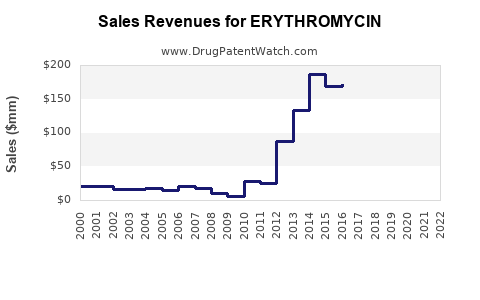
Erythromycin is an older, largely off-patent antibiotic with mature generic competition across oral and topical segments. Market dynamics are driven by (1) class-level demand for macrolides, (2) pricing compression from multi-source generics, (3) supply chain concentration for key branded and generic SKUs, and (4) periodic regulatory or manufacturing disruptions that tighten availability and lift pricing temporarily. Financial trajectory is therefore typically characterized by modest revenue growth at most, recurring volume-led fluctuations, and structurally low margins versus newer protected specialty antibiotics.
What is the current market size and growth outlook for erythromycin in the US and EU?
Featured snippet answer: Erythromycin demand tracks macrolide prescribing trends and indication mix (respiratory infections, acne/dermatology, ophthalmic uses). Growth is limited by generics and shifting clinical practice toward azithromycin/clarithromycin and narrower-guideline stewardship, with demand volatility driven more by supply and payer dynamics than by new clinical uptake.
How does erythromycin sit within the macrolide class market?
Erythromycin competes within the macrolide set dominated by azithromycin and clarithromycin. Relative position typically reflects:
- Higher dosing frequency for some oral regimens versus azithromycin, which can reduce convenience-driven switching.
- Broader historical use that keeps baseline volume steady, but limits incremental growth because prescribers can choose other macrolides.
- Ongoing niche retention in certain clinical settings and in dermatology formulations.
What does “multi-segment” mean for commercial trajectory?
Erythromycin commercial exposure is split into:
- Oral antibiotics (historical backbone for certain indications; now largely generic)
- Ophthalmic antibiotic products (where dosing form and formulation stability matter)
- Topical dermatology products (where patient adherence and product marketing can influence share, but generic entry compresses long-term price)
What are the main drivers of EU demand?
EU demand is affected by:
- National payer restrictions for antibiotics and stewardship programs
- Local generics penetration by molecule and dosage form
- Availability issues tied to manufacturing sites and regulatory actions
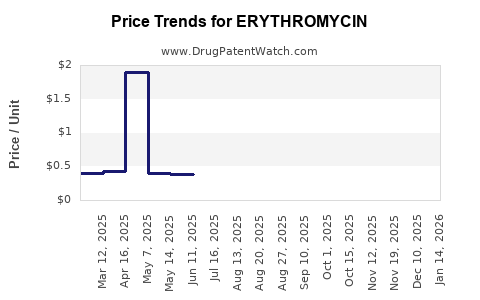
How have erythromycin prices and gross margins evolved as generics increased?
Featured snippet answer: As erythromycin moved deeper into generic competition, pricing typically compressed to near “commodity antibiotic” levels. Financial trajectory is dominated by volume retention and procurement dynamics rather than premium pricing.
What pricing mechanics matter for antibiotics like erythromycin?
Pricing and margin behavior is shaped by:
- Tender-based procurement by wholesalers/hospitals in many jurisdictions
- Bulk purchasing by public systems for mass-market antibiotics
- Retail reimbursement for oral tablets/suspensions that tracks generic basket pricing
What causes periodic price spikes in erythromycin?
Erythromycin can experience short-term pricing lift from:
- Manufacturing outages or quality events at high-impact plants
- Short supply from constrained API or intermediate sourcing
- Logistics disruption for low-commodity-margin manufacturers (fewer suppliers, slower substitution)
How does form factor influence pricing compression?
Price erosion is often faster for:
- Common strengths and immediate-release oral tablets
- Highly substitutable suspensions with multiple bioequivalent options
Price resilience is more likely where:
- Specific controlled-release or stable topical/ophthalmic formulations have higher technical barriers
- Packaging formats or excipient systems create fewer “drop-in” generic equivalents
Which companies dominate the erythromycin supply chain and competitive landscape?
Featured snippet answer: Supply is typically fragmented across multiple generic manufacturers and distributors, with occasional brand or niche-topical competitors depending on jurisdiction and dosage form. The commercial landscape usually includes both domestic and India/China-linked generic producers for oral dosage forms.
What competitive factors determine share?
Key determinants include:
- Ability to supply consistently at tender-competitive price
- Product quality track record under GMP and pharmacovigilance
- Portfolio breadth across strengths and dosage forms (tablet, suspension, ophthalmic, topical)
Where does competition concentrate?
Commercial competition concentrates in:
- Oral generics (largest volume pool)
- Dermatology topical formulations (smaller revenue pool but can support differentiated positioning for some SKUs)
- Ophthalmic (supply and regulatory stability can affect availability and pricing)
How do patent and regulatory status issues affect erythromycin commercial earnings?
Featured snippet answer: Erythromycin is generally off the core small-molecule patent timeline in most major markets, so earnings are driven primarily by generics entry timing, product-specific formulation protections, and exclusivity tied to particular dosage forms rather than by a molecule-level patent wall.
What is the Orange Book dynamic for erythromycin products?
For off-patent molecules, the Orange Book typically reflects:
- Expired active ingredient-related patents
- Fewer remaining protections, often formulation- or method-of-manufacture-scoped
- Product-specific exclusivity that can delay generic substitution for certain presentations
What exclusivity pathways are relevant if new erythromycin products launch?
If a manufacturer reformulates erythromycin into a novel dosage form, exclusivity could come from:
- 505(b)(2) pathways for certain reformulations
- Patent-linked exclusivity for specific protected formulation or manufacturing method claims
When do generics typically gain market access for erythromycin, and what risks exist?
Featured snippet answer: Generic access is usually already widespread for standard oral erythromycin presentations. Remaining launch risks are product-level: where a specific formulation retains patent or exclusivity coverage longer than the core molecule.
What are Paragraph IV risks for erythromycin?
For erythromycin, Paragraph IV events are typically less central than for on-patent brand drugs. When they occur, they usually relate to:
- Surviving formulation or packaging patents for a specific NDA
- Remaining method-of-use or method-of-manufacture protections tied to a branded product presentation
What is the market impact when a late generic enters?
Late entrants can cause:
- Further price compression on that SKU
- Shift in formulary status within hospital formularies
- Margin dilution for incumbents holding the last “protected” presentation
How do FDA manufacturing changes and supply disruptions affect erythromycin financial performance?
Featured snippet answer: Supply disruptions can create short-lived pricing and margin lift, but they also increase compliance cost and can trigger customer loss if hospital/wholesaler customers substitute alternatives quickly.
What regulatory events matter most for antibiotics with multi-source supply?
High impact events include:
- FDA inspections and warning letters affecting sterile ophthalmic or topical products
- Recalls affecting specific lots that reduce near-term fill rates
- Label changes and stability issues that delay distribution
What do wholesalers do during short supply?
During constrained supply, wholesalers prioritize:
- Contracted hospitals and large accounts
- Products with the fastest turnaround and the fewest substitution friction costs
How does erythromycin compare with azithromycin and clarithromycin in market dynamics?
Featured snippet answer: Azithromycin typically has stronger global volume and perceived convenience advantages, while erythromycin’s market is usually more legacy-driven. That relative position affects revenue growth potential and pricing power.
What drives differential share between macrolides?
Drivers include:
- dosing convenience (once-daily azithromycin versus multi-dose options for erythromycin regimens)
- formulary preference patterns and stewardship guidelines
- antibiotic resistance considerations in local settings
What does this mean for financial trajectory?
Compared with azithromycin, erythromycin typically shows:
- Lower premium pricing and lower gross margin
- More sensitivity to generic procurement cycles
- Smaller incremental growth from new prescribing
What formulation and method-of-use protections can still matter for earnings?
Featured snippet answer: Even when core patents expire, formulation patents and manufacturing-method claims can delay generic entry for specific erythromycin products. Earnings persistence is usually tied to product-level survivorship rather than molecule-level exclusivity.
Common areas where protection can persist
- Stability-enhancing excipient systems for oral suspensions
- Manufacturing processes for consistent potency and dissolution
- Sterile processes for ophthalmic products
How does this affect generic substitution timing?
Generic substitution tends to lag when:
- formulation complexity reduces “easy” bioequivalence demonstrations
- manufacturing method patents require designing around process claims
- labeling or stability requirements raise regulatory burden for generic products
What licensing and M&A dynamics are seen in older antibiotic portfolios like erythromycin?
Featured snippet answer: Licensing in erythromycin is usually about product-level rights: specific NDA presentations, distribution rights in certain regions, or manufacturing capacity. Deal value depends more on SKU availability and patent/formulation survivorship than on molecule exclusivity.
Where do deals typically cluster?
- Dermatology and ophthalmic brands where formulation differentiation exists
- Regions where supply constraints make distribution rights valuable
- Manufacturing capacity acquisitions for specific dosage forms
What commercial metrics best explain erythromycin’s financial trajectory?
Featured snippet answer: Volume (prescriptions and units sold), average net price after rebates/tenders, and supply continuity explain most of the earnings movement for erythromycin.
KPI framework for erythromycin profitability
- Units sold per dosage form and strength
- Net sales per unit (post-contract pricing)
- Gross margin by SKU (manufacturing cost and yield)
- Fill-rate and backorder frequency for ophthalmic/topical products
- Portfolio churn (share loss when generics enter or when shortages push substitution)
Key Takeaways
- Erythromycin’s financial trajectory is structurally constrained by deep generic penetration and pricing compression.
- Demand is primarily stewardship- and prescribing-pattern driven, with growth limited by macrolide class competition and convenience factors favoring azithromycin.
- Earnings can show short-lived improvement during supply disruptions, but long-run margins trend toward commodity antibiotic levels.
- Patent and exclusivity effects, when present, are usually product-specific (formulation/manufacturing) rather than molecule-level, making SKU-level protection the main driver of any revenue durability.
- Competitive and regulatory dynamics (tenders, inspections, recalls, fill-rate) typically explain more revenue movement than clinical novelty.
FAQs
- Which erythromycin dosage forms are most exposed to generic price compression?
- How do hospital tender cycles impact erythromycin net pricing and margin variability?
- What types of FDA manufacturing issues most often create erythromycin supply shortages?
- How does erythromycin prescribing compare to azithromycin when macrolide stewardship tightens?
- What product-level patents (formulation or manufacturing method) can delay generics for erythromycin even after molecule patents expire?
References
- U.S. Food and Drug Administration. “Drugs@FDA.” (Accessed 2026).
- U.S. Food and Drug Administration. “Orange Book: Approved Drug Products with Therapeutic Equivalence Evaluations.” (Accessed 2026).