Last updated: February 19, 2026
BAQSIMI, a glucagon nasal spray, has established a distinct market position in the treatment of severe hypoglycemia in individuals with diabetes. Its unique delivery mechanism differentiates it from traditional injectable glucagon formulations. Financial performance reflects market adoption, patent landscape, and competition.
What is BAQSIMI and Its Clinical Application?
BAQSIMI (glucagon nasal spray) is an FDA-approved medication indicated for the treatment of severe hypoglycemia in individuals with diabetes mellitus aged four years and older. Severe hypoglycemia is a condition characterized by dangerously low blood glucose levels that impair a person's ability to self-treat, often requiring assistance from another person.
The active pharmaceutical ingredient is glucagon, a hormone that increases blood glucose levels. Unlike conventional glucagon rescue kits that require reconstitution and injection, BAQSIMI is administered intranasally. This novel delivery system offers several potential advantages:
- Ease of Administration: The nasal spray format does not require refrigeration, reconstitution, or injection training, making it simpler for caregivers and patients to use in emergency situations.
- Rapid Onset of Action: Clinical studies have demonstrated a rapid increase in blood glucose levels following intranasal administration of glucagon.
- Patient and Caregiver Convenience: The non-injectable form can reduce anxiety associated with emergency treatment for both patients and their family members or caregivers.
The drug is available in two strengths: 3 mg and 10 mg, depending on the age group (patients aged 4 to <12 years and 12 years and older, respectively). The typical regimen involves administering one spray into one nostril. If blood glucose has not improved and the individual has not regained consciousness within 15 minutes, a second dose may be administered if available.
What is the Patent Landscape for BAQSIMI?
The patent landscape for BAQSIMI is crucial for understanding its market exclusivity and future competitive pressures. The primary patent for the glucagon nasal spray formulation and its method of use is held by OAPI (formerly Naurex), which licensed the technology from Scion Pharmaceuticals. Lilly ICOS LLC (an Eli Lilly and Company affiliate) acquired the rights to develop and commercialize BAQSIMI from Amylin Pharmaceuticals in 2012. Eli Lilly is the current marketing and distribution entity.
Key patents associated with BAQSIMI include:
- U.S. Patent No. 9,737,448: This patent covers specific glucagon nasal spray formulations. It was issued on August 22, 2017, and is listed in the FDA's Orange Book. The listed expiration date for this patent is September 29, 2033.
- U.S. Patent No. 10,660,800: This patent relates to methods of manufacturing glucagon nasal spray. It was issued on May 26, 2020, with a listed expiration date of September 29, 2033.
- U.S. Patent No. 10,758,754: This patent covers a device for administering glucagon nasal spray. It was issued on September 1, 2020, with a listed expiration date of January 15, 2036.
These patents, along with others related to manufacturing processes and specific formulations, provide a period of market exclusivity for Eli Lilly. However, the potential for patent challenges and the expiration of these patents in the mid-2030s present long-term strategic considerations for the company and potential market entrants. The expiration dates suggest a significant period of market protection, but the exact duration can be influenced by potential patent litigations and extensions (e.g., Patent Term Extension).
Who are the Key Competitors in the Severe Hypoglycemia Market?
The market for severe hypoglycemia treatment primarily consists of injectable glucagon emergency kits. These have been the established standard of care for decades.
Primary Competitors include:
- Gvoke HypoPen (Xeris Pharmaceuticals, acquired by Emergent BioSolutions): This is an auto-injector pre-filled syringe containing a ready-to-use liquid glucagon formulation. It offers a more convenient administration method than traditional powder-based kits. Gvoke was approved in September 2019.
- GlucaGen HypoKit (Novo Nordisk): This is a traditional glucagon emergency kit that requires reconstitution of lyophilized glucagon powder with a diluent before subcutaneous injection. It has been a long-standing market leader.
- GlucaGen Emergency Kit (Novo Nordisk): Similar to the HypoKit, this product is also a reconstitution-based injectable glucagon kit.
- Baqsimi (Eli Lilly and Company): As discussed, this is the only FDA-approved nasal glucagon spray for severe hypoglycemia.
The competitive landscape is characterized by:
- Incumbent Injectable Products: GlucaGen HypoKit and Emergency Kit have historically dominated the market.
- Convenience-Focused Injectables: Gvoke HypoPen represents a step towards improved convenience compared to traditional kits, directly competing on ease of use.
- Novel Delivery System: BAQSIMI's intranasal delivery is its primary differentiator. Its success hinges on demonstrating clear advantages in emergency situations over both traditional and convenient injectable options.
The market share dynamics are influenced by physician prescribing habits, formulary access, patient and caregiver preferences, and the perceived reliability and efficacy of each product in an emergency scenario.
What is the Financial Performance of BAQSIMI?
BAQSIMI's financial performance is a key indicator of its market penetration and commercial success. Eli Lilly and Company reports its financial results on a quarterly and annual basis, providing insights into the drug's sales trajectory.
Sales Data:
- 2020: BAQSIMI, launched in the latter half of 2019, generated approximately $46.5 million in sales for Eli Lilly. This initial year reflected early adoption and market entry. (Source: Eli Lilly and Company Annual Reports)
- 2021: Sales increased to approximately $79.6 million, indicating growing market acceptance and broader physician and patient uptake. (Source: Eli Lilly and Company Annual Reports)
- 2022: BAQSIMI achieved sales of approximately $91.2 million. This demonstrated continued growth, albeit at a slightly moderated pace compared to the previous year. (Source: Eli Lilly and Company Annual Reports)
- 2023: Sales reached approximately $112.4 million. This represents significant year-over-year growth and suggests sustained market penetration. (Source: Eli Lilly and Company Quarterly and Annual Reports)
Key Financial Considerations:
- Revenue Growth: BAQSIMI has demonstrated consistent revenue growth since its launch, moving from its initial sales figures to surpassing $100 million. This indicates successful market penetration and increasing adoption.
- Gross Margin: While specific gross margin figures for BAQSIMI are not publicly disclosed by Eli Lilly, the drug's proprietary formulation and delivery system likely contribute to a healthy gross margin, characteristic of specialty pharmaceutical products.
- R&D Investment: Eli Lilly continues to invest in research and development, which may include post-market studies, lifecycle management, and potentially expanding indications or improving the product. These investments impact profitability.
- Marketing and Sales Expenses: As a branded pharmaceutical, significant expenditure is allocated to marketing, sales force detailing, and patient education programs to drive adoption and compete with established therapies.
- Market Access and Reimbursement: Reimbursement status with major payers (Medicare, Medicaid, private insurers) is critical. Favorable formulary placement and reasonable co-pays are essential for patient access and, consequently, sales volume.
The trajectory suggests that BAQSIMI is gaining traction in the severe hypoglycemia market, carving out a niche for its non-injectable alternative. The sustained growth indicates that healthcare providers and patients are recognizing the value proposition of its delivery mechanism.
What are the Market Dynamics and Future Outlook for BAQSIMI?
The market dynamics for BAQSIMI are shaped by its innovative delivery system, competitive landscape, and the evolving needs of patients with diabetes requiring emergency glucose rescue.
Market Dynamics:
- Differentiation: BAQSIMI's primary driver is its unique intranasal administration. This addresses a significant barrier to adoption for traditional injectable glucagon kits, which can cause anxiety and require specific handling.
- Caregiver Adoption: The ease of use is particularly attractive to caregivers and family members who may administer the drug in stressful emergency situations. This has likely been a key factor in its market penetration.
- Competition from Injectables: While BAQSIMI offers a novel approach, it faces competition from both traditional injectable glucagon kits (e.g., GlucaGen) and newer, more convenient injectable formulations (e.g., Gvoke HypoPen). The choice often comes down to a balance of perceived efficacy, ease of use, cost, and physician preference.
- Diabetes Patient Population: The growing prevalence of diabetes globally, particularly Type 1 diabetes and advanced Type 2 diabetes, represents a large potential patient pool requiring effective management of hypoglycemia.
- Physician Education: Continued education of endocrinologists, primary care physicians, and diabetes educators is critical for increasing prescription rates. Highlighting the benefits of the nasal delivery system in emergency preparedness is key.
- Patient Advocacy: Patient advocacy groups play a role in raising awareness about hypoglycemia and the availability of different treatment options, influencing patient-physician conversations.
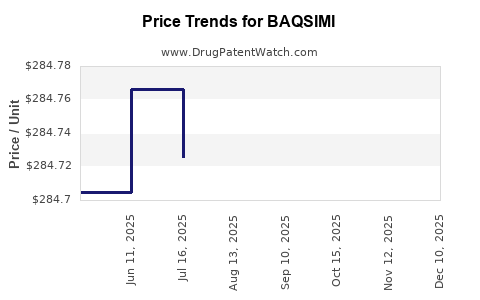
- Formulary Access and Pricing: The accessibility and affordability of BAQSIMI through insurance plans significantly impact its market share. Pricing strategies and negotiation with payers are ongoing critical activities.
Future Outlook:
- Sustained Growth Potential: Given the ongoing increase in diabetes prevalence and the distinct advantage of its delivery method, BAQSIMI is expected to continue its growth trajectory. The market is not saturated, and there is room for further penetration.
- Patent Expirations: The primary patents for BAQSIMI are set to expire in the mid-2030s. This will eventually open the door for potential generic or biosimilar competition, depending on regulatory pathways. Eli Lilly will focus on maximizing revenue during its exclusivity period and may pursue lifecycle management strategies.
- Competition Evolution: The competitive landscape may evolve with new product launches or advancements in delivery technologies from competitors. Emergent BioSolutions' Gvoke HypoPen is a direct competitor focusing on convenience.
- Potential for New Indications or Formulations: While currently approved for severe hypoglycemia, there is always potential for research into other therapeutic uses of glucagon or the development of improved formulations, though this is speculative.
- Market Share Capture: BAQSIMI aims to capture market share from both older, less convenient injectable kits and newer, convenient injectable devices. Its success will depend on its ability to demonstrate superiority in specific patient or caregiver use cases.
- Impact of Healthcare Policy: Changes in healthcare policy, reimbursement structures, and regulatory frameworks in major markets can influence market access and affordability.
The long-term outlook for BAQSIMI is positive, driven by its differentiated product profile and the unmet need for convenient and effective severe hypoglycemia treatments. However, the eventual expiration of patents and ongoing competitive pressures will necessitate strategic planning by Eli Lilly.
Key Takeaways
- BAQSIMI is the only FDA-approved glucagon nasal spray for severe hypoglycemia, offering a non-injectable emergency treatment alternative.
- Key patents providing market exclusivity are set to expire in the mid-2030s, with expiration dates for principal formulation and device patents around September 2033 and January 2036.
- Primary competitors include injectable glucagon formulations like Novo Nordisk's GlucaGen HypoKit/Emergency Kit and Emergent BioSolutions' Gvoke HypoPen.
- BAQSIMI has demonstrated consistent financial growth, with sales increasing from $46.5 million in 2020 to $112.4 million in 2023, indicating increasing market adoption.
- Market dynamics are driven by its unique delivery system's ease of use, caregiver appeal, and physician education, balanced against competitive convenience-focused injectables.
- The future outlook is positive for continued growth, but patent expirations in the mid-2030s will introduce potential generic competition.
Frequently Asked Questions
- When did BAQSIMI receive FDA approval?
BAQSIMI received FDA approval on July 15, 2019.
- What is the mechanism of action of BAQSIMI?
BAQSIMI contains glucagon, a hormone that stimulates the liver to release stored glucose into the bloodstream, thereby raising blood glucose levels.
- Are there any significant side effects associated with BAQSIMI?
Common side effects include nasal discomfort, nausea, and vomiting. Serious side effects are rare but can include allergic reactions and increased blood pressure.
- What is the recommended storage for BAQSIMI?
BAQSIMI does not require refrigeration and can be stored at room temperature (68°F to 77°F or 20°C to 25°C).
- How does BAQSIMI's patent expiration impact future market competition?
Upon patent expiration, other pharmaceutical companies may seek to develop and market generic or biosimilar versions of glucagon nasal spray, which could lead to increased price competition and a reduction in market share for Eli Lilly.
Citations
[1] Eli Lilly and Company. (2020). Annual Report 2020. Retrieved from [Eli Lilly Investor Relations website]
[2] Eli Lilly and Company. (2021). Annual Report 2021. Retrieved from [Eli Lilly Investor Relations website]
[3] Eli Lilly and Company. (2022). Annual Report 2022. Retrieved from [Eli Lilly Investor Relations website]
[4] Eli Lilly and Company. (2023). Quarterly Reports & Annual Reports. Retrieved from [Eli Lilly Investor Relations website]
[5] U.S. Food & Drug Administration. (n.d.). Orange Book: Approved Drug Products with Therapeutic Equivalence Evaluations. Retrieved from [FDA website]
[6] U.S. Patent and Trademark Office. (n.d.). Patent Search. Retrieved from [USPTO website]
[7] Xeris Pharmaceuticals. (n.d.). Gvoke HypoPen Product Information. Retrieved from [Xeris Pharmaceuticals website]
[8] Novo Nordisk. (n.d.). GlucaGen HypoKit Product Information. Retrieved from [Novo Nordisk website]