You're using a free limited version of DrugPatentWatch: Upgrade for Complete Access

Last Updated: March 26, 2026

Levothyroxine sodium - Generic Drug Details


✉ Email this page to a colleague

« Back to Dashboard


What are the generic drug sources for levothyroxine sodium and what is the scope of patent protection?

Levothyroxine sodium is the generic ingredient in twelve branded drugs marketed by Ani Pharms, Ibsa, Dr Reddys, Fresenius Kabi Usa, Maia Pharms Inc, Onesource Specialty, Ph Health, Piramal Critical, Xiromed, Zydus Pharms, Hikma, Mylan, Stevens J, Emd Serono Inc, Cediprof Inc, Genus Lifesciences, Accord Hlthcare, Amneal, Ascent Pharms Inc, Aurobindo Pharma, Lupin, Macleods Pharms Ltd, Merck Kgaa, Watson Labs Teva, King Pharms, Abbvie, and Alvogen, and is included in thirty-two NDAs. There are fourteen patents protecting this compound and two Paragraph IV challenges. Additional information is available in the individual branded drug profile pages.

Levothyroxine sodium has forty-eight patent family members in seventeen countries.

There are ten drug master file entries for levothyroxine sodium. Fifty-four suppliers are listed for this compound. There is one tentative approval for this compound.

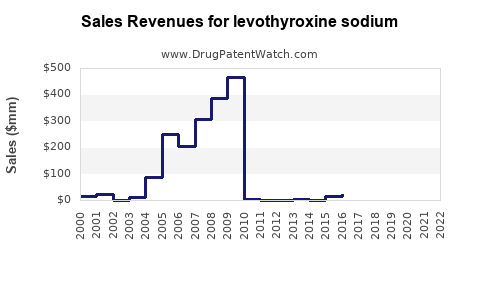
Drug Sales Revenue Trends for levothyroxine sodium

See drug sales revenues for levothyroxine sodium

Recent Clinical Trials for levothyroxine sodium

Identify potential brand extensions & 505(b)(2) entrants

SponsorPhase
Peking UniversityEARLY_PHASE1
University of PennsylvaniaPhase 4
National Institute on Aging (NIA)Phase 4

See all levothyroxine sodium clinical trials

Generic filers with tentative approvals for LEVOTHYROXINE SODIUM
Applicant Application No. Strength Dosage Form
⤷  Start Trial⤷  Start Trial200MCG/VIALPOWDER;INTRAVENOUS

The 'tentative' approval signifies that the product meets all FDA standards for marketing, and, but for the patents / regulatory protections, it would approved.

Pharmacology for levothyroxine sodium
Drug Classl-Thyroxine
Paragraph IV (Patent) Challenges for LEVOTHYROXINE SODIUM
Tradename Dosage Ingredient Strength NDA ANDAs Submitted Submissiondate
THYQUIDITY Oral Solution levothyroxine sodium 100 mcg/5 mL 214047 1 2022-12-28
TIROSINT Capsules levothyroxine sodium 137 mcg and 175 mcg 021924 1 2022-11-04
TIROSINT-SOL Oral Solution levothyroxine sodium 13 mcg/mL 25 mcg/mL 50 mcg/mL 75 mcg/mL 88 mcg/mL 100 mcg/mL 112 mcg/mL 125 mcg/mL 137 mcg/mL 150 mcg/mL 175 mcg/mL 200 mcg/mL 206977 1 2022-09-30
TIROSINT Capsules levothyroxine sodium 200 mcg 021924 1 2021-12-30
TIROSINT Capsules levothyroxine sodium 112 mcg 021924 1 2020-12-18
TIROSINT Capsules levothyroxine sodium 88 mcg, 100 mcg and 125 mcg 021924 1 2019-08-01
TIROSINT Capsules levothyroxine sodium 75 mcg and 150 mcg 021924 1 2017-12-29
LEVOTHYROXINE SODIUM for Injection levothyroxine sodium 200 mcg/vial 202231 1 2015-05-01
LEVOTHYROXINE SODIUM for Injection levothyroxine sodium 100 mcg/vial and 500 mcg/vial 202231 2 2015-04-14

US Patents and Regulatory Information for levothyroxine sodium

Applicant Tradename Generic Name Dosage NDA Approval Date TE Type RLD RS Patent No. Patent Expiration Product Substance Delist Req. Exclusivity Expiration
Stevens J UNITHROID levothyroxine sodium TABLET;ORAL 021210-001 Aug 21, 2000 AB1,AB2,AB3 RX Yes No ⤷  Start Trial ⤷  Start Trial ⤷  Start Trial
Alvogen THYRO-TABS levothyroxine sodium TABLET;ORAL 021116-011 Oct 24, 2002 AB1,AB2,AB3,AB4 RX Yes No ⤷  Start Trial ⤷  Start Trial ⤷  Start Trial
Zydus Pharms LEVOTHYROXINE SODIUM levothyroxine sodium POWDER;INTRAVENOUS 217066-001 Mar 24, 2023 AP RX No No ⤷  Start Trial ⤷  Start Trial ⤷  Start Trial
Abbvie SYNTHROID levothyroxine sodium TABLET;ORAL 021402-011 Jul 24, 2002 AB1,AB2 RX Yes Yes ⤷  Start Trial ⤷  Start Trial ⤷  Start Trial
>Applicant >Tradename >Generic Name >Dosage >NDA >Approval Date >TE >Type >RLD >RS >Patent No. >Patent Expiration >Product >Substance >Delist Req. >Exclusivity Expiration

Expired US Patents for levothyroxine sodium

Applicant Tradename Generic Name Dosage NDA Approval Date Patent No. Patent Expiration
King Pharms LEVOXYL levothyroxine sodium TABLET;ORAL 021301-009 May 25, 2001 ⤷  Start Trial ⤷  Start Trial
Ibsa TIROSINT levothyroxine sodium CAPSULE;ORAL 021924-006 Oct 13, 2006 ⤷  Start Trial ⤷  Start Trial
Ibsa TIROSINT levothyroxine sodium CAPSULE;ORAL 021924-012 Apr 25, 2017 ⤷  Start Trial ⤷  Start Trial
King Pharms LEVOXYL levothyroxine sodium TABLET;ORAL 021301-010 May 25, 2001 ⤷  Start Trial ⤷  Start Trial
>Applicant >Tradename >Generic Name >Dosage >NDA >Approval Date >Patent No. >Patent Expiration

Levothyroxine Sodium Market Dynamics and Financial Trajectory

Last updated: February 19, 2026

Levothyroxine sodium, a synthetic thyroid hormone, is the cornerstone treatment for hypothyroidism. Its market is characterized by a mature, generic-dominated landscape with stable demand driven by the chronic nature of the condition. Key financial dynamics are influenced by pricing pressures, manufacturing capacity, and evolving regulatory scrutiny.

What is the Current Market Size and Projected Growth for Levothyroxine Sodium?

The global market for levothyroxine sodium is estimated at approximately $650 million as of 2023, with a compound annual growth rate (CAGR) projected at 1.5% to 2.0% over the next five years. This modest growth reflects the drug's status as a well-established generic. Demand is largely inelastic due to its essential therapeutic role. The prevalence of thyroid disorders, particularly hypothyroidism, continues to rise globally, providing a steady base for consumption. Factors contributing to this rise include increased awareness, improved diagnostic capabilities, and potentially environmental factors.

Region Market Share (2023 est.) Projected CAGR (2024-2028)
North America 40% 1.8%
Europe 30% 1.6%
Asia-Pacific 18% 2.2%
Rest of World 12% 1.7%

The Asia-Pacific region is expected to exhibit slightly higher growth due to increasing healthcare expenditure and a growing patient population seeking treatment.

Who are the Key Manufacturers and What is Their Market Share?

The levothyroxine sodium market is highly fragmented, with a significant number of generic manufacturers. The dominant players have historically included:

  • AbbVie Inc. (through its acquisition of Allergan): While AbbVie's primary focus is often on novel therapies, its legacy products through acquisitions maintain a presence.
  • Teva Pharmaceutical Industries Ltd.: A major player in the generics market globally, Teva has a substantial footprint in levothyroxine.
  • Mylan N.V. (now Viatris Inc.): Another significant generic drug manufacturer with a broad portfolio.
  • Amneal Pharmaceuticals LLC: A prominent US-based generics company.
  • Various smaller and regional manufacturers: Contributing to the overall supply and competitive landscape.

Market share is fluid and subject to production capacity, supply chain reliability, and pricing strategies. Leading manufacturers typically hold market shares in the 10% to 20% range individually, with the top five accounting for approximately 50% to 60% of the global market.

What are the Primary Pricing Drivers and Trends?

Pricing for levothyroxine sodium is predominantly influenced by generic competition and supply chain dynamics.

  • Generic Competition: With numerous manufacturers producing bioequivalent versions, intense price competition exists. This drives prices down to cost-plus margins for most market participants.
  • Manufacturing Costs: The cost of active pharmaceutical ingredients (APIs), excipients, and adherence to Good Manufacturing Practices (GMP) are significant cost components. Fluctuations in these inputs can impact margins.
  • Supply Chain Disruptions: Shortages or production issues at key manufacturing sites have historically led to temporary price spikes. However, the long-term trend remains downward pressure due to competition.
  • Contract Pricing: A substantial portion of levothyroxine sodium is sold through contracts with pharmacy benefit managers (PBMs), wholesalers, and large hospital systems. These contracts often involve volume discounts and rebates.
  • Government Procurement: In many countries, national health systems procure medications, influencing pricing through tenders and formulary management.

The average wholesale price (AWP) for a standard 30-day supply of levothyroxine sodium has hovered between $10 and $25, with significant variations based on dosage, brand status (though largely generic), and pharmacy markup. The net price after rebates and discounts is considerably lower.

What is the Regulatory Landscape and Its Impact?

The regulatory environment for levothyroxine sodium is stringent, focusing on drug quality, manufacturing standards, and supply chain integrity.

  • FDA Oversight (United States): The U.S. Food and Drug Administration (FDA) closely monitors levothyroxine sodium due to past instances of efficacy and safety concerns related to product variability. This includes:
    • Bioequivalence Standards: Manufacturers must demonstrate bioequivalence to the reference listed drug.
    • Manufacturing Site Inspections: Regular inspections of API and finished product manufacturing facilities.
    • Labeling Requirements: Precise labeling is mandated, including potency and stability information.
    • Drug Shortage Management: The FDA actively works to prevent and mitigate drug shortages, which have occasionally affected levothyroxine.
  • EMA Oversight (Europe): The European Medicines Agency (EMA) and national competent authorities enforce similar standards, emphasizing quality control and patient safety.
  • GMP Compliance: Adherence to current Good Manufacturing Practices (cGMP) is non-negotiable for all manufacturers. Non-compliance can lead to warning letters, import alerts, and product recalls.
  • Impurity Limits: Strict limits are set for impurities, including related substances and degradation products.

Past issues with product stability and therapeutic equivalence have led to increased regulatory scrutiny, prompting manufacturers to invest in robust quality control systems and process validation. This adds to the cost of production but is essential for market access.

What are the Manufacturing Challenges and Supply Chain Considerations?

Manufacturing levothyroxine sodium, while a mature process, presents several challenges:

  • API Sourcing: Securing a reliable and high-quality source of synthetic thyroxine sodium API is critical. Many API manufacturers are based in Asia, introducing geopolitical and logistical risks.
  • Formulation Stability: Levothyroxine sodium can be susceptible to degradation from light, heat, and moisture. Ensuring formulation stability throughout the product's shelf life requires careful excipient selection and packaging.
  • Potency and Dissolution Testing: Rigorous testing is required to confirm the accurate potency and dissolution profile of each batch, ensuring consistent therapeutic effect.
  • Batch-to-Batch Consistency: Maintaining extremely high levels of consistency across manufacturing batches is paramount, especially given the narrow therapeutic index of thyroid hormones.
  • Capacity Management: Manufacturers must balance production capacity with fluctuating market demand and potential for unexpected supply chain disruptions. Overcapacity can lead to price erosion, while undercapacity can result in shortages.
  • Geographic Concentration of Manufacturing: A significant portion of global API and finished product manufacturing is concentrated in a few countries, making the supply chain vulnerable to disruptions from natural disasters, trade disputes, or regulatory changes.

The industry has experienced recalls and shortages in the past due to manufacturing deviations and API quality issues, highlighting the need for diversified sourcing and stringent internal quality assurance.

What are the Key Therapeutic Alternatives and Their Market Impact?

While levothyroxine sodium is the primary treatment for hypothyroidism, other options exist, though their market impact on levothyroxine is generally limited for primary hypothyroidism.

  • Liothyronine Sodium (Synthetic T3): Used in combination with levothyroxine for select patients who remain symptomatic on T4 monotherapy, or in specific medical contexts. It is a smaller market segment and not a direct replacement for primary hypothyroidism treatment.
  • Desiccated Thyroid Extract (DTE): Derived from animal thyroid glands. DTE contains both T4 and T3 hormones. While used by some physicians and patients, it faces challenges in standardization of hormone content and is generally not preferred as a first-line therapy by major endocrinology societies due to variability.
  • Combination Therapies: Research continues into optimal thyroid hormone replacement strategies, including combinations of T4 and T3, but levothyroxine remains the standard of care.

The market for these alternatives is significantly smaller than that for levothyroxine. The overwhelming majority of patients with hypothyroidism are treated with levothyroxine sodium due to its proven efficacy, predictable pharmacokinetics, and cost-effectiveness. The market share of alternatives is estimated to be less than 5% of the total thyroid hormone replacement market.

What are the Future Growth Opportunities and Threats?

The levothyroxine sodium market, while mature, presents specific growth avenues and significant threats:

Growth Opportunities:

  • Emerging Markets: Increasing access to healthcare and diagnosis of hypothyroidism in developing economies offers incremental growth.
  • Improved Formulations: While less likely for a generic, advancements in drug delivery or patient compliance (e.g., combination products for specific patient needs) could create niche opportunities.
  • Biosimil Development (Theoretical): While levothyroxine is a small molecule generic, the concept of biosimilarity drives competition and innovation in the broader pharmaceutical space, indirectly influencing market dynamics.

Threats:

  • Intensified Pricing Pressure: Continued generic entry and aggressive PBM/payer negotiations will likely further compress profit margins.
  • Supply Chain Vulnerability: Geopolitical instability, trade wars, or major manufacturing disruptions could lead to significant shortages and impact patient access.
  • Regulatory Sanctions: Stricter enforcement of GMP and quality standards could lead to costly remediation efforts or product withdrawals for non-compliant manufacturers.
  • Emergence of Novel Therapies (Long-term): While distant, breakthroughs in understanding thyroid hormone physiology could eventually lead to entirely new treatment paradigms that might compete with current hormonal replacement.
  • Alternative Medicine: Increased patient adoption of unproven or less evidence-based alternative treatments for thyroid conditions could theoretically impact demand for conventional therapies, though this remains a fringe concern for established generics.

Key Takeaways

The levothyroxine sodium market is a high-volume, low-margin segment driven by consistent demand for hypothyroidism treatment. Its financial trajectory is shaped by intense generic competition, stringent regulatory oversight, and the constant imperative for manufacturing efficiency and supply chain resilience. While growth is modest, market participants must navigate pricing pressures and potential supply disruptions to maintain profitability.

FAQs

What is the primary reason for levothyroxine shortages?

Past levothyroxine shortages have been attributed to manufacturing disruptions, quality control issues at production facilities, and API supply chain problems.

How does the FDA's scrutiny impact levothyroxine manufacturers?

FDA scrutiny, particularly after historical issues with product variability, necessitates robust quality management systems, strict adherence to GMP, and thorough bioequivalence testing, increasing operational costs and regulatory compliance burdens.

Are there any new patented levothyroxine formulations in development?

Given its status as a well-established generic, there are limited significant patentable innovations for novel levothyroxine sodium formulations; the focus is on efficient manufacturing of existing bioequivalent products.

What is the typical profit margin for levothyroxine sodium manufacturers?

Profit margins for levothyroxine sodium are generally thin, often in the single digits, due to intense price competition among multiple generic manufacturers.

How do pharmacy benefit managers influence levothyroxine pricing?

PBMs significantly influence levothyroxine pricing through bulk purchasing agreements, preferred formulary placement, and negotiated rebates, which drive down the net price paid by payers and pharmacies.

More… ↓

⤷  Start Trial

Make Better Decisions: Try a trial or see plans & pricing

Drugs may be covered by multiple patents or regulatory protections. All trademarks and applicant names are the property of their respective owners or licensors. Although great care is taken in the proper and correct provision of this service, thinkBiotech LLC does not accept any responsibility for possible consequences of errors or omissions in the provided data. The data presented herein is for information purposes only. There is no warranty that the data contained herein is error free. We do not provide individual investment advice. This service is not registered with any financial regulatory agency. The information we publish is educational only and based on our opinions plus our models. By using DrugPatentWatch you acknowledge that we do not provide personalized recommendations or advice. thinkBiotech performs no independent verification of facts as provided by public sources nor are attempts made to provide legal or investing advice. Any reliance on data provided herein is done solely at the discretion of the user. Users of this service are advised to seek professional advice and independent confirmation before considering acting on any of the provided information. thinkBiotech LLC reserves the right to amend, extend or withdraw any part or all of the offered service without notice.