Last updated: August 28, 2026
Glimepiride is a mature, low-cost sulfonylurea used for type 2 diabetes. Its commercial profile is driven by generic availability, broad international distribution, low manufacturing costs, and continued use where affordability matters. Revenue growth is structurally limited by price erosion and competition from metformin, DPP-4 inhibitors, SGLT2 inhibitors, and GLP-1 therapies. No public source reports a consolidated global revenue figure for glimepiride across manufacturers.
What is the current market position of glimepiride?
Glimepiride is an oral antidiabetic drug that stimulates pancreatic insulin release through sulfonylurea receptor activity. The FDA approved the originator product Amaryl under NDA 20-496 in 1995. It remains available in the United States through generic ANDA products and in many international markets under national brand and generic names [1][2].
| Market attribute |
Glimepiride position |
| Therapeutic class |
Second-generation sulfonylurea |
| Primary indication |
Type 2 diabetes mellitus |
| Typical dosage forms |
1 mg, 2 mg, 4 mg tablets; some markets also offer 3 mg and 6 mg |
| Administration |
Once daily, usually with breakfast or the first main meal |
| Originator |
Amaryl |
| Originator sponsor |
Hoechst Marion Roussel, later associated with Sanofi |
| U.S. regulatory pathway |
Original NDA; subsequent generic ANDAs |
| Current status |
Mature, multisource generic market |
| Biosimilar exposure |
None |
| Principal commercial advantage |
Low acquisition cost |
| Principal commercial risks |
Hypoglycemia, weight gain, declining guideline preference, intense generic competition |
Glimepiride retains demand in price-sensitive health systems, public formularies, community practice, and combination therapy. Its position is weaker in markets where treatment guidelines and reimbursement favor agents with demonstrated cardiovascular, renal, or weight-related benefits.
How large is the glimepiride market?
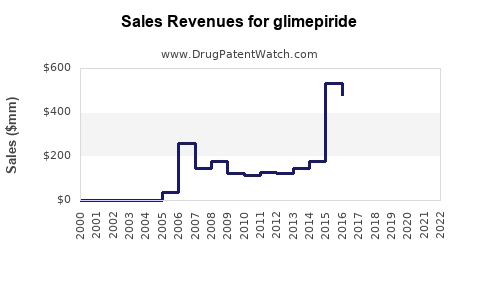
There is no authoritative, publicly disclosed global market total for glimepiride. Commercial market-research reports often combine glimepiride with the broader sulfonylurea market or report estimates that vary by geography, channel, and inclusion of fixed-dose combinations. Company filings generally do not disclose glimepiride revenue separately.
The market is best understood through its economic structure:
- Unit demand remains material because type 2 diabetes prevalence is increasing.
- Average selling prices are low because multiple manufacturers compete on the same active ingredient.
- Revenue is fragmented among regional generic companies.
- Fixed-dose combinations create additional volume but reduce product-level price transparency.
- Premium growth is concentrated in newer drug classes rather than sulfonylureas.
Global diabetes prevalence supports continued baseline demand. The International Diabetes Federation estimated that approximately 537 million adults aged 20 to 79 were living with diabetes in 2021, with the total projected to rise materially by 2045 [3]. That epidemiological expansion does not translate directly into glimepiride growth because treatment mix is changing.
Which regions have the strongest glimepiride demand?
Glimepiride is commercially strongest where generic affordability and established physician familiarity outweigh the clinical advantages of newer therapies.
| Region |
Demand characteristics |
Commercial outlook |
| India and South Asia |
Large diabetic population, extensive generic manufacturing, widespread fixed-dose combinations |
Stable to growing unit demand; severe price competition |
| Southeast Asia |
Generic use remains significant, with variable reimbursement |
Stable demand, fragmented suppliers |
| Latin America |
Public and private channels use low-cost oral therapies |
Stable volume; tender pricing limits margins |
| Middle East and Africa |
Access constraints favor inexpensive oral agents |
Opportunity for volume growth, but procurement prices are low |
| Europe |
Generic availability is broad, but treatment guidelines increasingly favor newer agents in higher-risk patients |
Gradual share pressure |
| United States |
Generic availability and low prices support residual demand |
Mature or declining branded-equivalent revenue |
The strongest commercial opportunity is usually not a premium single-ingredient glimepiride product. It is reliable supply into institutional channels, local branded generics, and combination products containing metformin.
When did glimepiride lose exclusivity?
Glimepiride’s U.S. market exclusivity expired many years ago. The original Amaryl product is no longer protected by meaningful market exclusivity, and generic versions are widely available.
The original compound and product patent estate is functionally expired in the United States and other major markets. Current commercial barriers relate to manufacturing, registration, quality compliance, distribution, and procurement rather than exclusionary patent rights.
What is the Orange Book status of glimepiride?
The FDA Orange Book contains the reference-listed drug and approved generic equivalents for glimepiride products. Current U.S. glimepiride tablets are primarily exposed to generic competition, and no active Orange Book patent protection is expected to prevent ordinary ANDA competition for the mature product [4].
The relevant U.S. exclusivity categories are:
| Exclusivity category |
Current relevance |
| New chemical entity exclusivity |
Expired |
| Original NDA exclusivity |
Expired |
| Pediatric exclusivity |
No current commercial significance |
| Orphan-drug exclusivity |
Not applicable |
| Reference-product patent protection |
Functionally expired |
| Generic approval pathway |
ANDA |
| Biosimilar pathway |
Not applicable |
The FDA’s Orange Book remains the controlling source for current listed patents, exclusivity codes, and therapeutic-equivalence designations. Patent status can change through delisting or administrative updates, so diligence should use the current edition rather than historical product databases [4].
What patents protect glimepiride?
No commercially material, unexpired U.S. composition-of-matter patent is expected to block generic glimepiride. The historical patent estate covered the active pharmaceutical ingredient and early product development. Those rights expired before the current generic market matured.
Are formulation patents still a major barrier?
Formulation patents are not a significant barrier for conventional glimepiride immediate-release tablets. The dosage form is technically straightforward, and multiple manufacturers have developed equivalent products.
Potentially relevant intellectual-property categories include:
- Tablet composition and excipient selection
- Combination products containing glimepiride and metformin
- Modified-release delivery systems
- Manufacturing processes and crystallization methods
- Packaging and stability systems
- Country-specific registrations and trademarks
These rights may support a particular manufacturer’s product in a specific jurisdiction, but they do not recreate broad exclusivity for glimepiride as an active ingredient.
What manufacturing barriers affect glimepiride?
Manufacturing barriers are operational rather than patent-based. They include:
- Consistent active-ingredient sourcing
- Control of polymorphic or solid-state characteristics
- Low-dose content uniformity
- Dissolution and impurity control
- Stability in hot and humid climates
- Compliance with current good manufacturing practices
- Bioequivalence documentation
- Reliable supply for public tenders
Because glimepiride tablets contain relatively small active doses, content uniformity and analytical validation remain important quality-control issues. A supplier with weak quality systems may lose tenders or face product recalls even without patent exposure.
Which companies compete in the glimepiride market?
Competition is fragmented. The market includes multinational generic companies, regional branded-generic manufacturers, contract manufacturers, and local distributors.
Representative competitive groups include:
| Competitor group |
Typical role |
| Large multinational generic companies |
Regulatory scale, multi-country supply, institutional tenders |
| Indian pharmaceutical companies |
High-volume API and finished-dose manufacturing, combination products |
| European generic companies |
Regulated-market supply and pharmacy distribution |
| Latin American manufacturers |
Local registration and branded-generic channels |
| Contract manufacturers |
Low-cost production for regional licensees |
| Originator-linked suppliers |
Residual brand recognition and legacy distribution |
The main competitive distinction is not molecule ownership. It is supply reliability, registration coverage, price, tablet quality, and access to healthcare channels.
Glimepiride also competes indirectly with other diabetes therapies. Metformin is usually the strongest low-cost comparator. DPP-4 inhibitors compete when lower hypoglycemia risk is prioritized. SGLT2 inhibitors and GLP-1 receptor agonists compete in patients with cardiovascular disease, chronic kidney disease, obesity, or a need for weight reduction.
How does glimepiride compare with newer diabetes drugs?
| Attribute |
Glimepiride |
Metformin |
DPP-4 inhibitor |
SGLT2 inhibitor |
GLP-1 receptor agonist |
| Price |
Very low |
Very low |
Moderate to high |
Moderate to high |
High |
| Hypoglycemia risk |
Meaningful |
Low when used alone |
Low |
Low |
Low |
| Weight effect |
Gain possible |
Neutral or modest loss |
Neutral |
Loss possible |
Significant loss possible |
| Cardiovascular benefit |
Not established as a class benefit |
Broad first-line use |
Generally neutral |
Benefit in selected populations |
Benefit in selected populations |
| Kidney-related positioning |
Limited |
Dose and renal restrictions |
Varies by agent |
Stronger evidence in selected patients |
Increasing use in metabolic disease |
| Generic availability |
Broad |
Broad |
Increasing in some markets |
Expanding but variable |
Limited relative to oral generics |
| Commercial growth |
Flat or declining value |
Stable, high-volume |
Mixed |
Stronger |
Stronger |
The American Diabetes Association’s Standards of Care place substantial emphasis on patient-specific selection and the use of therapies with cardiovascular, renal, or weight benefits when clinically indicated [5]. That approach limits long-term share expansion for glimepiride, even where the molecule remains clinically effective for glucose lowering.
What is the FDA regulatory status of glimepiride?
The FDA-approved indication is adjunctive to diet and exercise for improving glycemic control in adults with type 2 diabetes. Glimepiride is not indicated for type 1 diabetes or diabetic ketoacidosis [1].
Key regulatory and clinical points include:
- Initial dosing commonly begins at 1 mg or 2 mg once daily.
- Dose escalation is based on glycemic response.
- The labeled maximum daily dose is 8 mg.
- Hypoglycemia is the principal class safety concern.
- Older adults, patients with renal impairment, and patients with irregular food intake require particular caution.
- Weight gain can occur.
- Sulfonylureas are not substitutes for insulin in type 1 diabetes or ketoacidosis.
FDA-approved generic products must demonstrate pharmaceutical equivalence and bioequivalence to the reference product. The approval environment is therefore relatively predictable, although manufacturing compliance and supply-chain performance can determine commercial success [2].
Are there Paragraph IV challenges involving glimepiride?
Paragraph IV litigation is not a major current risk for conventional glimepiride tablets because the original patent and exclusivity period have expired. Generic applicants have long entered the U.S. market, and the competitive question is supply economics rather than patent invalidity or noninfringement.
A Paragraph IV filing could still arise for a newly patented combination or delivery system, but it would not normally affect the established single-ingredient glimepiride market. Any current litigation review should distinguish between:
- Historical challenges to the Amaryl reference product
- Patent disputes involving metformin-glimepiride combinations
- Litigation over unrelated diabetes products
- Trademark or manufacturing disputes
- Current ANDA litigation involving a novel formulation
What licensing deals affect glimepiride?
Glimepiride has no widely recognized current global licensing deal comparable to the licensing structures associated with innovative diabetes products. Commercial rights are generally handled through regional registrations, distribution agreements, private-label supply, and contract manufacturing.
The most relevant transaction structures are:
- API supply agreements
- Finished-dose contract manufacturing
- Country-specific marketing rights
- Branded-generic distribution agreements
- Fixed-dose combination licensing
- Government and hospital tender contracts
Because the molecule is generic, transaction value is usually based on volume, registration status, manufacturing cost, and channel access rather than patent duration.
What is the financial trajectory for glimepiride?
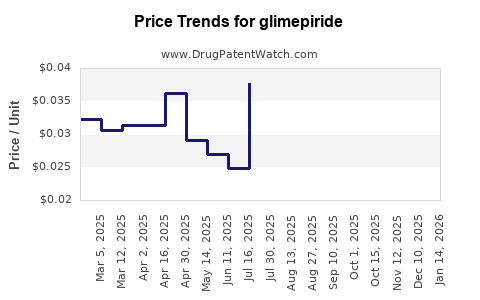
Glimepiride’s financial trajectory is best characterized as stable in volume but declining in value per unit.
| Financial driver |
Direction |
Effect |
| Diabetes prevalence |
Up |
Supports baseline demand |
| Generic manufacturer count |
Up or stable |
Increases price pressure |
| Average selling price |
Down |
Reduces revenue per prescription |
| Use in lower-income markets |
Stable or up |
Protects unit volumes |
| Use in high-risk cardiovascular patients |
Down relative to newer agents |
Reduces mix quality |
| Fixed-dose combinations |
Stable or up |
Supports volume and differentiation |
| Manufacturing costs |
Low but exposed to API and freight changes |
Limits margin expansion |
| Brand premium |
Minimal in most markets |
Weakens pricing power |
No public company is known to report a standalone global glimepiride revenue line. Financial analysis therefore requires a bottom-up model using prescription volume, average net price, market share, and combination-product contribution.
For generic manufacturers, the business can remain attractive at high volume despite low prices. Gross-margin performance depends on procurement scale, plant utilization, tender discipline, and avoidance of quality-related disruptions. For originator companies, glimepiride is unlikely to be a material growth asset.
What generic launch scenarios exist for glimepiride?
The conventional U.S. generic launch scenario is already complete. Future commercial changes are more likely to involve supplier entry, exit, or consolidation than a first generic launch.
Base case
Glimepiride remains available from multiple generic suppliers. Prices stay low, unit demand remains adequate, and revenue gradually declines as treatment shifts toward newer therapies.
Downside case
Guideline-driven substitution, payer restrictions, safety concerns, or supply competition reduce prescription volume and compress margins. Manufacturers withdraw from low-price markets, increasing the risk of intermittent shortages without restoring durable pricing power.
Higher-volume case
Demand rises in emerging markets because of expanding diabetes prevalence, public procurement, and continued reliance on low-cost oral therapy. Revenue growth remains limited because tender prices stay compressed.
Product-extension case
Manufacturers gain incremental value through glimepiride-metformin combinations, differentiated packaging, regional brands, or supply contracts. These extensions improve distribution economics but do not create broad molecule-level exclusivity.
What patent litigation affects glimepiride?
No major ongoing U.S. patent litigation is central to the established glimepiride tablet market based on the FDA regulatory record and the product’s long-generic status. Litigation exposure is more likely to arise from a specific manufacturer’s formulation, trademark, quality, or commercial agreement than from the core active ingredient.
Settlement agreements also have limited current relevance. Any historic settlement should be analyzed in the context of the expired Amaryl patent estate and should not be treated as a current barrier to generic entry.
How strong is the glimepiride patent estate?
The patent estate is weak as a present commercial asset and strong only in the historical sense that the original product enjoyed a conventional period of protection before generic entry.
| Patent-estate factor |
Assessment |
| Core composition patent |
Expired |
| U.S. Orange Book exclusivity |
Expired |
| Immediate-release tablet protection |
No material current barrier |
| Combination-product opportunities |
Limited, product-specific |
| Manufacturing know-how |
Potentially useful but nonexclusive |
| Geographic enforceability |
Varies by country; core rights are generally mature |
| Litigation leverage |
Low for conventional tablets |
| Licensing value |
Low unless tied to distribution or a differentiated product |
Key Takeaways
- Glimepiride is a mature generic diabetes drug with broad international availability.
- Its commercial value is based on low cost, established use, and supply scale rather than patent protection.
- The original Amaryl exclusivity period and core patent rights have expired.
- No biosimilar issue applies because glimepiride is a small-molecule drug.
- Current revenue is fragmented and not publicly reported on a consolidated global basis.
- Unit demand can remain stable while revenue and margins decline because of generic price erosion.
- Emerging markets and fixed-dose combinations offer the strongest volume opportunities.
- SGLT2 inhibitors, GLP-1 receptor agonists, and DPP-4 inhibitors create long-term share pressure.
- Manufacturing quality, procurement scale, and distribution coverage are more important than patent litigation.
- The most likely financial trajectory is flat-to-declining value, with selective volume growth in price-sensitive markets.
FAQs About Glimepiride Market and Patent Economics
Is glimepiride still commercially attractive for generic manufacturers?
Yes, but mainly as a volume product. Its attractiveness depends on low production costs, efficient regulatory coverage, combination-product access, and reliable institutional demand.
Does glimepiride have any biosimilar competition?
No. Biosimilars apply to biological products. Glimepiride is a chemically synthesized small molecule and competes through generic-drug pathways.
Can a new glimepiride formulation obtain patent protection?
A genuinely novel formulation or delivery system may qualify for patent protection if it satisfies applicable novelty, inventive-step, and enablement standards. Such protection would cover the specific formulation, not necessarily conventional glimepiride tablets.
Is glimepiride expected to lose all demand because of GLP-1 drugs?
No. GLP-1 therapies are expensive and may have access, tolerability, and reimbursement limitations. Glimepiride is likely to retain demand in low-cost treatment settings and among patients without access to newer therapies.
What is the main investment risk in the glimepiride market?
The main risk is structural price erosion combined with gradual therapeutic substitution. Supply disruptions can create short-term opportunities, but they generally do not produce durable pricing power in a multisource generic market.
References
-
U.S. Food and Drug Administration. (1995). Amaryl (glimepiride) prescribing information. FDA.
-
U.S. Food and Drug Administration. (n.d.). Drugs@FDA: FDA-approved drugs. https://www.accessdata.fda.gov/scripts/cder/daf/
-
International Diabetes Federation. (2021). IDF diabetes atlas (10th ed.). https://diabetesatlas.org/
-
U.S. Food and Drug Administration. (n.d.). Approved drug products with therapeutic equivalence evaluations: Orange Book. https://www.accessdata.fda.gov/scripts/cder/ob/
-
American Diabetes Association Professional Practice Committee. (2025). Standards of care in diabetes - 2025. Diabetes Care, 48(Supplement 1). https://diabetesjournals.org/care/issue/48/Supplement_1