Last Updated: August 9, 2026

TOBRAMYCIN - Generic Drug Details


✉ Email this page to a colleague

« Back to Dashboard


What are the generic drug sources for tobramycin and what is the scope of freedom to operate?

Tobramycin is the generic ingredient in eleven branded drugs marketed by Novartis, Viatris, Epic Pharma Llc, Alcon Pharms Ltd, Alembic, Apotex Inc, Bausch And Lomb Inc, Chartwell Rx, Gland, Somerset Theraps Llc, Sandoz, Chiesi, Pulmoflow Inc, Alkem Labs Ltd, Amneal Pharms, Dr Reddys Labs Sa, Hikma, Luoxin Aurovitas, Lupin, Mankind Pharma, Micro Labs, Pharmobedient, Sun Pharm, Teva Pharms Usa, Lilly, Apothecon, Baxter Hlthcare Corp, Eugia Pharma, Fresenius Kabi Usa, Hospira, Igi Labs Inc, Mylan Labs Ltd, Slate Run Pharma, Watson Labs Inc, Xellia Pharms Aps, and Xgen Pharms, and is included in sixty-four NDAs. There are two patents protecting this compound and two Paragraph IV challenges. Additional information is available in the individual branded drug profile pages.

Tobramycin has fifteen patent family members in thirteen countries.

There are eighteen drug master file entries for tobramycin. Thirty-six suppliers are listed for this compound.

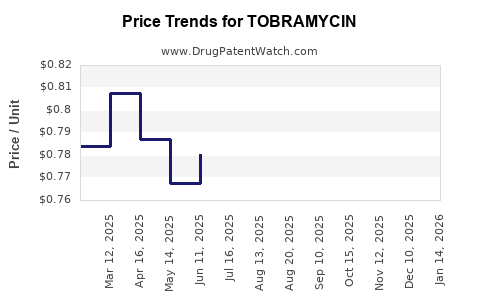
Drug Prices for TOBRAMYCIN

See drug prices for TOBRAMYCIN

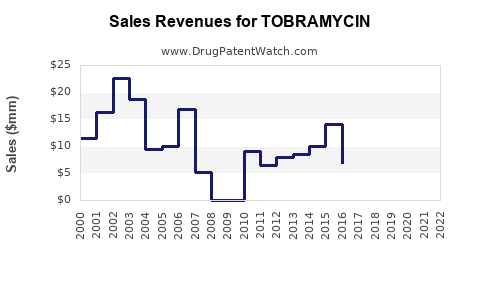
Drug Sales Revenue Trends for TOBRAMYCIN

See drug sales revenues for TOBRAMYCIN

Recent Clinical Trials for TOBRAMYCIN

Identify potential brand extensions & 505(b)(2) entrants

SponsorPhase
Uppsala Clinical Research Center, SwedenPHASE4
The Swedish Research CouncilPHASE4
Uppsala UniversityPHASE4

See all TOBRAMYCIN clinical trials

Pharmacology for TOBRAMYCIN
Medical Subject Heading (MeSH) Categories for TOBRAMYCIN
Paragraph IV (Patent) Challenges for TOBRAMYCIN
Tradename Dosage Ingredient Strength NDA ANDAs Submitted Submissiondate
BETHKIS Inhalation Solution tobramycin 300 mg/4 mL 201820 1 2017-08-31
TOBI Inhalation Solution tobramycin 300 mg/5 mL 050753 1 2009-06-29

US Patents and Regulatory Information for TOBRAMYCIN

Applicant Tradename Generic Name Dosage NDA Approval Date TE Type RLD RS Patent No. Patent Expiration Product Substance Delist Req. Exclusivity Expiration
Novartis TOBREX tobramycin SOLUTION/DROPS;OPHTHALMIC 050541-001 Approved Prior to Jan 1, 1982 DISCN Yes No ⤷  Start Trial ⤷  Start Trial ⤷  Start Trial
Watson Labs Inc TOBRAMYCIN SULFATE tobramycin sulfate INJECTABLE;INJECTION 062945-001 Aug 9, 1989 DISCN No No ⤷  Start Trial ⤷  Start Trial ⤷  Start Trial
Pulmoflow Inc KITABIS PAK tobramycin SOLUTION;INHALATION 205433-001 Dec 2, 2014 AN RX No No ⤷  Start Trial ⤷  Start Trial ⤷  Start Trial
Fresenius Kabi Usa TOBRAMYCIN SULFATE tobramycin sulfate INJECTABLE;INJECTION 065122-002 Nov 29, 2002 AP RX No Yes ⤷  Start Trial ⤷  Start Trial ⤷  Start Trial
>Applicant >Tradename >Generic Name >Dosage >NDA >Approval Date >TE >Type >RLD >RS >Patent No. >Patent Expiration >Product >Substance >Delist Req. >Exclusivity Expiration

Expired US Patents for TOBRAMYCIN

Applicant Tradename Generic Name Dosage NDA Approval Date Patent No. Patent Expiration
Viatris TOBI PODHALER tobramycin POWDER;INHALATION 201688-001 Mar 22, 2013 ⤷  Start Trial ⤷  Start Trial
Chiesi BETHKIS tobramycin SOLUTION;INHALATION 201820-001 Oct 12, 2012 ⤷  Start Trial ⤷  Start Trial
Viatris TOBI PODHALER tobramycin POWDER;INHALATION 201688-001 Mar 22, 2013 ⤷  Start Trial ⤷  Start Trial
>Applicant >Tradename >Generic Name >Dosage >NDA >Approval Date >Patent No. >Patent Expiration

EU/EMA Drug Approvals for TOBRAMYCIN

Company Drugname Inn Product Number / Indication Status Generic Biosimilar Orphan Marketing Authorisation Marketing Refusal
Viatris Healthcare Limited Tobi Podhaler tobramycin EMEA/H/C/002155Tobi Podhaler is indicated for the suppressive therapy of chronic pulmonary infection due to Pseudomonas aeruginosa in adults and children aged 6 years and older with cystic fibrosis. See sections 4.4 and 5.1 regarding data in different age groups.Consideration should be given to official guidance on the appropriate use of antibacterial agents. Authorised no no no 2011-07-20
Pari Pharma GmbH Vantobra (previously Tobramycin PARI) tobramycin EMEA/H/C/005086Vantobra is indicated for the management of chronic pulmonary infection due to Pseudomonas aeruginosa in patients aged 6 years and older with cystic fibrosis (CF).Consideration should be given to official guidance on the appropriate use of antibacterial agents. Authorised no no no 2019-02-18
Pari Pharma GmbH Vantobra tobramycin EMEA/H/C/002633Vantobra is indicated for the management of chronic pulmonary infection due to Pseudomonas aeruginosa in patients aged 6 years and older with cystic fibrosis (CF).Consideration should be given to official guidance on the appropriate use of antibacterial agents. Withdrawn no no no 2015-03-18
>Company >Drugname >Inn >Product Number / Indication >Status >Generic >Biosimilar >Orphan >Marketing Authorisation >Marketing Refusal

International Patents for TOBRAMYCIN

Country Patent Number Title Estimated Expiration
Australia 2004229512 Aerosolization apparatus with capsule puncture alignment guide ⤷  Start Trial
Canada 2520265 APPAREIL DE PULVERISATION EN AEROSOL COMPRENANT UN GUIDE D'ALIGNEMENT POUR PERFORER LA CAPSULE (AEROSOLIZATION APPARATUS WITH CAPSULE PUNCTURE ALIGNMENT GUIDE) ⤷  Start Trial
Cyprus 1117408 ⤷  Start Trial
Denmark 1615689 ⤷  Start Trial
>Country >Patent Number >Title >Estimated Expiration

Supplementary Protection Certificates for TOBRAMYCIN

Patent Number Supplementary Protection Certificate SPC Country SPC Expiration SPC Description
1280520 14/2015 Austria ⤷  Start Trial PRODUCT NAME: TOBRAMYCIN ODER EIN PHARMAZEUTISCH ANNEHMBARES SALZ DAVON; REGISTRATION NO/DATE: EU/1/10/652/001-003 20110720
1273292 C01273292/01 Switzerland ⤷  Start Trial PRODUCT NAME: TOBRAMYCIN; REGISTRATION NO/DATE: SWISSMEDIC 58751 28.05.2009
1280520 92678 Luxembourg ⤷  Start Trial PRODUCT NAME: TOBRAMYCINE OU UN SEL PHARMACEUTIQUEMENT ACCEPTABLE QUI EN DERIVE. FIRST REGISTRATION: 20110725
1280520 CA 2015 00017 Denmark ⤷  Start Trial PRODUCT NAME: TOBRAMYCIN ELLER ET FARMACEUTISK ACCEPTABELT SALT DERAF; REG. NO/DATE: EU/1/10/652/001-003 20110720
>Patent Number >Supplementary Protection Certificate >SPC Country >SPC Expiration >SPC Description
Last updated: July 30, 2026

Tobramycin market dynamics and financial trajectory: how demand, pricing, and exclusivity shape revenue

Tobramycin’s revenue trajectory is driven by (1) sustained use in cystic fibrosis (CF) airway disease and (2) utilization of inhaled formulations that face periodic formulation and device competition. Market growth is constrained by patent/route-to-market timing, payor pressure, and competitive inhaled antibiotics. Financial performance depends on mix between nebulized and dry powder offerings, formulary status, and competitive entries that can erode unit pricing after exclusivity windows end.

What is tobramycin’s current market structure and where does revenue come from?

Snapshot: Tobramycin is primarily an inhaled antibiotic used for chronic suppressive therapy in CF patients with Pseudomonas aeruginosa. Revenue is concentrated in the U.S., with smaller contributions from Europe and other geographies depending on local formulary coverage and availability of specific inhaled products.

Tobramycin therapeutic role in CF

Tobramycin is used as chronic inhaled suppressive therapy to reduce bacterial burden and exacerbations in CF patients with P. aeruginosa. Demand is tied to:

  • CF population size and treated prevalence (diagnosis, survival, and treatment adherence)
  • Therapy persistence (repeat cycles, discontinuations, switching)
  • Clinical guideline adherence and payer coverage criteria

Product forms that typically anchor revenue

Tobramycin’s market is segmented by route and delivery system:

  • Inhaled nebulized solutions (historically dominant in CF)
  • Inhaled dry powder/alternative inhalation technologies (where available in-country)
  • Oral and topical uses exist but generally do not drive tobramycin’s largest commercial footprint relative to inhaled CF therapy

Competitive set affecting pricing and share

Tobramycin faces substitution pressure from inhaled antibiotics used for chronic or intermittent airway suppression, including:

  • Other aminoglycosides and inhaled antimicrobials
  • Combination and alternating regimens deployed by CF clinicians
  • Newer pipeline entries that can shift payer preference

How do pricing, reimbursement, and payer policies affect tobramycin revenues?

Tobramycin revenue is sensitive to net price because inhaled antibiotics are frequently subject to:

  • High rebate intensity in managed care
  • Prior authorization and step edits
  • Formulary tier placement that changes with competing products

What drives net price vs list price

Net realization for inhaled drugs is typically impacted by:

  • Contracting and rebate structures
  • Indication-specific restrictions (CF subsets)
  • Pharmacy benefit management positioning
  • Use of “therapeutic equivalence” policies for generics or authorized copies when exclusivity expires

Pharmacy channel dynamics

  • Specialty pharmacy distribution is common for CF inhaled antibiotics.
  • Patient support programs can improve persistence and reduce churn, but they do not fully offset pricing pressure when competitors enter.

When does tobramycin lose exclusivity, and what does that mean for financial trajectory?

Exclusivity timing determines when the market shifts from brand-protected pricing to lower-cost competition. The revenue impact is usually lumpy:

  • Pre-expiration: share held by brand during last-cycle prescribing
  • At/after expiration: rapid competitive share loss if authorized generics or generics enter
  • Post-entry: pricing stabilizes at lower net levels but volumes can partially offset revenue decline

How tobramycin exclusivity mechanics translate to revenue

Key drivers include:

  • Patent expiration dates by dosage form and delivery system
  • Regulatory exclusivities (if applicable by product history)
  • The strength and timing of any Paragraph IV filings (when relevant)

Generic entry risk profile

Inhaled antibiotics face manufacturing and delivery-system barriers. Even when active ingredient patents expire, competition may hinge on:

  • Device equivalence requirements
  • Performance consistency in aerosolization and dosing delivery
  • Formulation patents that can delay generic approvals or restrict substitution

What patents protect tobramycin inhaled products, and how strong is the estate?

Tobramycin’s patent protection is typically layered:

  • Composition-of-matter patents on tobramycin and related salts/complexes (where applicable by specific product)
  • Formulation and particle/aerosol performance patents for inhaled delivery
  • Method-of-use patents tied to CF regimens
  • Delivery device and manufacturing process patents for consistent dose administration

Patent estate strength that matters commercially

From a revenue-risk perspective, the most commercially determinative patents are those that:

  • Block approval of an inhaled generic or “authorized copy”
  • Protect delivery-system performance characteristics that payors and clinicians treat as clinically necessary
  • Extend exclusivity beyond the earliest composition patent expiration

How to assess strength in practice

Companies typically evaluate:

  • Remaining years-to-expiration by jurisdiction
  • Claim breadth (is it limited to a specific formulation or more general?)
  • Litigation history that indicates enforceability
  • Whether settlement agreements constrain generic entry dates

What FDA regulatory status applies to tobramycin, and how does it shape competition?

The FDA approval pathway influences timing and entry risk. Tobramycin inhaled products are typically listed in the Orange Book with patent and exclusivity information that governs generic and AB-rated substitution dynamics.

Orange Book listings and patent-protection implications

For each marketed tobramycin product, Orange Book:

  • Lists active ingredients and approved dosage forms
  • Connects products to listed patents (drug substance, drug product, and method-of-use)
  • Shows exclusivity periods (if any) tied to the FDA approval history

AB-rated interchangeability and substitution

Commercial substitution hinges on:

  • AB rating for generics and whether they are pharmaceutically equivalent
  • Pharmacy and payer policies allowing switching without prior authorization
  • Patient tolerance and device comfort, particularly for inhaled therapies

How does tobramycin compare with competing inhaled antibiotics in market impact?

Tobramycin competes inside the inhaled antibiotic class used for CF airway suppression. The financial outcome depends on relative advantages across:

  • Dose regimen convenience
  • Perceived tolerability and tolerability management protocols
  • Formulary preference and contract value
  • Switching costs tied to delivery devices

Competitive scenarios that change revenue trajectory

  • Switching toward alternative inhaled antibiotics when payors incentivize preferred agents
  • Cost-driven substitutions after generic entry or authorized copies
  • Regimen optimization by CF clinicians that changes relative cycles among inhaled antibiotics

Which companies hold tobramycin revenue exposure, and what are the likely financial inflections?

Revenue exposure is typically held by:

  • Brand originators and their licensees
  • Authorized generics or marketers post-exclusivity
  • In some cases, specialty distributors and CF-focused channel partners (less direct revenue risk, but meaningful influence on prescribing)

Financial inflection points investors track

  • Loss of formulary status or major payer contract renegotiations
  • Patent-driven settlement constraints that delay generic entry
  • Product discontinuations or consolidation among inhaled formulations

How many patent-labeled products are at stake, and how does that map to revenue?

Tobramycin’s commercial “at risk” universe typically includes multiple labeled forms under different product applications and delivery formats. The revenue mapping is driven by:

  • Which specific dosage forms generate the majority of spend
  • Which forms have later-expiring patents or device-specific protection
  • Which products have active litigation or Paragraph IV activity that can accelerate entry

Revenue mapping method used in market-risk analysis

  • Identify Orange Book listed tobramycin products by strength and dosage form
  • Tie each to patent and exclusivity dates
  • Overlay expected generic entry scenarios
  • Convert likely share changes into revenue impacts using channel and payer adoption curves

What patent litigation and settlements affect tobramycin market timing?

Inhaled antibiotic markets often see disputes tied to:

  • Whether generic formulations infringe listed patents
  • Whether certain patents are invalid or unenforceable
  • Settlement terms that can impose “launch-at-risk” windows or entry delays

What settlement terms typically change financially

Settlements can change:

  • Earliest permitted generic launch date
  • Scope of products that are allowed to enter (specific strengths, device configurations, or indications)
  • Carve-outs that keep certain SKUs protected longer than the earliest expiration

What generic entry risks exist for tobramycin and what barriers can slow erosion?

Generic competition is not purely time-based. For inhaled antibiotics, barriers include:

  • Manufacturing controls that demonstrate consistent aerosol performance
  • Device equivalence and dosing delivery to meet FDA standards
  • Formulation or process patents that remain in force past active ingredient expiry

Barriers that can extend pricing pressure timelines

  • Delivery system patents
  • Formulation-specific patent claims
  • Device performance litigation that slows AB rating adoption

How does tobramycin revenue typically evolve by year: pre-expiration, launch, and post-launch?

A typical revenue pattern for a protected inhaled antibiotic:

  1. Pre-expiration plateau: brand holds share; price discipline by payors offsets some volume growth
  2. Launch-year volatility: generic entry timing can cause abrupt share movement
  3. Post-launch stabilization: net price declines; volume may partially recover if overall CF population growth persists
  4. Re-optimization: competitors adjust contracting and rebates; brand may defend through patient support, switching programs, or contracting concessions

Key Takeaways

  • Tobramycin’s financial trajectory is anchored by chronic CF use and sustained dosing persistence, with growth constrained by payor pressure and substitution within inhaled antibiotics.
  • Net revenue is most sensitive to formulary status, rebate intensity, and delivery-system competition, not just underlying demand.
  • Exclusivity and patent estate timing shape when pricing erodes; delivery-device and formulation patents can delay or complicate generic entry.
  • Patent litigation and settlements can produce step-function changes in market share at the SKU level.
  • Competitive dynamics within inhaled CF antibiotics determine whether revenue declines are volume-offset or mainly price-driven.

FAQs

  1. Does tobramycin’s revenue depend more on volume growth or net price erosion after generic entry?
  2. How do Orange Book patent listings for tobramycin dosage forms translate into generic launch timing?
  3. What role do delivery devices and formulation performance play in inhaled tobramycin generic viability?
  4. Which payer policies most affect persistence and switching behavior for CF inhaled antibiotics like tobramycin?
  5. How do patent litigation settlement terms typically influence the effective launch date for competing tobramycin products?

References

  1. FDA Orange Book. “Approved Drug Products with Therapeutic Equivalence Evaluations.” U.S. Food and Drug Administration. https://www.accessdata.fda.gov/scripts/cder/daf/
  2. FDA. “Drug Approval Reports.” U.S. Food and Drug Administration. https://www.fda.gov/drugs/drug-approvals-and-databases/drug-approval-reports
  3. FDA. “Paragraph IV Patent Certifications.” U.S. Food and Drug Administration. https://www.fda.gov/drugs/competition-economics-and-patents/drug-patent-information-and-interactions

More… ↓

⤷  Start Trial

Make Better Decisions: Try a trial or see plans & pricing

Drugs may be covered by multiple patents or regulatory protections. All trademarks and applicant names are the property of their respective owners or licensors. Although great care is taken in the proper and correct provision of this service, thinkBiotech LLC does not accept any responsibility for possible consequences of errors or omissions in the provided data. The data presented herein is for information purposes only. There is no warranty that the data contained herein is error free. We do not provide individual investment advice. This service is not registered with any financial regulatory agency. The information we publish is educational only and based on our opinions plus our models. By using DrugPatentWatch you acknowledge that we do not provide personalized recommendations or advice. thinkBiotech performs no independent verification of facts as provided by public sources nor are attempts made to provide legal or investing advice. Any reliance on data provided herein is done solely at the discretion of the user. Users of this service are advised to seek professional advice and independent confirmation before considering acting on any of the provided information. thinkBiotech LLC reserves the right to amend, extend or withdraw any part or all of the offered service without notice.