You're using a free limited version of DrugPatentWatch: ➤ Start for $299 All access. No Commitment.

Last Updated: December 15, 2025

METHYLPREDNISOLONE - Generic Drug Details


✉ Email this page to a colleague

« Back to Dashboard


What are the generic sources for methylprednisolone and what is the scope of freedom to operate?

Methylprednisolone is the generic ingredient in eleven branded drugs marketed by Pfizer, Amneal, Chartwell Rx, Duramed Pharms Barr, Heather, Invatech, Jubilant Cadista, Novast Labs, Par Pharm, Ph Health, Praxgen, Sandoz, Tianjin Tianyao, Watson Labs, Zydus Pharms, Pharmacia And Upjohn, Bel Mar, Epic Pharma Llc, Eugia Pharma, Hikma, Hong Kong, Sagent Pharms Inc, Teva Pharms Usa, Wilshire Pharms Inc, Abbott, Hospira, Hospira Inc, Elkins Sinn, Organon Usa Inc, Abraxis Pharm, Bedford Labs, Fresenius Kabi Usa, Intl Medication, Teva Parenteral, and Tianjin Kingyork, and is included in ninety-three NDAs. Additional information is available in the individual branded drug profile pages.

There are forty drug master file entries for methylprednisolone. Twenty-seven suppliers are listed for this compound.

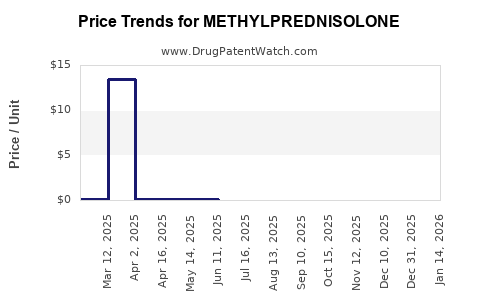
Drug Prices for METHYLPREDNISOLONE

See drug prices for METHYLPREDNISOLONE

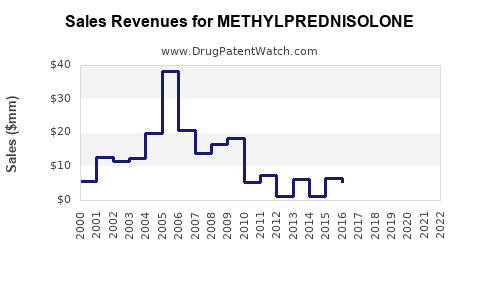
Drug Sales Revenue Trends for METHYLPREDNISOLONE

See drug sales revenues for METHYLPREDNISOLONE

Recent Clinical Trials for METHYLPREDNISOLONE

Identify potential brand extensions & 505(b)(2) entrants

SponsorPhase
Children's Oncology GroupPHASE2
Vanderbilt University Medical CenterPHASE4
Nishtar Medical UniversityPHASE2

See all METHYLPREDNISOLONE clinical trials

Pharmacology for METHYLPREDNISOLONE
Medical Subject Heading (MeSH) Categories for METHYLPREDNISOLONE

US Patents and Regulatory Information for METHYLPREDNISOLONE

Applicant Tradename Generic Name Dosage NDA Approval Date TE Type RLD RS Patent No. Patent Expiration Product Substance Delist Req. Exclusivity Expiration
Sandoz METHYLPREDNISOLONE ACETATE methylprednisolone acetate INJECTABLE;INJECTION 040719-002 Jan 29, 2009 AB RX No No ⤷  Get Started Free ⤷  Get Started Free ⤷  Get Started Free
Sagent Pharms Inc METHYLPREDNISOLONE ACETATE methylprednisolone acetate INJECTABLE;INJECTION 201835-003 Jun 27, 2018 AB RX No Yes ⤷  Get Started Free ⤷  Get Started Free ⤷  Get Started Free
Fresenius Kabi Usa METHYLPREDNISOLONE SODIUM SUCCINATE methylprednisolone sodium succinate INJECTABLE;INJECTION 040583-001 Jul 30, 2004 AP RX No No ⤷  Get Started Free ⤷  Get Started Free ⤷  Get Started Free
Elkins Sinn METHYLPREDNISOLONE SODIUM SUCCINATE methylprednisolone sodium succinate INJECTABLE;INJECTION 086906-001 Approved Prior to Jan 1, 1982 DISCN No No ⤷  Get Started Free ⤷  Get Started Free ⤷  Get Started Free
Bedford Labs METHYLPREDNISOLONE SODIUM SUCCINATE methylprednisolone sodium succinate INJECTABLE;INJECTION 040641-003 Feb 21, 2007 DISCN No No ⤷  Get Started Free ⤷  Get Started Free ⤷  Get Started Free
Chartwell Rx METHYLPREDNISOLONE methylprednisolone TABLET;ORAL 209097-003 Feb 22, 2019 DISCN No No ⤷  Get Started Free ⤷  Get Started Free ⤷  Get Started Free
Ph Health METHYLPREDNISOLONE ACETATE methylprednisolone acetate INJECTABLE;INJECTION 214297-002 Jan 21, 2022 AB RX No No ⤷  Get Started Free ⤷  Get Started Free ⤷  Get Started Free
>Applicant >Tradename >Generic Name >Dosage >NDA >Approval Date >TE >Type >RLD >RS >Patent No. >Patent Expiration >Product >Substance >Delist Req. >Exclusivity Expiration

Market Dynamics and Financial Trajectory for Methylprednisolone

Last updated: July 27, 2025

Introduction

Methylprednisolone, a synthetic corticosteroid with anti-inflammatory and immunosuppressive properties, remains pivotal within the pharmaceutical landscape. Its diverse applications range from treating allergic conditions, autoimmune diseases, and inflammatory disorders to managing acute respiratory distress syndrome. The drug’s market dynamics are heavily influenced by evolving clinical needs, regulatory landscape, and commercialization strategies, shaping its financial trajectory.

This report offers an in-depth analysis of methylprednisolone’s current market environment, growth drivers, challenges, and future outlook, providing crucial intelligence for stakeholders seeking to optimize strategic decisions.

Market Overview

Global Market Size and Growth

The corticosteroid segment, including methylprednisolone, is experiencing steady growth, driven by increasing prevalence of autoimmune diseases and respiratory conditions globally. As of 2023, the global corticosteroid market was valued at approximately USD 2.5 billion, with methylprednisolone accounting for a significant share due to its widespread clinical use and generic availability (allied with other corticosteroids like prednisone and dexamethasone) [1].

Predicted Compound Annual Growth Rate (CAGR) for the corticosteroids market hovers around 4-6% through 2030, with methylprednisolone’s segment maintaining resilience amid patent expirations and generic proliferation.

Market Segments & Key Applications

  • Therapeutic Areas: Autoimmune disorders (multiple sclerosis, rheumatoid arthritis), allergic reactions, dermatology, pulmonary conditions, and emergency medicine (e.g., acute respiratory distress syndrome).
  • Formulations: Injectable formulations dominate, especially in acute care, but oral and topical forms expand the market’s reach.
  • Geographies: North America constitutes the largest market share (~45%), fueled by high healthcare expenditure and prevalent chronic conditions. Asia-Pacific exhibits significant growth potential, driven by rising healthcare infrastructure and disease burden.

Market Drivers

Increasing Prevalence of Autoimmune and Respiratory Diseases

The rising incidence of conditions such as multiple sclerosis, rheumatoid arthritis, and chronic obstructive pulmonary disease (COPD) bolsters demand for corticosteroids. For instance, the CDC reports a rising prevalence of autoimmune diseases in North America, directly correlating with heightened corticosteroid utilization [2].

Growing Use in Emergency and Critical Care

Methylprednisolone’s efficacy in managing acute inflammatory states, including severe COVID-19 pulmonary complications, enhances its clinical adoption. The COVID-19 pandemic, in particular, underscored the importance of corticosteroids in critical care settings.

Advancements in Formulation and Delivery

Innovations leading to improved formulations—such as sustained-release injections—enhance patient compliance and broaden clinical application scopes, thus expanding the market.

Regulatory Approvals and Expanded Clinical Indications

FDA approvals for new indications and formulations amplify market growth. Notably, methylprednisolone’s inclusion in treatment protocols for hyperinflammatory responses in COVID-19 patients (e.g., RECOVERY trial outcomes) have catalyzed adoption.

Cost-Effectiveness of Generic Versions

The patent expiry for methylprednisolone has shifted the market toward generics, significantly lowering costs and increasing accessibility, especially in developing regions.

Market Challenges

Generic Competition and Pricing Pressures

The proliferation of generic methylprednisolone formulations depresses prices, constraining profit margins, especially for branded manufacturers.

Stringent Regulatory Environment

Regulatory hurdles related to biosimilarity assessments and manufacturing standards, particularly following the COVID-19 pandemic, can delay product launches or formulation updates.

Side-Effect Profile and Safety Concerns

Long-term corticosteroid use correlates with adverse effects—such as osteoporosis and immunosuppression—potentially impacting prescription practices.

Alternative Therapeutics

Emerging biologics and targeted therapies for autoimmune conditions threaten methylprednisolone’s dominance in some indications, encouraging market consolidation or diversification strategies.

Financial Trajectory

Revenue Trends & Market Share

Methylprednisolone’s global revenues demonstrate stability, with peaks associated with acute disease outbreaks and critical care needs. While patent cliffs diminish premium pricing, volume-based sales sustain revenue streams.

Impact of Patent Expiry & Generics

The expiration of patents (notably around 2010 for some formulations) led to a boom in generic entries, exerting downward pressure on prices but increasing overall volume sales globally.

Forecasts & Future Growth

Market analysts project that the methylprednisolone segment will achieve a CAGR of approximately 4-5% from 2023-2030, driven by expanding indications and geographic penetration, especially in emerging markets [3].

Investment & Strategic Movements

Pharmaceutical companies are channeling investments into formulation innovation, biosimilars, and expanding indications to sustain growth trajectories amid commoditization.

Regulatory Landscape

Regulatory bodies such as the FDA and EMA continue to oversee manufacturing standards, safety profiles, and labeling claims. Recent updates include revised guidelines for corticosteroid biosimilars, impacting pricing and market access.

COVID-19 has prompted emergency use authorizations (EUAs) for methylprednisolone in specific respiratory conditions, opening new regulatory pathways but also increasing scrutiny.

Competitive Landscape

Major market players include Pfizer, Teva Pharmaceuticals, Mylan (now part of Viatris), and generic companies that dominate due to patent expirations. Their strategies focus on manufacturing efficiency, emerging markets expansion, and clinical research.

Private labels and regional manufacturers also add to the competitive pressures, creating a fragmented landscape.

Future Outlook

The outlook for methylprednisolone remains cautiously optimistic. Growth is expected to stem from increased utilization across new therapeutic indications, expanding access in developing regions, and ongoing formulation improvements. However, the impact of competitive biosimilars and potential regulatory shifts necessitate adaptive strategies.

Stakeholders should monitor advancements in biologic alternatives, regulatory developments, and shifting disease epidemiology to optimize market positioning.

Key Takeaways

  • The methylprednisolone market exhibits moderate growth resilient to patent expirations, primarily driven by high prevalence of autoimmune and inflammatory diseases.
  • Generic proliferation ensures competitive pricing, expanding access but compressing margins.
  • Clinical and formulation innovations, coupled with expanding indications (notably in critical care), underpin future revenue potential.
  • Regional disparities, especially rapid growth in Asia-Pacific, present strategic opportunities.
  • Regulatory environments remain complex, necessitating agility in compliance and market entry strategies.

FAQs

1. How does patent expiry impact methylprednisolone’s market?
Patent expirations have accelerated generic entry, reducing prices and increasing volume sales. While this diminishes branded revenues, overall market size remains buoyed by affordability and demand.

2. Are there upcoming formulation innovations for methylprednisolone?
Yes, sustained-release injectable forms and novel delivery systems are under development to improve patient compliance and expand therapeutic applications.

3. What role does methylprednisolone play in COVID-19 treatment?
It has been used to manage hyperinflammatory states in severe COVID-19 cases, supported by clinical trials such as the RECOVERY trial, which demonstrated reduced mortality.

4. What are the key growth regions for methylprednisolone?
North America leads in revenue, but Asia-Pacific shows significant growth potential owing to rising disease burden and expanding healthcare infrastructure.

5. How do biosimilars influence the methylprednisolone market?
While biosimilars are more prominent in biologics, corticosteroids like methylprednisolone face biosimilar-like generic competition, intensifying price competition and market accessibility.

References

  1. Research and Markets. "Global Corticosteroids Market Analysis," 2022.
  2. Centers for Disease Control and Prevention (CDC). "Autoimmune Disease Prevalence," 2023.
  3. MarketWatch. "Pharmaceuticals: Methylprednisolone Market Forecast," 2023.

More… ↓

⤷  Get Started Free

Make Better Decisions: Try a trial or see plans & pricing

Drugs may be covered by multiple patents or regulatory protections. All trademarks and applicant names are the property of their respective owners or licensors. Although great care is taken in the proper and correct provision of this service, thinkBiotech LLC does not accept any responsibility for possible consequences of errors or omissions in the provided data. The data presented herein is for information purposes only. There is no warranty that the data contained herein is error free. We do not provide individual investment advice. This service is not registered with any financial regulatory agency. The information we publish is educational only and based on our opinions plus our models. By using DrugPatentWatch you acknowledge that we do not provide personalized recommendations or advice. thinkBiotech performs no independent verification of facts as provided by public sources nor are attempts made to provide legal or investing advice. Any reliance on data provided herein is done solely at the discretion of the user. Users of this service are advised to seek professional advice and independent confirmation before considering acting on any of the provided information. thinkBiotech LLC reserves the right to amend, extend or withdraw any part or all of the offered service without notice.