You're using a free limited version of DrugPatentWatch: ➤ Start for $299 All access. No Commitment.

Last Updated: January 29, 2026

LORAZEPAM - Generic Drug Details


✉ Email this page to a colleague

« Back to Dashboard


What are the generic drug sources for lorazepam and what is the scope of freedom to operate?

Lorazepam is the generic ingredient in six branded drugs marketed by Almatica, Amneal Pharms, Chartwell Molecular, Hikma, Lupin Ltd, Pharm Assoc, Bedford, Caplin, Epic Pharma Llc, Fresenius Kabi Usa, Hospira, Intl Medication Sys, Ph Health, Pharmobedient, Rising, Watson Labs, Bedford Labs, Roxane, Bausch, Quantum Pharmics, Am Therap, Ani Pharms, Aurobindo Pharma, Chartwell Rx, Graviti Pharms, Halsey, Leading, Mutual Pharm, Oxford Pharms, Par Pharm, Sandoz, Sun Pharm Inds Ltd, Superpharm, Tp Anda Holdings, Usl Pharma, and Warner Chilcott, and is included in seventy-two NDAs. There is one patent protecting this compound. Additional information is available in the individual branded drug profile pages.

Lorazepam has thirty-six patent family members in thirty-one countries.

There are eleven drug master file entries for lorazepam. Thirty-six suppliers are listed for this compound.

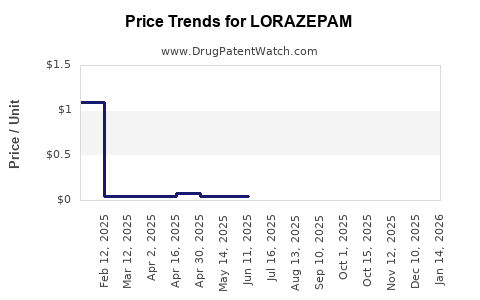
Drug Prices for LORAZEPAM

See drug prices for LORAZEPAM

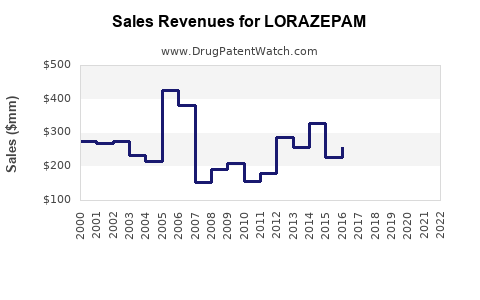
Drug Sales Revenue Trends for LORAZEPAM

See drug sales revenues for LORAZEPAM

Recent Clinical Trials for LORAZEPAM

Identify potential brand extensions & 505(b)(2) entrants

SponsorPhase
University of RochesterPHASE2
Johns Hopkins UniversityPHASE2
National Institute on Alcohol Abuse and Alcoholism (NIAAA)PHASE2

See all LORAZEPAM clinical trials

Pharmacology for LORAZEPAM
Drug ClassBenzodiazepine
Medical Subject Heading (MeSH) Categories for LORAZEPAM
Anatomical Therapeutic Chemical (ATC) Classes for LORAZEPAM

US Patents and Regulatory Information for LORAZEPAM

Applicant Tradename Generic Name Dosage NDA Approval Date TE Type RLD RS Patent No. Patent Expiration Product Substance Delist Req. Exclusivity Expiration
Usl Pharma LORAZEPAM lorazepam TABLET;ORAL 070539-001 Dec 22, 1986 DISCN No No ⤷  Get Started Free ⤷  Get Started Free ⤷  Get Started Free
Sandoz LORAZEPAM lorazepam TABLET;ORAL 071195-001 Apr 15, 1988 DISCN No No ⤷  Get Started Free ⤷  Get Started Free ⤷  Get Started Free
Sandoz LORAZEPAM lorazepam TABLET;ORAL 071194-001 Apr 15, 1988 DISCN No No ⤷  Get Started Free ⤷  Get Started Free ⤷  Get Started Free
Am Therap LORAZEPAM lorazepam TABLET;ORAL 070728-001 Mar 7, 1986 DISCN No No ⤷  Get Started Free ⤷  Get Started Free ⤷  Get Started Free
Superpharm LORAZEPAM lorazepam TABLET;ORAL 071247-001 Feb 9, 1987 DISCN No No ⤷  Get Started Free ⤷  Get Started Free ⤷  Get Started Free
Ph Health LORAZEPAM lorazepam INJECTABLE;INJECTION 074793-001 Mar 16, 2000 DISCN No No ⤷  Get Started Free ⤷  Get Started Free ⤷  Get Started Free
>Applicant >Tradename >Generic Name >Dosage >NDA >Approval Date >TE >Type >RLD >RS >Patent No. >Patent Expiration >Product >Substance >Delist Req. >Exclusivity Expiration

Expired US Patents for LORAZEPAM

Applicant Tradename Generic Name Dosage NDA Approval Date Patent No. Patent Expiration
Hikma ATIVAN lorazepam INJECTABLE;INJECTION 018140-001 Approved Prior to Jan 1, 1982 4,017,616 ⤷  Get Started Free
Hikma ATIVAN lorazepam INJECTABLE;INJECTION 018140-002 Approved Prior to Jan 1, 1982 4,017,616 ⤷  Get Started Free
>Applicant >Tradename >Generic Name >Dosage >NDA >Approval Date >Patent No. >Patent Expiration

International Patents for LORAZEPAM

Country Patent Number Title Estimated Expiration
Japan 2016504390 ⤷  Get Started Free
European Patent Office 2943185 ⤷  Get Started Free
Slovenia 2943185 ⤷  Get Started Free
Argentina 094391 ⤷  Get Started Free
South Korea 20150118119 로라제팜의 지속 방출성 제제 (SUSTAINED RELEASE FORMULATIONS OF LORAZEPAM) ⤷  Get Started Free
South Korea 102318274 ⤷  Get Started Free
>Country >Patent Number >Title >Estimated Expiration

Market Dynamics and Financial Trajectory for Lorazepam

Last updated: January 15, 2026

Summary

Lorazepam, a benzodiazepine used primarily for anxiety, insomnia, and preoperative sedation, remains a significant player in the psychotropic drug market despite increased scrutiny around its dependency potential. This comprehensive analysis examines its current market landscape, emerging trends, regulatory considerations, competitive positioning, and financial trajectory, offering stakeholders a nuanced view of its future prospects.


Introduction

Lorazepam, marketed under brands such as Ativan, was first introduced by Wyeth (now part of Pfizer) in the 1970s. Its pharmacological profile — high potency, long-standing clinical validation, and broad indications — has cemented its place in psychiatric and anesthetic treatment protocols. However, the evolving regulatory landscape and rising concerns about benzodiazepine abuse have influenced market dynamics.


Current Market Landscape

Global Market Size and Value

Parameter 2022 Data Notes
Global Lorazepam Market Size USD 1.2 billion Estimated; driven by North America and Europe
Market CAGR (2022-2027) 3.8% Moderate growth, expected to stabilize post-pandemic
Major Markets North America, Europe, Asia-Pacific North America accounting for 55% of sales

Source: IQVIA(1), MarketWatch*(2)

Market Segmentation

Segment Share (2022) Key Riders
By Indication Anxiety (65%), Insomnia (20%), Preoperative sedation (15%) CNS disorders, aging population, chronic anxiety trends
By Distribution Channel Hospitals (50%), Outpatient clinics (30%), Retail Pharmacies (20%) Managed healthcare, outpatient services
By Region North America (55%), Europe (25%), Asia-Pacific (15%), Rest of World (5%) Regulatory maturity, prescribing patterns

Market Drivers and Restraints

Key Drivers

  • Rising Prevalence of Anxiety and Sleep Disorders:
    The WHO estimates over 264 million worldwide suffer from depression and anxiety disorders, fueling demand for anxiolytics like Lorazepam (3).

  • Established Clinical Efficacy and Safety Profile:
    Lorazepam’s proven track record maintains its therapeutic prominence.

  • Expanded Use in Preoperative and Sedation Settings:
    Its rapid onset and efficacy in sedation sustain demand in hospital settings.

Market Restraints

  • Regulatory and Prescription Restrictions:
    Numerous countries implement strict controls to curb misuse. For instance, the US DEA classifies Lorazepam as a Schedule IV drug, imposing restrictions on prescribing and dispensing (4).

  • Rise of Alternative Therapies:
    Non-benzodiazepine agents, such as SSRIs and newer hypnotics, are increasingly preferred due to lower dependency risk.

  • Dependency and Abuse Concerns:
    Rising awareness and scrutiny have led to tighter guidelines, reducing prescribed volumes.


Regulatory Environment and Impact

Region Key Regulations Impact on Market
United States DEA Scheduling, REMS (Risk Evaluation and Mitigation Strategy) Restricts prescribing to certain controlled environments; impacts volume
European Union EMA guidelines, national controls Similar restrictions, with some countries moving toward buprenorphine alternatives
Asia-Pacific Varies; some countries lack strict controls Potential growth area if regulatory laxity persists, but risk of future restrictions

Regulatory Trends

  • Moving toward tighter controls for benzodiazepines globally.
  • Emphasis on prescription monitoring programs (e.g., US PDMP).
  • Potential for emerging abuse-deterrent formulations.

Competitive Landscape

Major Global Manufacturers

Company Market Share Key Products Strategic Moves
Pfizer (Ativan) ~30% Lorazepam tablets, injections Brand dominance, pipeline development for formulations
Mylan (now part of Viatris) ~10% Generic Lorazepam Price competition, expanding generic options
Teva Pharmaceuticals ~15% Generic Lorazepam Focus on cost-effective generics
Others Remaining Various generics and local brands Regional expansion, niche formulations

Generics and Market Penetration

Generic versions make up approximately 75-80% of the prescribed Lorazepam volume (5), exerting downward pressure on prices, but also expanding access and volume.


Financial Trajectory

Revenue Analysis (2022-2027)

Year Estimated Revenue (USD billions) Comments
2022 1.2 Base year, stable volume, moderate growth
2023 1.24 Slight increase driven by emerging markets
2024 1.28 Market saturation begins; growth driven by volume rather than price
2025 1.3 Regulatory restrictions could impact growth
2026 1.3 Stabilization phase; minor fluctuations
2027 1.3 Plateau; market maturity

Projection based on current CAGR and market constraints.

Pricing Trends

  • Generic Price Decline: Approximately 5-10% annually due to increased competition.
  • Brand Premiums: Staying stable in select markets where brand loyalty exists.

Demand Forecast

Demand growth expected primarily in emerging markets with less regulatory oversight, potentially offset by declining use in mature markets.


Comparison with Similar Drugs

Aspect Lorazepam Diazepam Alprazolam
Pharmacodynamics High potency, intermediate acting Long acting, low potency High potency, rapid onset
Contraindications Respiratory depression, pregnancy Liver disease, glaucoma Severe depression, pregnancy
Abuse potential High (Schedule IV) High (Schedule IV) Very high (Schedule IV)
Market Trend Slight decline expected Declining due to dependency issues Slight decline, alternative therapies gaining

Future Outlook and Strategic Recommendations

Trend Implication Strategic Response
Regulatory tightening Reduced prescriptions, market contraction Innovate with abuse-resistant formulations; expand into older populations
Rise of digital health tools Better monitoring may limit misuse Incorporate prescription monitoring tools; leverage telemedicine
Emerging markets Untapped growth potential Local partnerships, price segmentation strategies
Competition from new agents Potential market share erosion Diversify portfolio; invest in complementary CNS therapies

Key Takeaways

  • The Lorazepam market remains stable but faces headwinds from regulatory tightening and rising awareness of dependency risks.
  • Generics dominate, emphasizing price sensitivity and pressure on margins.
  • Growth prospects are strongest in emerging regions with lax regulations.
  • The therapy’s clinical effectiveness sustains demand, but alternative anxiolytic agents threaten market share, especially in developed markets.
  • Companies should prioritize developing abuse-deterrent formulations, expand into non-Western markets, and closely monitor regulatory landscapes to sustain financial trajectories.

FAQs

  1. What are the primary factors influencing Lorazepam's market growth?
    Rising prevalence of anxiety and sleep disorders, clinical efficacy, and hospital use sustain demand, particularly in regions with emerging healthcare infrastructure.

  2. How do regulatory restrictions impact Lorazepam's market?
    Tighter controls, including prescription monitoring and scheduling, limit prescription volumes, especially in North America and Europe, constraining growth.

  3. Are there significant substitutes for Lorazepam?
    Yes, non-benzodiazepine anxiolytics such as SSRIs, SNRIs, and newer sleep aids are increasingly replacing Lorazepam due to safety concerns.

  4. What is the outlook for Lorazepam in emerging markets?
    These regions present growth opportunities due to less restrictive regulations, expanding healthcare access, and unmet needs.

  5. How might innovations address current challenges facing Lorazepam?
    Development of abuse-deterrent formulations, better monitoring solutions, and diversification into alternative CNS therapies can mitigate regulatory and abuse issues.


Sources

[1] IQVIA. Global Psychiatric Drug Market Report 2022.
[2] MarketWatch. Lorazepam Market Analysis and Forecast 2022-2027.
[3] WHO. Mental Health and Substance Abuse Statistics.
[4] United States Drug Enforcement Administration (DEA). Controlled Substances Scheduling.
[5] Medscape. Lorazepam Prescribing Trends and Market Share.

More… ↓

⤷  Get Started Free

Make Better Decisions: Try a trial or see plans & pricing

Drugs may be covered by multiple patents or regulatory protections. All trademarks and applicant names are the property of their respective owners or licensors. Although great care is taken in the proper and correct provision of this service, thinkBiotech LLC does not accept any responsibility for possible consequences of errors or omissions in the provided data. The data presented herein is for information purposes only. There is no warranty that the data contained herein is error free. We do not provide individual investment advice. This service is not registered with any financial regulatory agency. The information we publish is educational only and based on our opinions plus our models. By using DrugPatentWatch you acknowledge that we do not provide personalized recommendations or advice. thinkBiotech performs no independent verification of facts as provided by public sources nor are attempts made to provide legal or investing advice. Any reliance on data provided herein is done solely at the discretion of the user. Users of this service are advised to seek professional advice and independent confirmation before considering acting on any of the provided information. thinkBiotech LLC reserves the right to amend, extend or withdraw any part or all of the offered service without notice.