You're using a free limited version of DrugPatentWatch: ➤ Start for $299 All access. No Commitment.

Last Updated: December 15, 2025

ISOTRETINOIN - Generic Drug Details


✉ Email this page to a colleague

« Back to Dashboard


What are the generic sources for isotretinoin and what is the scope of freedom to operate?

Isotretinoin is the generic ingredient in nine branded drugs marketed by Sun Pharm Inds Inc, Sun Pharm, Hoffmann La Roche, Mylan Pharms Inc, Teva Pharms Usa, Actavis Labs Fl, Amneal Pharms Ny, Aurobindo Pharma, Upsher Smith Labs, Zydus Pharms, Sun Pharm Inds Ltd, and Dr Reddys Labs Ltd, and is included in eighteen NDAs. There are two patents protecting this compound and five Paragraph IV challenges. Additional information is available in the individual branded drug profile pages.

Isotretinoin has seventeen patent family members in nine countries.

There are thirteen drug master file entries for isotretinoin. Thirteen suppliers are listed for this compound.

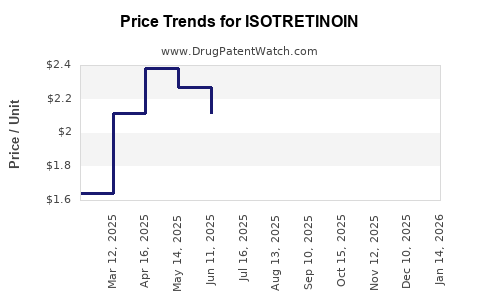
Drug Prices for ISOTRETINOIN

See drug prices for ISOTRETINOIN

Recent Clinical Trials for ISOTRETINOIN

Identify potential brand extensions & 505(b)(2) entrants

SponsorPhase
Medipol UniversityNA
C17 CouncilEARLY_PHASE1
Centre Hospitalier Universitaire de NicePHASE3

See all ISOTRETINOIN clinical trials

Pharmacology for ISOTRETINOIN
Drug ClassRetinoid
Medical Subject Heading (MeSH) Categories for ISOTRETINOIN
Paragraph IV (Patent) Challenges for ISOTRETINOIN
Tradename Dosage Ingredient Strength NDA ANDAs Submitted Submissiondate
ABSORICA Capsules isotretinoin 25 mg 021951 1 2016-05-16
ABSORICA Capsules isotretinoin 35 mg 021951 1 2015-11-25
ABSORICA Capsules isotretinoin 10 mg 021951 1 2013-06-20
ABSORICA Capsules isotretinoin 20 mg 021951 1 2013-01-07
ABSORICA Capsules isotretinoin 40 mg 021951 1 2012-12-31

US Patents and Regulatory Information for ISOTRETINOIN

Applicant Tradename Generic Name Dosage NDA Approval Date TE Type RLD RS Patent No. Patent Expiration Product Substance Delist Req. Exclusivity Expiration
Zydus Pharms ISOTRETINOIN isotretinoin CAPSULE;ORAL 216633-004 May 22, 2025 AB2 RX No No ⤷  Get Started Free ⤷  Get Started Free ⤷  Get Started Free
Zydus Pharms ISOTRETINOIN isotretinoin CAPSULE;ORAL 216633-002 May 22, 2025 AB2 RX No No ⤷  Get Started Free ⤷  Get Started Free ⤷  Get Started Free
Sun Pharm ABSORICA LD isotretinoin CAPSULE;ORAL 211913-004 Nov 5, 2019 RX Yes No 9,700,535 ⤷  Get Started Free Y ⤷  Get Started Free
Zydus Pharms ISOTRETINOIN isotretinoin CAPSULE;ORAL 211568-001 Aug 29, 2023 AB1 RX No No ⤷  Get Started Free ⤷  Get Started Free ⤷  Get Started Free
Sun Pharm ABSORICA LD isotretinoin CAPSULE;ORAL 211913-005 Nov 5, 2019 DISCN Yes No 9,700,535 ⤷  Get Started Free Y ⤷  Get Started Free
Sun Pharm Inds Ltd SOTRET isotretinoin CAPSULE;ORAL 076041-001 Dec 24, 2002 DISCN No No ⤷  Get Started Free ⤷  Get Started Free ⤷  Get Started Free
Mylan Pharms Inc AMNESTEEM isotretinoin CAPSULE;ORAL 075945-004 Mar 17, 2025 AB1 RX No No ⤷  Get Started Free ⤷  Get Started Free ⤷  Get Started Free
>Applicant >Tradename >Generic Name >Dosage >NDA >Approval Date >TE >Type >RLD >RS >Patent No. >Patent Expiration >Product >Substance >Delist Req. >Exclusivity Expiration

Expired US Patents for ISOTRETINOIN

Applicant Tradename Generic Name Dosage NDA Approval Date Patent No. Patent Expiration
Sun Pharm Inds Inc ABSORICA isotretinoin CAPSULE;ORAL 021951-006 Aug 15, 2014 9,078,925 ⤷  Get Started Free
Sun Pharm Inds Inc ABSORICA isotretinoin CAPSULE;ORAL 021951-002 May 25, 2012 9,089,534 ⤷  Get Started Free
Sun Pharm Inds Inc ABSORICA isotretinoin CAPSULE;ORAL 021951-003 May 25, 2012 8,367,102 ⤷  Get Started Free
Hoffmann La Roche ACCUTANE isotretinoin CAPSULE;ORAL 018662-002 May 7, 1982 4,464,394*PED ⤷  Get Started Free
Hoffmann La Roche ACCUTANE isotretinoin CAPSULE;ORAL 018662-004 Mar 28, 1983 4,464,394*PED ⤷  Get Started Free
Sun Pharm Inds Inc ABSORICA isotretinoin CAPSULE;ORAL 021951-006 Aug 15, 2014 8,367,102 ⤷  Get Started Free
Sun Pharm Inds Inc ABSORICA isotretinoin CAPSULE;ORAL 021951-006 Aug 15, 2014 9,089,534 ⤷  Get Started Free
>Applicant >Tradename >Generic Name >Dosage >NDA >Approval Date >Patent No. >Patent Expiration

International Patents for ISOTRETINOIN

Country Patent Number Title Estimated Expiration
Brazil 112017006779 ⤷  Get Started Free
European Patent Office 3200877 ⤷  Get Started Free
South Africa 201700843 ORAL PHARMACEUTICAL COMPOSITION OF ISOTRETINOIN ⤷  Get Started Free
Russian Federation 2017106013 ⤷  Get Started Free
Australia 2015294993 ⤷  Get Started Free
Mexico 2017004312 COMPOSICION FARMACEUTICA ORAL DE BAJA DOSIS DE ISOTRETINOINA. (LOW DOSE ORAL PHARMACEUTICAL COMPOSITION OF ISOTRETINOIN.) ⤷  Get Started Free
World Intellectual Property Organization (WIPO) 2016016742 ⤷  Get Started Free
>Country >Patent Number >Title >Estimated Expiration

Market Dynamics and Financial Trajectory for the Pharmaceutical Drug: Isotretinoin

Last updated: July 27, 2025


Introduction

Isotretinoin, a potent retinoid primarily used to treat severe nodular acne refractory to other therapies, has carved a significant niche within dermatological pharmacotherapy. Its complex market landscape, driven by evolving regulatory frameworks, competitive forces, patent status, and patient safety considerations, defines its economic trajectory. Understanding these market dynamics is critical for stakeholders including pharmaceutical companies, healthcare providers, and investors seeking to navigate its future prospects.


Historical Context and Clinical Significance

Developed initially in the 1970s, isotretinoin was approved by the FDA in 1982 for severe acne treatment. Its efficacy—marked by high remission rates—established its position as a cornerstone therapy. However, notable adverse effects, including teratogenicity and psychiatric risks, prompted stringent regulatory oversight, notably the iPLEDGE program in the United States. These safety concerns have shaped prescribing practices and influenced market access, impacting the drug’s overall adoption.


Market Demand Drivers

1. Clinical Efficacy and Patient Need
Isotretinoin remains indispensable for severe acne management, especially in resistant cases. The persistent demand is fueled by the limited alternatives that demonstrate comparable efficacy, underpinning its essential role in dermatological therapeutics.

2. Aging & Demographic Trends
Increased prevalence of acne among adolescents and young adults sustains consistent demand. Additionally, subsequent adult-onset acne further broadens user demographics, ensuring stable prescription volumes.

3. Regulatory and Prescriber Preferences
Regulatory mandates emphasizing safety protocols influence prescribing behaviors, sometimes limiting widespread use but also reinforcing trust among clinicians and patients that safety remains a priority—thus maintaining demand in specialized settings.


Market Challenges and Competitive Landscape

1. Safety and Regulatory Restrictions
Stringent regulatory controls, including the iPLEDGE program, have increased prescription hurdles, potentially impacting sales volume. Ongoing safety concerns about depression and suicidality influence prescriber confidence and patient acceptance.

2. Patent and Formulation Changes
Isotretinoin's patent expirations in many regions have facilitated generic entry, sharply reducing prices and impacting revenue. Generic formulations, while increasing accessibility, compress profit margins for branded manufacturers.

3. Emergence of Alternatives
Development of newer therapies, such as laser and light-based treatments, hormonal agents, and biologics, offers adjunctive or alternative options that may gradually encroach upon isotretinoin’s market share, especially among mild-to-moderate acne patients.

4. Supply Chain and Manufacturing Risks
Quality control issues, as historically seen with certain generics, can disrupt supplies, affecting market stability.


Intellectual Property and Patent Landscape

Patent Expiry & Generics
The original patents for isotretinoin have largely expired globally, opening pathways for generic manufacturers. This shift has significantly driven down prices and altered the competitive dynamics, emphasizing cost-efficiency over brand loyalty.

Formulation Patents & Exclusivities
Certain formulations and delivery methods may still hold patent protection, offering limited periods of market exclusivity. Companies seeking to preserve market share invest in formulation innovations or combination products to extend lifecycle.


Pricing and Reimbursement Dynamics

In mature markets, pricing pressures from payers and policymakers enforce cost-containment strategies. Insurance reimbursement is generally favorable, but stricter controls—particularly in government-dominated healthcare systems—may limit access or impose utilization restrictions, influencing overall sales volume.


Geographical Market Insights

United States
Despite regulatory hurdles, the U.S. remains the largest market driven by high prevalence rates and robust healthcare infrastructure. Industry players experience fluctuating revenues influenced by patent litigation and safety protocols.

Europe & Asia
European markets balance safety concerns with regulatory constraints; growing markets in Asia exhibit increasing demand, driven by rising acne prevalence and expanding healthcare access, but face challenges around affordability and regulatory approval pathways.


Financial Trajectory Forecast

Short-term Outlook (1-3 Years)
Despite patent expiries, stable demand persists for severe cases, underscoring resilient revenue streams. Price erosion due to generics continues to limit bottom-line growth. Safety management costs and regulatory compliance expenditures remain significant.

Medium to Long-term Outlook (3-10 Years)
Innovation in formulations—such as sustained-release variants—or combination therapies could revitalize interest. However, the emergence of novel acne treatments and systemic therapies, coupled with safety concerns, may cap exponential growth. The market is expected to stabilize, with revenues expected to decline modestly but remain substantial due to enduring clinical utility.


Emerging Trends and Opportunities

  • Digital Monitoring & Safety Management: Integration of digital health tools for monitoring adverse effects and compliance could reduce safety risks and improve prescribing confidence.
  • Personalized Medicine: Genetic and biomarker research may allow tailored dosing strategies, potentially expanding tolerability and adherence.
  • Combination Regimens: Developing combination products with other acne agents could sustain profitability.
  • Market Expansion: Growing dermatological awareness and increasing healthcare access in emerging markets present opportunities for volume growth.

Key Takeaways

  • Robust Clinical Utility Ensures Continued Demand: Despite safety concerns, isotretinoin remains a premier option for severe acne due to its demonstrated efficacy, securing its market position.

  • Patent Expirations Drive Price Competition: The proliferation of generics has significantly reduced prices, compressing profit margins but broadening accessibility.

  • Regulatory and Safety Protocols Are Central Market Influencers: Stringent safety requirements impact prescribing patterns and market entry, necessitating compliance investments.

  • Emerging Therapies and Innovations Present Both Challenges and Opportunities: The competitive landscape evolves with new treatments, prompting companies to innovate formulation and delivery methods.

  • Growth is Stabilizing; Strategic Adaptation Is Essential: Long-term growth prospects hinge on technological innovations, regulatory navigation, and expanding markets, especially in Asia and other emerging regions.


FAQs

1. How has patent expiration affected isotretinoin’s market revenue?
Patent expirations have led to the entry of generic competitors, significantly reducing prices and profit margins for branded formulations, while increasing market accessibility and volume.

2. What safety concerns influence isotretinoin’s market?
Major safety issues include teratogenicity, depression, and suicidal ideation. Regulatory measures, such as the iPLEDGE program, limit prescribing to mitigate these risks, impacting market access.

3. Are there emerging alternatives to isotretinoin for severe acne?
Yes. Biologics and novel topical agents are under development; however, none have fully displaced isotretinoin for refractory severe cases due to efficacy and cost considerations.

4. What geographical markets offer the most growth potential?
Emerging markets in Asia and Latin America promise growth due to rising prevalence, increased healthcare infrastructure, and expanding pharmaceutical markets, albeit with regulatory challenges.

5. What strategic moves can pharmaceutical companies pursue to sustain profits?
Innovations in formulations, digital safety monitoring, combination therapies, and penetrating underserved markets are key pathways to sustain revenue streams amid increasing generic competition.


Sources

[1] U.S. Food and Drug Administration. Isotretinoin (Accutane) approval history.
[2] MarketWatch. Acne Drugs Market Size & Trends.
[3] EvaluatePharma. Oncology and dermatology pipeline insights.
[4] European Medicines Agency. Safety regulation updates for isotretinoin.
[5] Statista. Global acne treatment market forecast.


Note: All information is based on current publicly available data and market analyses as of 2023.

More… ↓

⤷  Get Started Free

Make Better Decisions: Try a trial or see plans & pricing

Drugs may be covered by multiple patents or regulatory protections. All trademarks and applicant names are the property of their respective owners or licensors. Although great care is taken in the proper and correct provision of this service, thinkBiotech LLC does not accept any responsibility for possible consequences of errors or omissions in the provided data. The data presented herein is for information purposes only. There is no warranty that the data contained herein is error free. We do not provide individual investment advice. This service is not registered with any financial regulatory agency. The information we publish is educational only and based on our opinions plus our models. By using DrugPatentWatch you acknowledge that we do not provide personalized recommendations or advice. thinkBiotech performs no independent verification of facts as provided by public sources nor are attempts made to provide legal or investing advice. Any reliance on data provided herein is done solely at the discretion of the user. Users of this service are advised to seek professional advice and independent confirmation before considering acting on any of the provided information. thinkBiotech LLC reserves the right to amend, extend or withdraw any part or all of the offered service without notice.