Last updated: August 9, 2026
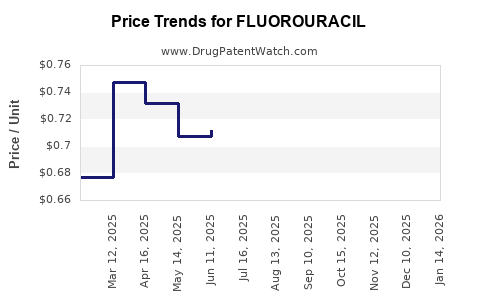
Fluorouracil is a mature, largely commoditized oncology and dermatology drug with durable clinical demand but limited pricing power. The active ingredient has been generic for decades. Commercial value is concentrated in three segments: injectable 5-fluorouracil for cancer treatment, topical fluorouracil for actinic keratosis and superficial skin cancers, and branded or differentiated formulations that improve delivery, convenience, or tolerability.
The market’s financial trajectory is bifurcated. Injectable fluorouracil generates high-volume, low-margin revenue and remains exposed to hospital purchasing pressure and supply interruptions. Topical products have higher unit economics, particularly branded 4% and 5% creams, but face generic substitution and limited exclusivity. Capecitabine, the oral prodrug of fluorouracil, has captured some treatment volume in colorectal, breast, and gastrointestinal cancers without eliminating demand for intravenous 5-FU.
What is the current FDA regulatory status of fluorouracil?
Fluorouracil is an FDA-approved antimetabolite available in injectable and topical dosage forms.
| Product category |
Main use |
FDA status |
Commercial structure |
| Fluorouracil injection |
Colorectal, breast, gastric, pancreatic, head and neck cancers |
Approved generic drug |
Multiple injectable manufacturers |
| Fluorouracil topical 5% cream or solution |
Actinic keratosis and superficial basal cell carcinoma |
Approved generic and branded products |
Generic-heavy with branded niches |
| Fluorouracil topical 4% cream |
Actinic keratosis |
Approved branded product |
Differentiated topical product |
| Capecitabine |
Oral prodrug converted to fluorouracil |
Approved generic and branded product |
Competes with some intravenous use |
| Combination topical products |
Actinic keratosis |
Limited market presence |
Product-specific formulations |
The FDA approved fluorouracil injection in the early 1960s. The drug’s core composition-of-matter and initial clinical-use rights have long expired. Current commercial differentiation depends on formulation, delivery system, manufacturing reliability, regulatory execution, and distribution rather than exclusivity in the active ingredient.
The FDA label for fluorouracil injection identifies the drug as a pyrimidine antagonist that interferes with DNA and RNA synthesis. Topical fluorouracil labels focus on abnormal epidermal tissue, particularly actinic keratoses and superficial basal cell carcinoma.[1][2]
When did fluorouracil lose exclusivity?
Fluorouracil lost meaningful market exclusivity decades ago. No broad patent barrier protects the active ingredient in the United States.
The relevant commercial distinction is between the old active ingredient and newer product-specific formulations:
| Exclusivity layer |
Status |
| Fluorouracil active ingredient |
Expired |
| Conventional injectable 5-FU |
Generic competition |
| Conventional topical 5% products |
Generic competition |
| Topical vehicle and concentration claims |
May support product-specific protection |
| Combination or delivery technologies |
May have limited patent or regulatory protection |
| FDA new-drug exclusivity for legacy products |
Expired |
Orange Book protection is therefore product-specific rather than molecule-wide. A branded topical product may have listed patents or regulatory exclusivity even though generic fluorouracil is widely available. Orange Book-listed rights can affect an abbreviated new drug application for that particular product, but they do not restore exclusivity to fluorouracil as a chemical entity.[3]
What patents protect fluorouracil products?
The strongest remaining intellectual-property opportunities involve formulation and delivery rather than the fluorouracil molecule.
Topical formulation patents
Potentially protectable features include:
- Concentration and particle size
- Cream, solution, gel, or emulsion composition
- Vehicle selection
- Skin penetration enhancement
- Stabilization of fluorouracil
- Reduced irritation or improved tolerability
- Controlled release
- Combination with another active ingredient
- Packaging that improves chemical stability
- Dosing schedules linked to a specific formulation
A topical product may have a commercially relevant patent estate even when its active ingredient is fully generic. The practical strength of that estate depends on whether a generic applicant can market a non-infringing formulation while meeting FDA bioequivalence or pharmaceutical-equivalence requirements.
Method-of-use patents
Method-of-use claims may cover:
- Treatment of actinic keratosis
- Treatment of superficial basal cell carcinoma
- Specific treatment duration
- Field-directed therapy
- Combination treatment with cryotherapy, photodynamic therapy, or immunomodulators
- Use in selected patient populations
Method-of-use patents generally have narrower commercial reach than composition patents. They may be difficult to enforce when physicians prescribe a generic product for multiple labeled and off-label uses.
Injectable formulation and manufacturing rights
Manufacturing patents can address:
- Sterility assurance
- Container closure systems
- Stability
- Concentration control
- Infusion compatibility
- Production processes
- Storage and transport conditions
These rights can create operational barriers but rarely support sustained premium pricing for standard injectable fluorouracil. Hospitals and group purchasing organizations usually prioritize supply reliability and cost.
How many patents cover fluorouracil?
There is no meaningful single patent count for fluorouracil because the relevant universe includes expired compound patents, formulation patents, process patents, topical product patents, and patents covering capecitabine or combination regimens.
The commercial conclusion is clearer than the raw count:
- Core fluorouracil patents are expired.
- Standard injectable 5-FU has a weak standalone patent position.
- Conventional topical 5% fluorouracil is also exposed to generic competition.
- Differentiated topical products can retain narrower formulation or use-based rights.
- Patent strength is highest where the product has a proprietary vehicle, delivery technology, or device-linked administration system.
What is the Orange Book status of fluorouracil?
The Orange Book should be reviewed at the individual product level. There is no single Orange Book status for all fluorouracil products.
Generic injectable fluorouracil products generally compete against reference products without broad active-ingredient exclusivity. Topical products such as branded 4% or 5% creams can have different listing profiles, depending on the reference product, approval pathway, and patent declarations.
Paragraph IV risk is therefore concentrated in branded topical products. A generic applicant that asserts that a listed patent is invalid, unenforceable, or not infringed can trigger the statutory litigation process under the Hatch-Waxman Act. Standard injectable fluorouracil has comparatively limited Paragraph IV value because the market is already generic and price competition is established.
Which companies manufacture or sell fluorouracil?
The supply base is fragmented. Manufacturers and marketers have included large generic companies, injectable specialists, dermatology companies, and contract manufacturers.
Injectable segment
The injectable market has included companies such as:
- Fresenius Kabi
- Hikma Pharmaceuticals
- Pfizer and Hospira operations
- Teva Pharmaceutical Industries
- Accord Healthcare
- Sagent Pharmaceuticals and related portfolio companies
- Eugia Pharma Specialties
- Hikma and other hospital-focused generic suppliers
Manufacturing ownership changes through acquisitions, divestitures, and contract supply arrangements. The relevant competitive factors are approved vial sizes, sterile manufacturing capacity, allocation practices, and institutional contracts.
Topical segment
Topical fluorouracil has included:
- Generic dermatology suppliers
- Bausch Health-related dermatology businesses
- Hill Dermaceuticals
- Tolmar and other specialty dermatology companies
- Compounding pharmacies for non-FDA-approved presentations
Brand and generic availability differs by concentration and dosage form. Products marketed under names such as Efudex, Carac, Fluoroplex, and Tolak have occupied different commercial positions. Brand ownership and distribution arrangements can change over time, so product-level FDA and company records control the current status.
How does fluorouracil compare with capecitabine?
Capecitabine is the principal oral prodrug competitor to intravenous fluorouracil. It is converted in the body to fluorouracil and is used in several overlapping oncology indications.
| Factor |
Fluorouracil |
Capecitabine |
| Administration |
Intravenous or topical |
Oral |
| Main commercial advantage |
Familiarity, low acquisition cost, infusion protocols |
Convenience and outpatient use |
| Main disadvantage |
Infusion infrastructure and administration burden |
Oral adherence and gastrointestinal toxicity |
| Patent position |
Core rights expired |
Core rights expired; product-specific rights may vary |
| Hospital exposure |
High |
Lower for outpatient regimens |
| Generic competition |
Extensive |
Extensive |
| Substitution risk |
Moderate from oral therapy |
Limited where continuous infusion is clinically preferred |
Capecitabine has reduced demand for some bolus and infusion regimens, particularly in colorectal and breast cancer. Fluorouracil remains important in continuous-infusion protocols, chemoradiation, and regimens where clinicians prefer direct intravenous dosing.
The two drugs are not fully interchangeable. Pharmacokinetic differences, toxicity profiles, renal considerations, treatment setting, and regimen design determine use.
What are the main market dynamics for fluorouracil?
1. Oncology demand is clinically durable but economically weak
5-FU remains embedded in established treatment protocols. It is inexpensive, familiar to oncology providers, and supported by extensive clinical experience. These attributes stabilize volume but do not create pricing power.
Hospital buyers often treat injectable fluorouracil as a commodity. Contracting favors suppliers with reliable sterile capacity, competitive prices, and a record of avoiding back orders.
2. Topical demand is driven by dermatology volume
Actinic keratosis prevalence supports recurring demand for topical fluorouracil. An aging population and increasing skin-cancer screening support treatment volume. Topical therapy also benefits from use as field therapy, allowing clinicians to treat visible and subclinical lesions across a defined area.
The economic value is higher than for injectable fluorouracil when a product has brand recognition, a preferred vehicle, or improved patient experience. Irritation, adherence, application frequency, and insurance coverage limit the ability to sustain premium pricing.
3. Supply reliability is a competitive asset
Fluorouracil injection has experienced supply disruptions tied to manufacturing capacity, raw-material availability, quality findings, and demand shifts. FDA drug-shortage records have listed fluorouracil injection during periods of constrained supply.[4]
Shortages can temporarily improve pricing and increase the strategic value of available capacity. They do not usually create durable returns because additional suppliers can enter a long-established generic market once economics improve.
4. Treatment migration affects product mix
Market demand is shifting by setting:
- Intravenous 5-FU remains important in institutional oncology.
- Capecitabine captures some outpatient and oral-treatment demand.
- Topical fluorouracil remains relevant in dermatology.
- Combination regimens can reduce use of fluorouracil in selected cancers.
- Newer targeted and immune therapies compete for treatment share but do not eliminate fluorouracil from standard regimens.
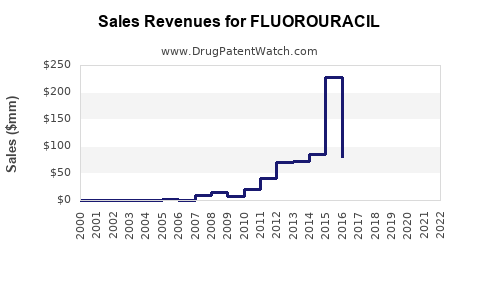
What is the financial trajectory for fluorouracil?
Fluorouracil has a mature-market financial profile rather than a high-growth pharmaceutical profile.
| Financial driver |
Expected effect |
| Generic injectable competition |
Sustained price compression |
| Hospital contracting |
Lower gross margins |
| Sterile manufacturing shortages |
Temporary price and volume upside |
| Topical brand differentiation |
Higher margin potential |
| Generic topical entry |
Revenue erosion after launch |
| Capecitabine substitution |
Gradual pressure on selected oncology uses |
| Dermatology prevalence |
Stable topical demand |
| Manufacturing consolidation |
Potential supply leverage |
| Regulatory or quality problems |
Sudden volume loss and remediation cost |
Public companies generally do not disclose fluorouracil revenue as a separate line item. Revenue is usually aggregated within generic injectables, hospital products, dermatology, or specialty pharmaceuticals. As a result, market-size estimates from commercial databases can differ materially depending on whether they include topical products, hospital tender revenue, capecitabine, or only branded sales.
The most defensible financial conclusion is that fluorouracil is a high-volume, low-price product with limited molecule-level growth. Profit pools are concentrated in:
- Efficient sterile manufacturing
- Reliable supply during shortage periods
- Branded topical formulations
- Specialty pharmacy distribution
- Contract manufacturing
- Product portfolios that bundle fluorouracil with other oncology or dermatology products
What generic entry risks exist for fluorouracil?
Generic entry risk is high for conventional formulations and more selective for differentiated topical products.
Injectable 5-FU
Generic entry is already established. The main risk is not a first generic launch but further price erosion, contract loss, and displacement by competitors with lower manufacturing costs.
Topical 5% products
Generic substitution is also established. A branded product can retain share through physician familiarity, payer positioning, availability, or patient preference, but these defenses are commercial rather than molecule-based.
Topical 4% products
A 4% product may have more protection from direct substitution if the reference product has a differentiated vehicle, proprietary manufacturing process, or listed patents. Even then, a successful generic or alternative topical product can pressure reimbursement and market share.
Biosimilar risk
Biosimilar risk is not applicable to fluorouracil. Fluorouracil is a small-molecule drug, not a biologic. Its competitive threats come from generics, oral prodrugs, combination regimens, and newer oncology therapies.
What patent litigation and settlement risks affect fluorouracil?
Litigation risk is concentrated in branded topical products, not the conventional injectable market.
A Paragraph IV dispute could involve:
- Non-infringement of a cream or vehicle patent
- Invalidity of formulation claims
- Obviousness of a concentration or dosing regimen
- Patent-term calculation
- Regulatory exclusivity
- Approval of a product with a different inactive-ingredient profile
Settlement agreements could delay generic launch through a negotiated entry date, license, supply arrangement, or other commercial terms. Public litigation involving a topical fluorouracil product must be assessed against the specific Orange Book listing and the generic applicant’s certification. A litigation headline alone does not establish a market-wide barrier.
What geographic markets offer the strongest fluorouracil opportunity?
The United States remains commercially important because of its large oncology and dermatology market, but pricing is highly competitive. Europe has established generic use and national reimbursement controls. Emerging markets can provide volume growth, although price levels, local manufacturing requirements, regulatory standards, and tender competition constrain returns.
| Region |
Market characteristic |
| United States |
Strong demand, mature generics, high shortage sensitivity |
| Western Europe |
Generic penetration and reimbursement pressure |
| Japan |
Established oncology use with local regulatory requirements |
| China |
Large volume opportunity, intense local competition |
| India |
Large manufacturing base and export capacity |
| Latin America |
Variable access, tender-driven pricing |
| Middle East and Africa |
Supply and affordability constraints |
Geographic expansion is most attractive for manufacturers with scalable API access, approved sterile facilities, and local regulatory capabilities. A simple product launch without cost or supply differentiation is unlikely to generate durable returns.
How strong is the fluorouracil patent estate?
The overall patent estate is weak for the active ingredient and standard injectable product. It is moderate for selected topical formulations and narrow delivery systems.
| Asset |
Patent strength |
Commercial assessment |
| Fluorouracil molecule |
Very weak |
Long generic history |
| Standard injectable product |
Weak |
Commodity market |
| Generic topical 5% cream |
Weak to moderate |
Direct substitution |
| Branded 4% cream |
Moderate, product-specific |
Depends on formulation and listing |
| Novel vehicle or delivery system |
Moderate to strong if claims survive |
Potential premium pricing |
| Method-of-use claim |
Narrow |
Enforcement depends on prescribing behavior |
| Manufacturing process |
Variable |
More useful for supply control than premium pricing |
The estate can support a specialty dermatology strategy but does not support broad monopoly economics.
What launch scenarios should investors and manufacturers expect?
Base case
Injectable fluorouracil remains a stable-volume generic with low margins. Topical demand grows modestly with dermatology utilization, while branded products lose share gradually to generics and alternative treatments.
Upside case
A supplier gains share through reliable sterile production, enters during a shortage, or launches a topical product with improved tolerability and reimbursement support. Returns depend on maintaining supply and avoiding rapid price competition.
Downside case
Additional injectable capacity creates oversupply, a quality event removes a supplier from the market, or oral and combination regimens displace more intravenous use. Branded topical revenue falls faster if a generic design-around product avoids key formulation claims.
Key Takeaways
- Fluorouracil is a mature generic drug with durable clinical demand and limited molecule-level exclusivity.
- Injectable 5-FU is a high-volume, low-margin hospital product.
- Topical fluorouracil offers the strongest commercial differentiation, particularly through formulation and delivery.
- Capecitabine competes with some intravenous fluorouracil use but does not replace all infusion-based regimens.
- Paragraph IV and patent litigation risk is concentrated in branded topical products.
- Biosimilar risk does not apply because fluorouracil is a small molecule.
- Public companies rarely report fluorouracil revenue separately, making product-level financial analysis dependent on market datasets and company portfolio disclosures.
- The most valuable competitive assets are sterile manufacturing reliability, shortage resilience, dermatology branding, and differentiated topical delivery.
FAQs About Fluorouracil Market Economics and Exclusivity
Is fluorouracil still profitable for pharmaceutical manufacturers?
Yes, but profitability depends on manufacturing scale, supply reliability, and product differentiation. Standard injectable fluorouracil generally has low margins, while branded topical formulations can produce better economics.
Why does fluorouracil remain widely used despite being an old drug?
It is inexpensive, clinically familiar, and incorporated into established oncology protocols. Its long history supports physician confidence and guideline inclusion.
Can a company obtain new patents on fluorouracil?
A company can seek patents on a new formulation, delivery system, manufacturing process, combination, or method of use. A new patent cannot extend the expired patent term for the fluorouracil molecule itself.
Is topical fluorouracil subject to generic substitution?
Yes. Generic substitution is common for conventional 5% products. Substitution may be more limited for differentiated concentrations, vehicles, or branded products with product-specific protection.
Does capecitabine eliminate the need for intravenous fluorouracil?
No. Capecitabine replaces some treatment regimens but intravenous fluorouracil remains used in continuous-infusion protocols, chemoradiation, and other settings where direct parenteral administration is preferred.
References
-
U.S. Food and Drug Administration. (2023). Fluorouracil injection prescribing information. FDA.
-
U.S. Food and Drug Administration. (2023). Fluorouracil topical cream prescribing information. FDA.
-
U.S. Food and Drug Administration. (2024). Approved drug products with therapeutic equivalence evaluations: Orange Book. FDA.
-
U.S. Food and Drug Administration. (2024). Drug shortages: Fluorouracil injection. FDA.
-
National Cancer Institute. (2024). Fluorouracil. National Institutes of Health.
-
U.S. Food and Drug Administration. (2023). Capecitabine prescribing information. FDA.
-
Bausch Health Companies Inc. (2023). Annual report for the year ended December 31, 2023. Bausch Health.
-
Hikma Pharmaceuticals PLC. (2023). Annual report and accounts 2023. Hikma Pharmaceuticals.