You're using a free limited version of DrugPatentWatch: Upgrade for Complete Access

Last Updated: December 16, 2025

BASAGLAR Drug Profile


✉ Email this page to a colleague

« Back to Dashboard


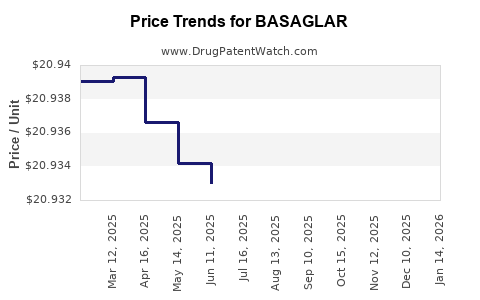
Summary for Tradename: BASAGLAR
Recent Clinical Trials for BASAGLAR

Identify potential brand extensions & biosimilar entrants

SponsorPhase
Eli Lilly and CompanyPhase 3
Baqai Institute of Diabetology and EndocrinologyPHASE4
BADAS-Centre for Health Research and ImplementationPHASE4

See all BASAGLAR clinical trials

Pharmacology for BASAGLAR
Established Pharmacologic ClassInsulin Analog
Chemical StructureInsulin
Note on Biologic Patents

Matching patents to biologic drugs is far more complicated than for small-molecule drugs.

DrugPatentWatch employs three methods to identify biologic patents:

  1. Brand-side disclosures in response to biosimilar applications
  2. These patents were identified from disclosures by the brand-side company, in response to a potential biosimilar seeking to launch. They have a high certainty of blocking biosimilar entry. The expiration dates listed are not estimates — they're expiration dates as indicated by the brand-side company.

  3. DrugPatentWatch analysis and company disclosures
  4. These patents were identified from searching various sources, including drug labels and other general disclosures from the brand-side company. This list may exclude some of the patents which block biosimilar launch, and some of these patents listed may not actually block biosimilar launch. The expiration dates listed for these patents are estimates, based on the grant date of the patent.

  5. Patents from broad patent text search
  6. For completeness, these patents were identified by searching the patent literature for mentions of the branded or ingredient name of the drug. Some of these patents protect the original drug, whereas others may protect follow-on inventions or even inventions casually mentioning the drug. The expiration dates listed for these patents are estimates, based on the grant date of the patent.

1) High Certainty: US Patents for BASAGLAR Derived from Brand-Side Litigation

No patents found based on brand-side litigation

2) High Certainty: US Patents for BASAGLAR Derived from DrugPatentWatch Analysis and Company Disclosures

These patents were obtained from company disclosures
Applicant Tradename Biologic Ingredient Dosage Form BLA Patent No. Estimated Patent Expiration Source
Eli Lilly And Company BASAGLAR insulin glargine Injection 205692 5,656,722 2014-09-12 DrugPatentWatch analysis and company disclosures
Eli Lilly And Company BASAGLAR insulin glargine Injection 205692 7,476,652 2025-03-25 DrugPatentWatch analysis and company disclosures
Eli Lilly And Company BASAGLAR insulin glargine Injection 205692 7,713,930 2028-12-04 DrugPatentWatch analysis and company disclosures
Eli Lilly And Company BASAGLAR insulin glargine Injection 205692 7,918,833 2026-07-11 DrugPatentWatch analysis and company disclosures
>Applicant >Tradename >Biologic Ingredient >Dosage Form >BLA >Patent No. >Estimated Patent Expiration >Source

3) Low Certainty: US Patents for BASAGLAR Derived from Patent Text Search

These patents were obtained by searching patent claims

Supplementary Protection Certificates for BASAGLAR

Supplementary Protection Certificate SPC Country SPC Expiration SPC Description
0091020-8 0090020-9 Sweden ⤷  Get Started Free PRODUCT NAME: LANTUS - INSULIN GLARGIN; REGISTRATION NO/DATE: EU/1/00/134/001 20000609
C300019 Netherlands ⤷  Get Started Free PRODUCT NAME: INSULINE GLARGINE,DESGEWENST IN DE VORM VAN EEN FYSIOLOGISCH GESCHIKT ZOUT; REGISTRATION NO/DATE: EU/1/00/134/001 - 007 20000609
00C0023 France ⤷  Get Started Free PRODUCT NAME: INSULIN GLARGINE; NAT. REGISTRATION NO/DATE: EU/0/00/134/001 20000609; FIRST REGISTRATION: EU/1/00/134/001 20000609
SPC/GB00/022 United Kingdom ⤷  Get Started Free PRODUCT NAME: INSULIN GLARGINE (LANTUS) OPTIONALLY IN THE FORM OF ESTERS THEREOF OR PHYSIOLOGICALLY TOLERATED SALTS THEREOF.; REGISTERED: UK EU/1/00/134/001 20000609; UK EU/1/00/134/002 20000609; UK EU/1/00/134/003 20000609; UK EU/1/00/134/004 20000609; UK EU/1/00/134/005 20000609; UK EU/1/00/134/006 20000609; UK EU/1/00/134/007 20000609
>Supplementary Protection Certificate >SPC Country >SPC Expiration >SPC Description

Last updated: September 19, 2025

rket Dynamics and Financial Trajectory for Biologic Drug: BASAGLAR

Introduction
BASAGLAR (insulin glargine [rDNA origin] injection) is a long-acting basal insulin analog used predominantly for managing diabetes mellitus type 1 and type 2. Introduced by Eli Lilly and Company in partnership with AstraZeneca, BASAGLAR entered a competitive insulin market characterized by rapid innovation, pricing pressures, and evolving reimbursement landscapes. This analysis explores the market forces shaping BASAGLAR's trajectory, current financial performance, and future outlook within the global diabetes therapeutics domain.


Market Overview and Industry Context

Global Diabetes Landscape
The prevalence of diabetes continues to escalate alarmingly. The International Diabetes Federation estimates approximately 537 million adults were living with diabetes in 2021, projected to rise to 643 million by 2030 (IDF, 2021). The increasing incidence drives demand for reliable, effective insulin therapies, fostering significant market expansion.

Biologic Insulin Market Dynamics
Long-acting insulins like BASAGLAR comprise a significant segment within the broader diabetes management market. The collective valuation of this market is forecasted to exceed $55 billion by 2027, driven by rising diabetes prevalence, better access to medications, and innovation in insulin formulations (Fortune Business Insights, 2022).

Competitive Landscape
BASAGLAR's primary competitors include Sanofi’s Lantus (insulin glargine U100), Novo Nordisk’s Tresiba (insulin degludec), and biosimilar versions like Detemir and newer ultra-long acting insulins. The entry of biosimilars and follow-on biologics has intensified price competition, compelling manufacturers to innovate and differentiate their offerings.


Market Dynamics Influencing BASAGLAR

Pricing and Reimbursement Pressures
U.S. and European payers exert significant influence over insulin pricing. The Affordable Care Act and subsequent policies have increased scrutiny on drug prices, leading to negotiations, formulary restrictions, and tiered co-pays. Eli Lilly’s response involved offering discounts and patient assistance programs, yet pricing remains a pivotal sales determinant.

Patent and Biosimilar Competition
BASAGLAR faced patent expirations and the emergence of biosimilars, which dampened its market share in some regions. While patents protect exclusivity, the biosimilar influx in the U.S. since 2021 has introduced downward price pressures, emphasizing the importance of lifecycle management and differentiation strategies.

Regulatory and Approval Pathways
Regulatory agencies, such as the FDA and EMA, have approved biosimilars and insulin analogs with enhanced convenience and safety profiles. BASAGLAR’s future growth depends on regulatory adaptations and potential approvals for more convenient delivery devices or biosimilar versions.

Innovation and Differentiation Strategies
Eli Lilly's repositioning with BASAGLAR involves emphasizing its efficacy, safety, and affordability. Additionally, bundling BASAGLAR with digital health solutions (e.g., continuous glucose monitoring integration) could create value propositions, thereby maintaining its relevance amidst rivals.

Patient and Provider Adoption Trends
Physician preferences are shifting towards insulins offering better patient compliance. BASAGLAR’s once-daily regimen and proven efficacy compare favorably with newer formulations, albeit price sensitivity and insurance formulary placements influence prescribing behaviors.


Financial Trajectory of BASAGLAR

Revenue Performance
Since its 2014 launch, BASAGLAR has established a steady revenue base within the long-acting insulin segment. Early growth was driven by generic availability of Lantus and patent cliffs of competitor products, but recent years witnessed stagnation amid biosimilar competition. In 2021, Eli Lilly reported insulin segment revenues, including BASAGLAR, maintaining stability but with signs of plateauing growth trajectories.

Impact of Biosimilar Competition
In 2021, biosimilar versions of insulin glargine entered the U.S. market, leading to a notable decline in sales of originator products like BASAGLAR. Such market shifts have led Lilly to reconsider pricing strategies and focus on innovation or adjacent offerings to offset revenue erosion.

Market Penetration and Geographic Variances
While the U.S. remains the largest market, BASAGLAR's penetration in Europe and emerging markets is dependent on local healthcare infrastructure, pricing agreements, and regulatory approvals. Growth prospects are constrained where biosimilar insulins dominate or where healthcare systems favor more cost-effective therapies.

Profitability and Cost Dynamics
The manufacturing of biologics entails high R&D and production costs. Patent expiries and biosimilar proliferation compress margins, challenging profitability. Eli Lilly’s strategic investments in digital health and pipeline expansion underpin efforts to diversify revenue streams and sustain profitability.

Future Financial Outlook
Analysts project that BASAGLAR’s revenues will experience moderate decline absent innovation. However, strategic portfolio enhancements and market expansion could stabilize or rekindle growth. The trajectory hinges on regulatory environments, biosimilar pricing, and the success of Eli Lilly’s lifecycle strategies.


Future Outlook and Strategic Considerations

Pipeline and Biosimilar Developments
Emerging long-acting insulins, including biosimilars with enhanced injection devices or fixed-dose combinations, threaten BASAGLAR’s market share. Eli Lilly’s R&D efforts focus on next-generation insulins, such as combination therapies and ultra-long-acting analogs, which could redefine the landscape.

Digital and Personalized Medicine
Integration with digital health platforms presents opportunities for BASAGLAR to deliver personalized insulin management, improving patient adherence and outcomes. Such innovations can differentiate products in a crowded market.

Regulatory and Policy Trends
Global efforts to reduce drug costs are likely to intensify, especially in public healthcare systems. Price controls and value-based reimbursement models could further compress margins, requiring manufacturers to innovate beyond traditional formulations.

Market Expansion in Emerging Economies
Growing healthcare access in regions like Asia-Pacific offers potential growth. Strategic collaborations, local manufacturing, and pricing adaptation will be vital to unlocking these markets.

Key Success Factors
Success for BASAGLAR involves maintaining product efficacy, managing pricing pressures, navigating biosimilar entry, and innovating in digital health. Strategic lifecycle management and aligning with evolving healthcare policies will underpin its financial trajectory.


Key Takeaways

  • The rising global prevalence of diabetes sustains demand for proven long-acting insulins like BASAGLAR but faces intense competition from biosimilars.
  • Pricing pressures and reimbursement policies directly impact sales, necessitating strategic discounting and patient support initiatives.
  • Patent expirations and biosimilar entries have led to revenue erosion; innovation and diversification remain critical.
  • Digital health integration and next-generation formulations represent future avenues to differentiate BASAGLAR and sustain market relevance.
  • Market growth is promising in emerging economies; tailored strategies are essential for capturing these opportunities amid healthcare system disparities.

FAQs

1. What factors influence the market share of BASAGLAR compared to its competitors?
Market share depends on pricing strategies, regulatory approvals, biosimilar competition, physician prescribing habits, patient adherence, and reimbursement policies.

2. How does biosimilar competition affect BASAGLAR's financial performance?
Biosimilars exert price pressure, leading to revenue declines for the originator product. This intensifies the need for lifecycle management, innovation, and strategic repositioning.

3. What future innovations could enhance BASAGLAR’s market position?
Potential innovations include improved delivery devices, fixed-dose combination therapies, ultra-long-acting formulations, and digital health integrations to improve adherence and outcomes.

4. How are global health policies impacting the sales of long-acting insulins like BASAGLAR?
Policies emphasizing cost control and value-based care create downward pressure on prices, impacting margins and encouraging manufacturers to adopt innovative pricing and engagement strategies.

5. What regions present the most growth opportunities for BASAGLAR?
Emerging markets such as Asia-Pacific and Latin America offer significant growth potential due to increasing diabetes prevalence and expanding healthcare infrastructure, provided pricing and regulatory challenges are addressed.


References
[1] International Diabetes Federation. (2021). IDF Diabetes Atlas, 9th edition.
[2] Fortune Business Insights. (2022). Global Insulin Market Size, Share & Industry Analysis.
[3] Eli Lilly and Company Reports. (2021). Annual and Quarterly Financial Statements.

More… ↓

⤷  Get Started Free

Make Better Decisions: Try a trial or see plans & pricing

Drugs may be covered by multiple patents or regulatory protections. All trademarks and applicant names are the property of their respective owners or licensors. Although great care is taken in the proper and correct provision of this service, thinkBiotech LLC does not accept any responsibility for possible consequences of errors or omissions in the provided data. The data presented herein is for information purposes only. There is no warranty that the data contained herein is error free. We do not provide individual investment advice. This service is not registered with any financial regulatory agency. The information we publish is educational only and based on our opinions plus our models. By using DrugPatentWatch you acknowledge that we do not provide personalized recommendations or advice. thinkBiotech performs no independent verification of facts as provided by public sources nor are attempts made to provide legal or investing advice. Any reliance on data provided herein is done solely at the discretion of the user. Users of this service are advised to seek professional advice and independent confirmation before considering acting on any of the provided information. thinkBiotech LLC reserves the right to amend, extend or withdraw any part or all of the offered service without notice.