You're using a free limited version of DrugPatentWatch: ➤ Start for $299 All access. No Commitment.

Last Updated: December 28, 2025

Vertical Pharms Company Profile


✉ Email this page to a colleague

« Back to Dashboard


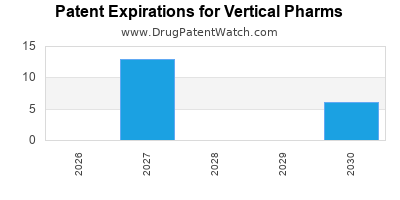
Summary for Vertical Pharms
International Patents:92
US Patents:21
Tradenames:2
Ingredients:2
NDAs:2

Drugs and US Patents for Vertical Pharms

Applicant Tradename Generic Name Dosage NDA Approval Date TE Type RLD RS Patent No. Patent Expiration Product Substance Delist Req. Exclusivity Expiration
Vertical Pharms DSUVIA sufentanil citrate TABLET;SUBLINGUAL 209128-001 Nov 2, 2018 DISCN Yes No 8,778,393 ⤷  Get Started Free ⤷  Get Started Free
Vertical Pharms DSUVIA sufentanil citrate TABLET;SUBLINGUAL 209128-001 Nov 2, 2018 DISCN Yes No 8,778,394 ⤷  Get Started Free ⤷  Get Started Free
Vertical Pharms DIVIGEL estradiol GEL;TRANSDERMAL 022038-002 Jun 4, 2007 AB RX Yes Yes ⤷  Get Started Free ⤷  Get Started Free
Vertical Pharms DSUVIA sufentanil citrate TABLET;SUBLINGUAL 209128-001 Nov 2, 2018 DISCN Yes No 8,252,329 ⤷  Get Started Free Y ⤷  Get Started Free
>Applicant >Tradename >Generic Name >Dosage >NDA >Approval Date >TE >Type >RLD >RS >Patent No. >Patent Expiration >Product >Substance >Delist Req. >Exclusivity Expiration

Supplementary Protection Certificates for Vertical Pharms Drugs

Patent Number Supplementary Protection Certificate SPC Country SPC Expiration SPC Description
0398460 04C0022 France ⤷  Get Started Free PRODUCT NAME: ESTRADIOL ANHYDRE DROSPIRENONE; REGISTRATION NO/DATE IN FRANCE: NL 28661 DU 20040316; REGISTRATION NO/DATE AT EEC: RVG 27505 DU 20021211
1453521 C201630040 Spain ⤷  Get Started Free PRODUCT NAME: ETINILESTRADIOL Y MEZCLA DE LEVONORGESTREL Y ETINILESTRADIOL; NATIONAL AUTHORISATION NUMBER: 80340; DATE OF AUTHORISATION: 20160122; NUMBER OF FIRST AUTHORISATION IN EUROPEAN ECONOMIC AREA (EEA): 17/0017/15-S; DATE OF FIRST AUTHORISATION IN EEA: 20150211
2782584 LUC00245 Luxembourg ⤷  Get Started Free PRODUCT NAME: COMPOSITION CONTENANT A LA FOIS DE L'ESTRADIOL (17SS-ESTRADIOL), EVENTUELLEMENT SOUS FORME D'UN SEL, HYDRATE OU SOLVATE PHARMACEUTIQUEMENT ACCEPTABLE DE CELUI-CI (Y COMPRIS SOUS FORME HEMIHYDRATEE), ET DE LA PROGESTERONE; AUTHORISATION NUMBER AND DATE: BE582231 20210701
0770388 SPC/GB09/026 United Kingdom ⤷  Get Started Free PRODUCT NAME: ESTRADIOL AND COMBINATIONS OF ESTRADIOL AND DIENOGEST, PREFERABLY ESTRADIOL VALERATE AND COMBINATIONS OF ESTRADIOL VALERATE AND DIENOGEST; REGISTERED: BE BE 327792 20081103; UK PL 00010/0576-0001 20081208
>Patent Number >Supplementary Protection Certificate >SPC Country >SPC Expiration >SPC Description
Similar Applicant Names
Applicants may be listed under multiple names.
Here is a list of applicants with similar names.

Pharmaceutical Competitive Landscape Analysis: Vertical Pharmacies – Market Position, Strengths & Strategic Insights

Last updated: July 30, 2025


Introduction

The rapid evolution of healthcare delivery models has positioned vertical pharmacies—also called vertical farms or in-building pharmacies—as a pivotal innovation in pharmaceutical logistics, retail, and healthcare management. Positioned at the nexus of urbanization, technological advancement, and precision medicine, vertical pharmacies integrate vertical farming techniques with advanced pharmaceutical distribution systems. This analysis delves into their market positioning, core strengths, competitive landscape, and strategic outlook, providing business professionals with actionable insights amid the shifting pharmaceutical ecosystem.


Market Position of Vertical Pharmacies

Vertical pharmacies occupy a niche at the intersection of retail pharmacy, urban agriculture, and healthcare technology. The global vertical farming market, valued at approximately $4.7 billion in 2022 and projected to reach $12.8 billion by 2028 (CAGR of 18.6%), underscores the technological backbone of these pharmacy models [1]. Vertical pharmacies leverage this technology to streamline medication supply chains, minimize spoilage, and enable proximity-based healthcare access, especially in dense urban environments where traditional pharmacies face logistical constraints.

Major industry players such as Village Farms, InFarm, and Bowery Farming have begun to expand into pharmacy applications, either through partnerships or direct development. Additionally, regional healthcare providers and retail giants, including CVS Health and Walgreens, are piloting in-building pharmacy models that integrate vertical farming for fresh, personalized medications and expedited logistics.

The positioning of vertical pharmacies is further reinforced by their alignment with the broader movement toward personalized, on-demand healthcare. Their proximity to consumers and capacity for rapid medication dispensing position them competitively, especially as disruptive startups and tech-enabled manufacturers leverage AI and IoT to optimize supply chains.


Core Strengths of Vertical Pharmacies

1. Enhanced Supply Chain Resilience and Freshness
Vertical farms significantly extend shelf life for certain medications by controlling environmental conditions, reducing spoilage, and enabling just-in-time inventory management. The ability to produce and dispense medications within urban environments diminishes dependence on global supply chain variables, such as transportation delays or geopolitical disruptions.

2. Environmental Sustainability
Compared to traditional agriculture and pharmaceutical logistics, vertical farming reduces water usage by up to 90%, cuts transportation emissions, and minimizes waste [2]. These sustainability credentials appeal to regulatory bodies and health-conscious consumers, aligning with ESG (Environmental, Social, and Governance) mandates.

3. Proximity and Patient-Centric Care
Vertical pharmacies positioned within hospitals, clinics, or residential complexes enable 24/7 access, reduce wait times, and foster personalized healthcare. Their capacity for on-site medication production facilitates immediate dispense of compounded drugs, reducing patient inconvenience.

4. Integration with Digital Health Platforms
These systems are inherently compatible with telemedicine, AI-driven inventory management, and real-time data analytics. Such integration enhances inventory accuracy, forecasts patient medication needs, and ensures regulatory compliance.

5. Cost-efficiency and Scalability
Although initial capital expenditure is high, the operational efficiencies—less wastage, reduced transportation costs, and minimized inventory holdings—offer long-term cost savings. Modular farm designs allow scalable deployment across multiple urban sites.


Competitive Landscape and Strategic Dynamics

Market Participants & Roles
The competitive field comprises technology developers, pharmaceutical companies, retail chains, and healthcare providers. Tech firms such as AeroFarms and Plenty operate vertical farming platforms adaptable for pharmaceutical use, partnering with pharma manufacturers to develop custom solutions.

Traditional pharmaceutical manufacturers—like Pfizer and Novartis—are investing in vertical pharmacy pilots to bolster supply chain agility and patient engagement strategies. Retail giants such as CVS and Walgreens are integrating vertical farms into their storefronts to enhance product freshness, personalized medication offerings, and supply chain transparency.

Key Competitive Strategies

  • Partnerships & Alliances
    Collaborations among technology developers, pharma firms, and healthcare providers drive innovation. For instance, a joint venture between Bowery Farming and a regional hospital chain enhances medication customization and delivery speed.

  • Vertical Integration & Acquisition
    Some players seek to control end-to-end supply chains via acquisitions—e.g., a pharmacy chain acquiring a vertical farm startup to internalize medication production capabilities.

  • Investment in R&D & Technology
    Incorporation of AI, robotics, and IoT enhances operational efficiency. For example, real-time monitoring of crop health and medication stability ensures compliance and maximizes yields.

  • Geographic Expansion & Pilot Programs
    Urban-centric deployment in dense metropolises such as New York, London, Tokyo provides scalable models for global expansion.

Challenges & Barriers
The high capital costs and regulatory complexities associated with pharmaceutical production within urban farms pose significant hurdles. Compliance with Good Manufacturing Practices (GMP) and Food and Drug Administration (FDA) regulations requires rigorous validation. Moreover, technological integration with existing healthcare systems remains complex.


Strategic Insights & Future Outlook

Innovative Business Models
Hybrid models combining vertical farms with traditional pharmacies offer flexible, patient-centric services. These include on-demand dispensing, personalized medication compounding, and health monitoring integrated within smart buildings.

Technological Disruption & Digital Integration
The adoption of AI, blockchain, and IoT ensures supply chain transparency, medication traceability, and enhanced patient data security, creating defensible competitive advantages.

Regulatory Navigation & Standards Development
Active engagement with regulatory authorities to develop clear standards for urban pharmaceutical manufacturing is essential. Evolving policies concerning medicinal plant cultivation, compounded drugs, and food-pharmaceutical hybrids will shape market access.

Sustainability & Consumer Preference Shifts
Growing consumer demand for sustainable, local, and fresh medications favors vertical pharmacy models. Strategic focus on ESG credentials will differentiate competitive offerings and attract investment.

Global Expansion Opportunities
Emerging markets with dense urban centers and strained pharmaceutical supply chains—such as India, Brazil, and Southeast Asia—present growth opportunities. Local manufacturing reduces import dependence and improves access.


Key Takeaways

  • Emerging Market Niche: Vertical pharmacies are transforming urban healthcare logistics, blending pharmaceutical manufacturing with advanced vertical farming for rapid, localized medication delivery.

  • Strategic Collaborations: Alliances among tech firms, pharma manufacturers, and healthcare providers accelerate innovation and market penetration.

  • Technology as a Differentiator: AI, IoT, and blockchain underpin operational efficiency, safety, and competitive moats.

  • Regulatory & Capital Challenges: Navigating compliance and funding for urban pharmaceutical farms requires strategic planning and stakeholder engagement.

  • Sustainability & Consumer Trends: Environmental credentials and proximity-based services align with evolving consumer and investor priorities, creating competitive advantages.


FAQs

1. How do vertical pharmacies differ from traditional pharmacies?
Vertical pharmacies integrate vertical farming technology within or near urban healthcare facilities to produce and dispense medications rapidly, offering enhanced freshness, personalization, and proximity, unlike traditional pharmacies reliant on extensive supply chains.

2. What regulatory hurdles do vertical pharmacies face?
They must comply with pharmaceutical manufacturing standards (e.g., GMP), food safety regulations, and local health policies, which can complicate urban production and require significant validation processes.

3. What types of medications are most suitable for vertical farming?
Herbal medicines, compounded drugs, and specific plant-based pharmaceuticals are most adaptable to vertical cultivation. Emerging bio-engineered medications may also benefit from controlled environments.

4. What is the outlook for investment and growth in vertical pharmacy technology?
Global vertical farming is projected to grow at a CAGR of 18.6% through 2028 [1], with vertical pharmacies positioned to capitalize on urbanization, patient demand for personalized care, and technological innovation.

5. How can pharmaceutical companies leverage vertical farms for strategic advantage?
By integrating vertical farming into supply chains, firms can improve resilience, deliver fresher personalized medications, and showcase sustainability, aligning with consumer and regulatory expectations.


References

[1] Research and Markets. "Vertical Farming Market – Growth, Trends, and Forecasts (2022-2028)."
[2] Environmental Research Letters. "Sustainable Aspects of Vertical Farming."


This analysis provides a comprehensive framework for understanding how vertical pharmacies position themselves within the evolving pharmaceutical landscape, outlining strategic avenues for stakeholders seeking to leverage this innovative frontier.

More… ↓

⤷  Get Started Free

Make Better Decisions: Try a trial or see plans & pricing

Drugs may be covered by multiple patents or regulatory protections. All trademarks and applicant names are the property of their respective owners or licensors. Although great care is taken in the proper and correct provision of this service, thinkBiotech LLC does not accept any responsibility for possible consequences of errors or omissions in the provided data. The data presented herein is for information purposes only. There is no warranty that the data contained herein is error free. We do not provide individual investment advice. This service is not registered with any financial regulatory agency. The information we publish is educational only and based on our opinions plus our models. By using DrugPatentWatch you acknowledge that we do not provide personalized recommendations or advice. thinkBiotech performs no independent verification of facts as provided by public sources nor are attempts made to provide legal or investing advice. Any reliance on data provided herein is done solely at the discretion of the user. Users of this service are advised to seek professional advice and independent confirmation before considering acting on any of the provided information. thinkBiotech LLC reserves the right to amend, extend or withdraw any part or all of the offered service without notice.