Last updated: February 19, 2026
Bayer Healthcare Pharmaceuticals maintains a significant market presence, driven by its established portfolio and strategic R&D focus in key therapeutic areas, including cardiovascular, oncology, and women's health. The company's competitive standing is influenced by its patent portfolio, pipeline development, and recent divestitures and acquisitions aimed at optimizing its pharmaceutical operations.
What are Bayer's Core Therapeutic Areas?
Bayer’s pharmaceutical business concentrates on specific high-need therapeutic areas. These include:
- Cardiovascular Diseases: This segment is a historical strength for Bayer, with blockbuster products contributing substantially to revenue. The company invests in the development of novel treatments for conditions such as heart failure and thrombosis.
- Oncology: Bayer is actively expanding its oncology portfolio through internal research and strategic partnerships. The focus is on targeted therapies and immunotherapies for various cancer types.
- Women's Health: Bayer has a long-standing commitment to women's health, offering a range of contraceptives and treatments for gynecological conditions. This area remains a core pillar of its pharmaceutical strategy.
- Ophthalmology: The company has demonstrated success in developing treatments for eye diseases, particularly those affecting vision.
How is Bayer's Patent Portfolio Structured?
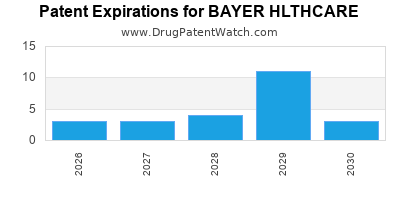
Bayer's patent strategy involves securing intellectual property protection for new chemical entities (NCEs), formulations, and manufacturing processes across its therapeutic focus areas. The patent landscape for major products is critical to understanding market exclusivity.
| Product Name |
Active Ingredient |
Primary Indication(s) |
Key Patent Expiry (approximate) |
| Xarelto |
Rivaroxaban |
Thrombosis, Stroke Prevention |
2026-2027 |
| Eylea |
Aflibercept |
Wet Age-Related Macular Degeneration, Diabetic Macular Edema |
2027-2030 |
| Mirena/Kyleena |
Levonorgestrel |
Contraception, Heavy Menstrual Bleeding |
Primarily Post-2030 |
| Nexium (co-marketed) |
Esomeprazole |
GERD, Peptic Ulcers |
Primarily Generic |
| Jurnista |
Hydromorphone |
Moderate to Severe Pain |
NCE Patent Expired; Formulation Patents Exist |
Note: Patent expiry dates are approximate and can vary based on jurisdiction and specific patent types. Generic entry can occur earlier due to patent challenges or smaller formulation patents.
Bayer actively defends its intellectual property through litigation and by seeking secondary patents for improved drug delivery systems or new indications. The company's R&D pipeline is designed to anticipate patent expirations by developing next-generation therapies and diversifying its revenue streams.
What is the Status of Bayer's Pharmaceutical Pipeline?
Bayer's R&D pipeline is focused on advancing novel therapeutics, particularly in oncology and cardiology. The company has disclosed several promising candidates in various stages of clinical development.
Key Pipeline Highlights:
- Oncology:
- BAY 2927397: A novel oral Bruton’s tyrosine kinase (BTK) inhibitor in Phase II development for chronic lymphocytic leukemia (CLL) and other B-cell malignancies.
- Adavosertib (AZD1775): An investigational Wee1 kinase inhibitor, licensed from AstraZeneca, in combination studies for ovarian cancer and other solid tumors in Phase II/III development.
- Larotrectinib (Vitrakvi): A TRK inhibitor approved for NTRK-fusion positive solid tumors, with ongoing research into new indications and combinations.
- Cardiology:
- Vericiguat (BAY 2927397): A soluble guanylate cyclase (sGC) stimulator approved for certain types of heart failure. Phase III trials have explored its efficacy in broader heart failure populations.
- Omecamtiv Mecarbil: A cardiac myosin activator that was investigated for symptomatic chronic heart failure with reduced ejection fraction, though development faced setbacks in late-stage trials.
- Other Areas:
- Bayer is also investing in areas like women's health and ophthalmology, though specific late-stage pipeline assets in these areas are less prominent in public disclosures compared to oncology.
The success of these pipeline assets is crucial for mitigating the impact of upcoming patent cliffs for established products. Strategic collaborations and acquisitions are also employed to augment internal R&D efforts.
How Have Divestitures and Acquisitions Impacted Bayer's Strategy?
Bayer has undertaken significant strategic maneuvers, including divestitures and acquisitions, to refine its pharmaceutical business and align with market opportunities.
Key Divestitures:
- Consumer Health Business (2014): Bayer divested its over-the-counter (OTC) drug portfolio to focus on prescription pharmaceuticals and its crop science division. This allowed for greater resource allocation to its core pharmaceutical segments.
- Environmental Science Professional business (2022): The divestiture of its Environmental Science Professional business to Cinven for $2.6 billion aimed to sharpen the focus on its core HealthCare and Crop Science divisions, particularly its pharmaceutical R&D and commercialization efforts.
Key Acquisitions:
- Merck KGaA's Consumer Care Business (2014): While divesting its own consumer health business, Bayer acquired Merck KGaA's global consumer care business for €13.1 billion. This move was aimed at strengthening its position in specific consumer health categories outside of prescription drugs and was a part of a broader strategic realignment that included the subsequent divestiture of its own OTC portfolio.
- AskBio (2020): Bayer acquired AskBio, a gene therapy company, for up to $4 billion. This acquisition significantly bolstered Bayer's capabilities in the rapidly growing field of gene therapy, a key area for future pharmaceutical innovation.
- N Innovation (2022): Bayer acquired a stake in N Innovation, a US-based cell therapy company, further expanding its presence in the cell therapy space.
These strategic actions indicate a clear intent to concentrate on high-growth areas within pharmaceuticals, particularly in innovative therapeutic modalities like gene and cell therapy, while optimizing its overall business structure.
What are Bayer's Strengths and Weaknesses?
Bayer's competitive position is characterized by a mix of established strengths and areas requiring strategic attention.
Strengths:
- Strong Market Position in Key Areas: Established brands in cardiovascular (e.g., Xarelto) and ophthalmology (e.g., Eylea) provide consistent revenue streams and market authority.
- Diversified Therapeutic Focus: Presence across cardiovascular, oncology, women's health, and ophthalmology reduces reliance on a single product or disease area.
- Growing Gene and Cell Therapy Capabilities: Strategic acquisitions like AskBio position Bayer to compete in cutting-edge therapeutic modalities.
- Global Commercial Infrastructure: Extensive sales and marketing networks facilitate broad market access for its products.
- Commitment to Women's Health: A long-standing leadership position in this niche segment offers stable and predictable revenue.
Weaknesses:
- Patent Cliffs on Major Products: Approaching patent expirations for key revenue drivers like Xarelto and Eylea present a significant risk of generic competition and revenue decline.
- Pipeline Execution Risk: The success of the R&D pipeline, particularly in oncology, is critical for future growth but carries inherent scientific and regulatory risks.
- Dependence on Key Products: While diversified, a substantial portion of revenue is still derived from a limited number of blockbuster drugs.
- Integration Challenges: The successful integration of acquired technologies and companies, such as gene therapy platforms, requires significant operational and scientific expertise.
- Litigation and Regulatory Environment: Like all large pharmaceutical companies, Bayer faces ongoing legal and regulatory scrutiny, which can impact R&D, marketing, and financial performance.
What are the Strategic Implications for Competitors?
Bayer's strategic positioning and pipeline development have several implications for its competitors.
- Oncology Competition: Bayer's increasing investment in oncology, particularly in targeted therapies and gene therapy, intensifies competition in this highly lucrative and dynamic market. Competitors will need to differentiate their offerings through novel mechanisms of action, improved efficacy, or better patient outcomes.
- Cardiovascular Market Dynamics: As Xarelto faces generic competition, competitors with strong anticoagulant portfolios or innovative cardiovascular therapies will likely see market share shifts. The development of novel treatments for heart failure and thrombosis remains a critical battleground.
- Ophthalmology Landscape: The success of Eylea has established a high standard. Competitors in ophthalmology will focus on next-generation treatments with improved delivery, efficacy, or longer duration of action to challenge Bayer's dominance.
- Gene and Cell Therapy Race: Bayer's commitment to gene and cell therapy signals an acceleration of investment in this field. Competitors without robust capabilities in these areas will need to pursue partnerships, acquisitions, or focus on alternative therapeutic modalities to remain competitive in the long term.
- Women's Health Focus: Bayer's continued strength in women's health means competitors in this segment will face an established leader. Innovation in contraception and gynecological treatments will be key to gaining market traction.
Competitors must monitor Bayer's pipeline progression, patent strategies, and M&A activity to anticipate market shifts and adapt their own R&D and commercial strategies accordingly.
Key Takeaways
Bayer Healthcare Pharmaceuticals operates in a dynamic market, leveraging established strengths in cardiovascular, oncology, and women's health. The company's strategic acquisitions, particularly in gene and cell therapy, signal a forward-looking approach to innovation. However, impending patent expirations for key products necessitate successful pipeline execution and continued portfolio diversification to maintain competitive advantage.
Frequently Asked Questions
-
What is Bayer's primary strategy for addressing the upcoming patent expirations of Xarelto and Eylea?
Bayer is pursuing a multi-pronged strategy that includes advancing its R&D pipeline with novel therapeutics, exploring lifecycle management opportunities for existing products, and leveraging its strengthened capabilities in gene and cell therapy.
-
How significant is Bayer's investment in gene therapy relative to its historical pharmaceutical R&D spending?
Bayer's acquisition of AskBio for up to $4 billion represents a substantial financial commitment to gene therapy, indicating a strategic shift towards investing heavily in this advanced therapeutic modality, which may represent a significant portion of its future R&D focus.
-
Which therapeutic areas are expected to contribute most to Bayer's future pharmaceutical revenue growth?
Oncology and gene/cell therapy are anticipated to be the primary drivers of future revenue growth, given Bayer's strategic investments and the market potential in these fields.
-
What impact has the divestiture of the Consumer Health business had on Bayer's pharmaceutical operations?
The divestiture allowed Bayer to sharpen its focus and reallocate resources towards its core prescription pharmaceutical business and its advanced R&D pipeline, particularly in oncology and gene therapy.
-
How does Bayer's competitive positioning in women's health compare to its other core therapeutic areas?
Bayer maintains a long-standing leadership position in women's health, characterized by established products and a dedicated focus. While it is a significant and stable revenue contributor, its growth trajectory may be less dynamic compared to the high-innovation potential in oncology and gene therapy.
Citations
[1] Bayer AG. (2023). Bayer Annual Report 2023. Retrieved from https://www.annualreport.bayer.com/2023/en/
[2] U.S. Food & Drug Administration. (n.d.). Drug Database. Retrieved from https://www.fda.gov/drugs/drug-approvals-and-databases
[3] European Medicines Agency. (n.d.). Medicines Database. Retrieved from https://www.ema.europa.eu/en/medicines
[4] GlobalData. (2023). Company Profiles & Pipeline Analysis - Bayer AG. (Proprietary Market Intelligence Report).
[5] FiercePharma. (2022). Bayer sells Environmental Science Professional business for $2.6B. Retrieved from https://www.fiercepharma.com/pharma/bayer-sells-environmental-science-professional-business-2-6b
[6] BioSpace. (2020). Bayer Acquires AskBio for Up to $4 Billion. Retrieved from https://www.biospace.com/article/bayer-acquires-askbio-for-up-to-4-billion-to-bolster-gene-therapy-capabilities-/