Last updated: August 25, 2026
Wellbutrin is the brand name for bupropion, a small-molecule antidepressant marketed primarily as Wellbutrin XL and Wellbutrin SR. Its commercial profile has shifted from branded innovation to mature generic volume. The originator franchise no longer has meaningful U.S. exclusivity protection, while bupropion remains a large, durable prescription market because of chronic treatment use, multiple indications, low-cost generic access, and differentiation from serotonergic antidepressants.
The principal commercial risks are generic price compression, limited brand differentiation, and the absence of biologic or device barriers. The principal market supports are broad clinical use, established prescriber familiarity, once-daily extended-release dosing, and continued demand for smoking-cessation treatment through the related Zyban brand.
What is Wellbutrin and how is bupropion used?
Wellbutrin contains bupropion hydrochloride. The product is available in immediate-release, sustained-release, and extended-release formulations.
| Product |
Active ingredient |
Main FDA-approved use |
Dosage form |
| Wellbutrin |
Bupropion hydrochloride |
Major depressive disorder |
Immediate release |
| Wellbutrin SR |
Bupropion hydrochloride |
Major depressive disorder |
Sustained release |
| Wellbutrin XL |
Bupropion hydrochloride |
Major depressive disorder; seasonal affective disorder |
Extended release |
| Zyban |
Bupropion hydrochloride |
Smoking cessation |
Sustained release |
| Generic bupropion |
Bupropion hydrochloride |
Corresponding approved indications |
IR, SR, and XL |
The FDA-approved mechanism is distinct from selective serotonin reuptake inhibitors. Bupropion inhibits norepinephrine and dopamine reuptake and does not carry the same sexual-dysfunction and weight-gain profile commonly associated with some serotonergic antidepressants. It is contraindicated in patients with seizure disorders and certain eating disorders because of seizure risk. (U.S. Food and Drug Administration [FDA], 2024a)
How has the Wellbutrin market evolved?
The commercial trajectory has three phases:
- Branded expansion: Wellbutrin SR and Wellbutrin XL expanded bupropion use in depression and seasonal affective disorder.
- Generic entry: Generic sustained-release and extended-release products entered the U.S. market, reducing originator pricing power.
- Mature generic market: Prescription demand remained substantial, but revenue shifted from the branded product to multiple manufacturers and pharmacy channels.
Wellbutrin XL became the principal branded formulation because once-daily dosing supported adherence and differentiation from older immediate-release and twice-daily products. Generic bupropion XL subsequently removed most of that commercial advantage.
Bupropion is also used off-label in combination with other antidepressants, for antidepressant augmentation, and in some cases for attention-related symptoms. Those uses support prescription volume but do not create additional product exclusivity.
When did Wellbutrin lose U.S. market exclusivity?
Wellbutrin's core U.S. exclusivity ended through a combination of patent expiry and generic approvals. Generic competition began well before the current market's mature phase.
| Milestone |
Approximate timing |
Commercial effect |
| Wellbutrin SR generic approvals |
Mid-2000s |
Initiated erosion of sustained-release brand sales |
| Wellbutrin XL generic development and litigation |
Late 2000s to early 2010s |
Delayed and then accelerated extended-release competition |
| First major generic XL approvals |
2012 onward |
Reduced Wellbutrin XL pricing and share |
| Current market |
2020s |
Generic bupropion dominates prescription volume |
The precise economic loss of exclusivity occurred earlier than the expiration of every listed patent because generic approvals, settlements, and authorized-generic or licensed supply arrangements can affect market share before the final patent date.
Wellbutrin XL is listed under FDA New Drug Application 021515. The Orange Book historically identified U.S. Patent No. 6,905,708 among the principal patents associated with the extended-release product. That patent covered aspects of the controlled-release formulation and became central to generic challenges. (FDA, 2024b)
What patents protect Wellbutrin and bupropion formulations?
The strongest historical patent protection focused on extended-release delivery rather than the bupropion molecule itself.
Core patent categories
| Patent category |
Protected subject matter |
Current strategic value |
| Active ingredient |
Bupropion hydrochloride |
Expired; no meaningful molecule-level barrier |
| Sustained-release formulation |
Controlled release over multiple dosing intervals |
Historical value; generic alternatives established |
| Extended-release formulation |
Once-daily release profile and tablet architecture |
Historical value; challenged and largely expired |
| Method of use |
Depression, seasonal affective disorder, smoking cessation |
Limited value where indications and labeling are established |
| Manufacturing process |
Granulation, coating, release-control, or tablet processing |
Potential supplier barrier, but generally nonexclusive |
| Trade dress and trademarks |
Wellbutrin and product branding |
Brand protection only; no barrier to generic entry |
The formulation estate was commercially more important than the active pharmaceutical ingredient. Bupropion itself is an old compound, and generic manufacturers can produce the molecule using established chemistry. The remaining technical issues concern release kinetics, dose uniformity, impurity control, and manufacturing scale.
What is the Orange Book status of Wellbutrin XL?
Wellbutrin XL's Orange Book status reflects a mature small-molecule product with approved generic equivalents. FDA's Orange Book identifies listed patents and regulatory exclusivities for approved products, but an expired patent does not prevent the FDA from approving products with different formulation claims if the applicant satisfies the applicable requirements. (FDA, 2024b)
The principal commercial facts are:
- Wellbutrin XL has approved generic extended-release equivalents.
- The active ingredient has no current molecule-level exclusivity.
- The historical formulation patent estate has expired or no longer prevents broad generic competition.
- Remaining listed patents, if any, do not restore originator-level market control.
- Brand prescribing is generally supported by physician familiarity, patient stability, and payer coverage rather than patent exclusivity.
Which companies challenged Wellbutrin XL patents?
Generic drugmakers challenged Wellbutrin XL through abbreviated new drug applications and Paragraph IV certifications. Companies involved in the broader bupropion extended-release competitive field included Actavis, Anchen, Impax, Par Pharmaceutical, Teva, and other generic manufacturers.
Paragraph IV litigation alleged that listed patents were invalid, unenforceable, or would not be infringed by the proposed generic products. The commercial importance of those challenges was high because the 180-day first-applicant exclusivity period could create a temporary duopoly or limited-competition market.
The FDA later addressed a separate bioequivalence problem involving certain bupropion XL 300 mg products. In 2013, the agency concluded that Budeprion XL 300 mg was not therapeutically equivalent to Wellbutrin XL 300 mg and requested withdrawal of the product. The episode demonstrated that extended-release antidepressants can present clinically meaningful formulation risks even after patent barriers fall. (FDA, 2013)
How strong is the current Wellbutrin patent estate?
The current patent estate is weak as a barrier to generic competition.
| Factor |
Assessment |
| Molecule patent |
No meaningful remaining protection |
| Formulation patents |
Historical protection; generic alternatives are established |
| Method-of-use patents |
Limited ability to block broad generic prescribing |
| Manufacturing patents |
May protect specific processes but not the market |
| Regulatory exclusivity |
Expired |
| Biosimilar protection |
Not applicable |
| Litigation leverage |
Low compared with an active branded product |
| Generic entry risk |
Already realized rather than prospective |
Wellbutrin does not have the patent characteristics of a recently launched specialty drug. Its commercial defense is operational and brand-based: supply reliability, product quality, payer positioning, and prescriber retention.
What generic entry risks exist for Wellbutrin?
The main generic risks are price, substitution, and formulation perception.
Price erosion
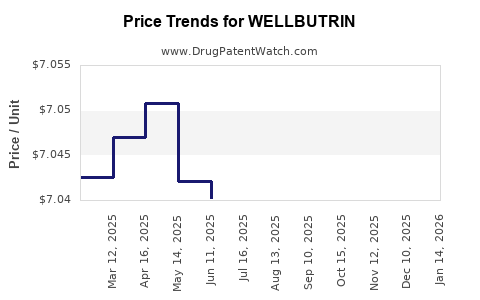
Multiple approved manufacturers create pharmacy-level substitution and reduce average selling prices. Extended-release tablets can command a modest premium over immediate-release products, but that premium is constrained by therapeutic interchangeability and payer formularies.
Product switching
Patients stabilized on a branded or particular generic formulation may experience differences in release characteristics, tolerability, or subjective effect. These concerns can support limited brand retention, but they do not create enforceable exclusivity.
Supply concentration
Bupropion is manufactured by multiple companies, but interruptions at one supplier can create temporary shortages. A manufacturer with dependable supply can gain volume without owning relevant patents.
Regulatory scrutiny
The 2013 Budeprion XL finding remains relevant to any manufacturer developing extended-release bupropion. Applicants must establish bioequivalence using product-specific pharmacokinetic and regulatory standards. FDA approval of an extended-release product does not eliminate the need for manufacturing consistency.
What is the financial trajectory of Wellbutrin?
Wellbutrin's financial trajectory is consistent with a mature branded medicine:
| Period |
Revenue direction |
Primary driver |
| Pre-generic period |
High branded revenue |
Broad depression market and branded pricing |
| Early generic period |
Sharp decline |
Formulation-level generic entry |
| Mature generic period |
Lower brand revenue, stable category demand |
Generic substitution and chronic use |
| Current period |
Brand niche, generic volume market |
Low-cost access and persistent prescription demand |
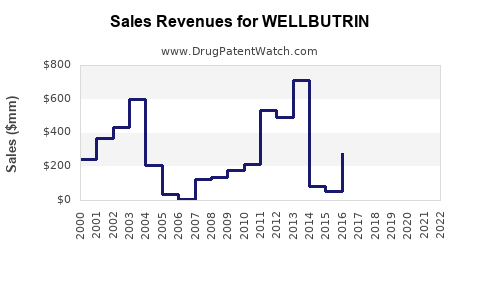
Standalone Wellbutrin revenue is not consistently disclosed in current public filings. Product-level reporting has varied by owner and reporting period, which limits direct comparison between historical GlaxoSmithKline revenue and later Valeant or Bausch Health revenue. The financial conclusion is nevertheless clear: generic entry transferred most U.S. economic value away from the originator brand.
GlaxoSmithKline transferred certain established products, including U.S. rights connected with Wellbutrin XL, to Valeant Pharmaceuticals in a 2015 transaction. The deal illustrated the franchise's value as a cash-generating mature product rather than as a pipeline asset. (GlaxoSmithKline, 2015)
Bausch Health later reported Wellbutrin XL within its established-pharmaceutical portfolio. Public disclosures have generally placed the product within broader portfolio reporting rather than providing a consistent annual standalone revenue series. (Bausch Health Companies Inc., 2024)
Does Wellbutrin face biosimilar competition?
No. Wellbutrin is a small-molecule drug, so the relevant competitors are abbreviated new drug applications and generic bupropion products, not biosimilars.
The distinction matters commercially:
- Generic applicants rely on pharmaceutical equivalence and bioequivalence.
- Biosimilar applicants rely on a biologics licensing pathway.
- Wellbutrin has no biologic manufacturing complexity.
- Generic manufacturing barriers are lower than for monoclonal antibodies or other biologics.
- Price competition is therefore more direct and usually more severe.
What licensing deals affect Wellbutrin?
The principal recent strategic transaction was GlaxoSmithKline's transfer of rights to Valeant in 2015. The transaction moved commercialization of an established product to a company focused on acquiring and managing mature pharmaceutical assets. It did not create new patent exclusivity.
Any current economics depend more on commercialization rights, supply arrangements, and generic competition than on discovery licensing. Generic manufacturers may use contract manufacturing or active-ingredient suppliers, but those arrangements do not materially change the competitive structure.
What is the competitive landscape for bupropion?
The market includes:
- Generic bupropion immediate-release tablets.
- Generic bupropion sustained-release tablets.
- Generic bupropion extended-release tablets.
- Wellbutrin XL and Wellbutrin SR.
- Zyban for smoking cessation.
- Alternative antidepressants, including SSRIs, SNRIs, mirtazapine, vortioxetine, and newer branded therapies.
Wellbutrin competes on tolerability, absence of serotonergic activity, dosing flexibility, and clinical familiarity. It competes poorly on price against generic bupropion, where the active ingredient and therapeutic indication are the same.
How does Wellbutrin compare with newer antidepressants?
| Attribute |
Wellbutrin/bupropion |
Newer branded antidepressants |
| Market maturity |
Mature |
Often protected or recently launched |
| Patent strength |
Low |
Varies, often stronger |
| Generic exposure |
Extensive |
Limited before loss of exclusivity |
| Mechanism |
Norepinephrine/dopamine reuptake inhibition |
Product-specific |
| Differentiation |
Established tolerability and dosing |
Novel mechanism, formulation, or indication |
| Pricing power |
Low for generics; limited for brand |
Potentially higher before generic entry |
| Regulatory risk |
Formulation consistency |
Clinical, safety, and manufacturing risks |
Wellbutrin retains clinical relevance, but its commercial position is defensive rather than expansionary. Revenue growth is unlikely to come from price increases or new indications without a new formulation, combination product, or materially differentiated delivery system.
What generic launch scenarios remain?
A large first-wave generic launch has already occurred. The remaining scenarios are incremental:
- Additional manufacturers enter specific strengths or dosage forms.
- Existing suppliers expand capacity and compete on contracts.
- Shortages temporarily improve pricing for available suppliers.
- Brand sales decline further as payer substitution increases.
- Reformulated or combination bupropion products seek narrower commercial niches.
The most credible upside for a manufacturer is not patent exclusivity. It is reliable supply, regulatory compliance, low manufacturing cost, and preferred formulary or pharmacy-channel access.
Key Takeaways
- Wellbutrin is a mature bupropion franchise with extensive generic competition.
- The active ingredient and principal extended-release patent protections no longer provide a meaningful U.S. market barrier.
- Generic bupropion XL, SR, and IR products control the economic center of the market.
- Wellbutrin XL remains commercially relevant through brand familiarity, patient stability, and clinical differentiation.
- The product faces generic substitution risk, not biosimilar risk.
- The 2013 Budeprion XL episode remains a key regulatory precedent for extended-release bioequivalence.
- GlaxoSmithKline's 2015 transfer of rights to Valeant reflects the product's mature-cash-flow profile.
- Public filings do not provide a consistent current standalone revenue series for Wellbutrin.
- Future value depends on supply execution and brand retention, not patent-based pricing power.
FAQs about Wellbutrin market dynamics
Is Wellbutrin still a profitable branded drug?
It can generate cash flow as a mature brand, but generic substitution substantially limits pricing power and growth.
Can a generic manufacturer still challenge Wellbutrin patents?
A manufacturer can file Paragraph IV certifications against any relevant unexpired listed patent, but the historical Wellbutrin estate does not present the same blocking potential as an active, recently launched product.
Does Wellbutrin XL have a formulation advantage over generic bupropion?
Wellbutrin XL has an established once-daily extended-release profile. Approved generic XL products are required to satisfy FDA bioequivalence standards, although manufacturing consistency remains commercially important.
Is Zyban the same drug as Wellbutrin?
Yes. Both contain bupropion hydrochloride, but they are approved and marketed for different primary uses: Wellbutrin for depressive disorders and Zyban for smoking cessation.
Could a new bupropion formulation revive the franchise?
A new formulation could create limited differentiation if it improves adherence, tolerability, dosing, or delivery. It would need meaningful clinical or commercial advantages to overcome established generic competition.
References
-
Bausch Health Companies Inc. (2024). 2023 annual report. Bausch Health Companies Inc.
-
GlaxoSmithKline. (2015). Annual report 2015. GlaxoSmithKline plc.
-
U.S. Food and Drug Administration. (2013). FDA updates and provides information on the therapeutic equivalence of Budeprion XL 300 mg. U.S. Department of Health and Human Services.
-
U.S. Food and Drug Administration. (2024a). Wellbutrin XL prescribing information. U.S. Department of Health and Human Services.
-
U.S. Food and Drug Administration. (2024b). Approved drug products with therapeutic equivalence evaluations: Orange Book. U.S. Department of Health and Human Services.