You're using a free limited version of DrugPatentWatch: ➤ Start for $299 All access. No Commitment.

Last Updated: December 14, 2025

VENTOLIN Drug Patent Profile


✉ Email this page to a colleague

« Back to Dashboard


When do Ventolin patents expire, and what generic alternatives are available?

Ventolin is a drug marketed by Glaxosmithkline and is included in seven NDAs.

The generic ingredient in VENTOLIN is albuterol sulfate. There are thirty-eight drug master file entries for this compound. Forty-eight suppliers are listed for this compound. Additional details are available on the albuterol sulfate profile page.

DrugPatentWatch® Litigation and Generic Entry Outlook for Ventolin

A generic version of VENTOLIN was approved as albuterol sulfate by SUN PHARM INDUSTRIES on December 5th, 1989.

  Get Started Free

AI Deep Research
Questions you can ask:
  • What is the 5 year forecast for VENTOLIN?
  • What are the global sales for VENTOLIN?
  • What is Average Wholesale Price for VENTOLIN?
Drug patent expirations by year for VENTOLIN
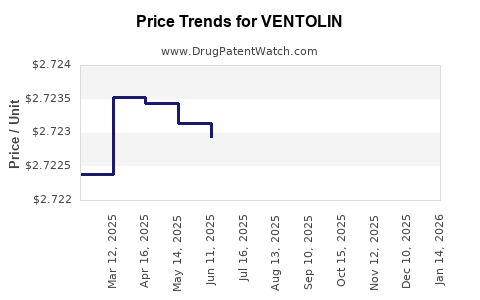
Drug Prices for VENTOLIN

See drug prices for VENTOLIN

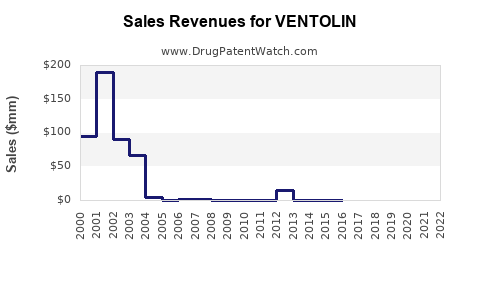
Drug Sales Revenue Trends for VENTOLIN

See drug sales revenues for VENTOLIN

Recent Clinical Trials for VENTOLIN

Identify potential brand extensions & 505(b)(2) entrants

SponsorPhase
Beni-Suef UniversityPHASE4
University of AlbertaPhase 1
Canisius-Wilhelmina HospitalPhase 3

See all VENTOLIN clinical trials

US Patents and Regulatory Information for VENTOLIN

Applicant Tradename Generic Name Dosage NDA Approval Date TE Type RLD RS Patent No. Patent Expiration Product Substance Delist Req. Exclusivity Expiration
Glaxosmithkline VENTOLIN albuterol AEROSOL, METERED;INHALATION 018473-001 Approved Prior to Jan 1, 1982 DISCN No No ⤷  Get Started Free ⤷  Get Started Free ⤷  Get Started Free
Glaxosmithkline VENTOLIN HFA albuterol sulfate AEROSOL, METERED;INHALATION 020983-001 Apr 19, 2001 BX RX Yes Yes ⤷  Get Started Free ⤷  Get Started Free ⤷  Get Started Free
Glaxosmithkline VENTOLIN albuterol sulfate SYRUP;ORAL 019621-001 Jun 10, 1987 DISCN No No ⤷  Get Started Free ⤷  Get Started Free ⤷  Get Started Free
Glaxosmithkline VENTOLIN ROTACAPS albuterol sulfate CAPSULE;INHALATION 019489-001 May 4, 1988 DISCN No No ⤷  Get Started Free ⤷  Get Started Free ⤷  Get Started Free
Glaxosmithkline VENTOLIN albuterol sulfate SOLUTION;INHALATION 019773-001 Apr 23, 1992 DISCN Yes No ⤷  Get Started Free ⤷  Get Started Free ⤷  Get Started Free
Glaxosmithkline VENTOLIN albuterol sulfate SOLUTION;INHALATION 019269-002 Jan 16, 1987 DISCN No No ⤷  Get Started Free ⤷  Get Started Free ⤷  Get Started Free
Glaxosmithkline VENTOLIN albuterol sulfate TABLET;ORAL 019112-002 Jul 10, 1986 DISCN No No ⤷  Get Started Free ⤷  Get Started Free ⤷  Get Started Free
>Applicant >Tradename >Generic Name >Dosage >NDA >Approval Date >TE >Type >RLD >RS >Patent No. >Patent Expiration >Product >Substance >Delist Req. >Exclusivity Expiration

Expired US Patents for VENTOLIN

Applicant Tradename Generic Name Dosage NDA Approval Date Patent No. Patent Expiration
Glaxosmithkline VENTOLIN albuterol sulfate TABLET;ORAL 019112-001 Jul 10, 1986 3,705,233 ⤷  Get Started Free
Glaxosmithkline VENTOLIN albuterol AEROSOL, METERED;INHALATION 018473-001 Approved Prior to Jan 1, 1982 3,644,353 ⤷  Get Started Free
Glaxosmithkline VENTOLIN albuterol sulfate TABLET;ORAL 019112-002 Jul 10, 1986 3,644,353 ⤷  Get Started Free
Glaxosmithkline VENTOLIN albuterol sulfate TABLET;ORAL 019112-002 Jul 10, 1986 3,705,233 ⤷  Get Started Free
Glaxosmithkline VENTOLIN albuterol sulfate TABLET;ORAL 019112-001 Jul 10, 1986 3,644,353 ⤷  Get Started Free
Glaxosmithkline VENTOLIN albuterol sulfate SYRUP;ORAL 019621-001 Jun 10, 1987 3,705,233 ⤷  Get Started Free
Glaxosmithkline VENTOLIN albuterol sulfate SYRUP;ORAL 019621-001 Jun 10, 1987 4,594,359 ⤷  Get Started Free
>Applicant >Tradename >Generic Name >Dosage >NDA >Approval Date >Patent No. >Patent Expiration

International Patents for VENTOLIN

See the table below for patents covering VENTOLIN around the world.

Country Patent Number Title Estimated Expiration
Czechoslovakia 167875 ⤷  Get Started Free
France 2527442 COMPOSITION PHARMACEUTIQUE CONTENANT DU SALBUTAMOL ⤷  Get Started Free
United Kingdom 8314736 ⤷  Get Started Free
Germany 2032642 1-PHENYL-2-AMINOAETHANOL-DERIVATE, VERFAHREN ZU IHRER HERSTELLUNG UND DIESE VERBINDUNGEN ENTHALTENDE ARZNEIMITTEL ⤷  Get Started Free
Ireland 831267 ⤷  Get Started Free
Sweden 354061 ⤷  Get Started Free
Cyprus 713 Phenylaminoethanol derivatives ⤷  Get Started Free
>Country >Patent Number >Title >Estimated Expiration

Market Dynamics and Financial Trajectory for VENTOLIN

Last updated: July 28, 2025

Introduction

Ventolin, a well-established inhaled bronchodilator primarily containing albuterol (salbutamol), remains a cornerstone in the treatment of asthma and chronic obstructive pulmonary disease (COPD). Recognized globally, Ventolin's brand legacy is underpinned by extensive clinical use, widespread adoption, and significant market presence. This article explores the evolving market dynamics that influence Ventolin's positioning, analyzes its financial trajectory amid competitive and regulatory shifts, and offers strategic insights for stakeholders navigating this landscape.

Market Overview and Segmentation

Global Respiratory Drug Market

The global respiratory therapeutics market was valued at approximately USD 30 billion in 2022 and is projected to grow at a compound annual growth rate (CAGR) of 4-5% through 2030 [1]. This escalation is mainly driven by increasing prevalence of asthma and COPD, aging populations, and rising pollution levels.

Key Segments and Product Types

Ventolin operates within the inhaled bronchodilator segment, which includes both short-acting beta-agonists (SABAs) like albuterol and long-acting formulations. SABAs serve as rescue medications, providing rapid symptom relief, thus maintaining a high usage rate. The market's demand remains robust due to the chronic nature of respiratory diseases, creative formulations, and comfort of delivery.

Regulatory and Patent Considerations

Originally introduced in the 1960s, Ventolin’s patent exclusivity has long expired in many jurisdictions, opening the market to generic competitors. However, brand dominance persists owing to provider familiarity, prescribing habits, and formulation advantages [2].

Market Dynamics Influencing Ventolin

Competitive Landscape

Generic competition poses the most immediate threat to Ventolin’s revenue streams. Multiple manufacturers produce albuterol inhalers, often at lower prices, eroding market share. Innovations such as breath-actuated inhalers and low-cost generics have intensified competition.

Meanwhile, emerging inhaler technologies, including dry powder inhalers (DPIs) and advanced metered-dose inhalers (MDIs), are reshaping the delivery landscape. Some competitors have launched alternatives with improved drug delivery efficiency, patient compliance, and reduced dosing times.

Regulatory Environment and Labeling Changes

Regulatory agencies, notably the FDA and EMA, maintain stringent standards for inhaled medications’ safety and efficacy. Recent EU and US guidelines emphasize environmental impact, leading to the phase-out of chlorofluorocarbon (CFC)-containing inhalers and promoting environmentally friendly alternatives. Certain formulations of albuterol inhalers have faced regulatory restrictions due to ozone-depleting propellants [3].

Furthermore, patent challenges and regulatory-approved generics are reshaping the competitive terrain, with some new formulations receiving approval shortly after patent expiration, thereby decreasing market exclusivity.

Pricing and Reimbursement Trends

Price sensitivity remains high, particularly in mature markets with cost-controlled healthcare systems. Governments and insurers favor generics and biosimilars, exerting pricing pressures on branded inhalers like Ventolin. For instance, the US saw a significant drop in inhaler prices following the entry of generic competitors in the late 2010s.

Economic access and reimbursement policies significantly determine market share. In many developing markets, affordability restricts advanced inhalers’ penetration, but generic versions of Ventolin remain prevalent due to lower cost points.

Patient Adherence and Usage Trends

Patient adherence influences market forecasts significantly. Ease of use, device portability, and favorable side-effect profiles enhance adherence. The adoption of multiple-dose inhalers with digital connectivity features improves compliance, which may favor newer formulations over traditional Ventolin inhalers.

Pharmacological Advances and Innovation

While Ventolin remains a go-to rescue inhaler, ongoing research into combination therapies, long-acting bronchodilators, and biologics for severe asthma influences the market. These advancements could diminish Ventolin’s relative market share if they prove superior in efficacy, safety, and convenience [4].

Financial Trajectory and Market Performance

Historical Revenue Trends

Ventolin’s global revenue peaked when it held patent exclusivity, notably in the US, where the inhaler’s widespread usage generated billions annually. Following patent expirations, revenues declined, with the market flooded by generic albuterol inhalers leading to price erosion.

In 2019, the U.S. market for albuterol inhalers was estimated at USD 1.2 billion, with generics claiming significant market share [5]. This transition resulted in declining profit margins for branded Ventolin products and led manufacturers to diversify portfolios.

Current and Projected Revenue Streams

For market leaders with proprietary formulations, revenue projections depend on patent rights, market penetration strategies, and formulary placements. Company reports indicate that while brand-specific Ventolin sales have plateaued or declined in mature markets, emerging markets and refill rates sustain considerable income streams.

In markets where Ventolin remains under patent protection, revenues are projected to remain relatively stable over the next 2-3 years. Conversely, in regions with widespread generic access, revenues are expected to decline further unless new formulations or delivery mechanisms are introduced.

Impact of Competition and Innovation

New inhaler devices, digital health integrations, and alternative delivery systems threaten to displace traditional Ventolin inhalers. Companies investing in these innovations aim to capture greater market share, potentially diminishing Ventolin’s revenue trajectory.

Furthermore, the rising adoption of biologic therapies for severe asthma, such as monoclonal antibodies, redefines treatment hierarchies. While these options are more costly, their targeted approach may reduce conventional inhaler usage in specific patient populations, impacting future market size.

Regulatory and Environmental Pressures

The ongoing shift to environmentally friendly inhalers, including the phasing out of CFC-based formulations and push toward eco-friendly alternatives, could challenge existing Ventolin inhaler formulations. Manufacturers may need to redesign devices, incurring research and development costs, and potentially affecting pricing strategies.

Future Outlook

Analysts project that, absent significant innovation, Ventolin’s traditional market share will continue to decline gradually as competition intensifies. Nonetheless, its entrenched position in emergency response and as a first-line therapy ensures steady demand in certain segments, primarily developing markets with limited access to newer devices.

Players focusing on product differentiation, such as digital inhalers or combination therapies, might extend the brand’s relevance, with promising revenue opportunities that could stabilize or slightly improve overall financial trajectories.

Strategic Considerations for Stakeholders

  • For Manufacturers: Investing in device innovation, such as breath-activated or smart inhalers, can help retain market share amid generic competition. Expanding into emerging markets with affordable formulations also presents growth potential.

  • For Healthcare Providers: Prioritizing patient education for inhaler use and adherence enhances clinical outcomes, indirectly influencing market demand stability.

  • For Regulators: Streamlining approval processes for environmentally friendly formulations and ensuring clear guidelines support innovation while managing competition.

  • For Investors: Monitoring patent timelines, R&D pipelines for next-generation inhalers, and emerging biologic therapies provides insights into Ventolin’s long-term financial outlook.

Key Takeaways

  • Ventolin's market dominance diminishes due to patent expirations and aggressive generic competition, prompting pricing pressures and volume-based strategies.

  • Technological innovation—particularly in inhaler device design and digital integration—offers avenues to sustain or grow revenues amid market saturation.

  • Regulatory and environmental policies influence product formulations, potentially imposing costs for adaptation but also opening government-supported green alternatives.

  • The rise of biologic therapies for asthma management poses a long-term challenge to traditional inhalers, though immediate demand remains robust, especially in developing regions.

  • Strategic focus on product differentiation, geographic expansion, and technological innovation is vital for stakeholders aiming to optimize Ventolin’s commercial trajectory.

Conclusion

Ventolin's financial trajectory will be shaped by a convergence of market forces: technological evolution, regulatory changes, competitive dynamics, and shifting treatment paradigms. While near-term revenues face challenges from generics and environmental regulations, sustained demand in specific markets, coupled with innovation efforts, can provide strategic counterbalance. Stakeholders must proactively adapt, prioritizing innovation and market expansion to navigate this complex landscape effectively.


FAQs

  1. What factors primarily influence Ventolin's declining market share?
    Patent expirations, proliferation of generic inhalers, competition from new formulations and delivery devices, and environmental regulatory pressures significantly impact Ventolin’s market share.

  2. How are regulatory changes affecting Ventolin formulations?
    Regulations promoting environmentally friendly inhalers and restricting CFC-based propellants have prompted reformulation efforts, potentially increasing R&D costs and altering manufacturing processes.

  3. What role does technological innovation play in Ventolin’s future?
    Innovation in device technology, such as smart inhalers and breath-actuated systems, can enhance adherence, differentiate products, and sustain market presence amid increased competition.

  4. Are biologics a threat to traditional inhalers like Ventolin?
    While biologic therapies target severe asthma cases with high efficacy, they currently serve niche markets. Their high cost and specific indications limit their impact on the broader inhaler market in the near term.

  5. What strategic moves can manufacturers adopt to preserve Ventolin's market relevance?
    Investing in device innovation, expanding in emerging markets, developing environmentally friendly formulations, and integrating digital health features are key strategies for maintaining relevance.


References

[1] MarketWatch. "Respiratory Therapeutics Market Size, Share, Growth Analysis." 2022.

[2] U.S. Food and Drug Administration (FDA). "Patent and Exclusivity Data for Albuterol Inhalers." 2020.

[3] European Medicines Agency (EMA). "Environmental Impact and Regulation of Inhaled Therapies." 2021.

[4] GlobalData. "Innovations in Asthma and COPD Management." 2022.

[5] IMS Health. "Inhaler Market Trends and Sales Data." 2019.

More… ↓

⤷  Get Started Free

Make Better Decisions: Try a trial or see plans & pricing

Drugs may be covered by multiple patents or regulatory protections. All trademarks and applicant names are the property of their respective owners or licensors. Although great care is taken in the proper and correct provision of this service, thinkBiotech LLC does not accept any responsibility for possible consequences of errors or omissions in the provided data. The data presented herein is for information purposes only. There is no warranty that the data contained herein is error free. We do not provide individual investment advice. This service is not registered with any financial regulatory agency. The information we publish is educational only and based on our opinions plus our models. By using DrugPatentWatch you acknowledge that we do not provide personalized recommendations or advice. thinkBiotech performs no independent verification of facts as provided by public sources nor are attempts made to provide legal or investing advice. Any reliance on data provided herein is done solely at the discretion of the user. Users of this service are advised to seek professional advice and independent confirmation before considering acting on any of the provided information. thinkBiotech LLC reserves the right to amend, extend or withdraw any part or all of the offered service without notice.