Last updated: August 12, 2026
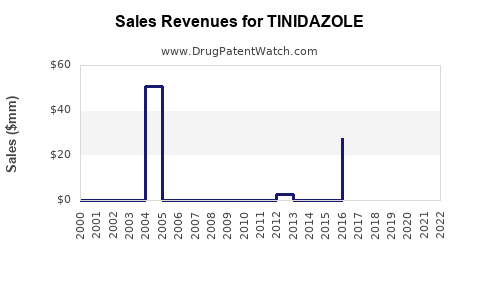
Tinidazole is a mature, largely generic nitroimidazole anti-infective with low patent risk, limited pricing power, and stable demand in selected infectious-disease indications. The U.S. branded product, Tindamax, received FDA approval in 2004, while generic tinidazole products have competed for years. No active U.S. Orange Book patent estate materially restricts generic entry based on current FDA listings. Product-level revenue is not publicly disclosed, so the financial trajectory must be assessed through market structure, prescribing demand, pricing, and manufacturer economics rather than reported sales.
What is the current market position of tinidazole?
Tinidazole is an oral antimicrobial approved in the United States for trichomoniasis, giardiasis, amebiasis, and bacterial vaginosis. It is also used in some markets and clinical settings for other anaerobic and protozoal infections.[1]
The product competes with metronidazole, secnidazole, clindamycin, and other anti-infective therapies. Tinidazole’s principal commercial advantages are oral dosing, activity against anaerobic organisms and protozoa, and shorter treatment courses in several indications. Its disadvantages are generic competition, limited differentiation from metronidazole, and the availability of branded alternatives for certain indications.
| Market attribute |
Tinidazole position |
| U.S. regulatory status |
FDA-approved prescription drug |
| U.S. brand |
Tindamax |
| U.S. NDA holder |
Mission Pharmacal during the branded product’s commercial history |
| Active ingredient |
Tinidazole |
| Primary dosage form |
Oral tablets |
| Main approved indications |
Trichomoniasis, giardiasis, amebiasis, bacterial vaginosis |
| Competition |
Generic tinidazole, metronidazole, secnidazole, clindamycin |
| Patent status |
No material active Orange Book patent barrier identified |
| Biosimilar exposure |
None; tinidazole is a small molecule |
| Commercial maturity |
Mature generic |
| Financial outlook |
Stable, low-growth, price-sensitive |
When did tinidazole lose exclusivity?
Tinidazole lost meaningful U.S. commercial exclusivity after the branded product’s regulatory and market protection periods expired. Tindamax was approved under NDA 021618 in December 2004.[2] The FDA product label identifies the active ingredient, dosage forms, indications, and safety information, but the product is now commercially exposed to generic substitution.[1]
The original active ingredient is substantially older than the U.S. Tindamax approval. Tinidazole was developed as a nitroimidazole anti-infective decades before the U.S. branded approval. Any basic compound or early-use patent rights associated with the molecule would have expired long before the current generic market.
Tinidazole exclusivity timeline
| Event |
Timing |
Commercial effect |
| Original tinidazole development and international commercialization |
20th century |
Established the active ingredient outside the modern U.S. patent period |
| Tindamax U.S. approval |
December 2004 |
Created a branded U.S. commercial product |
| FDA generic competition |
Subsequent years |
Reduced brand pricing power and market exclusivity |
| Current market |
Mature generic period |
Competition is primarily based on price, supply reliability, and distribution |
The U.S. approval date does not imply that tinidazole received a new composition-of-matter patent term in 2004. The approval was for a previously known active ingredient.
What patents protect tinidazole?
No current U.S. patent estate appears to provide meaningful blocking protection for ordinary oral tinidazole tablets. The FDA Orange Book is the controlling reference for patents listed against approved drug products for generic-drug certification purposes.[3]
The commercial patent position can be summarized as follows:
| Patent category |
Current risk assessment |
| Composition-of-matter patent |
Expired or not relevant to current U.S. entry |
| Basic oral tablet patent |
No material active barrier identified |
| Tindamax formulation patent |
No material active Orange Book barrier identified |
| Method-of-use patent |
No current listing materially blocking approved generic uses identified |
| Manufacturing patent |
Possible process rights may exist in specific jurisdictions, but they do not generally block U.S. oral-tablet substitution |
| Pediatric exclusivity |
No current commercial significance |
| Regulatory exclusivity |
No current exclusivity period materially restricting generic competition |
Patent protection may still differ by country. A national patent database may contain old formulation, process, or use claims, but those rights must be assessed separately from U.S. Orange Book status. A process patent also may be avoidable through an alternative manufacturing route.
What is the Orange Book status of tinidazole?
Tinidazole is not commercially protected by an active Orange Book patent listing that would materially delay generic entry in the United States. The relevant reference product is Tindamax, associated with NDA 021618. FDA’s Orange Book identifies approved drug products, therapeutic-equivalence information, patent listings, and regulatory exclusivity where applicable.[3]
The practical consequences are significant:
- Generic manufacturers do not need to wait for a current branded patent expiration date.
- A Paragraph IV challenge is not the central market-entry issue.
- ANDA applicants can compete based on approval, manufacturing capacity, and commercial distribution.
- The brand cannot rely on a current Orange Book patent to preserve a high-price segment.
A generic applicant may still encounter regulatory, bioequivalence, manufacturing, or supply-chain barriers. Those are execution risks rather than patent barriers.
Which companies are challenging tinidazole exclusivity?
No major, current Paragraph IV litigation campaign is central to the U.S. tinidazole market. The product is already genericized, and the commercial dispute has shifted from exclusivity litigation to ordinary generic competition.
Publicly available FDA records identify multiple tinidazole products and manufacturers over time, but the market is fragmented and product-level company shares are not consistently disclosed. Generic suppliers may include U.S. marketing companies that source active pharmaceutical ingredient or finished dosage forms from contract manufacturers in the United States, India, and other manufacturing regions.
A Paragraph IV certification is most commercially relevant before generic entry or during a remaining patent term. For tinidazole, the absence of a material current patent barrier reduces the value of an aggressive patent challenge.
What formulations are protected by tinidazole patents?
The main U.S. product is an immediate-release oral tablet. Tindamax was marketed in 250-milligram and 500-milligram tablet strengths.[1] Generic products generally target the same oral dosage form and rely on ANDA approval through bioequivalence rather than clinical efficacy trials.
No formulation category currently appears to command strong U.S. exclusivity. Potential formulation opportunities include:
- Modified-release tablets
- Pediatric liquid or reconstituted dosage forms
- Taste-masked oral suspensions
- Fixed-dose combinations
- Improved dispersible tablets
- Locally delivered vaginal or gastrointestinal formulations
These products could create differentiation, but they would need clinical, regulatory, and commercial justification. A reformulation patent alone would not prevent physicians or payers from using low-cost immediate-release generic tablets for the same underlying conditions.
How does tinidazole compare with secnidazole and metronidazole?
| Drug |
Main commercial position |
Differentiation |
Competitive risk |
| Tinidazole |
Mature generic oral anti-infective |
Longer half-life and useful short-course regimens |
High price competition |
| Metronidazole |
Large, established generic market |
Broad indications and multiple dosage forms |
Strongest direct substitute |
| Secnidazole |
Newer branded and genericizing product in selected markets |
Single-dose or short-course positioning in certain indications |
Can support premium pricing where available |
| Clindamycin |
Generic antibacterial |
Alternative for selected bacterial infections |
Safety and resistance considerations |
Tinidazole’s commercial value is strongest where clinicians prioritize short-course therapy or where local resistance, tolerability, or treatment convenience favors it over metronidazole. Its value is weakest in commodity tenders and formularies where several low-cost nitroimidazoles are interchangeable.
What is the FDA regulatory status of tinidazole?
Tinidazole is an FDA-approved prescription oral antimicrobial. The U.S. label covers treatment of trichomoniasis, giardiasis, amebiasis, and bacterial vaginosis.[1]
Key regulatory considerations include:
- Prescription-only status in the United States.
- Approved oral tablet dosage strengths of 250 milligrams and 500 milligrams for the branded product.
- Nitroimidazole-class warnings and precautions, including alcohol-related reactions and potential neurologic adverse effects.
- Use restrictions and dose adjustments in specific clinical circumstances.
- Generic approval through ANDA pathways when the product meets quality and bioequivalence requirements.
Tinidazole is not a biologic and therefore has no biosimilar pathway. The relevant competitive pathway is the small-molecule generic ANDA system.
What is the financial trajectory for tinidazole?
Tinidazole has the financial profile of a mature, low-priced generic drug rather than an innovation-stage pharmaceutical. Mission Pharmacal and other private or non-reporting manufacturers do not provide a reliable public, standalone revenue series for Tindamax or generic tinidazole. Public filings from diversified generic manufacturers generally also do not break out tinidazole revenue.
The most defensible financial assessment is therefore qualitative:
| Financial driver |
Direction |
Explanation |
| Volume demand |
Stable to modestly variable |
Supported by recurring infectious-disease use |
| Average selling price |
Downward |
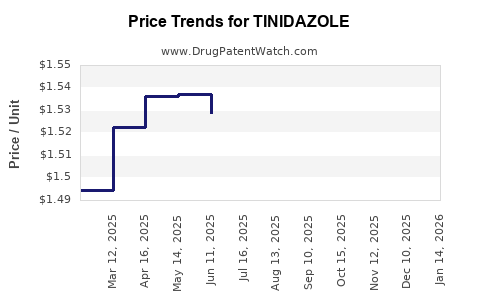
Generic competition and payer substitution |
| Gross margin |
Compressed |
Low unit prices and procurement pressure |
| Brand revenue |
Structurally declining |
Generic substitution limits premium pricing |
| Generic revenue pool |
Fragmented |
Multiple suppliers divide demand |
| Manufacturing cost |
Low to moderate |
Conventional oral solid dosage form |
| Working-capital risk |
Moderate |
Tender and wholesaler inventory cycles |
| Revenue growth |
Limited |
No major new indication or exclusivity driver |
Tinidazole can remain profitable for a manufacturer with efficient sourcing, high-volume distribution, reliable quality systems, or a shortage-related supply position. Its absolute revenue opportunity is constrained by low price and substitution. The product is more likely to contribute incremental portfolio revenue than to support a standalone commercial infrastructure.
What generic entry risks exist for tinidazole?
Generic entry risk is already realized in the United States. Future competitive risk comes from additional suppliers, lower prices, and procurement consolidation rather than the initial launch of the first generic.
The main risks are:
- Price erosion from additional ANDA holders.
- Contract losses in wholesalers, hospitals, and public-health tenders.
- Supply interruptions caused by dependence on a limited number of API or finished-dose plants.
- Manufacturing observations or import restrictions.
- Therapeutic substitution with metronidazole or secnidazole.
- Lower utilization if clinical guidelines favor alternative regimens.
- Increased competition from low-cost international manufacturers.
The principal barriers are regulatory compliance, reliable supply, and customer access. Patent clearance is comparatively straightforward.
What patent litigation affects tinidazole?
No active, high-value U.S. patent litigation appears to define the current tinidazole market. The absence of a meaningful patent dispute means that litigation risk is lower than for newer branded drugs with listed formulation or method-of-use patents.
Potential disputes could still arise over:
- ANDA validity or bioequivalence
- Manufacturing processes
- Trade secrets
- Product labeling
- Trademark rights involving Tindamax
- Contract manufacturing and distribution agreements
- Regulatory exclusivity in a specific foreign jurisdiction
These issues would generally affect individual suppliers rather than the entire market.
Are there licensing deals involving tinidazole?
No major recent licensing transaction has established a material new value center for tinidazole. The product’s age, generic competition, and limited patent protection reduce the likelihood of large upfront payments or strategic licensing premiums.
Commercial arrangements are more likely to involve:
- Contract manufacturing
- Regional distribution rights
- Private-label supply
- API sourcing
- Hospital or government procurement
- Portfolio acquisitions by generic companies
A licensee could obtain value from geographic access, a reliable supplier network, or a differentiated formulation. A conventional immediate-release tablet would offer limited negotiating leverage without scale or supply scarcity.
What is the geographic coverage of tinidazole?
Tinidazole is marketed in multiple regions, with regulatory status and commercial positioning varying by country. The product has established use in markets where protozoal and anaerobic infections are common and where oral short-course therapy is valued.
Geographic commercial factors include:
- United States: Genericized prescription market with limited brand protection.
- Europe: Nationally fragmented generic markets governed by local reimbursement and authorization systems.
- India: Broad availability through domestic generic manufacturers and branded-generic channels.
- Latin America: Strong relevance for gastrointestinal and reproductive-tract infections, with country-specific registration and pricing.
- Middle East, Africa, and Asia: Demand influenced by infectious-disease burden, procurement programs, and local manufacturing.
Patent and regulatory conclusions must be made country by country. Expired U.S. rights do not automatically establish freedom to operate in every jurisdiction.
How strong is the tinidazole patent estate?
The patent estate is weak from a blocking perspective and may retain limited defensive or lifecycle value only in narrow formulations, processes, or jurisdictions.
| Criterion |
Assessment |
| Blocking composition patent |
Weak or expired |
| Orange Book protection |
None materially restricting ordinary generic entry |
| Formulation differentiation |
Limited |
| Method-of-use protection |
Limited |
| Manufacturing barriers |
Potentially meaningful for individual suppliers |
| Geographic patent risk |
Low in mature markets, but country-specific |
| Litigation leverage |
Low |
| Lifecycle-management potential |
Modest |
The strongest defensible assets in a current tinidazole portfolio would likely be manufacturing quality, supply reliability, distribution rights, or a clinically useful dosage form rather than the active ingredient itself.
What generic launch scenarios are most likely?
The base case is continued generic supply with gradual price pressure and stable demand. Three scenarios are commercially relevant:
| Scenario |
Probability profile |
Market effect |
| Stable multi-supplier market |
Base case |
Low prices, recurring but modest revenue |
| Supplier consolidation or shortage |
Upside for available manufacturers |
Temporary price and volume improvement |
| Therapeutic substitution |
Downside |
Lower tinidazole utilization and weaker demand |
A durable price increase would require supply disruption, regulatory withdrawal of competitors, procurement concentration, or a differentiated product. A new patent by itself would have limited value unless tied to a commercially preferred formulation or delivery system.
Key Takeaways
- Tinidazole is a mature generic nitroimidazole with stable but limited commercial growth.
- Tindamax was approved in the United States in December 2004 under NDA 021618.
- No active Orange Book patent barrier materially restricts ordinary U.S. generic entry.
- Current competition is driven by price, supply reliability, distribution, and therapeutic substitution.
- Tinidazole has no biosimilar risk because it is a small-molecule drug.
- Public companies and private manufacturers generally do not disclose standalone tinidazole revenue.
- The financial profile is low-price, low-growth, and margin-sensitive.
- The strongest commercial assets are manufacturing capacity, regulatory compliance, and geographic distribution.
- Formulation or delivery innovations could create value, but conventional immediate-release tablets have limited differentiation.
- Patent litigation and Paragraph IV activity are not central to the current U.S. market.
FAQs
Is tinidazole still under patent in the United States?
No material active U.S. Orange Book patent appears to block generic tinidazole tablets. Any original molecule-level protection expired long ago.
Is Tindamax still commercially important?
Tindamax retains brand recognition, but its commercial importance is limited by generic substitution and the availability of lower-priced tinidazole products.
Does tinidazole have biosimilar competition?
No. Biosimilars apply to biologic products. Tinidazole competes through the small-molecule generic pathway.
Can a new tinidazole formulation obtain patent protection?
Potentially. A novel, non-obvious formulation, delivery system, or manufacturing process may be patentable. Such protection would cover the claimed innovation, not necessarily ordinary tinidazole tablets.
What drug is the largest competitor to tinidazole?
Metronidazole is generally the closest broad-market competitor because it is widely available, inexpensive, and approved across numerous anaerobic and protozoal indications.
Is tinidazole an attractive acquisition target?
As a standalone asset, it has limited strategic value because of low pricing and weak exclusivity. It may be attractive as part of a broader generic anti-infective portfolio, particularly where the buyer has manufacturing scale or regional distribution.
References
- U.S. Food and Drug Administration. (2016). Tindamax (tinidazole) tablets, prescribing information. Mission Pharmacal Company. https://www.accessdata.fda.gov
- U.S. Food and Drug Administration. (2004). Drugs@FDA: Tindamax, NDA 021618. https://www.accessdata.fda.gov/scripts/cder/daf/
- U.S. Food and Drug Administration. (2024). Approved drug products with therapeutic equivalence evaluations, Orange Book. https://www.fda.gov/drugs/drug-approvals-and-databases/approved-drug-products-therapeutic-equivalence-evaluations-orange-book