You're using a free limited version of DrugPatentWatch: Upgrade for Complete Access

Last Updated: April 1, 2026

Drug Sales Trends for TINIDAZOLE


✉ Email this page to a colleague
« Back to Dashboard


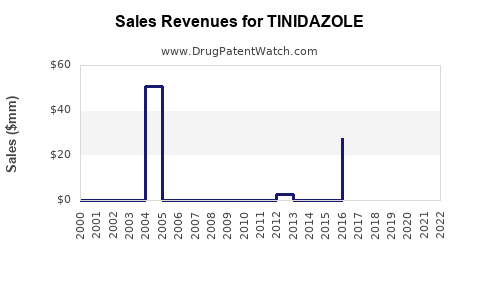
Drug Sales Revenue Trends for TINIDAZOLE
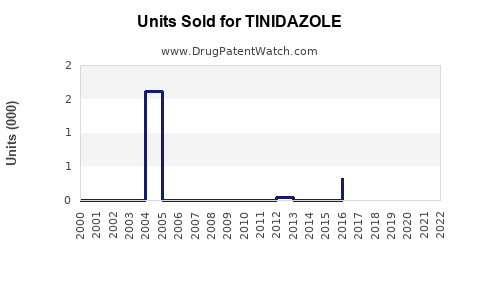
Drug Units Sold Trends for TINIDAZOLE

Annual Sales Revenues and Units Sold for TINIDAZOLE

These sales figures are drawn from a US national survey of drug expenditures
Drug Name Revenues (USD) Units Year
TINIDAZOLE ⤷  Start Trial ⤷  Start Trial 2022
TINIDAZOLE ⤷  Start Trial ⤷  Start Trial 2021
TINIDAZOLE ⤷  Start Trial ⤷  Start Trial 2020
TINIDAZOLE ⤷  Start Trial ⤷  Start Trial 2019
TINIDAZOLE ⤷  Start Trial ⤷  Start Trial 2018
>Drug Name >Revenues (USD) >Units >Year

TINIDAZOLE Market Analysis and Financial Projection

Last updated: February 15, 2026

What Is the Current Market Size for TINIDAZOLE?

TINIDAZOLE is an antiparasitic agent treating protozoal infections, including amoebiasis, giardiasis, and trichomoniasis. The compound's global market value was valued at approximately $150 million in 2022 and is expected to grow at a compound annual growth rate (CAGR) of 4.8% through 2030, reaching roughly $240 million.

Key factors include:

  • Prevalence of parasitic infections. Approximately 200 million cases of amoebiasis annually worldwide[1].
  • Use in low- and middle-income countries. High prevalence sustains steady demand.
  • Existing generic competition. Most formulations are now generic, limiting branded growth.

How Does TINIDAZOLE's Market Penetration Compare Globally?

Regional distribution shows:

Region Market Share Estimated Revenue (2022) CAGR (2023-2030)
Asia-Pacific 55% $82.5 million 5.0%
Africa 25% $37.5 million 4.9%
Europe 10% $15 million 3.5%
North America 5% $7.5 million 3.0%
Latin America 5% $7.5 million 4.2%

The Asia-Pacific region dominates the market due to high parasitic disease burden and limited healthcare infrastructure, relying heavily on low-cost generics.

What Are the Sales Drivers and Barriers?

Drivers:

  • Rising incidence of parasitic intestinal infections.
  • Low-cost generic formulations remain accessible.
  • Increasing awareness and testing in endemic areas.

Barriers:

  • Development of resistance to nitroimidazoles, including tinidazole.
  • Competition from alternative therapies, such as metronidazole.
  • Regulatory challenges in approving new formulations or indications.

What Are Future Sales Projections?

Based on current growth trends and market dynamics, sales are projected as follows:

Year Estimated Market Revenue Growth Rate
2023 $157 million 4.8%
2025 $185 million 4.9%
2027 $212 million 4.7%
2030 $240 million 4.8%

The consistent CAGR suggests moderate but steady growth, with potential accelerations in Africa and Asia due to increased infrastructure investments.

Are There Opportunities for Market Expansion?

Yes. Key opportunities include:

  • Developing combination therapies for co-infections.
  • Introducing tablet formulations with improved dosing convenience.
  • Expanding into markets with rising parasitic disease prevalence, such as Latin America and Southeast Asia.
  • Seeking regulatory approvals for new indications or for pediatric use.

What Are the Risks and Challenges?

  • Market saturation by generic products.
  • Resistance development reducing efficacy.
  • Limited investment in R&D due to low profit margins.
  • Variability in healthcare infrastructure affecting distribution.

Closing Summary

The global TINIDAZOLE market remains modest, with substantial regional variation. Growth is driven by endemic parasitic infections, particularly in Asia-Pacific and Africa. Market expansion hinges on innovation and addressing resistance issues. However, high generic competition and limited margins temper aggressive growth strategies.

Key Takeaways

  • Current market size approximates $150 million, with projected growth to $240 million by 2030.
  • Asia-Pacific and Africa regions account for over 80% of sales.
  • Sales growth remains steady, driven by endemic infection prevalence.
  • Opportunities exist in formulation improvements, new indications, and geographic expansion.
  • Resistance and generics pose ongoing challenges.

FAQs

1. How does tinidazole compare to metronidazole?
Tinidazole offers similar efficacy but has a longer half-life, allowing once-daily dosing, and causes fewer side effects, leading to better patient compliance.

2. Are there any new formulations of tinidazole in development?
Current development focuses on pediatric formulations and combination therapies, but no recent novel formulations have received regulatory approval.

3. What regulatory agencies oversee tinidazole sales in key markets?
The FDA (United States), EMA (Europe), and regional health authorities in endemic areas regulate approvals and formulations.

4. How does resistance impact future sales?
Resistance to nitroimidazoles can reduce effectiveness, potentially shrinking demand unless new formulations or combination therapies are developed.

5. What is the competitive landscape for tinidazole?
Most marketed products are generic. Branded versions are limited, primarily produced by a few generic manufacturers, with no dominant patent-holders.


[1] World Health Organization. Global prevalence of parasitic infections, 2022.

More… ↓

⤷  Start Trial

Make Better Decisions: Try a trial or see plans & pricing

Drugs may be covered by multiple patents or regulatory protections. All trademarks and applicant names are the property of their respective owners or licensors. Although great care is taken in the proper and correct provision of this service, thinkBiotech LLC does not accept any responsibility for possible consequences of errors or omissions in the provided data. The data presented herein is for information purposes only. There is no warranty that the data contained herein is error free. We do not provide individual investment advice. This service is not registered with any financial regulatory agency. The information we publish is educational only and based on our opinions plus our models. By using DrugPatentWatch you acknowledge that we do not provide personalized recommendations or advice. thinkBiotech performs no independent verification of facts as provided by public sources nor are attempts made to provide legal or investing advice. Any reliance on data provided herein is done solely at the discretion of the user. Users of this service are advised to seek professional advice and independent confirmation before considering acting on any of the provided information. thinkBiotech LLC reserves the right to amend, extend or withdraw any part or all of the offered service without notice.