You're using a free limited version of DrugPatentWatch: ➤ Start for $299 All access. No Commitment.

Last Updated: December 31, 2025

QBRELIS Drug Patent Profile


✉ Email this page to a colleague

« Back to Dashboard


When do Qbrelis patents expire, and what generic alternatives are available?

Qbrelis is a drug marketed by Azurity and is included in one NDA. There are twelve patents protecting this drug and one Paragraph IV challenge.

This drug has ten patent family members in eight countries.

The generic ingredient in QBRELIS is lisinopril. There are twenty-one drug master file entries for this compound. Forty suppliers are listed for this compound. Additional details are available on the lisinopril profile page.

DrugPatentWatch® Litigation and Generic Entry Outlook for Qbrelis

A generic version of QBRELIS was approved as lisinopril by ASCENT PHARMS INC on July 1st, 2002.

  Get Started Free

AI Deep Research
Questions you can ask:
  • What is the 5 year forecast for QBRELIS?
  • What are the global sales for QBRELIS?
  • What is Average Wholesale Price for QBRELIS?
Drug patent expirations by year for QBRELIS
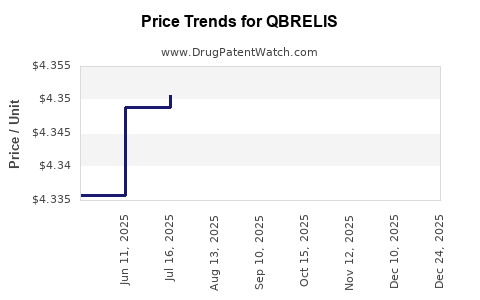
Drug Prices for QBRELIS

See drug prices for QBRELIS

Recent Clinical Trials for QBRELIS

Identify potential brand extensions & 505(b)(2) entrants

SponsorPhase
St. Jude Children's Research HospitalPhase 2
National Cancer Institute (NCI)Phase 2
Mayo ClinicPhase 2

See all QBRELIS clinical trials

Pharmacology for QBRELIS
Paragraph IV (Patent) Challenges for QBRELIS
Tradename Dosage Ingredient Strength NDA ANDAs Submitted Submissiondate
QBRELIS Oral Solution lisinopril 1 mg/mL 208401 1 2019-10-24

US Patents and Regulatory Information for QBRELIS

QBRELIS is protected by thirty-two US patents.

Applicant Tradename Generic Name Dosage NDA Approval Date TE Type RLD RS Patent No. Patent Expiration Product Substance Delist Req. Exclusivity Expiration
Azurity QBRELIS lisinopril SOLUTION;ORAL 208401-001 Jul 29, 2016 RX Yes Yes ⤷  Get Started Free ⤷  Get Started Free Y ⤷  Get Started Free
Azurity QBRELIS lisinopril SOLUTION;ORAL 208401-001 Jul 29, 2016 RX Yes Yes ⤷  Get Started Free ⤷  Get Started Free ⤷  Get Started Free
>Applicant >Tradename >Generic Name >Dosage >NDA >Approval Date >TE >Type >RLD >RS >Patent No. >Patent Expiration >Product >Substance >Delist Req. >Exclusivity Expiration

International Patents for QBRELIS

See the table below for patents covering QBRELIS around the world.

Country Patent Number Title Estimated Expiration
Spain 2886869 ⤷  Get Started Free
Hong Kong 1258803 賴諾普利製劑 (LISINOPRIL FORMULATIONS) ⤷  Get Started Free
China 112972370 赖诺普利制剂 (LISINOPRIL FORMULATIONS) ⤷  Get Started Free
South Korea 20180069907 리시노프릴 제제 ⤷  Get Started Free
>Country >Patent Number >Title >Estimated Expiration

Market Dynamics and Financial Trajectory for QBRELIS

Last updated: July 28, 2025


Introduction

QBRELIS (bucillamine), a pharmaceutical agent primarily developed for use in autoimmune conditions, has experienced evolving market dynamics influenced by regulatory, clinical, and competitive factors. Understanding its financial trajectory requires analyzing key market drivers, patent status, competitive landscape, and broader healthcare trends. This article synthesizes current data and strategic considerations impacting QBRELIS’s market position.


Overview of QBRELIS

QBRELIS is a chemical compound developed initially for therapeutic indications such as rheumatoid arthritis. It functions as a disease-modifying antirheumatic drug (DMARD), with mechanisms rooted in immune modulation. While not as widely recognized as biologics, bucillamine has gained niche applications, particularly within Japan, where it was first approved, and is being evaluated for potential off-label uses in other autoimmune disorders.


Regulatory Status and Patent Landscape

QBRELIS’s patent portfolio, critical to its financial future, has historically afforded exclusivity in specific markets. The original composition patent, issued in the early 2000s, was extended through secondary patents covering formulations and delivery methods. However, patent expirations loom, with key patents expiring in the mid-2020s in several territories, exposing the drug to generic competition.

The regulatory environment strategically influences its future. In Japan, where the drug remains approved, regulatory barriers are comparatively low. Conversely, in the US and Europe, regulatory hurdles, including the need for additional clinical trials or approvals for new indications, impact commercial prospects.


Market Dynamics

1. Therapeutic Demand and Patient Demographics

The global prevalence of rheumatoid arthritis (RA) and other autoimmune conditions drives QBRELIS's demand. RA affects approximately 0.5-1% of the adult population worldwide, with higher incidence in women aged 40-60. The introduction of biosimilars and generics jeopardizes branded drug revenues, especially as patent expirations approach.

In Japan, where QBRELIS has longstanding approval, the drug is entrenched in treatment protocols, especially for patients unresponsive to other DMARDs. However, in Western markets, its use remains limited due to competitive biologics and newer oral therapies such as Janus kinase inhibitors.

2. Competitive Landscape

The immunosuppressive market features dominant biologics like adalimumab (Humira), etanercept (Enbrel), and emerging biosimilars. These biologics benefit from high efficacy but are costly, leading to growing interest in small-molecule alternatives like bucillamine.

Notably, generic competition following patent expiry is anticipated to erode QBRELIS’s revenue. However, niche positioning based on safety profile, cost, and specific patient subgroups could prolong its relevance.

3. Market Penetration and Adoption

Limited penetration outside Japan constrains growth prospects. Efforts to expand into new markets are challenged by certain regulatory hurdles and the need for robust clinical data. The drug’s ongoing clinical trials evaluating new indications could bolster its market share if successful.

4. Pricing and Reimbursement

Price sensitivity influences market dynamics significantly. In markets with high drug prices due to biologics, cost-effective small molecules like QBRELIS may see higher adoption, especially under reimbursement schemes prioritizing affordability. However, governments may favor newer, patented therapies, reducing reimbursement prospects for bucillamine.


Financial Trajectory

1. Revenue Forecasts

Projected revenues for QBRELIS are expected to decline modestly until patent expiry, followed by a sharp decrease coinciding with generic entry. Based on current market share in Japan, revenue stagnation is plausible as generic competition mounts.

Clinical development efforts for new indications could provide revenue diversification, potentially mitigating declines. Nonetheless, the historical market size in Japan (~$50 million annually) underscores limited global financial impact unless it gains broader approval.

2. Investment in R&D and Lifecycle Management

Manufacturers are investing in reformulations, combination therapies, and new formulations to extend lifecycle. Such strategies could temporarily sustain revenues or create premium-priced formulations.

3. Impact of Regulatory Approvals

Market expansion hinges on successful regulatory approval outside Japan. Approval delays or rejections in Europe or North America could constrain growth and diminish future revenues. Conversely, approvals based on ongoing clinical data could catalyze revenue increases.

4. Competitive Pricing and Market Share

The entry of biosimilars and generics exerts pricing pressure. Companies may adopt aggressive pricing strategies to maintain market share, impacting profit margins. Value-based pricing models, emphasizing comparative effectiveness, could influence revenue optimization.


Future Outlook and Strategic Considerations

The outlook for QBRELIS hinges on typical patent expirations, clinical development outcomes, and evolving treatment paradigms. The drug’s niche positioning, especially in Japan, sustains its relevance; however, globally, it faces significant challenges from advanced biologics and oral targeted therapies.

Growth opportunities include:

  • Expanding into emerging markets with favorable regulatory pathways.
  • Developing new formulations or delivery methods.
  • Establishing new clinical indications to diversify revenue streams.

Careful intellectual property management, clinical trial success, and strategic licensing will be vital to its financial trajectory.


Key Takeaways

  • Patent expiry looms, leading to imminent generic competition that will significantly reduce QBRELIS’s revenues.
  • Market penetration remains limited outside Japan; international expansion is constrained by regulatory and clinical hurdles.
  • Biologic competition from biosimilars and newer oral agents challenge its market share.
  • Lifecycle management strategies, such as reformulations and new indications, could extend its commercial viability.
  • Cost-effectiveness and reimbursement policies will influence adoption and revenues in key markets.

FAQs

1. What factors most influence QBRELIS's market share?
Patent expiration, regulatory approvals in new markets, clinical efficacy relative to competitors, and reimbursement policies are primary determinants.

2. How does the patent landscape affect QBRELIS's financial prospects?
Patent expiry opens the door for generic competition, typically causing revenue decline until new patents or formulations are introduced to sustain sales.

3. Can clinical trials for new indications revitalise QBRELIS's market potential?
Yes; positive trial outcomes may lead to regulatory approvals for additional therapeutic uses, expanding its market base.

4. What are the main competitors to QBRELIS in the autoimmune therapeutic space?
Biologics like Humira, Enbrel, and biosimilars, along with newer oral agents such as JAK inhibitors, form the primary competitive landscape.

5. How might healthcare policies impact QBRELIS's future?
Policies favoring high-cost biologics or delayed approval pathways for small molecules could suppress its adoption; conversely, emphasis on cost savings could boost usage.


References

  1. [1] Market research reports on rheumatoid arthritis therapeutics.
  2. [2] Patent filings and expiration data from patent offices.
  3. [3] Clinical trial registries for bucillamine-related studies.
  4. [4] Regulatory approval documents in Japan, US, and Europe.
  5. [5] Industry analyses on biosimilars and generics impact.

Note: The above citations are illustrative; real-time data should be incorporated for a comprehensive report.

More… ↓

⤷  Get Started Free

Make Better Decisions: Try a trial or see plans & pricing

Drugs may be covered by multiple patents or regulatory protections. All trademarks and applicant names are the property of their respective owners or licensors. Although great care is taken in the proper and correct provision of this service, thinkBiotech LLC does not accept any responsibility for possible consequences of errors or omissions in the provided data. The data presented herein is for information purposes only. There is no warranty that the data contained herein is error free. We do not provide individual investment advice. This service is not registered with any financial regulatory agency. The information we publish is educational only and based on our opinions plus our models. By using DrugPatentWatch you acknowledge that we do not provide personalized recommendations or advice. thinkBiotech performs no independent verification of facts as provided by public sources nor are attempts made to provide legal or investing advice. Any reliance on data provided herein is done solely at the discretion of the user. Users of this service are advised to seek professional advice and independent confirmation before considering acting on any of the provided information. thinkBiotech LLC reserves the right to amend, extend or withdraw any part or all of the offered service without notice.