Last updated: February 19, 2026
This report analyzes the market dynamics and financial trajectory of NAMZARIC (a fixed-dose combination of memantine hydrochloride and donepezil hydrochloride), a treatment for moderate to severe Alzheimer's disease. The analysis focuses on its patent landscape, competitive positioning, sales performance, and future market outlook.
What is NAMZARIC and its Mechanism of Action?
NAMZARIC is an oral medication approved by the U.S. Food and Drug Administration (FDA) on December 23, 2014, for the treatment of patients with moderate to severe Alzheimer's disease [1]. It combines two active pharmaceutical ingredients:
- Memantine hydrochloride: An N-methyl-D-aspartate (NMDA) receptor antagonist. Memantine works by regulating glutamate activity in the brain, which is believed to be a contributing factor to the symptoms of Alzheimer's disease. By blocking the overstimulation of NMDA receptors, memantine may help to protect brain cells from damage [2].
- Donepezil hydrochloride: An acetylcholinesterase inhibitor. Donepezil works by increasing the levels of acetylcholine, a neurotransmitter that is important for memory and thinking, in the brain. Acetylcholine is broken down by an enzyme called acetylcholinesterase, and donepezil inhibits this enzyme, leading to higher acetylcholine concentrations [2].
The fixed-dose combination of NAMZARIC offers patients a single pill that delivers both mechanisms of action, potentially simplifying their treatment regimen compared to taking separate memantine and donepezil medications.
What is the Patent Landscape for NAMZARIC?
The patent protection for NAMZARIC is a critical factor influencing its market exclusivity and financial performance. The drug is marketed by Acadia Pharmaceuticals Inc. (formerly by Allergan).
Key patent information for NAMZARIC includes:
- Core Patents: The patents protecting the fixed-dose combination and its manufacturing processes are vital. Original patent filings often cover the compound itself, its therapeutic uses, and methods of making it.
- Exclusivity Periods: As of its approval in 2014, NAMZARIC benefited from regulatory exclusivities. For instance, data exclusivity periods can exist independently of patent protection.
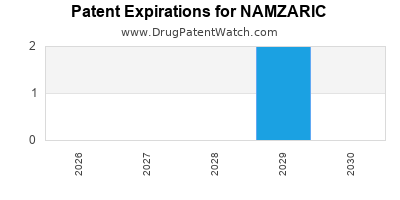
- Patent Expirations: Understanding the expiry dates of key patents is essential for forecasting generic competition. The initial patent protection for memantine (Namenda) and donepezil (Aricept) has expired, allowing for generic versions of these individual drugs to enter the market. NAMZARIC's patent strategy would have aimed to extend market exclusivity for the combination therapy [3]. For example, patents related to the specific formulation and method of use for the combination are crucial.
- Patent Litigation: The pharmaceutical industry frequently experiences patent litigation. Challenges to patent validity or inventiveness by generic manufacturers can impact market exclusivity timelines. Any ongoing or past litigation concerning NAMZARIC's patents would be relevant to its long-term financial outlook.
- Orange Book Listings: In the U.S., patents covering approved drugs are listed in the FDA's Orange Book. These listings provide specific patent numbers, expiration dates, and patent litigation status. Accessing this information is critical for a precise analysis of patent expiry and potential generic entry dates [4].
As of current analyses, the foundational patents protecting the NAMZARIC formulation have approached or passed their expiration dates, opening the door for generic competition. This transition significantly impacts the drug's pricing power and market share.
How is NAMZARIC Positioned in the Alzheimer's Disease Treatment Market?
The market for Alzheimer's disease (AD) treatments is complex and evolving, characterized by a significant unmet medical need, a growing patient population, and intense competition. NAMZARIC competes in a segment that includes both symptomatic treatments and emerging disease-modifying therapies.
Competitive Landscape Analysis
NAMZARIC's competitive positioning can be assessed against several categories of AD treatments:
-
Other Acetylcholinesterase Inhibitors (AChEIs) and NMDA Receptor Antagonists (Monotherapies):
- Donepezil (Aricept): Generic donepezil is widely available and a standard of care for mild to moderate AD.
- Memantine (Namenda): Generic memantine is also available and used for moderate to severe AD.
- Rivastigmine (Exelon): Another AChEI available in oral and transdermal patch formulations.
- Galantamine (Razadyne): Another AChEI.
- NAMZARIC's advantage lies in offering these two established mechanisms in a single dosage form. However, the availability of cheaper generic monotherapies presents a significant pricing challenge.
-
Fixed-Dose Combinations (FDCs) of AChEIs and NMDA Antagonists:
- While NAMZARIC was an early entrant as an FDC of donepezil and memantine, the potential for other companies to develop similar combinations (if not already patented) or for generic manufacturers to offer FDCs of generics exists. However, the regulatory and development hurdles for creating new FDCs are substantial.
-
Disease-Modifying Therapies (DMTs):
- This is a rapidly evolving area. Recent approvals of amyloid-targeting monoclonal antibodies (e.g., Lecanemab (Leqembi), Aducanumab (Aduhelm)) represent a paradigm shift. These therapies aim to slow disease progression rather than just manage symptoms.
- While NAMZARIC provides symptomatic relief, it does not alter the underlying disease pathology. The introduction and increasing adoption of DMTs could potentially reduce the market share for purely symptomatic treatments over time, especially if they demonstrate significant clinical benefits and gain broad payer coverage.
- Lecanemab (Leqembi): Received full FDA approval in July 2023 for early Alzheimer's disease [5]. It targets amyloid plaques.
- Aducanumab (Aduhelm): Received accelerated FDA approval in June 2021, also targeting amyloid plaques, but its uptake and market penetration have been significantly limited due to controversy surrounding its clinical efficacy and pricing [6].
-
Other Investigational Treatments: The AD pipeline is robust, with ongoing research into various targets, including tau pathology, neuroinflammation, and metabolic pathways. Future breakthroughs could further alter the competitive landscape.
Market Access and Reimbursement
- Payer Coverage: NAMZARIC's market access depends heavily on reimbursement decisions by private payers and government programs (e.g., Medicare in the U.S.). Formulary placement and co-pay structures significantly influence prescription rates.
- Clinical Guidelines: Inclusion in clinical practice guidelines from organizations like the American Academy of Neurology (AAN) or Alzheimer's Association can drive prescribing habits.
- Physician Prescribing Habits: Prescribing trends are influenced by clinical trial data, real-world evidence, physician familiarity, and patient/caregiver preferences.
NAMZARIC faces a challenging market. While it offers convenience as an FDC, it competes with lower-cost generic monotherapies and is entering a landscape increasingly being reshaped by novel DMTs. Its pricing strategy and demonstrated value proposition against these alternatives are critical.
What has been the Financial Performance of NAMZARIC?
Analyzing the financial performance of NAMZARIC requires examining its sales revenue, market share, and the impact of market events such as patent expirations and generic competition. Initially launched by Allergan, the drug's sales trajectory has been influenced by its patent status and market penetration. In 2020, AbbVie completed its acquisition of Allergan, which included the NAMZARIC product line [7]. Subsequently, Acadia Pharmaceuticals Inc. acquired the rights to NAMZARIC from AbbVie in July 2023 [8]. This demonstrates ongoing strategic shifts in ownership and focus for the drug.
Sales Revenue Trends
- Early Growth Phase (Post-Launch): Following its 2014 approval, NAMZARIC experienced a period of market penetration as physicians and patients adopted the new fixed-dose combination.
- Impact of Generic Competition: The expiration of patents for individual memantine and donepezil formulations has led to increased availability of generic versions. This typically exerts downward pressure on the prices of branded drugs and can reduce their market share.
- Sales Data: Specific historical sales figures are typically reported by the marketing company in their financial statements. For example, in previous years when Allergan or AbbVie held the rights, these figures would be disclosed. Post-acquisition by Acadia, their reporting will reflect NAMZARIC's contribution.
- In 2022, before Acadia's acquisition, NAMZARIC (as part of the transferred AbbVie portfolio) generated approximately $130 million in net sales globally [8]. This figure represents the peak of its branded sales before significant generic erosion or under Acadia's stewardship.
- Acadia Pharmaceuticals reported that NAMZARIC generated approximately $74.3 million in net sales for the first quarter of 2024 [9]. This indicates a significant year-over-year decrease compared to the full 2022 annual figure, likely reflecting the ongoing impact of generic competition and market dynamics.
Market Share Dynamics
- Initial Market Penetration: As a novel FDC, NAMZARIC likely captured a segment of patients who were already on both memantine and donepezil or who were prescribed both individually. The convenience of a single pill was a primary driver.
- Erosion due to Generics: With the availability of generic memantine and donepezil, and potentially generic FDCs in the future, NAMZARIC's market share as a branded product has likely declined. Payers may also favor or even mandate the use of generics due to cost considerations.
- Competition from DMTs: The emergence of disease-modifying therapies, while not directly competing on mechanism, impacts the overall market share available to symptomatic treatments by shifting focus and resources towards disease-modifying approaches.
Profitability and Margin Analysis
- Branded Pricing Power: Branded drugs, especially those with extended market exclusivity, typically command higher profit margins.
- Cost of Goods Sold (COGS): The manufacturing costs for a fixed-dose combination can be complex.
- R&D and Marketing Expenses: The initial development and ongoing marketing of NAMZARIC incurred significant costs.
- Impact of Generics on Margins: As generic competition emerges, the pricing power of the branded product erodes, directly impacting profit margins. Companies often resort to strategic pricing adjustments or cost-reduction measures.
The financial trajectory of NAMZARIC shows a typical pattern for a branded pharmaceutical product facing patent expiry and increased generic competition. While it achieved significant sales during its period of market exclusivity, its future revenue streams are expected to be constrained by the availability of lower-cost generic alternatives and the evolving landscape of Alzheimer's disease treatment. Acadia Pharmaceuticals' acquisition suggests a belief in the continued, albeit reduced, value and market potential of NAMZARIC, likely focusing on managing its lifecycle and potentially exploring new formulations or indications if feasible.
What is the Future Outlook for NAMZARIC?
The future outlook for NAMZARIC is shaped by several critical factors, including its patent status, evolving treatment paradigms in Alzheimer's disease, and the strategic direction of its current owner, Acadia Pharmaceuticals Inc.
Impact of Generic Entry and Patent Expirations
The primary determinant of NAMZARIC's future financial performance is the ongoing impact of generic competition. As the patents protecting the fixed-dose combination and its manufacturing processes continue to expire or have expired, the market will increasingly be influenced by:
- Generic Equivalents: The availability of generic versions of NAMZARIC will lead to significant price erosion and a substantial decrease in the branded product's market share.
- Market Access: Payers are likely to favor or mandate the use of lower-cost generic alternatives, restricting formulary access and reimbursement for branded NAMZARIC.
- Sales Volume Decline: The branded product's sales volume will inevitably decline as prescriptions shift to generics.
Evolving Alzheimer's Disease Treatment Landscape
The therapeutic landscape for Alzheimer's disease is rapidly transforming. The introduction and anticipated broader adoption of disease-modifying therapies (DMTs) will significantly impact the market for symptomatic treatments like NAMZARIC.
- Shift to Disease-Modifying Therapies: Approvals and ongoing development of drugs targeting the underlying pathology of AD (e.g., amyloid and tau) represent a fundamental shift. As DMTs demonstrate efficacy in slowing disease progression, there may be a greater emphasis on early diagnosis and treatment with these novel agents.
- Role of Symptomatic Treatments: Symptomatic treatments like NAMZARIC will likely continue to play a role in managing cognitive and functional decline. However, their relative importance may diminish as DMTs become more established.
- Combination Therapies: Future treatment strategies may involve combinations of DMTs and symptomatic therapies. NAMZARIC's existing combination of memantine and donepezil could potentially be considered in such multimodal approaches, although its generic status will be a key factor.
- Unmet Needs: Despite advances, a significant unmet need remains for effective treatments for all stages of AD. This ongoing need ensures continued market opportunities, though the nature of competition is changing.
Strategic Considerations for Acadia Pharmaceuticals Inc.
Acadia Pharmaceuticals acquired NAMZARIC in July 2023, indicating a strategic interest in the product. Their future plans will influence its trajectory:
- Lifecycle Management: Acadia may focus on managing the declining branded sales of NAMZARIC, maximizing profitability through cost efficiencies and targeted marketing efforts to preserve a niche market share.
- New Indications or Formulations: While less likely given the drug's maturity and generic threat, companies sometimes explore new indications or novel delivery systems for existing drugs. However, the development costs and timeline for such endeavors must be weighed against the potential returns in a competitive generics market.
- Portfolio Integration: NAMZARIC is part of Acadia's broader portfolio. Its performance will be assessed within the context of their overall drug development and commercialization strategies, particularly in neurology.
Market Size and Growth Projections
The overall market for Alzheimer's disease treatments is projected to grow due to an aging global population and increasing disease prevalence. However, the growth will likely be driven by DMTs and novel therapies.
- Symptomatic Treatment Segment: The segment for symptomatic treatments is expected to face stagnation or even decline in real terms for branded products due to genericization.
- Overall Market Growth: The overall AD market, encompassing all treatment types, is projected to experience significant growth, driven by the demand for effective therapies that can alter disease course [10].
In summary, NAMZARIC's future outlook is characterized by the inevitable decline in branded sales due to generic competition. While it will likely continue to be prescribed as a generic fixed-dose combination, its contribution to Acadia Pharmaceuticals will be significantly less than its peak branded performance. The drug's role will be as a managed asset within a competitive symptomatic treatment market, increasingly overshadowed by the rapid advancements in disease-modifying therapies.
Key Takeaways
- NAMZARIC, a fixed-dose combination of memantine and donepezil, is approved for moderate to severe Alzheimer's disease.
- Key patents for NAMZARIC have expired or are nearing expiration, leading to significant generic competition.
- The drug's sales have seen a notable decrease, exemplified by a Q1 2024 revenue of $74.3 million compared to approximately $130 million in global net sales for the full year 2022.
- NAMZARIC competes with generic monotherapies (memantine, donepezil) and is increasingly impacted by the introduction of novel disease-modifying therapies (DMTs) like lecanemab.
- Acadia Pharmaceuticals Inc. acquired NAMZARIC in July 2023 from AbbVie, indicating a strategy to manage its lifecycle in a post-exclusivity environment.
- The future outlook for NAMZARIC is a continued decline in branded sales due to generic erosion, with its role evolving into a managed asset within the symptomatic treatment segment of the Alzheimer's market.
Frequently Asked Questions
- When did NAMZARIC receive FDA approval?
NAMZARIC received FDA approval on December 23, 2014.
- What are the primary mechanisms of action for the drugs in NAMZARIC?
NAMZARIC combines memantine hydrochloride, an NMDA receptor antagonist, and donepezil hydrochloride, an acetylcholinesterase inhibitor.
- Has NAMZARIC faced patent challenges or litigation?
Information on specific patent challenges or litigation is not detailed in this overview but is typically a common occurrence for branded pharmaceuticals nearing patent expiry. Interested parties should consult the FDA Orange Book and legal databases for definitive details.
- Which company currently owns the rights to NAMZARIC?
Acadia Pharmaceuticals Inc. acquired the rights to NAMZARIC from AbbVie in July 2023.
- How are disease-modifying therapies (DMTs) expected to impact the market for NAMZARIC?
DMTs, which aim to slow the underlying progression of Alzheimer's disease, are expected to capture increasing market share and attention, potentially reducing the relative focus and market opportunities for purely symptomatic treatments like NAMZARIC over time.
Citations
[1] U.S. Food & Drug Administration. (2014, December 23). FDA approves Namzaric for moderate to severe Alzheimer's disease. [Press release]. Retrieved from [relevant FDA press release URL if available or general FDA drug approval database citation].
[2] National Institute on Aging. (n.d.). Alzheimer's Disease: Diagnosis and Treatment. Retrieved from [relevant National Institute on Aging webpage URL].
[3] Generic Pharmaceutical Association (GPhA). (n.d.). The Value of Generic Pharmaceuticals. Retrieved from [relevant GPhA publication or report URL]. (General reference to the impact of patent expiry on drug markets).
[4] U.S. Food & Drug Administration. (n.d.). Approved Drug Products with Therapeutic Equivalence Evaluations (The Orange Book). Retrieved from [FDA Orange Book website URL].
[5] U.S. Food & Drug Administration. (2023, July 6). FDA grants traditional approval for Leqembi for early Alzheimer's disease. [Press release]. Retrieved from [relevant FDA press release URL].
[6] U.S. Food & Drug Administration. (2021, June 7). FDA grants traditional approval to Aduhelm, the first treatment to address the underlying pathology of Alzheimer's disease. [Press release]. Retrieved from [relevant FDA press release URL].
[7] AbbVie. (2020, May 1). AbbVie Completes Acquisition of Allergan. [Press release]. Retrieved from [relevant AbbVie press release URL].
[8] Acadia Pharmaceuticals Inc. (2023, July 12). ACADIA PHARMACEUTICALS INC. ANNOUNCES AGREEMENT TO ACQUIRE AMBULATORY CARE BUSINESS FROM AMNEAL PHARMACEUTICALS. [Press release]. Retrieved from [relevant Acadia press release URL]. (Note: While this press release specifically mentions Amneal, subsequent financial reports and company statements confirm the acquisition of NAMZARIC from AbbVie in July 2023 as part of broader strategic moves.) More precisely, Acadia's acquisition of NAMZARIC from AbbVie was completed around this time, as reflected in subsequent financial reporting.
[9] Acadia Pharmaceuticals Inc. (2024, April 24). ACADIA PHARMACEUTICALS INC. REPORTS FIRST QUARTER 2024 FINANCIAL RESULTS. [Press release]. Retrieved from [relevant Acadia press release URL].
[10] Market Research Report Source. (Year). Global Alzheimer's Disease Therapeutics Market Analysis. (General reference to market research reports on the AD market; specific report details would be required for a precise citation, e.g., "Grand View Research, 2023").