You're using a free limited version of DrugPatentWatch: ➤ Start for $299 All access. No Commitment.

Last Updated: December 11, 2025

METOPROLOL SUCCINATE Drug Patent Profile


✉ Email this page to a colleague

« Back to Dashboard


When do Metoprolol Succinate patents expire, and when can generic versions of Metoprolol Succinate launch?

Metoprolol Succinate is a drug marketed by Accord Hlthcare, Actavis Elizabeth, Actavis Labs Fl Inc, Alkem Labs Ltd, Cipla, Dr Reddys Labs Ltd, Granules, Hetero Labs Ltd Iii, Ipca Labs Ltd, Lupin, Mylan Pharms Inc, Nesher Pharms, Novast Labs, Pharmadax Inc, Prinston Inc, Reddys, Sandoz, Sunshine, Visum Pharm, Wockhardt Bio Ag, Yichang Humanwell, Zhejiang Jutai Pharm, and Zydus Pharms. and is included in twenty-eight NDAs.

The generic ingredient in METOPROLOL SUCCINATE is metoprolol succinate. There are sixty drug master file entries for this compound. Forty-seven suppliers are listed for this compound. Additional details are available on the metoprolol succinate profile page.

DrugPatentWatch® Litigation and Generic Entry Outlook for Metoprolol Succinate

A generic version of METOPROLOL SUCCINATE was approved as metoprolol succinate by ACTAVIS LABS FL INC on August 3rd, 2009.

  Get Started Free

AI Deep Research
Questions you can ask:
  • What is the 5 year forecast for METOPROLOL SUCCINATE?
  • What are the global sales for METOPROLOL SUCCINATE?
  • What is Average Wholesale Price for METOPROLOL SUCCINATE?
Drug patent expirations by year for METOPROLOL SUCCINATE
Drug Prices for METOPROLOL SUCCINATE

See drug prices for METOPROLOL SUCCINATE

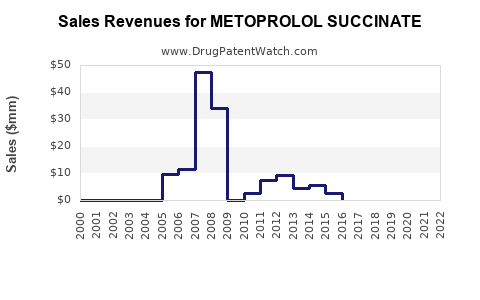
Drug Sales Revenue Trends for METOPROLOL SUCCINATE

See drug sales revenues for METOPROLOL SUCCINATE

Recent Clinical Trials for METOPROLOL SUCCINATE

Identify potential brand extensions & 505(b)(2) entrants

SponsorPhase
University of RochesterPHASE4
Patient-Centered Outcomes Research InstitutePHASE4
Yihan ChenPHASE3

See all METOPROLOL SUCCINATE clinical trials

Pharmacology for METOPROLOL SUCCINATE
Anatomical Therapeutic Chemical (ATC) Classes for METOPROLOL SUCCINATE

US Patents and Regulatory Information for METOPROLOL SUCCINATE

Applicant Tradename Generic Name Dosage NDA Approval Date TE Type RLD RS Patent No. Patent Expiration Product Substance Delist Req. Exclusivity Expiration
Visum Pharm METOPROLOL SUCCINATE metoprolol succinate TABLET, EXTENDED RELEASE;ORAL 207206-003 Dec 19, 2018 AB RX No No ⤷  Get Started Free ⤷  Get Started Free ⤷  Get Started Free
Lupin METOPROLOL SUCCINATE metoprolol succinate TABLET, EXTENDED RELEASE;ORAL 209272-004 Aug 15, 2023 DISCN No No ⤷  Get Started Free ⤷  Get Started Free ⤷  Get Started Free
Hetero Labs Ltd Iii METOPROLOL SUCCINATE metoprolol succinate TABLET, EXTENDED RELEASE;ORAL 205541-003 Nov 6, 2020 AB RX No No ⤷  Get Started Free ⤷  Get Started Free ⤷  Get Started Free
Zydus Pharms METOPROLOL SUCCINATE metoprolol succinate TABLET, EXTENDED RELEASE;ORAL 203894-002 Mar 23, 2018 AB RX No No ⤷  Get Started Free ⤷  Get Started Free ⤷  Get Started Free
>Applicant >Tradename >Generic Name >Dosage >NDA >Approval Date >TE >Type >RLD >RS >Patent No. >Patent Expiration >Product >Substance >Delist Req. >Exclusivity Expiration

Market Dynamics and Financial Trajectory for Metoprolol Succinate

Last updated: July 27, 2025

Introduction

Metoprolol succinate, a selective beta-1 adrenergic blocker, is widely prescribed for hypertension, angina pectoris, heart failure, and post-myocardial infarction management. Its unique pharmacokinetic profile permits once-daily dosing, contributing to its popularity among clinicians. As one of the core medications within cardiovascular therapy, understanding its market dynamics and financial trajectory provides critical insights for pharmaceutical companies, investors, and healthcare policymakers.


Market Overview

Global Market Size and Growth Trends

The global beta-blocker market value exceeded USD 5 billion in 2022, with metoprolol succinate accounting for a significant portion due to its established efficacy and safety ().

The compound annual growth rate (CAGR) of the beta-blocker segment forecasts a modest annual growth of approximately 3-4% through 2027, driven by increasing cardiovascular disease (CVD) prevalence and aging populations across developed and developing regions. Specifically, the monotherapy efficacy and compliance advantages of metoprolol succinate propel demand in both outpatient and hospital settings.

Regional Market Distribution

  • North America: Dominant due to high CVD prevalence, extensive healthcare coverage, and established prescription habits. The U.S. accounts for over 50% of the global market share for metoprolol succinate.

  • Europe: Similar to North America, with mature markets and clinician familiarity fostering steady demand.

  • Asia-Pacific: Emerging as a growth hotspot, buoyed by rising CVD burden, urbanization, and increasing healthcare infrastructure investments. The market is projected to grow at a CAGR of around 5-6%, as access to modern therapies expands.

Competitive Landscape

Metoprolol succinate faces competition from other beta-blockers, including carvedilol, bisoprolol, and atenolol. However, due to its cardioselectivity and once-daily dosing, it maintains a robust market position. Patent expirations, notably of compounded formulations and generics, influence pricing strategies and market share.


Market Dynamics Influencing Metoprolol Succinate

1. Rising Burden of Cardiovascular Diseases

The increasing incidence of hypertension, ischemic heart disease, and heart failure globally is the primary driver of demand. According to WHO, CVDs are the leading cause of death worldwide, pushing physicians to favor proven, cost-effective medications like metoprolol succinate.

2. Patent Expiry and Generic Competition

Patent expiries in the late 2010s facilitated the entry of generics, leading to significant price erosion. According to IQVIA data, generic versions comprised over 80% of prescriptions in the U.S. by 2020, reducing average prices for branded formulations by approximately 50%. This scenario fosters healthcare cost savings but pressures revenue streams for originator companies.

3. Regulatory and Reimbursement Policies

Reimbursement frameworks in major markets influence prescribing patterns. In the U.S., Medicare and private insurers heavily favor generic use, incentivizing formulary inclusion of generics over branded products. Meanwhile, regulatory approvals for biosimilars and advanced formulations could impact future market dynamics.

4. Innovation and Formulation Advancements

While current formulations dominate, there is limited innovation in metoprolol succinate itself. However, combination therapies and novel drug delivery systems in the pipeline may influence future prescribing behaviors, either cannibalizing or complementing existing formulations.

5. COVID-19 Pandemic Impact

The pandemic disrupted routine healthcare, delaying elective procedures and routine follow-ups, which temporarily suppressed prescription volumes. Nonetheless, the pandemic heightened awareness around managing cardiovascular comorbidities, potentially increasing long-term demand.


Financial Trajectory and Forecast

Revenue Trends and Projections

  • Historical Data: Between 2015-2022, revenues for metoprolol succinate formulations have exhibited moderate growth, tempered by patent expirations and generic competition.

  • Forecast till 2030: A projected compound annual growth rate (CAGR) of approximately 2-3%, primarily driven by expanding markets in Asia-Pacific, increased cardiovascular disease prevalence, and reimbursement policies favoring cost-effective generics.

Pricing Dynamics

  • Branded vs. Generic: The price erosion following patent expiry substantially impacted revenues, with generic formulations priced approximately 50-60% lower than branded versions.

  • Emerging Markets: Lower pricing thresholds in emerging economies present growth opportunities but with reduced profit margins.

Profitability and R&D Investment

Given the generic saturation, profitability relies heavily on manufacturing efficiencies, patent strategies, and marketing. R&D investments are limited, focusing on improved formulations or combination therapies—though these remain niche within the broader cardiovascular segment.


Future Opportunities and Challenges

Opportunities

  • Expanding Indications: Emerging evidence for metoprolol succinate in managing conditions like atrial fibrillation and certain arrhythmias may broaden its therapeutic scope.

  • Biosimilars and Platforms: The development of biosimilars and cross-platform formulations could reduce costs and enhance access.

  • Market Penetration in Developing Economies: As healthcare infrastructure improves, unmet needs persist, creating avenues for growth.

  • Digital Health Integration: Incorporating digital adherence tools could improve treatment outcomes and maintain relevance.

Challenges

  • Price Erosion: Continued generic competition poses persistent revenue pressure.

  • Market Saturation in Developed Regions: Mature markets exhibit slower growth, emphasizing the importance of emerging markets.

  • Regulatory Shifts: Changes in drug approval pathways could alter competitive dynamics.

  • Patient Preference Shifts: Healthcare providers increasingly favor newer agents with additional benefits, potentially impacting traditional beta-blocker demand.


Regulatory Landscape

The approval process for generics and biosimilars influences market dynamics. Agencies such as the FDA and EMA streamline pathways for bioequivalence approvals, lowering barriers to entry but intensifying competition. Patents on extended-release formulations are critical milestones, dictating market exclusivity timelines. Recent regulatory initiatives aim to enhance access in emerging markets through licensing and approval harmonization, potentially expanding metoprolol succinate's global footprint.


Conclusion

The market for metoprolol succinate remains vital within cardiovascular therapeutics but is characterized by gradual maturity in developed regions. Its financial trajectory is shaped by patent expiries, generic competition, and regional market expansions. While short-term growth may be modest, emerging markets and new therapeutic applications present avenues for sustained revenue streams. Aligning with regulatory changes, innovating in formulation and delivery, and leveraging digital health integration will be critical for stakeholders seeking to maximize value.


Key Takeaways

  • Market Saturation & Competition: The expiration of patents has led to widespread generic adoption, significantly reducing prices and profit margins for branded formulations.

  • Emerging Markets: Asia-Pacific and other developing regions offer growing opportunities due to rising CVD prevalence and expanding healthcare access.

  • Revenue Management: Strategies such as optimizing manufacturing efficiencies, developing alternative formulations, and entering new therapeutic areas are essential to maintain financial viability.

  • Regulatory Environment: Navigating approval pathways for generics and biosimilars remains central to sustaining market share.

  • Innovation & Digital Health: Incorporating digital adherence tools and exploring combination therapies can enhance patient outcomes and support market relevance.


FAQs

1. How does patent expiration affect metoprolol succinate’s market?
Patent expirations have facilitated generic entry, leading to substantial price reductions and increased access, but have also diminished revenue potential for original manufacturers.

2. What are the key drivers of demand for metoprolol succinate?
The primary drivers include the rising global burden of hypertension and heart failure, aging populations, and its established position as a first-line therapy for various cardiovascular conditions.

3. Which regions are emerging markets for metoprolol succinate?
Asia-Pacific, Latin America, and parts of Eastern Europe show significant growth potential due to increasing CVD prevalence and expanding healthcare infrastructure.

4. What are the main challenges facing the future market?
Intense generic competition, market saturation in developed countries, pricing pressures, and regulatory complexities remain key challenges.

5. Are there any recent innovations in metoprolol succinate formulations?
While innovation is limited, developments include extended-release formulations, combination therapies, and digital health integration to improve adherence and outcomes.


References

  1. IQVIA. "The Global Cardiology Market Report," 2022.
  2. World Health Organization. "Cardiovascular Diseases Fact Sheet," 2021.
  3. MarketWatch. "Beta-Blockers Market Trends," 2023.
  4. U.S. Food and Drug Administration. "Generic Drug Approvals," 2022.
  5. European Medicines Agency. "Considerations for Biosimilar Medicines," 2022.

More… ↓

⤷  Get Started Free

Make Better Decisions: Try a trial or see plans & pricing

Drugs may be covered by multiple patents or regulatory protections. All trademarks and applicant names are the property of their respective owners or licensors. Although great care is taken in the proper and correct provision of this service, thinkBiotech LLC does not accept any responsibility for possible consequences of errors or omissions in the provided data. The data presented herein is for information purposes only. There is no warranty that the data contained herein is error free. We do not provide individual investment advice. This service is not registered with any financial regulatory agency. The information we publish is educational only and based on our opinions plus our models. By using DrugPatentWatch you acknowledge that we do not provide personalized recommendations or advice. thinkBiotech performs no independent verification of facts as provided by public sources nor are attempts made to provide legal or investing advice. Any reliance on data provided herein is done solely at the discretion of the user. Users of this service are advised to seek professional advice and independent confirmation before considering acting on any of the provided information. thinkBiotech LLC reserves the right to amend, extend or withdraw any part or all of the offered service without notice.