Last updated: August 21, 2026
Methotrexate is a mature, low-cost generic drug with stable medical demand and limited patent-driven pricing power. The market is split between inexpensive oral and injectable generics, specialty autoinjectors, and liquid formulations for patients who cannot use tablets. Revenue growth is concentrated in delivery systems and formulation improvements rather than in the active ingredient.
Methotrexate demand remains structurally supported by rheumatoid arthritis, psoriasis, juvenile idiopathic arthritis, inflammatory bowel disease, and oncology. Its commercial profile is constrained by decades of generic competition, multiple manufacturers, low reimbursement rates, toxicity monitoring, and substitution toward newer biologic and targeted therapies in autoimmune disease.
What is methotrexate and where is it used?
Methotrexate is a folate antagonist that inhibits dihydrofolate reductase and other folate-dependent pathways. It is used at substantially different doses and schedules across oncology and inflammatory disease.
| Market segment |
Principal uses |
Commercial characteristics |
| Rheumatology |
Rheumatoid arthritis, juvenile idiopathic arthritis |
Largest chronic-use segment; usually low-cost generic therapy |
| Dermatology |
Severe psoriasis and related inflammatory disorders |
Intermittent or chronic use; competition from biologics and oral targeted therapies |
| Gastroenterology |
Crohn's disease and other inflammatory conditions |
Smaller segment; often used after failure of other therapies |
| Oncology |
Leukemias, lymphomas, osteosarcoma, breast cancer and other malignancies |
Hospital and institutional purchasing; injectable demand |
| Obstetrics and reproductive medicine |
Ectopic pregnancy and selected pregnancy-related protocols |
Use is clinically important but not the main commercial driver |
| Specialty delivery |
Subcutaneous autoinjectors and oral solutions |
Higher unit prices and differentiated prescribing |
The FDA-approved label includes oral tablets, injectable products, prefilled autoinjectors, and oral solutions. Methotrexate is also used in clinical settings for indications and dosing regimens that may vary by specialty and local practice. The FDA label carries prominent warnings concerning embryo-fetal toxicity, serious infections, hepatotoxicity, pulmonary toxicity, renal toxicity, and dosing errors, particularly accidental daily administration for conditions requiring weekly dosing (FDA, 2024a).
How large is the methotrexate market?
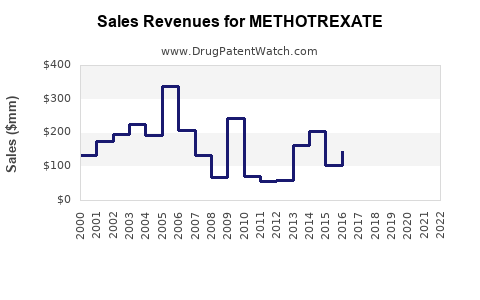
Methotrexate does not have a single consolidated market because sales are distributed across numerous generic manufacturers, hospital suppliers, specialty pharmacies, and branded delivery products. Public-company filings generally do not report methotrexate as a standalone revenue category.
The financial market has three distinct layers:
- Low-price generic tablets, which account for substantial prescription volume but limited revenue.
- Generic and branded injectable products, which have higher institutional value and greater supply sensitivity.
- Differentiated subcutaneous systems and oral liquids, which command higher prices because they address administration, adherence, or swallowing barriers.
Unit demand is relatively resilient because methotrexate remains a standard first-line disease-modifying antirheumatic drug. Revenue growth is weak in conventional tablets because price competition offsets volume growth. The commercial opportunity is stronger in formulations that reduce injection burden or serve pediatric and dysphagic patients.
What drives methotrexate demand?
The principal demand drivers are:
- Continued prevalence of rheumatoid arthritis and psoriasis.
- Methotrexate's position as a first-line conventional synthetic disease-modifying antirheumatic drug.
- Use as a low-cost treatment before escalation to biologics.
- Oncology demand for parenteral methotrexate.
- Pediatric demand for oral liquid formulations.
- Periodic shortages or manufacturing interruptions that shift purchasing toward available suppliers.
The principal demand restraints are:
- Substitution by tumor necrosis factor inhibitors, interleukin inhibitors, Janus kinase inhibitors, and other targeted therapies.
- Methotrexate intolerance and discontinuation because of gastrointestinal, hepatic, pulmonary, or hematologic toxicity.
- Requirements for laboratory monitoring.
- Patient and physician concerns about dosing errors and teratogenicity.
- Institutional purchasing pressure on injectable products.
The American College of Rheumatology continues to recommend methotrexate as a preferred initial disease-modifying therapy for many patients with rheumatoid arthritis, supporting long-term baseline demand (Fraenkel et al., 2021).
What products and manufacturers compete in methotrexate?
The market includes generic products and a limited number of branded or differentiated formulations.
| Product |
Dosage form |
Company or commercial sponsor |
Market position |
| Generic methotrexate tablets |
2.5 mg tablets and other strengths |
Multiple generic manufacturers |
Lowest-cost, high-substitution segment |
| Generic methotrexate injection |
Vials and preservative-free presentations |
Multiple manufacturers |
Hospital, oncology, and specialty use |
| Rasuvo |
Single-dose subcutaneous autoinjector |
medac Pharma |
Differentiated delivery system for autoimmune disease |
| Otrexup |
Subcutaneous autoinjector |
Antares Pharma; Antares was acquired by Halozyme in 2022 |
Specialty self-injection product |
| RediTrex |
Prefilled subcutaneous syringe |
Cumberland Pharmaceuticals |
Rheumatology-focused specialty formulation |
| Xatmep |
Oral methotrexate solution |
Silvergate Pharmaceuticals |
Pediatric and swallowing-challenged patients |
| Jylamvo |
Oral solution |
Orphan Europe and commercial partners in selected markets |
Liquid formulation in international markets |
Rasuvo, Otrexup, and RediTrex compete on administration convenience rather than active-ingredient novelty. Their economic value depends on payer coverage, specialty pharmacy distribution, patient support, and the ability to avoid substitution to low-cost tablets or vials.
Cumberland Pharmaceuticals reported RediTrex as part of its specialty pharmaceutical portfolio, while Halozyme's acquisition of Antares expanded its ownership of the Otrexup product and related drug-device capabilities (Cumberland Pharmaceuticals, 2024; Halozyme Therapeutics, 2022).
What is the FDA regulatory status of methotrexate?
Methotrexate is an established FDA-approved active ingredient with multiple approved products and abbreviated new drug applications.
Key FDA-regulated dosage forms include:
- Oral tablets.
- Injectable solutions.
- Subcutaneous autoinjectors.
- Prefilled syringes.
- Oral solutions.
Selected FDA product records include:
| Product |
FDA application or regulatory identifier |
Dosage form |
| Trexall |
NDA 009872 |
Tablets |
| Otrexup |
NDA 204824 |
Subcutaneous injection |
| Rasuvo |
NDA 205776 |
Subcutaneous injection |
| Xatmep |
NDA 207770 |
Oral solution |
| RediTrex |
NDA 212270 |
Subcutaneous injection |
FDA approval of a methotrexate product does not create broad exclusivity for the molecule. The active ingredient is long established, and generic applicants can rely on the reference product's safety and efficacy record through the abbreviated new drug application pathway when applicable.
Methotrexate products remain subject to strict labeling requirements. Weekly dosing, contraindications in pregnancy, required laboratory monitoring, and warnings about medication errors are material regulatory considerations. These requirements increase development and commercialization costs for differentiated products but do not prevent generic entry.
What patents protect methotrexate products?
The original methotrexate compound patents expired decades ago. Conventional methotrexate tablets and standard injectable products are not protected by a meaningful composition-of-matter patent estate.
Current intellectual-property value is concentrated in:
- Autoinjector architecture.
- Prefilled syringe configurations.
- Device usability.
- Specific concentration and volume combinations.
- Oral liquid formulations.
- Manufacturing processes.
- Packaging and stability systems.
- Narrow method-of-use claims, where enforceable.
The relevant distinction is between drug patents and device or formulation rights. A patent covering an autoinjector may not prevent a competitor from selling methotrexate tablets, vials, or a different injection system.
How many patents cover methotrexate?
No single patent family covers the global methotrexate market. Conventional methotrexate has no meaningful remaining molecule-level exclusivity. The number of potentially relevant patents depends on the product, jurisdiction, delivery device, formulation, and claim status.
For business purposes, the estate can be characterized as follows:
| Patent category |
Strategic value |
| Compound patents |
Expired |
| Standard tablet formulation patents |
Generally expired or commercially weak |
| Standard injectable formulation patents |
Generally expired or commercially weak |
| Autoinjector patents |
Product-specific; may delay direct device substitution |
| Oral solution patents |
Narrow formulation and manufacturing protection |
| Method-of-use patents |
Limited value unless tied to a specific FDA-approved indication and enforceable claim |
| Manufacturing patents |
May create process barriers but rarely establish broad market exclusivity |
Patent strength is therefore low for the molecule and moderate at most for selected delivery systems. The principal barriers to entry are regulatory compliance, manufacturing validation, device development, product quality, distribution, and payer access.
When does methotrexate lose exclusivity?
Methotrexate lost primary molecule-level exclusivity decades ago. The commercial market is already in the post-exclusivity phase.
| Exclusivity element |
Status |
| Active ingredient exclusivity |
Expired |
| Original compound patent protection |
Expired |
| Generic tablet competition |
Established |
| Generic injectable competition |
Established, although supply can be concentrated |
| Autoinjector protection |
Product-specific and potentially limited by device claims |
| Pediatric or other regulatory exclusivity |
Product-specific; does not restore molecule-level exclusivity |
| Biosimilar exclusivity |
Not applicable |
The absence of molecule-level exclusivity means that market share depends on price, reliable supply, product availability, payer positioning, and specialty distribution.
Are there Paragraph IV challenges for methotrexate?
Paragraph IV litigation risk is generally concentrated around newer methotrexate formulations rather than standard tablets or the active ingredient.
A generic applicant can challenge listed patents by alleging that a patent is invalid, unenforceable, or not infringed. For conventional methotrexate tablets and established injectable products, the commercial significance of Paragraph IV litigation is limited because multiple generics are already available.
The higher-risk areas are:
- Autoinjector products with device-related patents.
- Oral solutions with formulation or concentration claims.
- Combination products involving a drug and delivery device.
- New methods of administration or dosing schedules.
An ANDA challenge to a specialty formulation could affect the branded product's revenue even if it has no impact on the wider methotrexate market. A successful generic entrant would likely reduce the premium associated with convenience and increase payer pressure.
What methotrexate formulations are commercially protected?
Formulation protection is most relevant where the product solves a specific administration problem.
Subcutaneous autoinjectors
Autoinjectors allow patients to self-administer methotrexate without drawing a dose from a vial. Their commercial value comes from:
- Lower injection complexity.
- Fixed dosing.
- Potentially improved adherence.
- Reduced handling requirements.
- Specialty-pharmacy and patient-support programs.
The limitation is price. Many patients can obtain tablets or standard injectable methotrexate at materially lower cost. Payers may require prior authorization or step therapy before approving an autoinjector.
Oral solutions
Xatmep and similar products address pediatric dosing and patients who cannot swallow tablets. The formulation may support more precise dosing, but its market is smaller than the tablet market. Oral liquids can also carry higher manufacturing, packaging, stability, and dispensing costs.
Preservative-free injections
Preservative-free presentations have relevance in oncology, hospital practice, and patients with specific tolerability requirements. Their market is sensitive to sterile manufacturing capacity and procurement contracts.
Which companies are challenging or competing with methotrexate?
Methotrexate faces competition from two different groups.
Generic methotrexate manufacturers
Multiple manufacturers compete in tablets and injections. The competitive field changes by dosage form, strength, and supply status. Generic competition is typically strongest in tablets and less predictable in sterile injectables because fewer facilities produce injectable products at scale.
Therapeutic competitors
In rheumatoid arthritis, methotrexate is compared with:
- Adalimumab and other tumor necrosis factor inhibitors.
- Etanercept.
- Tocilizumab and other interleukin-directed therapies.
- Abatacept.
- Rituximab.
- JAK inhibitors such as tofacitinib, upadacitinib, and baricitinib.
- Other conventional disease-modifying antirheumatic drugs, including leflunomide and sulfasalazine.
Methotrexate often remains the anchor therapy because of its low cost and long clinical experience. Newer agents capture revenue when patients fail to respond, cannot tolerate methotrexate, or require more targeted disease control.
In oncology, methotrexate competes less through direct substitution and more through disease-specific treatment protocols. Its role remains embedded in established chemotherapy regimens, although newer targeted therapies and immunotherapies have reduced its role in selected diseases.
What patent litigation affects methotrexate?
There is no single market-wide methotrexate patent dispute comparable to litigation around a protected blockbuster. Litigation is product-specific and generally concerns:
- Delivery-device patents.
- Formulation patents.
- Manufacturing methods.
- Labeling or method-of-use claims.
- ANDA approval timing.
The legal exposure of a branded autoinjector is materially different from that of generic tablets. A device patent may support a lawsuit against a directly substitutable product but does not prevent broader methotrexate competition.
Settlement agreements, if reached in a specific ANDA dispute, would typically determine the launch date of a competing formulation rather than the end of methotrexate market exclusivity. Because the molecule is already generic, settlement economics are narrower and depend on the size of the affected specialty product.
Does methotrexate have biosimilar risk?
Methotrexate has no biosimilar risk because it is a small-molecule drug, not a biologic. Competition occurs through generic drug applications, not the FDA biosimilar pathway.
The relevant distinction is:
| Product type |
FDA competition pathway |
| Methotrexate tablets |
ANDA generic pathway |
| Methotrexate injection |
ANDA or applicable 505(b)(2) pathway |
| Methotrexate autoinjector |
Drug-device combination requirements; pathway depends on reference product |
| Methotrexate oral solution |
ANDA or 505(b)(2), depending on reference and formulation |
| Biologic rheumatoid arthritis therapies |
351(k) biosimilar pathway |
Methotrexate indirectly faces biosimilar pressure because lower-cost biosimilars of biologic rheumatoid arthritis drugs can reduce the total cost of advanced therapy. That pressure may accelerate movement from conventional methotrexate-based regimens to biologic treatment in selected patients, but it also can preserve methotrexate's role as a low-cost first-line therapy.
What generic launch scenarios exist for methotrexate?
The most likely launch scenarios differ by product category.
| Scenario |
Probability profile |
Expected commercial effect |
| Additional tablet generic |
High feasibility, low differentiation |
Further price erosion; limited market expansion |
| Additional standard injection |
Feasible but dependent on sterile capacity |
Potential price pressure; may improve supply resilience |
| Generic oral solution |
Moderate complexity |
Pressure on Xatmep-type pricing and payer coverage |
| Competing autoinjector |
Higher device and regulatory complexity |
Potential loss of specialty premium |
| New formulation with improved usability |
Moderate development risk |
May capture niche share if reimbursement is favorable |
| New oncology presentation |
Institutional opportunity |
Depends on procurement, shortages, and contract access |
A new tablet entrant would likely gain share through price and wholesaler access. A new autoinjector entrant would face device-development, human-factors, manufacturing, and reimbursement barriers. Sterile injectable entry could be commercially attractive during shortages but carries higher quality and plant-investment risk.
How strong is the methotrexate patent estate?
The methotrexate patent estate is weak at the molecule level and selective at the product level.
| Factor |
Assessment |
| Composition-of-matter protection |
Very weak; expired |
| Generic entry barrier |
Low for tablets; moderate for sterile injectables |
| Formulation protection |
Narrow and product-specific |
| Device protection |
More relevant for autoinjectors |
| Method-of-use protection |
Limited by narrow claims and established clinical use |
| Manufacturing barriers |
Material for sterile products |
| Regulatory complexity |
Moderate |
| Pricing power |
Low for standard products; higher for specialty delivery |
| Litigation leverage |
Limited across the overall market |
Commercial durability depends more on execution than on patent exclusivity. Reliable supply, low defect rates, approved facilities, specialty-pharmacy relationships, and payer contracts can sustain share after patents expire.
What is the financial trajectory for methotrexate?
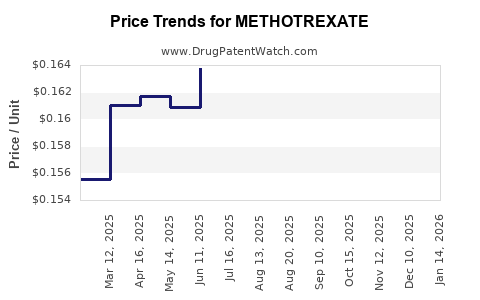
Methotrexate's financial trajectory is best described as stable volume, declining or flat pricing in conventional forms, and selective growth in differentiated delivery.
Revenue outlook by segment
| Segment |
Volume outlook |
Price outlook |
Revenue outlook |
| Generic tablets |
Stable to modest growth |
Continued downward pressure |
Flat to declining |
| Generic vials and syringes |
Stable demand |
Volatile during shortages |
Flat with periodic spikes |
| Autoinjectors |
Niche growth potential |
Premium pricing under payer pressure |
Modest growth if coverage expands |
| Oral solutions |
Small but durable niche |
Higher unit price than tablets |
Stable to modest growth |
| Oncology supply |
Protocol-dependent |
Contract and shortage sensitive |
Variable |
| Rheumatology total market |
Stable methotrexate use but therapeutic substitution |
Low generic pricing |
Mature market |
Revenue exposure is significant for companies that own differentiated methotrexate products but limited for diversified pharmaceutical companies that sell generic tablets as one product among hundreds. A manufacturer with a single autoinjector product faces concentrated reimbursement and competitive risk. A generic manufacturer with tablets and injectable products can benefit from procurement diversification but remains exposed to price erosion.
What is the outlook for methotrexate from 2025 onward?
The market should remain commercially relevant but unattractive as a molecule-only growth story.
Expected trends include:
- Stable baseline demand in rheumatoid arthritis and oncology.
- Continued substitution toward biologics and targeted therapies among treatment failures.
- Persistent low pricing for tablets.
- Greater value for patient-friendly injection systems.
- Periodic supply disruptions in sterile injectables.
- Ongoing regulatory scrutiny of dosing errors and medication safety.
- Limited value from new composition patents.
- Greater importance of manufacturing reliability and distribution.
The strongest investment cases are likely to involve differentiated delivery, dependable sterile manufacturing, pediatric formulations, or products with a defensible reimbursement position. A conventional tablet strategy has limited upside unless supported by unusually low manufacturing costs or a supply-constrained market.
Key Takeaways
- Methotrexate is a mature generic drug with no meaningful molecule-level exclusivity.
- Oral tablets are highly commoditized and have low pricing power.
- Injectable products have greater supply risk because sterile manufacturing is more concentrated.
- Autoinjectors and oral solutions are the principal areas of formulation-based value.
- Otrexup, Rasuvo, RediTrex, and Xatmep compete through administration and patient convenience.
- Paragraph IV litigation is relevant mainly to specific formulations and drug-device products.
- Biosimilar competition does not apply directly because methotrexate is a small molecule.
- Methotrexate remains a first-line rheumatology therapy, supporting stable demand despite competition from biologics and JAK inhibitors.
- Financial growth is more likely to come from delivery systems and supply reliability than from higher volume of standard tablets.
- Patent strength is low for methotrexate as an active ingredient and stronger only in narrow, product-specific device and formulation claims.
FAQs about methotrexate market dynamics
Is methotrexate still profitable for pharmaceutical companies?
It can be profitable when produced at scale or sold in a differentiated autoinjector, oral solution, or specialized injectable presentation. Standard tablets generally offer low margins because of extensive generic competition.
Which methotrexate product has the strongest commercial differentiation?
Subcutaneous autoinjectors have the strongest differentiation because they reduce administration complexity. Their commercial success depends heavily on payer coverage and patient out-of-pocket cost.
Can a generic manufacturer launch a competing methotrexate autoinjector?
Yes, but the product may require device compatibility, human-factors validation, formulation equivalence, manufacturing controls, and analysis of remaining device or formulation patents.
Why do methotrexate injections experience supply problems?
Sterile injectables require specialized manufacturing, validated aseptic processes, and more complex quality controls. A plant shutdown, inspection issue, or limited supplier base can disrupt supply faster than in the tablet market.
Does methotrexate remain important after biologic treatment becomes available?
Yes. Methotrexate remains widely used as initial therapy and may be combined with biologics to improve disease control or reduce anti-drug antibody formation, depending on the biologic and clinical setting.
References
-
American College of Rheumatology. (2021). 2021 American College of Rheumatology guideline for the treatment of rheumatoid arthritis. Arthritis Care & Research, 73(7), 924-939.
-
Cumberland Pharmaceuticals, Inc. (2024). Annual report for the fiscal year ended December 31, 2023. U.S. Securities and Exchange Commission.
-
Food and Drug Administration. (2024a). Methotrexate tablets prescribing information. U.S. Department of Health and Human Services.
-
Food and Drug Administration. (2024b). Drugs@FDA: FDA-approved drug database. U.S. Department of Health and Human Services.
-
Halozyme Therapeutics, Inc. (2022). Halozyme completes acquisition of Antares Pharma. Company transaction announcement.
-
National Library of Medicine. (2024). DailyMed: Methotrexate drug labels. U.S. National Library of Medicine.