Last updated: August 25, 2026
Ivermectin is a mature, low-cost antiparasitic with a fragmented commercial market. Its original human and veterinary patents have expired, leaving commodity economics for oral products and differentiated pricing for branded dermatology formulations. COVID-19 caused a temporary demand and visibility spike in 2020-2021, but regulatory warnings, negative clinical evidence and normalization of prescribing sharply reduced that surge. Current value is concentrated in veterinary parasiticides, branded topical dermatology and selected neglected-disease programs rather than in human oral tablets.
What is ivermectin and how is the market segmented?
Ivermectin is a macrocyclic lactone antiparasitic derived from avermectins. It acts primarily through glutamate-gated chloride channels in parasites. Human indications include strongyloidiasis, onchocerciasis and certain ectoparasitic infections. Veterinary products cover cattle, horses, swine, sheep, companion animals and other species.
The market divides into four economically distinct segments:
| Segment |
Representative products |
Commercial profile |
| Human oral ivermectin |
Generic tablets; Stromectol |
Mature generic market with low unit pricing |
| Human topical dermatology |
Soolantra, Rosiver, generic or compounded products |
Higher pricing, brand and formulation differentiation |
| Veterinary injectable, oral and topical products |
Ivomec, Eqvalan and generic products |
Large recurring animal-health market |
| Donated public-health supply |
Mectizan |
Primarily humanitarian distribution, not conventional commercial revenue |
Merck developed ivermectin and marketed the human product as Stromectol. The company has donated ivermectin through the Mectizan Donation Program for onchocerciasis and lymphatic filariasis elimination efforts since 1987. The program has distributed more than four billion treatments, according to its program materials.[1]
How large is the ivermectin market?
There is no single reliable global ivermectin revenue figure because the market is split across human generics, branded dermatology, veterinary products, government procurement and donated supply. Public companies generally do not report ivermectin revenue as a standalone line item.
The most defensible commercial conclusion is that veterinary ivermectin represents the largest recurring value pool, while human oral ivermectin has the lowest margins. Branded topical products generate higher revenue per treatment but compete in narrower dermatology indications.
Revenue structure by product type
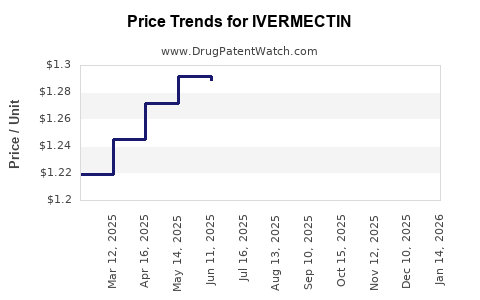
Human oral ivermectin is inexpensive because multiple manufacturers supply tablets and regulatory exclusivity has expired. Revenue depends on prescription volume, public-health procurement and pricing in individual markets. Distribution disruptions or shortages can affect prices temporarily, but they do not create durable patent-based pricing power.
Topical ivermectin has stronger economics. Soolantra, approved in the United States for inflammatory lesions of rosacea, uses a proprietary cream formulation and brand positioning. Pricing is supported by dermatology prescribing, insurance coverage and physician familiarity rather than by the active ingredient alone.
Veterinary ivermectin has recurring demand tied to parasite control, livestock production and companion-animal care. Competition is extensive, but animal-health brands can preserve distribution advantages through formulations, dosing devices, species-specific labeling and channel relationships.
What is the financial trajectory for ivermectin?
Ivermectin’s long-term financial trajectory is mature and volume-driven, with a temporary COVID-related distortion.
| Period |
Market development |
Financial effect |
| 1980s-1990s |
Launch of veterinary and human products; broad patent protection expires over time |
High initial innovation value followed by genericization |
| 2000s-2010s |
Expansion of generic oral supply and veterinary formulations |
Lower unit prices; stable treatment demand |
| 2012-2019 |
Growth of topical dermatology products |
Higher-margin branded niche develops |
| 2020-2021 |
Off-label COVID-19 demand, stockpiling and unusual public attention |
Temporary volume and price volatility |
| 2022 onward |
Regulatory warnings and negative or inconclusive COVID evidence reduce demand |
COVID-driven demand unwinds; market returns to core indications |
The COVID period did not create durable pharmaceutical franchise value. The FDA stated that ivermectin was not authorized or approved for preventing or treating COVID-19 and warned against using veterinary formulations in humans.[2] The World Health Organization recommended ivermectin for COVID-19 only within clinical trials, except in jurisdictions where its use was part of a research protocol.[3] Randomized trial evidence, including the TOGETHER trial, did not show a meaningful reduction in COVID-19 hospitalization or prolonged emergency-department observation.[4]
The financial result was a short-lived increase in prescriptions and retail demand, followed by demand normalization. Manufacturers with established veterinary distribution networks gained temporary sales exposure, while human generic suppliers faced reputational, regulatory and channel-management risks.
Which companies commercialize ivermectin?
The commercial landscape includes originators, generic manufacturers, animal-health companies and dermatology specialists.
Human ivermectin companies
Merck is the original developer and remains associated with Stromectol and the Mectizan Donation Program. Stromectol is no longer a conventional high-growth pharmaceutical franchise because generic competition has eroded oral-tablet pricing.
Generic suppliers vary by country and procurement channel. In the United States, ivermectin tablets have been supplied through multiple ANDA holders and wholesalers. The identity of active suppliers can change because of shortages, manufacturing economics and wholesaler contracting.
Topical ivermectin has had a more differentiated commercial path. Galderma has marketed Soolantra for rosacea in several markets. Other topical products, including lice treatments, have used ivermectin in different formulations and regulatory categories.
Veterinary ivermectin companies
Boehringer Ingelheim Animal Health markets Ivomec-branded products. Other animal-health companies and generic manufacturers sell ivermectin injectables, pastes, drenches, pour-ons and combination products.
Veterinary competition is based on:
- Species-specific regulatory approvals
- Formulation and administration route
- Parasite-control spectrum
- Withdrawal periods for food-producing animals
- Distributor access
- Resistance-management programs
- Brand trust and farm-level purchasing behavior
The veterinary segment is more commercially durable than human oral ivermectin because treatment demand recurs across production cycles and companion-animal care.
What FDA approvals and exclusivity apply to ivermectin?
The FDA approved Stromectol tablets in 1996 for strongyloidiasis and onchocerciasis.[5] Ivermectin has also been approved in topical products for dermatologic indications, including rosacea and head lice.
| Product or use |
FDA status |
Commercial relevance |
| Stromectol tablets |
Approved prescription drug |
Generic competition limits pricing |
| Generic ivermectin tablets |
Approved through ANDA pathway |
Multiple suppliers and low barriers to substitution |
| Soolantra cream |
Approved for rosacea |
Branded formulation economics |
| Sklice lotion |
Approved for head lice |
Topical, indication-specific market |
| Veterinary ivermectin |
Approved under animal-drug pathways |
Separate animal-health market |
| COVID-19 treatment or prevention |
Not FDA-approved |
No legitimate FDA-based COVID indication |
Ivermectin has no meaningful remaining new-molecule exclusivity in the United States. Pediatric exclusivity, orphan exclusivity or other regulatory protections may apply to individual products or indications in particular jurisdictions, but they do not restore broad exclusivity for the active ingredient.
What patents protect ivermectin products?
The original ivermectin and avermectin patent estate is expired or commercially exhausted in major markets. Generic manufacturers can therefore compete on oral products without licensing the original discovery patents.
Current patent value is more likely to arise from:
- Topical cream, lotion or gel formulations
- Particle-size or solubility engineering
- Combination products
- Controlled-release delivery
- Device or applicator design
- Manufacturing processes
- Specific dermatologic methods of use
- New indications supported by proprietary clinical data
A patent covering a formulation does not necessarily block a conventional oral tablet. Freedom-to-operate analysis must separate the active ingredient, dosage form, excipients, concentration, manufacturing steps and claimed method of use.
How strong is the ivermectin patent estate?
The estate is weak for the active ingredient and conventional oral tablets but potentially stronger for branded topical products and specialized delivery systems. Patent strength depends on claim scope, expiration, prosecution history, terminal disclaimers, obviousness risk and whether a generic product practices the asserted claims.
The main business implication is that ivermectin is not a single patent market. Oral generics face commodity competition. Dermatology brands can use formulation and indication protection. Veterinary companies rely more heavily on regulatory approvals, distribution and brand assets than on blocking patents around ivermectin itself.
What is the Orange Book status of ivermectin?
FDA Orange Book treatment differs by product and dosage form. Stromectol’s original product-level exclusivity has expired, and generic ivermectin tablets can be approved through ANDA filings. Orange Book listings for branded topical products must be reviewed separately because formulation patents, method-of-use patents and patent certifications can vary by product.
An Orange Book listing does not automatically establish enforceability. A listed patent may be challenged through a Paragraph IV certification, carved out through a section viii statement, or avoided through a non-infringing formulation or label.
For ivermectin tablets, the main competitive barrier is generally regulatory filing, manufacturing quality and supply reliability rather than an active original-composition patent.
When did ivermectin lose exclusivity?
Ivermectin lost practical exclusivity in oral products after the expiration of its original patent protection and the subsequent approval of generic products. The exact timing varies by country and by product because national patent terms, pediatric extensions, data exclusivity and regulatory approvals differ.
The U.S. human market has been generic for many years. No single expiration date controls all ivermectin products because:
- Oral tablets, topical products and veterinary products have separate regulatory histories.
- Formulation patents can expire later than active-ingredient patents.
- Country-specific patents and supplementary protection mechanisms differ.
- Brand products may retain commercial differentiation after patent expiry.
Which companies are challenging ivermectin patents through Paragraph IV filings?
Paragraph IV litigation is more relevant to branded topical ivermectin products than to conventional oral tablets. A generic applicant can challenge an Orange Book-listed patent by certifying that the patent is invalid, unenforceable or not infringed.
Publicly visible litigation must be matched to the specific branded product, patent number, ANDA applicant and filing date. A broad search for “ivermectin Paragraph IV” can incorrectly combine tablet, cream, lotion and veterinary disputes.
For oral ivermectin, generic entry is already established, so the central issue is not a future patent cliff. For topical ivermectin, potential challenges depend on the remaining patent term, product design and whether the generic applicant can use a label carve-out.
What patent litigation and settlement risks affect ivermectin?
Ivermectin litigation risk is product-specific rather than molecule-wide.
Oral tablets
The risk profile is low from an originator-patent perspective. Litigation may still arise from manufacturing patents, supply contracts, labeling, quality claims or product liability, but these issues do not recreate broad market exclusivity.
Topical products
Risk is higher where a branded product has listed formulation or method-of-use patents. A generic applicant may face:
- Hatch-Waxman litigation after a Paragraph IV notice
- A 30-month stay of FDA approval in qualifying circumstances
- Settlement restrictions under antitrust review
- Delayed launch terms
- At-risk launch exposure
- Label carve-out disputes
No universal ivermectin settlement date or launch date applies across products. Each dispute must be analyzed at the NDA, patent and ANDA level.
What generic entry scenarios exist for ivermectin?
Oral generic entry
Oral generic entry is already the base case. Competition is determined by:
- Number of approved suppliers
- API availability
- Manufacturing concentration
- Government tenders
- Pharmacy reimbursement
- Shortage conditions
- Wholesaler purchasing power
A new oral entrant can gain volume during shortages, but durable pricing expansion is unlikely without supply scarcity or a specialized procurement contract.
Topical generic entry
Topical entry is more complex. A challenger must match the reference product’s formulation performance, microbiological quality, stability, container-closure system and clinical or regulatory requirements. Patent certifications and label strategy can delay launch.
A successful topical generic could pressure brand pricing, but substitution may be slower than for tablets because dermatologists and patients may distinguish among vehicle characteristics, tolerability and cosmetic acceptability.
Veterinary generic entry
Veterinary entry depends on species, route, residue requirements and local animal-drug approvals. Injectable and pour-on products can face manufacturing and quality barriers, while paste and oral products may be easier to replicate.
Does ivermectin face biosimilar risk?
No. Ivermectin is a small-molecule drug, not a biologic. Biosimilar pathways do not apply. Competition occurs through generic-drug ANDAs, national generic procedures, hybrid applications or animal-drug approval pathways.
The relevant risks are generic substitution, formulation replication, API sourcing and regulatory compliance. Calling an ivermectin competitor a biosimilar would misclassify the product and its approval pathway.
How does ivermectin compare with competing antiparasitic drugs?
| Drug class |
Examples |
Competitive position |
| Macrocyclic lactones |
Ivermectin, moxidectin, selamectin |
Strong veterinary presence; resistance concerns |
| Benzimidazoles |
Albendazole, mebendazole, fenbendazole |
Important human and veterinary alternatives |
| Pyrazinoisoquinolines |
Praziquantel |
Strong position for cestode infections |
| Topical ectoparasiticides |
Permethrin, spinosad, ivermectin |
Compete on efficacy, tolerability and resistance |
| Newer veterinary parasiticides |
Isoxazolines |
Higher-priced, newer products in companion animals |
Ivermectin’s advantage is breadth of use, extensive clinical experience, low cost and established supply. Its disadvantages include mature pricing, resistance risk in some veterinary settings and limited ability to support premium oral pricing.
What geographic markets matter most?
Human public-health demand is concentrated in regions affected by onchocerciasis and lymphatic filariasis, particularly sub-Saharan Africa and selected areas of Latin America and Yemen. Much of this demand is supplied through donation and government programs rather than commercial retail channels.[1]
Commercial human prescriptions are strongest where ivermectin is routinely used for approved parasitic infections and dermatology indications. The United States and Europe are more relevant to branded topical products and prescription reimbursement.
Veterinary demand is geographically broad. Major markets include North America, Europe, Latin America, Australia and parts of Asia with large livestock or companion-animal populations. Product mix varies according to species, parasite prevalence, resistance patterns and residue regulations.
What manufacturing and intellectual-property barriers affect supply?
The active ingredient is mature, but quality manufacturing remains a practical barrier. Manufacturers must manage:
- API purity and impurity controls
- Content uniformity in low-dose tablets
- Stability and dissolution
- Sterility or microbial controls for selected products
- Topical emulsion consistency
- Container-closure compatibility
- Veterinary residue and withdrawal requirements
- Good manufacturing practice compliance
Ivermectin’s low price creates a risk of supplier exit when reimbursement falls below sustainable manufacturing cost. Shortages can therefore occur even when patent barriers are absent. The strongest defensible assets are often qualified manufacturing sites, regulatory files, distribution contracts and dependable API supply.
What is the investment outlook for ivermectin?
Ivermectin is a low-growth, cash-generative mature product category rather than a conventional specialty-pharma growth asset.
The most attractive commercial positions are:
- Veterinary brands with recurring demand and strong distribution.
- Branded topical dermatology products with differentiated formulations.
- Contract manufacturing or API supply tied to reliable procurement.
- Public-health supply programs with predictable tender volumes.
- New delivery technologies supported by defensible patents and clinical evidence.
The least attractive position is undifferentiated oral ivermectin tablets sold into a crowded generic market. COVID-related revenue should not be used as a sustainable forecast assumption. Regulatory agencies and clinical trial data have removed the basis for treating COVID demand as a durable indication.[2-4]
Key Takeaways
- Ivermectin is a mature generic antiparasitic, not a protected new-molecule franchise.
- Veterinary products are the largest recurring commercial opportunity.
- Human oral tablets have low margins and established generic competition.
- Branded topical products retain greater pricing power through formulation, indication and brand differentiation.
- COVID-19 created a temporary demand spike that subsequently reversed.
- Ivermectin has no biosimilar risk because it is a small molecule.
- Patent value now resides mainly in formulations, delivery systems, manufacturing methods and specific methods of use.
- Generic entry is already established for oral products and remains product-specific for topical products.
- The main supply risks are API concentration, manufacturing economics, shortages and regulatory compliance.
- Sustainable financial growth depends on veterinary franchises, dermatology brands or genuinely differentiated delivery technologies.
FAQs
Is ivermectin still a profitable pharmaceutical product?
Yes, but profitability is concentrated in veterinary brands, branded dermatology products and efficient manufacturing. Conventional oral tablets are generally low-margin generics.
Did COVID-19 create a permanent ivermectin market?
No. COVID-19 produced temporary demand and distribution volatility, but regulatory decisions and randomized clinical evidence did not support a durable COVID indication.
Can a company obtain a new patent on ivermectin?
A company cannot generally re-patent the old active ingredient, but it may patent a novel formulation, delivery system, combination, manufacturing process or method of use that satisfies patentability requirements.
Is veterinary ivermectin interchangeable with human ivermectin?
No. Veterinary products can differ in concentration, excipients, manufacturing controls, labeling and approved species. FDA guidance specifically warns against using animal formulations in humans.[2]
What is the main competitive threat to branded topical ivermectin?
The main threat is an approved topical generic or competing dermatology product that matches clinical performance at a lower price. Patent litigation, label carve-outs and formulation complexity can affect the timing of entry.
References
-
Mectizan Donation Program. (n.d.). Mectizan Donation Program overview. https://mectizan.org/
-
U.S. Food and Drug Administration. (2023). Ivermectin and COVID-19. https://www.fda.gov/consumers/consumer-updates/ivermectin-and-covid-19
-
World Health Organization. (2021). WHO advises that ivermectin only be used to treat COVID-19 within clinical trials. https://www.who.int/news-room/feature-stories/detail/who-advises-that-ivermectin-only-be-used-to-treat-covid-19-within-clinical-trials
-
Reis, G., Silva, E. A. S. M., Silva, D. C. M., et al. (2022). Effect of early treatment with ivermectin among patients with Covid-19. New England Journal of Medicine, 386(18), 1721-1731. https://doi.org/10.1056/NEJMoa2115869
-
U.S. Food and Drug Administration. (1996). STROMECTOL (ivermectin) tablets prescribing information. https://www.accessdata.fda.gov/drugsatfda_docs/label/1996/50742lbl.pdf