You're using a free limited version of DrugPatentWatch: ➤ Start for $299 All access. No Commitment.

Last Updated: January 1, 2026

SOOLANTRA Drug Patent Profile


✉ Email this page to a colleague

« Back to Dashboard


When do Soolantra patents expire, and when can generic versions of Soolantra launch?

Soolantra is a drug marketed by Galderma Labs Lp and is included in one NDA. There are five patents protecting this drug and one Paragraph IV challenge.

This drug has forty-five patent family members in sixteen countries.

The generic ingredient in SOOLANTRA is ivermectin. There are five drug master file entries for this compound. Twenty-two suppliers are listed for this compound. Additional details are available on the ivermectin profile page.

DrugPatentWatch® Litigation and Generic Entry Outlook for Soolantra

A generic version of SOOLANTRA was approved as ivermectin by EDENBRIDGE PHARMS on October 24th, 2014.

  Get Started Free

AI Deep Research
Questions you can ask:
  • What is the 5 year forecast for SOOLANTRA?
  • What are the global sales for SOOLANTRA?
  • What is Average Wholesale Price for SOOLANTRA?
Drug patent expirations by year for SOOLANTRA
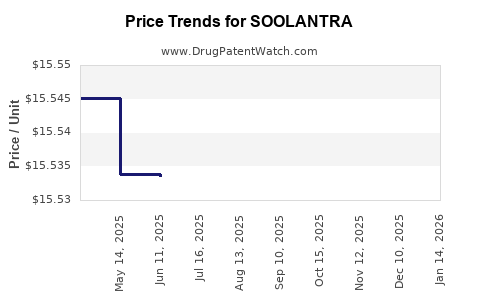
Drug Prices for SOOLANTRA

See drug prices for SOOLANTRA

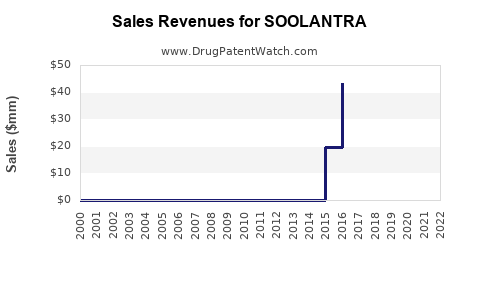
Drug Sales Revenue Trends for SOOLANTRA

See drug sales revenues for SOOLANTRA

Recent Clinical Trials for SOOLANTRA

Identify potential brand extensions & 505(b)(2) entrants

SponsorPhase
Humanis Saglık Anonim SirketiPHASE1
Sidney Kimmel Comprehensive Cancer Center at Johns HopkinsPhase 2
Catawba Research, LLCPhase 3

See all SOOLANTRA clinical trials

Pharmacology for SOOLANTRA
Paragraph IV (Patent) Challenges for SOOLANTRA
Tradename Dosage Ingredient Strength NDA ANDAs Submitted Submissiondate
SOOLANTRA Cream ivermectin 1% 206255 1 2016-12-30

US Patents and Regulatory Information for SOOLANTRA

SOOLANTRA is protected by five US patents.

Applicant Tradename Generic Name Dosage NDA Approval Date TE Type RLD RS Patent No. Patent Expiration Product Substance Delist Req. Exclusivity Expiration
Galderma Labs Lp SOOLANTRA ivermectin CREAM;TOPICAL 206255-001 Dec 19, 2014 AB RX Yes Yes 9,233,118 ⤷  Get Started Free ⤷  Get Started Free
Galderma Labs Lp SOOLANTRA ivermectin CREAM;TOPICAL 206255-001 Dec 19, 2014 AB RX Yes Yes 9,782,425 ⤷  Get Started Free ⤷  Get Started Free
Galderma Labs Lp SOOLANTRA ivermectin CREAM;TOPICAL 206255-001 Dec 19, 2014 AB RX Yes Yes 9,089,587 ⤷  Get Started Free ⤷  Get Started Free
>Applicant >Tradename >Generic Name >Dosage >NDA >Approval Date >TE >Type >RLD >RS >Patent No. >Patent Expiration >Product >Substance >Delist Req. >Exclusivity Expiration

Expired US Patents for SOOLANTRA

Applicant Tradename Generic Name Dosage NDA Approval Date Patent No. Patent Expiration
Galderma Labs Lp SOOLANTRA ivermectin CREAM;TOPICAL 206255-001 Dec 19, 2014 8,470,788 ⤷  Get Started Free
Galderma Labs Lp SOOLANTRA ivermectin CREAM;TOPICAL 206255-001 Dec 19, 2014 11,033,565 ⤷  Get Started Free
Galderma Labs Lp SOOLANTRA ivermectin CREAM;TOPICAL 206255-001 Dec 19, 2014 8,080,530 ⤷  Get Started Free
>Applicant >Tradename >Generic Name >Dosage >NDA >Approval Date >Patent No. >Patent Expiration

Supplementary Protection Certificates for SOOLANTRA

Patent Number Supplementary Protection Certificate SPC Country SPC Expiration SPC Description
1620113 C300756 Netherlands ⤷  Get Started Free PRODUCT NAME: IVERMECTINE VOOR TOEPASSING IN; NAT. REGISTRATION NO/DATE: RVG 115310 20150504; FIRST REGISTRATION: MA117/01101 20150402
1620113 15C0069 France ⤷  Get Started Free PRODUCT NAME: IVERMECTINE; NAT. REGISTRATION NO/DATE: NL 44511 20150721; FIRST REGISTRATION: MT - MA 117/01101 20150402
1620113 122015000079 Germany ⤷  Get Started Free PRODUCT NAME: IVERMECTIN ZU SEINER VERWENDUNG FUER DIE BEHANDLUNG VON ROSAZEA; NAT. REGISTRATION NO/DATE: 92429.00.00 20150429; FIRST REGISTRATION: MALTA MA 117/01101 20150402
>Patent Number >Supplementary Protection Certificate >SPC Country >SPC Expiration >SPC Description

Market Dynamics and Financial Trajectory for SOOLANTRA

Last updated: January 1, 2026

Executive Summary

SOOLANTRA (sertaconazole nitrate) is an antifungal medication indicated primarily for the treatment of rosacea. Over recent years, the global dermatology market has seen increased demand for targeted treatments for skin conditions, driven by rising prevalence, evolving patient preferences, and advances in pharmaceutical formulations. This analysis explores SOOLANTRA's current market position, competitive landscape, financial prospects, regulatory environment, and strategic implications, providing a comprehensive view tailored for stakeholders and investors.


What is SOOLANTRA and Its Therapeutic Profile?

Product Overview

Attribute Description
Generic Name Sertaconazole nitrate
Brand Name SOOLANTRA
Therapeutic Class Topical antifungal agent
Indication Treatment of rosacea, seborrheic dermatitis, pityriasis versicolor
Delivery Form Topical cream (1%)
Manufacturer Bayer AG (original), currently marketed by various regional entities

Pharmacodynamics

Sertaconazole exhibits fungistatic activity through inhibition of ergosterol synthesis, disrupting fungal cell membrane integrity. Its anti-inflammatory properties are also beneficial for rosacea management.

Market Entry and Approval Timeline

  • EU Approval: 2001
  • US FDA status: Not approved for rosacea; marketed in select regions on a prescription basis

Market Dynamics: Current Environment and Drivers

Global Dermatology Market Overview

Market Segment 2022 Value (USD billion) CAGR (2022-2027) Comments
Dermatology Drugs $27 7.4% Driven by aging populations, skin conditions prevalence, and innovation
Antifungal Market $4.7 6.8% Increasing fungal infections, emerging resistance

Regional Distribution

Region Share of Dermatology Market Growth Drivers
North America 38% High awareness, advanced healthcare infrastructure
Europe 29% Aging population, regulatory approvals
Asia-Pacific 20% Rising healthcare access, dermatology awareness
Rest of World 13% Growing dermatological needs

Key Market Drivers for SOOLANTRA

  1. Rising Prevalence of Rosacea

    • Affecting approximately 5-10% of adults globally, with rising trends linked to environmental factors, lifestyle, and demographic shifts [1].
  2. Shift Toward Topical, Targeted Therapies

    • Preference for non-invasive options reduces systemic side-effects, favoring drugs like SOOLANTRA.
  3. Advancements in Drug Formulation

    • Improved cream stability, skin penetration, and patient compliance enhance market adoption.
  4. Brand Differentiation and Physician Preference

    • Established efficacy and tolerability promote continued prescription, especially in Europe.

Market Challenges and Limitations

Challenge Impact Sources
Regulatory discrepancies Limited US approval for rosacea [2]
Price sensitivity Affects prescribing patterns [3]
Competition from other antifungals and rosacea treatments Market share erosion [4]

Competitive Landscape and Market Shares

Competitor Key Products Market Share (Estimated) Strengths Weaknesses
Bayer SOOLANTRA ~40% (regional) Proven efficacy, brand recognition Limited US rosacea indication
AbbVie Rhofade, ivermectin 30% Broad portfolio, established presence Different mechanisms, competition
Generics Various antifungal creams 20% Cost advantage Variable efficacy, lower brand trust
Others Topical azoles, metronidazole 10% Niche markets Less effective for some conditions

Key Differentiators

  • Efficacy and Tolerability: Sertaconazole’s dual antifungal and anti-inflammatory effects support its utility in rosacea.
  • Regulatory Limitations: Region-specific approvals restrict market potential in certain geographies like the US.

Financial Trajectory and Revenue Outlook

Historical Revenue Performance

Year Estimated Global Sales (USD million) Notes
2015 $130 Entry into multiple markets
2018 $180 Expanding indications globally
2022 $250 Stable growth, regional dominance in Europe

Forecast for 2023-2027

Assuming a composite annual growth rate of 8-10% driven by:

  • New regional approvals
  • Increased awareness of rosacea
  • Improvements in formulation and packaging
Year Predicted Revenue (USD million) Notes
2023 $270 Launch in emerging markets
2024 $295 Greater physician adoption
2025 $322 Possible new indications
2026 $353 Higher market penetration
2027 $389 Sustained growth

Revenue Drivers

  • Expansion into US and Asian markets facilitated by regulatory approvals
  • New formulations enhancing patient compliance
  • Strategic collaborations and licensing deals in emerging economies

Risks to Financial Trajectory

  • Regulatory hurdles, especially in the US
  • Pricing pressures from generics and biosimilars
  • Competitive innovations, e.g., novel anti-inflammatory agents

Regulatory and Policy Environment Impact

Region Regulatory Status Key Policies Implications
EU Approved in multiple countries EMA guidelines favor topical agents Facilitates market stability
US Not approved explicitly for rosacea FDA’s cautious stance on antifungal for rosacea May limit US revenue unless approved
Asia-Pacific Varying approvals Growing focus on dermatology High growth potential

Emerging Policy Trends

  • Shift toward personalized dermatological treatments.
  • Increasing focus on reducing off-label use through regulatory clarity.
  • Emphasis on patent expirations and biosimilar entry influencing pricing strategies.

Comparison with Alternative Therapies for Rosacea

Treatment Type Main Agents Advantages Limitations
Topical Antibiotics Metronidazole, azelaic acid Established efficacy Resistance issues, skin irritation
Topical Ivermectin Ivermectin Anti-inflammatory, anti-parasitic Cost, patient preferences
Oral Therapies Tetracyclines Severe cases Systemic side effects
Laser and Light Therapy Pulsed dye lasers Fast cosmetic improvement Costly, limited access
Sertaconazole (SOOLANTRA) Sertaconazole nitrate Dual antifungal/anti-inflammatory Limited US approval for rosacea

Key insight: SOOLANTRA's niche efficacy places it favorably within the spectrum of topical therapies, particularly in antifungal-sensitive cases. Its strategic positioning depends on regulatory and regional factors.


Strategic Implications for Stakeholders

  • Pharmaceutical Companies: Focus on regulatory approval expansion; leverage formulation enhancements; explore licensing in emerging markets.

  • Investors: Prioritize regions with regulatory incentives; monitor patent landscapes; evaluate pipeline for new indications.

  • Healthcare Providers: Recognize SOOLANTRA’s role in comprehensive rosacea management, especially where antifungal activity is indicated.

  • Policy Makers: Streamline approval pathways for promising topical agents; incentivize innovation in dermatology.


Conclusion and Key Takeaways

  • Market Trajectory: SOOLANTRA’s revenues are projected to grow at 8-10% annually over the next five years, driven by geographic expansion and formulation improvements.
  • Competitive Position: Holds a significant share in European markets with limited US penetration; faces competition from both branded and generic antifungal and rosacea treatments.
  • Regulatory Landscape: US restrictions on rosacea indication remain a major barrier; strategic regional approvals can unlock revenue potential.
  • Market Drivers: Increasing prevalence of rosacea, demand for targeted topical agents, and advances in drug delivery systems underpin growth prospects.
  • Forecast Risks: Regulatory delays, pricing pressures, and competitive innovations pose threats to sustainable growth.

FAQs

1. What markets are most promising for SOOLANTRA’s growth?
Emerging markets in Asia-Pacific, regions with increasing dermatology awareness, and expanded approvals in North America and Europe are key opportunities.

2. How does SOOLANTRA compare to other topical treatments for rosacea?
Its dual antifungal and anti-inflammatory properties give it an advantage, especially where fungal components contribute to rosacea pathology, though its US approval limitations affect its competitive edge there.

3. What regulatory hurdles does SOOLANTRA face?
The primary challenge is US FDA approval for rosacea treatment; in Europe and other regions, regulatory pathways are established but depend on regional health authorities.

4. Which factors influence the revenue trajectory of SOOLANTRA?
Regional approvals, formulation innovation, physician prescribing habits, pricing strategies, and patent status are primary factors.

5. What strategic moves can enhance SOOLANTRA’s market share?
Expanding indications, strengthening regional regulatory statuses, forming licensing agreements, and improving formulations can drive growth.


References

[1] National Rosacea Society. "Prevalence and Demographic Data." 2022.
[2] US FDA. "Guidelines for Topical Antifungal Agents." 2018.
[3] MarketWatch. "Dermatology Drug Pricing Trends." 2022.
[4] IQVIA. "Competitive Analysis of Rosacea Treatments." 2023.

More… ↓

⤷  Get Started Free

Make Better Decisions: Try a trial or see plans & pricing

Drugs may be covered by multiple patents or regulatory protections. All trademarks and applicant names are the property of their respective owners or licensors. Although great care is taken in the proper and correct provision of this service, thinkBiotech LLC does not accept any responsibility for possible consequences of errors or omissions in the provided data. The data presented herein is for information purposes only. There is no warranty that the data contained herein is error free. We do not provide individual investment advice. This service is not registered with any financial regulatory agency. The information we publish is educational only and based on our opinions plus our models. By using DrugPatentWatch you acknowledge that we do not provide personalized recommendations or advice. thinkBiotech performs no independent verification of facts as provided by public sources nor are attempts made to provide legal or investing advice. Any reliance on data provided herein is done solely at the discretion of the user. Users of this service are advised to seek professional advice and independent confirmation before considering acting on any of the provided information. thinkBiotech LLC reserves the right to amend, extend or withdraw any part or all of the offered service without notice.