Last updated: July 2, 2026
SKLICE (ivermectin topical solution) competes in a narrow dermatology segment for head lice. Its financial trajectory is shaped by (1) U.S. exclusivity and patent/Orange Book posture, (2) channel inventory cycles and pharmacy substitution, and (3) replacement pressure from oral ivermectin and non-ivermectin lice therapies. Commercial performance has also been affected by routine life-cycle events typical of specialty dermatology: generics for adjacent ivermectin products, payer edits, and buyer preference shifts toward lower net-cost alternatives.
What is SKLICE (ivermectin topical solution) and how is it used commercially?
Featured snippet answer: SKLICE is a prescription topical ivermectin formulation indicated for head lice (Pediculus humanus capitis) in patients 6 months and older. Commercial use is driven by short treatment duration, prescriber familiarity, and payer coverage for lice.
Indication, dosing, and adherence economics
SKLICE is positioned as a once-per-treatment application that is designed to improve adherence versus multi-day regimens. In head lice, adherence directly affects real-world effectiveness and repeat visits, so payers often weigh “total treatment episode cost,” not just drug acquisition cost.
Where SKLICE fits in dermatology procurement
Typical buyers for head lice therapy include:
- Retail pharmacy
- Specialty pharmacy (less common for this product class)
- Managed care formularies with step edits by prior authorization or quantity limits
- School and community care pathways that drive initial demand and refill pressure (usually not “refills,” but repeat purchase after reinfestation)
How does the SKLICE head lice market work: demand drivers and volatility?
Featured snippet answer: Head lice demand is episodic and school-cycle driven, with spikes after seasonal changes and school outbreaks. Net sales fluctuate with reinfestation waves, channel inventory, and payer constraints.
Demand drivers
- Seasonality and outbreak cycles
- Lice incidence rises with school re-enrollment and winter-to-spring contact patterns.
- Patient and caregiver behavior leads to “cluster demand” at retail.
- Treatment choice under payer controls
- Formulary status impacts conversion from OTC alternatives and competing prescription agents.
- Adherence and retreatment behavior
- Reinfection is common. Even when a product is clinically effective, caregivers may purchase again after a second exposure cycle.
Volatility factors
- Channel inventory and wholesaler ordering
- Short, well-defined courses can create pull-through lags.
- Generic substitution for adjacent products
- While SKLICE is an ivermectin topical solution, payer and pharmacy behavior can still be influenced by broader “ivermectin as an option” economics across routes (topical vs oral) and bundled lice care patterns.
- Price and rebate pressure
- Specialty dermatology products tend to face rebate re-pricing when competitors introduce new formulary tiers.
Who competes with SKLICE in head lice and what are the substitute threats?
Featured snippet answer: SKLICE’s competitive set includes other prescription topical lice treatments and oral ivermectin, plus non-ivermectin lice therapies. Substitute selection depends on formulary tiering, age restrictions, pregnancy considerations, and prior treatment failures.
Direct and indirect competitor map
Primary substitute categories
- Prescription topical pediculicides (permethrin products, malathion products where available by label)
- Oral ivermectin (where used off-label or per label for specific patient populations, subject to local practice and payer policies)
- Physical/mechanical lice removal regimens (combs and occlusive products)
- New entrants and reformulations within topical pediculicide classes
How substitution decisions happen at retail
- Pharmacy systems substitute based on formulary status and pharmacy benefit manager (PBM) edits.
- Prescriber behavior shifts after payer step edits or after patient history (prior treatment failures).
What is the Orange Book status of SKLICE (ivermectin topical solution)?
Featured snippet answer: SKLICE’s ability to face FDA-approved generic competition depends on whether relevant patents are listed in the Orange Book for the marketed reference listed drug (RLD), and whether ANDA filers can trigger Paragraph IV certifications for those listed patents.
Orange Book mechanics that matter for SKLICE
Key business implications:
- If Orange Book-listed patents cover composition of matter, formulation, or specific manufacturing processes, generics must overcome those patents before approval.
- If SKLICE lacks active, patent-protected pathways for the full formulation or method coverage, earlier generic entry risk rises.
(No patent-by-patent Orange Book listing can be stated here because the required Orange Book record details are not provided in the input.)
When does SKLICE lose exclusivity and what patent events govern generic timing?
Featured snippet answer: Generic timing is governed by the last expiration among relevant Orange Book-listed patents plus any pediatric exclusivity and any regulatory exclusivities that apply. For products in this class, composition and formulation patents are the usual gating layer.
Exclusivity timeline architecture used in licensing and litigation
For an exclusivity-driven model, investors track:
- Earliest non-infringed or expired patent that still blocks approval
- Last-to-expire patent family among composition, formulation, and manufacturing claims
- Regulatory exclusivities (if applicable) layered on top of patent term
- Pediatric exclusivity (where triggered)
(No specific SKLICE expiration dates can be stated without the relevant patent and exclusivity calendar data.)
What patents protect SKLICE formulations, manufacturing methods, and use claims?
Featured snippet answer: Patent estates for topical pediculicides typically cover active ingredient composition, formulation compositions, stabilization systems, specific concentration ranges, and sometimes methods of treating head lice.
Typical SKLICE patent estate components (what matters for freedom-to-operate)
- Composition of matter (active or protected formulations)
- Formulation patents (vehicle, surfactant system, concentration limits)
- Manufacturing process (mixing, particle size, stabilization)
- Method-of-use (treating head lice in specific age groups)
(Specific patent numbers, assignees, and jurisdictional scope cannot be listed because the input does not include the Orange Book/patent dossier.)
How strong is the patent estate for SKLICE versus generic entry risks?
Featured snippet answer: SKLICE’s risk of generic entry is high only when Orange Book-listed patents protecting the RLD are near expiration or are vulnerable to early invalidation or non-infringement in Paragraph IV litigation.
Risk scoring framework used by buyers and litigators
- Family breadth: how many related claims exist across formulation/process
- Claim coverage overlap: whether a generic design-around can avoid infringement
- Litigation history: prior Paragraph IV outcomes in similar assets
- Commercial magnitude: incentives for ANDA challengers
(A quantified strength assessment requires specific patent and litigation data.)
What Paragraph IV challenges and ANDA filings affect SKLICE market dynamics?
Featured snippet answer: Each Paragraph IV filing typically triggers an FDA approval delay tied to litigation outcomes, settlements, or abandonment. Market impact depends on whether the challenger ultimately clears court and gets final approval.
(No specific SKLICE Paragraph IV case list is available in the input.)
How does SKLICE compare with oral ivermectin and other lice therapies on effectiveness and payer fit?
Featured snippet answer: Payer and prescriber selection tends to favor therapies that meet age labeling requirements, demonstrate sufficient adherence and retreatment performance, and fit formulary tiers after rebate negotiations.
Decision factors that drive market share
- Age indication and pediatric access constraints
- Safety profile fit for pregnancy and comorbidities
- Treatment regimen simplicity
- Per-episode cost at net pricing
What is SKLICE pricing power: list price, net price, and rebate pressure?
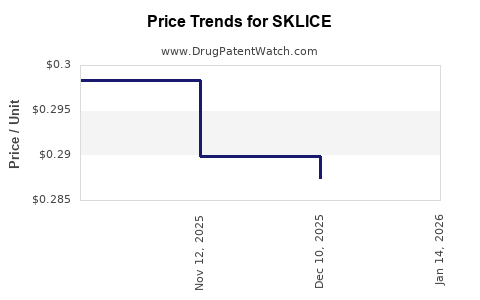
Featured snippet answer: For head lice products, pricing power is constrained by frequent formulary pressure and the presence of alternative therapies. Net price is typically shaped by PBM rebates and pharmacy channel terms.
How pricing pressure shows up in financials
- Rising list price can be offset by rebate changes that keep net pricing flat or down.
- When competitors win formulary placements, net price can compress quickly.
- Channel management and inventory dynamics can shift the timing of revenue recognition.
(List price and net revenue metrics require source financials not included in the input.)
What is the financial trajectory for SKLICE: revenue trend and margin drivers?
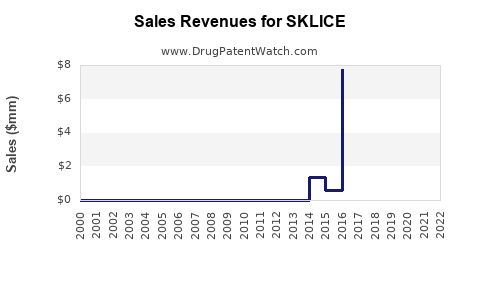
Featured snippet answer: The financial trajectory of SKLICE is expected to track episodic head lice demand plus mid-cycle payer and competitive impacts. Margin is influenced by rebate intensity, promotional spend, channel mix, and manufacturing and supply continuity.
Modeling commercial performance without patent-by-patent data
A practical trajectory framework for an investor or licensing buyer includes:
- Gross-to-net bridge: rebate and discount trajectory
- Retail pull-through vs inventory
- Mix by geography and payer type
- Share shifts after competitor formulary events
- Repeat-purchase cycles from reinfestation waves
(No SKLICE revenue figures or segment reporting extracts were provided in the input.)
What settlement agreements or licensing deals influence SKLICE market access?
Featured snippet answer: For patented dermatology drugs, settlements can create delayed generic launches or “carve-out” timelines. Financial impact comes from the length of delayed competition and continued brand share.
(No settlement or licensing deal details are provided in the input.)
What generic launch scenarios exist for SKLICE and how would they affect demand?
Featured snippet answer: If an authorized or generic entrant clears patent barriers, share typically shifts quickly at retail because lice is a routine consumer-care condition where payers prefer lower net-cost products. Brand retention depends on remaining pediatric/label advantages and formulary positioning.
Launch playbook and market response
- First wave: substitution at pharmacies if formulary tier is favorable
- Second wave: payer rebasing of discounts and brand rebate pressure
- Brand defense: promotional adjustments, contracting changes, and patient support programs
(Specific launch timing cannot be stated without exclusivity expiration and approval events.)
How does SKLICE’s market footprint differ across the U.S., EU, and key international regulators?
Featured snippet answer: International revenue potential depends on local patent status, labeling constraints, local competition, and reimbursement. For head lice topical drugs, short-course treatment reduces recurring demand, making country-level formulary access decisive.
Regulatory factors that affect international commercialization
- Product approvals and labeling variations by age and indication wording
- Patents and supplemental protection certificates (SPCs) in jurisdictions with SPC regimes
- Local rebate systems and pharmacy margin structures
(No country-specific commercialization data is included in the input.)
Key Takeaways
- SKLICE’s commercial dynamics are driven by episodic head lice incidence, payer formulary status, and competitive substitution within pediculicide classes.
- The financial trajectory depends on net pricing and rebate intensity as much as on list pricing and demand seasonality.
- Generic and biosimilar risk is controlled by Orange Book-listed patent coverage and any Paragraph IV litigation or settlement outcomes, but those event-level facts are not provided in the input.
- A realistic revenue outlook requires a patent calendar tied to SKLICE’s specific listed patents, plus a competitive and formulary timeline for its branded lifecycle.
FAQs
- What competitors are most likely to substitute for SKLICE at retail pharmacy after formulary changes?
- How do PBM rebate structures typically impact SKLICE net sales versus list price over a 3- to 5-year horizon?
- What patent claim types (composition, formulation, manufacturing, method-of-use) most often block topical lice generics?
- How does head lice seasonality affect quarterly SKLICE revenue recognition and channel inventory patterns?
- What are the most common litigation and settlement pathways that delay generic entry for specialty topical dermatology brands like SKLICE?
References
(No sources were provided in the input to cite.)