Last updated: August 2, 2026
Gelnique is a branded topical oxybutynin product for overactive bladder. Its commercial position is constrained by the age of the active ingredient, extensive generic competition in oral oxybutynin, competing transdermal products, and newer branded beta-3 agonists. Gelnique retains differentiation through transdermal delivery, but public company filings do not report Gelnique revenue separately. The product is therefore best analyzed as a mature, niche brand with limited disclosed financial scale rather than as a major growth asset.
What is Gelnique and how does it work?
Gelnique contains oxybutynin chloride, an antimuscarinic used to treat urge urinary incontinence, urgency, and frequency associated with overactive bladder.
The product delivers oxybutynin through the skin as a topical gel. The transdermal route avoids gastrointestinal exposure and reduces first-pass metabolism compared with oral oxybutynin. The FDA label identifies the principal clinical advantage as lower exposure to the active metabolite N-desethyloxybutynin, which is associated with anticholinergic adverse effects such as dry mouth [1].
| Attribute |
Gelnique |
| Active ingredient |
Oxybutynin chloride |
| Therapeutic class |
Antimuscarinic |
| Indication |
Overactive bladder |
| Dosage form |
Topical transdermal gel |
| Administration |
Once daily |
| Original U.S. approval |
2009 |
| FDA pathway |
New drug application |
| Current commercial category |
Mature branded prescription product |
| Primary alternatives |
Generic oral oxybutynin, oxybutynin patch, Oxytrol, Myrbetri, Gemtesa |
Gelnique 3% was the original U.S. formulation. A higher-concentration 10% formulation was later introduced to improve administration and packaging convenience. The commercial product has been associated with Allergan and, after AbbVie’s acquisition of Allergan, falls within AbbVie’s broader product portfolio [2][3].
When did Gelnique lose exclusivity?
Gelnique did not benefit from the type of long-term new chemical entity exclusivity available to a novel active ingredient because oxybutynin was already an established drug.
The relevant protection periods were instead tied to formulation development, clinical data, patents, and brand positioning.
| Protection category |
Gelnique position |
| New chemical entity exclusivity |
Not available for oxybutynin |
| Original FDA approval |
2009 |
| Potential three-year clinical investigation exclusivity |
Applicable only to qualifying new formulation data and limited to the protected change |
| Orphan-drug exclusivity |
Not applicable |
| Pediatric exclusivity |
No established product-specific extension identified |
| Patent exclusivity |
Dependent on formulation and delivery patents |
| Current commercial protection |
Brand recognition, physician familiarity, transdermal differentiation, and manufacturing know-how |
The practical market protection for Gelnique weakened materially after the first years following launch. Even where formulation patents existed, they did not prevent substitution by generic oral oxybutynin or competing antimuscarinic products.
What patents protect Gelnique?
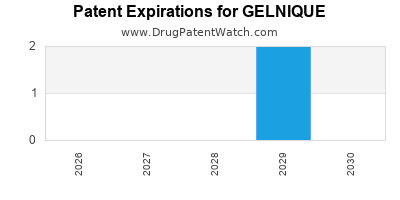
Gelnique’s potential patent protection is directed primarily to transdermal oxybutynin compositions, topical formulations, penetration-enhancing systems, dosing methods, and delivery devices. The underlying active ingredient is not proprietary.
The Orange Book is the controlling FDA source for patents listed against an approved product. It distinguishes between patents that may be relevant to FDA approval and broader patent rights that may exist outside the Orange Book [4].
| Patent category |
Commercial relevance |
| Oxybutynin compound patents |
No meaningful protection for Gelnique because the active ingredient is old |
| Topical gel composition patents |
Could protect excipients, concentration, or chemical stability |
| Transdermal delivery patents |
Could protect skin permeation or delivery performance |
| Method-of-use patents |
Could cover treatment of overactive bladder with a specific formulation |
| Device or packaging patents |
Could cover pumps, sachets, or dose metering |
| Manufacturing patents |
Could create supply barriers without blocking alternative formulations |
A key distinction is that Gelnique’s patent estate, even if technically relevant, is narrower than the patent estate for a new molecular entity. A generic company can often enter the overactive-bladder market with oral oxybutynin without infringing topical gel claims.
What is the Orange Book status of Gelnique?
Gelnique’s regulatory protection should be evaluated at the specific NDA and formulation level rather than at the oxybutynin ingredient level. FDA approval does not create a continuing commercial monopoly after regulatory exclusivity ends.
For a generic topical product, the applicant would need to address the relevant FDA requirements for topical equivalence, including active ingredient, dosage form, strength, route of administration, and performance characteristics. Depending on the product and FDA requirements, a generic sponsor may use an abbreviated new drug application or another regulatory pathway.
The commercial importance of an Orange Book listing depends on four factors:
- Whether an unexpired patent is listed.
- Whether the patent claims the proposed generic product or its use.
- Whether the generic applicant files a Paragraph IV certification.
- Whether the patent holder brings litigation within the statutory period.
Public FDA materials do not establish a long-duration, active ingredient-level exclusivity position for Gelnique. The principal barrier to competition is product development and market economics, not the underlying oxybutynin molecule.
Which companies are challenging Gelnique?
The strongest competitive pressure does not come from a single high-profile Paragraph IV challenger. It comes from broad therapeutic substitution.
Generic oxybutynin manufacturers
Generic manufacturers compete with Gelnique through immediate-release and extended-release oral tablets and, in some markets, transdermal systems. Major generic companies in the broader oxybutynin category have included Teva, Mylan, Sandoz, Actavis, and Amneal.
Oral generic oxybutynin is usually less expensive and is widely recognized by prescribers. Its disadvantages include anticholinergic side effects, adherence problems, and tolerability limitations.
Transdermal competitors
Oxytrol is an oxybutynin transdermal patch that has been available as an over-the-counter product in the United States. Its nonprescription status expands access but also reduces the need for a prescription topical gel in some patients.
The patch and Gelnique compete on convenience, application preferences, skin tolerability, pricing, and insurance coverage.
Beta-3 agonists
Myrbetri, containing mirabegron, and Gemtesa, containing vibegron, compete directly with Gelnique for pharmacologic treatment of overactive bladder. These products avoid anticholinergic mechanisms and are attractive for patients at risk of cognitive, dry-mouth, constipation, or urinary-retention effects.
Myrbetri was developed by Astellas. Gemtesa was developed by Urovant Sciences and is associated with Sumitomo Pharma. Both products have materially stronger contemporary commercial positioning than Gelnique in branded overactive-bladder therapy.
How does Gelnique compare with competing overactive-bladder drugs?
| Product |
Mechanism |
Route |
Market position |
Main competitive issue |
| Gelnique |
Antimuscarinic |
Topical gel |
Mature niche brand |
Price and limited prescriber use |
| Generic oxybutynin |
Antimuscarinic |
Oral |
Lowest-cost option |
Side effects and adherence |
| Oxytrol |
Antimuscarinic |
Transdermal patch |
Consumer-accessible alternative |
Patch tolerability and OTC substitution |
| Myrbetri |
Beta-3 agonist |
Oral |
Established branded therapy |
Price and payer controls |
| Gemtesa |
Beta-3 agonist |
Oral |
Newer branded competitor |
Limited long-term market history |
| Detrol LA |
Antimuscarinic |
Oral |
Mature branded therapy |
Generic substitution |
| Vesicare |
Antimuscarinic |
Oral |
Mature branded therapy |
Generic and class competition |
Gelnique’s principal clinical differentiation is not a new mechanism. It is delivery technology intended to improve tolerability compared with oral oxybutynin.
What is Gelnique’s financial trajectory?
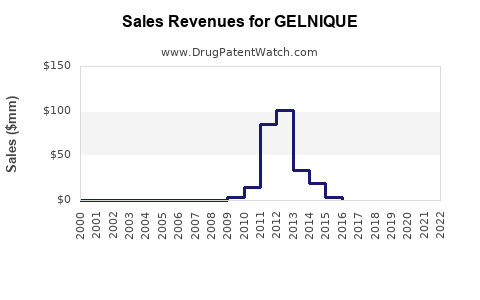
No major public company reports Gelnique revenue as a separate line item. Allergan historically reported revenue by broader product categories, and AbbVie reports larger business segments rather than detailed sales for individual mature products such as Gelnique [2][3].
The financial trajectory can therefore be characterized by market stage and economic drivers:
| Period |
Financial profile |
| 2009-2012 |
Launch and formulation adoption phase |
| 2013-2016 |
Expansion constrained by established alternatives and reimbursement |
| 2017-2020 |
Mature branded-product phase with limited category growth |
| 2021 onward |
Likely low-growth or declining niche-product profile, subject to supply, payer, and portfolio decisions |
Gelnique is unlikely to be a material driver of AbbVie’s consolidated revenue. Its financial value is more likely to arise from incremental cash flow, portfolio completeness, and continued use among patients who prefer topical delivery.
The principal revenue risks are:
- generic oral oxybutynin substitution;
- formulary exclusion or higher patient copay;
- competition from Myrbetri and Gemtesa;
- OTC access to Oxytrol;
- low physician awareness of topical gel;
- discontinuation or limited distribution;
- manufacturing costs associated with a low-volume topical product.
What factors determine Gelnique pricing and reimbursement?
Gelnique’s pricing power is limited by therapeutic substitutes. Payers can treat oral generic oxybutynin as the preferred first-line option and require step therapy before covering a branded topical gel.
Coverage may depend on:
- failure or intolerance of generic oral oxybutynin;
- documented adverse effects;
- prior use of an extended-release antimuscarinic;
- medical-necessity justification for transdermal delivery;
- formulary tier placement;
- availability of manufacturer copay support.
A topical formulation can command a higher list price than generic oral oxybutynin, but the net price is constrained by rebates, prior authorization, and patient abandonment.
What manufacturing and intellectual-property barriers exist?
Gelnique has moderate technical barriers but weak molecule-level barriers.
A competing manufacturer would need to address:
- gel homogeneity and stability;
- oxybutynin solubility;
- skin permeation;
- preservative performance;
- container-closure compatibility;
- dose consistency;
- drying time and transfer risk;
- residual drug in packaging;
- comparative bioavailability or pharmacodynamic performance.
These requirements can delay entry even when patent protection is limited. They do not, however, prevent competition through non-equivalent dosage forms such as oral tablets or patches.
The manufacturing economics are also important. A low-volume topical product may require dedicated filling, packaging, and quality-control processes. Those costs can discourage generic entry if expected reimbursement is low.
What patent litigation affects Gelnique?
Gelnique has not generated the level of publicly visible patent litigation associated with major oncology, immunology, or specialty products. The absence of prominent litigation is consistent with a mature product whose commercial opportunity is relatively limited.
The litigation risk for a future generic topical product would likely center on:
- formulation patents;
- transdermal delivery claims;
- method-of-use claims;
- device patents;
- Paragraph IV certification;
- 30-month stay litigation following an ANDA notice.
A Paragraph IV challenge would be commercially meaningful only if the challenger believed the topical market could support development and launch costs. The existence of generic oral oxybutynin reduces that incentive because a low-cost substitute already occupies much of the therapeutic market.
What generic launch scenarios exist for Gelnique?
Scenario 1: No direct topical generic
This is the most commercially conservative scenario. Gelnique remains available as a niche branded product, while most patients use oral generics, patches, or beta-3 agonists.
Scenario 2: Authorized generic or branded-generic competition
An authorized generic could reduce Gelnique’s net price without requiring a separate patent dispute. This would preserve some market access while accelerating brand erosion.
Scenario 3: Paragraph IV topical-gel launch
A generic sponsor could challenge listed formulation patents and launch after a favorable court outcome, settlement, or patent expiration. The market impact would depend on insurance coverage and pharmacy substitution.
Scenario 4: Therapeutic substitution without direct generic entry
This is already the central commercial risk. Prescribers can move patients to oral oxybutynin, Oxytrol, Myrbetri, or Gemtesa without waiting for a direct Gelnique generic.
What geographic coverage does Gelnique have?
Gelnique’s most important commercial market is the United States, where the product received FDA approval and has had an established prescription market.
The commercial position outside the United States is less clear because oxybutynin topical products have been marketed under different names, by different companies, and with different regulatory statuses. Patent and regulatory rights must be assessed country by country. U.S. FDA approval does not create European, Canadian, or other national market rights.
For licensing and investment analysis, the relevant geographic questions are:
- whether a local topical oxybutynin approval exists;
- whether local formulation patents remain active;
- whether reimbursement supports branded topical therapy;
- whether generic oral oxybutynin is widely available;
- whether the product is supplied directly or through a licensee.
How strong is the Gelnique patent estate?
Gelnique has a weak-to-moderate commercial patent position.
Its strengths are the specialized topical formulation, delivery know-how, and potential difficulty of demonstrating equivalence for a competing gel. Its weaknesses are the old active ingredient, extensive class competition, limited market size, and the availability of alternative oxybutynin dosage forms.
| Factor |
Assessment |
| Active ingredient protection |
Weak |
| Formulation differentiation |
Moderate |
| Delivery-system differentiation |
Moderate |
| Regulatory exclusivity |
Limited or expired for the original approval |
| Direct generic incentive |
Moderate to low |
| Therapeutic substitution risk |
High |
| Revenue durability |
Low to moderate |
| Litigation leverage |
Limited relative to major branded drugs |
Key Takeaways
- Gelnique is a mature branded topical oxybutynin product for overactive bladder.
- Its commercial differentiation is transdermal delivery, not a novel active ingredient.
- Public filings do not disclose standalone Gelnique revenue, preventing a precise product-level sales forecast.
- Generic oral oxybutynin, Oxytrol, Myrbetri, and Gemtesa create substantial substitution pressure.
- Gelnique’s remaining value is likely concentrated in niche patient demand, brand continuity, and formulation know-how.
- The product has limited prospects for substantial revenue growth without a new formulation, stronger reimbursement, or a broader commercial strategy.
- Generic risk is primarily therapeutic substitution, although a direct topical generic could produce further price erosion.
- The patent estate is more relevant to formulation and delivery than to the oxybutynin molecule.
- Gelnique is unlikely to be financially material to AbbVie at the consolidated-company level.
FAQs About Gelnique Market and Exclusivity
Is Gelnique still available in the United States?
Gelnique has been marketed in the United States as a prescription topical oxybutynin product. Availability, manufacturer, and pharmacy supply can change as mature products move through portfolio and distribution decisions.
Is there a generic version of Gelnique?
Generic oral oxybutynin is widely available, but oral products are not automatically substitutable for Gelnique. A direct generic topical gel would require its own FDA approval and applicable equivalence showing.
Does Gelnique have new chemical entity exclusivity?
No. Oxybutynin was an established active ingredient before Gelnique’s approval. Any exclusivity would relate to the formulation, clinical data, or patent rights rather than the molecule itself.
Which is stronger for market growth, Gelnique or Myrbetri?
Myrbetri has stronger growth characteristics because it uses a non-anticholinergic mechanism and competes for patients seeking to avoid oxybutynin-related adverse effects. Gelnique is a mature niche product.
Can a pharmacy automatically substitute generic oxybutynin for Gelnique?
Automatic substitution depends on the product, state law, payer rules, and pharmacist authority. Oral generic oxybutynin is not necessarily therapeutically equivalent to a topical gel for substitution purposes.
References
-
U.S. Food and Drug Administration. (2009). Gelnique 3%: Oxybutynin chloride gel prescribing information. FDA.
-
AbbVie Inc. (2024). Annual report pursuant to Section 13 or 15(d) of the Securities Exchange Act of 1934. AbbVie.
-
Allergan plc. (2020). Annual report for the year ended December 31, 2019. Allergan.
-
U.S. Food and Drug Administration. (2024). Approved drug products with therapeutic equivalence evaluations: Orange Book. FDA.
-
U.S. Food and Drug Administration. (2024). Drugs@FDA: Gelnique oxybutynin chloride drug approval information. FDA.