Last updated: October 31, 2026
Differin is the brand name for adapalene, a topical retinoid used primarily to treat acne vulgaris. Its commercial profile changed sharply after the FDA approved over-the-counter Differin Gel 0.1% in 2016. Prescription exclusivity had already expired, so the OTC switch expanded consumer access but also placed the brand in direct competition with generic adapalene and lower-priced acne products.
Differin remains commercially relevant because of brand recognition, broad retail distribution, and its position as the first FDA-approved over-the-counter topical retinoid for acne. Its financial trajectory is difficult to isolate because Galderma does not publicly report Differin revenue separately. The brand is likely a mature, high-volume consumer-health product rather than a high-growth prescription pharmaceutical.
What is Differin and how does it work?
Differin contains adapalene, a synthetic naphthoic acid derivative with retinoid-like activity. It regulates follicular cell differentiation and reduces the formation of comedones, the lesions associated with acne. The product is applied topically, usually once daily.
| Product |
Active ingredient |
Strength |
Route |
FDA status |
| Differin Gel |
Adapalene |
0.1% |
Topical |
OTC |
| Differin Cream |
Adapalene |
0.1% |
Topical |
Prescription history; generic competition |
| Differin Gel 0.3% |
Adapalene |
0.3% |
Topical |
Prescription |
| Epiduo |
Adapalene plus benzoyl peroxide |
0.1%/2.5% |
Topical |
Prescription and authorized generic competition |
| Epiduo Forte |
Adapalene plus benzoyl peroxide |
0.3%/2.5% |
Topical |
Prescription |
The OTC Differin product is indicated for the treatment of acne in patients aged 12 years and older. The 0.3% formulation remains a prescription product and has a more concentrated commercial and reimbursement profile than OTC Differin Gel 0.1%.[1]
When did Differin lose exclusivity?
Differin lost meaningful prescription exclusivity before its OTC launch. Adapalene is a small-molecule active ingredient, so it is exposed to conventional generic substitution rather than biosimilar competition.
The principal commercial milestones are:
| Year |
Event |
Commercial effect |
| 1996 |
FDA approval of Differin for acne |
Established the adapalene prescription franchise |
| 2007 |
FDA approval of Differin Gel 0.3% |
Expanded the prescription product line |
| 2010s |
Generic adapalene products entered the U.S. market |
Reduced prescription pricing power |
| 2016 |
FDA approved OTC Differin Gel 0.1% |
Expanded the consumer market |
| 2016 onward |
Retail and e-commerce distribution expanded |
Shifted revenue toward consumer purchases |
| 2019 |
Nestlé Skin Health acquired by an investor group led by EQT and Abu Dhabi Investment Authority |
Differin became part of the standalone Galderma business |
| 2022 |
Galderma expanded global dermatology and aesthetic operations |
Increased strategic emphasis on dermatology platforms |
| 2024 |
Galderma completed an initial public offering on SIX Swiss Exchange |
Improved public disclosure at the company level, but not Differin-specific revenue disclosure |
The FDA’s 2016 OTC approval did not restore prescription exclusivity. It changed the channel, regulatory status, and consumer reach of the 0.1% product.[2]
What patents protect Differin?
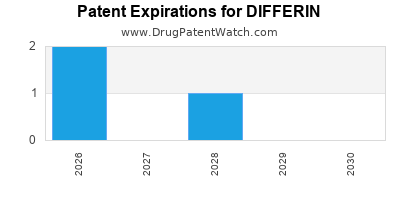
The core adapalene composition and original formulation patents have expired or no longer provide meaningful exclusivity in the United States. Current Differin protection is based more on trademarks, brand equity, packaging, retail placement, and formulation know-how than on a blocking composition-of-matter patent.
Patent estate
The original Differin patent estate included patents directed to adapalene and pharmaceutical compositions containing the active ingredient. Those patents supported the initial prescription launch but have reached the end of their effective life.
| Protection category |
Current commercial position |
| Adapalene composition patent |
Expired or no longer commercially blocking |
| Original topical formulation patents |
Expired or subject to generic competition |
| 0.1% adapalene product |
Generic competition established |
| 0.3% adapalene product |
Prescription generics and competing topical retinoids create risk |
| OTC branding |
Protected primarily by trademark and trade dress |
| Manufacturing process |
May include confidential know-how, but does not prevent generic entry |
| Combination products |
Separate protection may apply to Epiduo and Epiduo Forte formulations |
The most important point for investors is that Differin does not depend on an unexpired U.S. composition-of-matter patent. The brand’s defenses are commercial rather than exclusionary.
What is the Orange Book status of Differin?
The Orange Book historically included prescription adapalene products and related patents. The OTC 0.1% Differin product is not protected by an active Orange Book patent in the same way as a newly approved prescription drug.
Generic manufacturers could challenge listed patents through Paragraph IV certifications when relevant patents were listed for prescription adapalene products. Because the foundational patents have expired, the principal present risk is price competition rather than a pending patent challenge that could abruptly remove a remaining period of exclusivity.
| Issue |
Differin assessment |
| Orange Book-listed active ingredient patent |
No meaningful current blocking patent |
| Paragraph IV exposure |
Historically relevant; limited strategic importance after patent expiry |
| OTC product exclusivity |
No current market exclusivity comparable to NCE exclusivity |
| Prescription generic substitution |
Material |
| Trademark protection |
Important for retail differentiation |
| Regulatory exclusivity |
Expired for the original prescription product |
A Paragraph IV filing against an expired patent would not provide a commercial launch advantage. The key competitive question is whether a generic manufacturer can obtain approval, secure supply, and reach pharmacy or retail channels at a lower price.
How has Differin’s financial trajectory changed?
Differin’s financial trajectory has three phases.
Prescription growth phase
The first phase began with prescription approval in 1996. Differin competed against tretinoin, a widely used topical retinoid that had a longer commercial history and multiple formulations. Adapalene’s positioning included improved tolerability for some patients and once-daily use.
Revenue during this phase depended on physician prescribing, dermatology promotion, reimbursement, and pharmacy access. Patent protection supported pricing during the initial lifecycle, but the product eventually faced generic adapalene and broader topical-retinoid competition.
Generic erosion phase
The second phase followed the loss of meaningful prescription exclusivity. Generic adapalene reduced reimbursement and pharmacy prices. The 0.3% prescription formulation retained a more specialized role, but it also faced generic and therapeutic substitution risk.
The brand’s economics changed from protected prescription pricing to lifecycle management. The commercial value of Differin shifted toward:
- Consumer recognition
- Retail shelf placement
- Dermatology credibility
- Digital marketing
- OTC demand generation
- Product-line extensions
- Cross-selling with cleansers, moisturizers, and acne treatments
OTC expansion phase
The third phase began with the 2016 OTC switch. The FDA described the approval as the first prescription-strength retinoid approved for over-the-counter use in the United States.[2]
The OTC launch created several revenue advantages:
- Consumers could purchase Differin without a physician visit.
- The brand gained access to mass retail, drugstore, club, and e-commerce channels.
- Awareness expanded beyond dermatologist-prescribed patients.
- Retail pricing became less dependent on insurance reimbursement.
- Galderma could market directly to consumers.
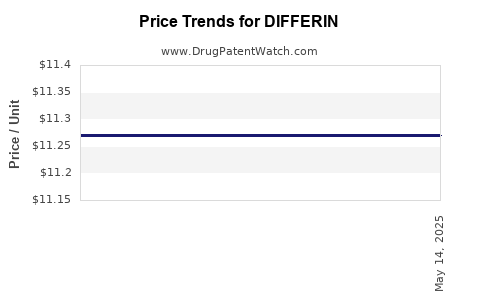
The OTC switch also created economic constraints. Consumers can compare Differin with generic adapalene, store-brand acne products, benzoyl peroxide, salicylic acid, and lower-priced tretinoin obtained through telehealth. Retail promotions and retailer margins can compress net realized pricing.
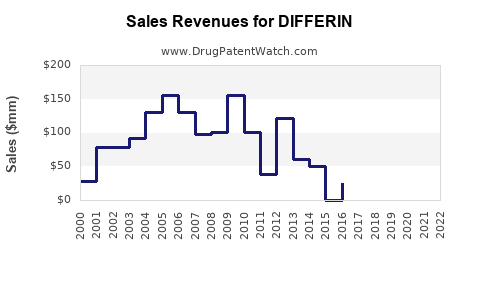
Galderma does not separately disclose Differin revenue, unit volume, gross margin, or geographic sales. Public financial statements therefore cannot support a precise standalone revenue trajectory. Galderma reports at the company level across aesthetics, therapeutic dermatology, and consumer products.[3]
How strong is the Differin patent estate?
The Differin patent estate is weak as a barrier to generic entry but strong as a brand platform.
Legal strength
The legal exclusivity profile is limited because:
- The active ingredient is well established.
- Core patents have expired.
- Generic adapalene products are available.
- OTC Differin has no current new-molecule exclusivity.
- Prescription formulations face therapeutic substitution.
Commercial strength
The commercial franchise remains more durable because:
- Differin is a recognized acne brand.
- Adapalene has a clear clinical position.
- The OTC product is widely distributed.
- Consumers often prefer branded products for skin-care treatments.
- The brand benefits from pharmacist and dermatologist familiarity.
- Product education can support adherence and repeat purchases.
This distinction matters. A weak patent estate does not mean the brand has no value. It means the brand’s value is vulnerable to pricing pressure, private-label competition, and marketing execution.
Which companies challenge Differin?
Differin competes with generic manufacturers, branded topical-retinoid companies, combination-product manufacturers, and consumer acne brands.
Prescription and generic competitors
| Competitor |
Product or ingredient |
Competitive relevance |
| Generic manufacturers |
Adapalene 0.1% and 0.3% |
Direct price competition |
| Tretinoin manufacturers |
Tretinoin creams, gels, and lotions |
Established topical-retinoid alternative |
| Almirall and related dermatology suppliers |
Prescription acne products |
Physician and dermatology-channel competition |
| Bausch Health |
Ortho Dermatologics acne products |
Branded prescription competition |
| Viatris and other generic suppliers |
Topical acne products |
Pharmacy substitution pressure |
OTC competitors
Differin also competes with:
- Benzoyl peroxide products
- Salicylic acid products
- Acne cleansers
- Private-label adapalene
- Proactiv and similar acne systems
- La Roche-Posay, CeraVe, and other dermatology-positioned skin-care brands
- Telehealth acne platforms selling generic prescriptions
The most direct competition is generic adapalene. The broader competitive threat comes from products that occupy the same consumer budget even when they use a different active ingredient.
What formulations are protected by Differin?
The 0.1% gel is the principal OTC Differin formulation. Prescription Differin historically included cream and gel forms, while the 0.3% gel targeted patients requiring a higher adapalene concentration.
Formulation-level differentiation has limited patent power but can support consumer positioning through:
- Gel texture
- Absorption characteristics
- Skin feel
- Packaging
- Stability
- Preservative systems
- Tolerability messaging
- Retail-specific product formats
Formulation patents can delay competition when they cover a genuinely distinct delivery system. They do not prevent competition where a generic manufacturer can obtain approval with a non-infringing formulation that delivers the same active ingredient.
Does Differin face biosimilar risk?
No. Differin contains adapalene, a chemically synthesized small molecule. Biosimilar rules apply to biological products, not conventional topical retinoids.
Differin faces generic-drug risk instead. Generic adapalene manufacturers can rely on an abbreviated approval pathway if they demonstrate pharmaceutical equivalence and bioequivalence or satisfy applicable topical-product requirements.
What is the FDA regulatory status of Differin?
The FDA approved prescription Differin for acne in 1996 and later approved Differin Gel 0.3%. In 2016, FDA approved Differin Gel 0.1% for OTC use in patients aged 12 years and older.[1][2]
The regulatory status is commercially important:
| Regulatory status |
Effect |
| OTC 0.1% adapalene |
Broad consumer access and direct-to-consumer marketing |
| Prescription 0.3% adapalene |
Continued physician and dermatology channel |
| Generic adapalene |
Lower prices and pharmacy substitution |
| Combination products |
Alternative treatment pathways and differentiated prescribing |
There is no current FDA exclusivity period that materially protects the mature Differin brand.
What patent litigation affects Differin?
Differin’s principal litigation risk is historical patent litigation associated with generic entry and product patents. The current commercial threat is more likely to arise from ordinary generic competition, trademark disputes, advertising claims, or formulation-related disputes than from enforcement of a live composition patent.
No publicly disclosed litigation currently appears to create a clear, near-term interruption of the core OTC Differin business. The absence of a known blocking case does not change the central conclusion: Differin is an off-patent brand competing through consumer demand and distribution.
What generic launch risks exist for Differin?
Generic entry risk is high for prescription adapalene and moderate to high for the OTC category.
Generic launch scenarios
| Scenario |
Likely effect |
| Additional generic adapalene launches |
Lower pharmacy prices and reduced prescription brand volume |
| Retail private-label adapalene expansion |
Pressure on OTC shelf pricing |
| Generic 0.3% gel expansion |
Erosion of the higher-strength prescription segment |
| Telehealth distribution growth |
More consumers receive low-cost generic prescriptions |
| Strong brand marketing |
Supports Differin price premium and repeat use |
| Retailer promotion increases |
Higher unit volume but lower net price |
Generic manufacturers face manufacturing, quality, and distribution barriers, but those barriers are modest relative to those for complex biologics or sterile injectables. Topical products still require appropriate manufacturing controls, consistency, stability, packaging, and regulatory compliance. Those requirements support quality differentiation but rarely create durable market exclusivity.
How does Differin compare with tretinoin and Epiduo?
| Factor |
Differin |
Tretinoin |
Epiduo |
| Main active ingredient |
Adapalene |
Tretinoin |
Adapalene plus benzoyl peroxide |
| OTC availability |
Yes, 0.1% gel |
Generally prescription |
Primarily prescription |
| Direct generic pressure |
High |
High |
High |
| Acne positioning |
Comedonal and inflammatory acne |
Broad acne use; formulation-dependent tolerability |
Acne with combined retinoid and antibacterial/keratolytic approach |
| Brand differentiation |
Consumer recognition and OTC status |
Long clinical history and multiple strengths |
Combination therapy |
| Patent profile |
Mature and largely expired |
Mature and largely expired |
Combination and formulation patents may have provided additional protection |
| Pricing power |
Limited to moderate |
Limited |
Greater in differentiated prescription formulations, but declining |
Differin has the clearest OTC advantage. Epiduo has a more differentiated prescription formulation, while tretinoin has deeper physician familiarity and a larger generic ecosystem.
What licensing and ownership deals affect Differin?
Differin was developed and commercialized within Galderma’s dermatology portfolio. Galderma later became part of Nestlé Skin Health, which was acquired in 2019 by an investor group led by EQT and Abu Dhabi Investment Authority. The transaction separated Nestlé Skin Health from Nestlé and contributed to the formation of the independent Galderma company.[4]
The ownership changes matter because Differin moved from a portfolio asset within a large food and consumer-products company to a dermatology-focused public company. Galderma’s strategic priorities now center on medical dermatology, aesthetics, and skin-health brands.
Public disclosures do not identify a separate Differin licensing stream or provide product-level royalty economics. The available evidence supports treating Differin as a Galderma-owned brand rather than as a major third-party licensed asset.
What is Differin’s geographic coverage?
Differin is sold in the United States and has international availability under Galderma’s dermatology portfolio, although regulatory status, strengths, formulations, branding, and distribution differ by country.
The United States is commercially important because of the OTC switch. Other markets may retain prescription-only status or use different adapalene brands. Geographic revenue cannot be estimated reliably from public disclosures because Galderma reports by broader business segments rather than by Differin and country.
What is the investment outlook for Differin?
Differin is best characterized as a mature cash-generating brand with limited patent upside and moderate execution risk.
Positive factors include:
- Large acne-treatment population
- OTC access
- High brand awareness
- Low clinical complexity
- Broad retail distribution
- Potential for repeat purchases
- Consumer-health and dermatology positioning
Negative factors include:
- Expired core patent protection
- Generic adapalene competition
- Retail price transparency
- Private-label substitution
- Limited product-level financial disclosure
- Consumer switching to low-cost telehealth prescriptions
- Limited ability to raise prices without volume loss
Differin is unlikely to deliver pharmaceutical-style growth based on exclusivity. Its value depends on maintaining a price premium over generic adapalene, protecting shelf space, improving consumer adherence, and using the brand to support the broader Galderma dermatology portfolio.
Key Takeaways
- Differin is adapalene, a topical retinoid for acne.
- The 0.1% gel became OTC in the United States in 2016.
- Core adapalene patent protection has expired or no longer blocks generic competition.
- Differin has no biosimilar risk because adapalene is a small molecule.
- Generic adapalene is the primary direct competitive threat.
- The brand’s current defenses are trademarks, consumer recognition, distribution, and clinical familiarity.
- Galderma does not separately disclose Differin revenue or profit.
- The OTC switch expanded the market but also increased exposure to retail pricing and private-label competition.
- Prescription 0.3% adapalene faces generic and therapeutic-substitution risk.
- Differin is a mature dermatology and consumer-health asset, not a patent-protected growth pharmaceutical.
FAQs
Is Differin still patented?
The foundational adapalene and original formulation patents have expired or no longer provide meaningful U.S. market exclusivity. Current protection is primarily commercial and trademark-based.
Can generic adapalene replace Differin?
Yes. Generic adapalene can provide a clinically comparable active ingredient and is usually priced below the branded product. Consumers may still choose Differin because of brand recognition, packaging, availability, or perceived quality.
Is Differin stronger than tretinoin?
Neither product is universally stronger. Differin contains adapalene, while tretinoin contains a different retinoid. Choice depends on acne type, tolerability, formulation, prescribing practice, and patient adherence.
Who owns the Differin brand?
Galderma owns and commercializes Differin as part of its dermatology and consumer-health portfolio. Galderma became an independent public company after the separation of Nestlé Skin Health and its subsequent ownership transition.
Does Differin have a Paragraph IV patent challenge pending?
The commercial significance of Paragraph IV challenges is limited because the core Differin patent estate is mature and generic adapalene is already established. No publicly disclosed pending challenge appears to threaten the core OTC Differin business.
References
- U.S. Food and Drug Administration. (1996). Differin (adapalene) prescribing information. FDA.
- U.S. Food and Drug Administration. (2016). FDA approves first over-the-counter adapalene gel for acne. FDA.
- Galderma S.A. (2024). Annual report 2023. Galderma.
- Nestlé S.A. (2019). Nestlé agrees to sell Nestlé Skin Health to a consortium led by EQT. Nestlé.