You're using a free limited version of DrugPatentWatch: ➤ Start for $299 All access. No Commitment.

Last Updated: December 11, 2025

Sodium chloride - Generic Drug Details


✉ Email this page to a colleague

« Back to Dashboard


What are the generic sources for sodium chloride and what is the scope of freedom to operate?

Sodium chloride is the generic ingredient in fourteen branded drugs marketed by Blairex, Abbott, B Braun, Baxter Hlthcare, Fresenius Kabi Usa, Hospira, Miles, Otsuka Icu Medcl, Medefil Inc, Fresenius Medcl, Gvs Tm, Laboratorios Grifols, Liebel-flarsheim, Abraxis Pharm, Hikma, Nexus, Spectra Mdcl Devices, Icu Medical Inc, Jubilant Cadista, Nephron, and Taro, and is included in fifty-six NDAs. Additional information is available in the individual branded drug profile pages.

There are nineteen drug master file entries for sodium chloride. Twenty-seven suppliers are listed for this compound.

Summary for sodium chloride
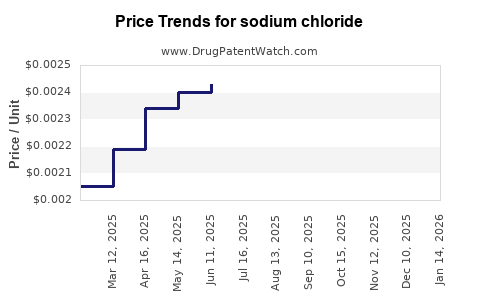
Drug Prices for sodium chloride

See drug prices for sodium chloride

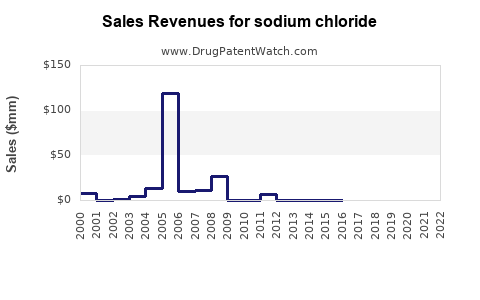
Drug Sales Revenue Trends for sodium chloride

See drug sales revenues for sodium chloride

Pharmacology for sodium chloride

US Patents and Regulatory Information for sodium chloride

Applicant Tradename Generic Name Dosage NDA Approval Date TE Type RLD RS Patent No. Patent Expiration Product Substance Delist Req. Exclusivity Expiration
Fresenius Medcl SODIUM CHLORIDE 0.9% IN PLASTIC CONTAINER sodium chloride INJECTABLE;INJECTION 078177-001 Apr 12, 2007 AP RX No No ⤷  Get Started Free ⤷  Get Started Free ⤷  Get Started Free
Fresenius Kabi Usa SODIUM CHLORIDE 23.4% sodium chloride SOLUTION;INTRAVENOUS 212070-003 Feb 14, 2022 AP RX No No ⤷  Get Started Free ⤷  Get Started Free ⤷  Get Started Free
Baxter Hlthcare SODIUM CHLORIDE 0.9% IN STERILE PLASTIC CONTAINER sodium chloride SOLUTION FOR SLUSH;IRRIGATION 019319-002 May 17, 1985 RX Yes Yes ⤷  Get Started Free ⤷  Get Started Free ⤷  Get Started Free
Hospira SODIUM CHLORIDE 0.9% IN PLASTIC CONTAINER sodium chloride SOLUTION;INJECTION 019465-001 Jul 15, 1985 AP RX Yes Yes ⤷  Get Started Free ⤷  Get Started Free ⤷  Get Started Free
B Braun SODIUM CHLORIDE 3% IN PLASTIC CONTAINER sodium chloride INJECTABLE;INJECTION 019635-003 Mar 9, 1988 AP RX No No ⤷  Get Started Free ⤷  Get Started Free ⤷  Get Started Free
>Applicant >Tradename >Generic Name >Dosage >NDA >Approval Date >TE >Type >RLD >RS >Patent No. >Patent Expiration >Product >Substance >Delist Req. >Exclusivity Expiration

Market Dynamics and Financial Trajectory for Sodium Chloride in Pharmaceutical Applications

Last updated: November 16, 2025


Introduction

Sodium chloride, commonly known as table salt, is a vital compound with extensive applications within the pharmaceutical industry, predominantly as a sterilizing agent, electrolyte replenisher, and component of infusion solutions. The global pharmaceutical markets' reliance on sodium chloride has propelled steady growth, driven by advancements in healthcare infrastructure, increasing prevalence of chronic diseases, and evolving formulations for parenteral therapies. This article provides a comprehensive analysis of the market dynamics and financial trajectory of sodium chloride in pharmaceuticals, emphasizing key industry trends, supply-demand factors, and potential investment considerations.


Market Overview

Global Market Size and Growth Trends

The pharmaceutical-grade sodium chloride market globally has exhibited consistent expansion over the past decade. According to industry reports, the pharmaceutical salt market was valued at approximately USD 1.2 billion in 2022, with projections indicating a Compound Annual Growth Rate (CAGR) of 3-4% through 2030 [1].

This growth trajectory is supported by increasing demand for injectable and infusion solutions, especially within hospital settings, where sodium chloride serves critical functions in maintaining electrolyte balance and drug solubility. Moreover, the rising adoption of intravenous therapies for dehydration, electrolyte disorders, and surgical procedures fuels further market expansion.

Regional Dynamics

  • North America: Leading the market due to high healthcare expenditure, advanced medical infrastructure, and widespread use of infusion therapies. The United States accounts for a substantial share owing to its large pharmaceutical manufacturing base and healthcare system demands.

  • Europe: Exhibits robust growth driven by aging populations and stringent quality standards mandating pharmaceutical-grade inputs.

  • Asia-Pacific: Offers significant growth potential owing to expanding healthcare infrastructure, generic drug manufacturing, and increasing awareness. Countries like China and India are emerging as production hubs for pharmaceutical sodium chloride, both domestically and for export.

  • Rest of the World: Markets in Latin America and the Middle East are gradually increasing their share, driven by improving healthcare access and pharmaceutical manufacturing capabilities.


Key Market Drivers

1. Increasing Demand for Parenteral Solutions

Sodium chloride’s primary function as a component of normal saline (0.9% sodium chloride solution) underscores its critical role in intravenous therapy. The global surge in hospitalization rates, surgeries, and chronic condition management directly correlates with rising infusion solution consumption [2].

2. Expansion of Pharmaceutical Manufacturing

Many developing nations are establishing local manufacturing capacities for pharmaceutical salts, driven by cost advantages and strategic self-sufficiency goals. This trend broadens domestic supply options, stabilizes prices, and mitigates supply chain risks.

3. Regulatory Approvals and Standards

Regulatory frameworks like USP (United States Pharmacopeia) and EP (European Pharmacopoeia) set rigorous quality standards, incentivizing pharmaceutical-grade sodium chloride production. Compliance ensures access to international markets, fostering growth.

4. Healthcare Infrastructure Development

Government initiatives to improve healthcare infrastructure, particularly in emerging economies, expand access to intravenous therapy and electrolyte management, bolstering demand.


Market Constraints and Challenges

1. Price Volatility and Supply Chain Disruptions

Fluctuations in raw material costs (notably sodium and chlorine sources), fuel prices, and transportation can impact pricing and availability. The COVID-19 pandemic highlighted vulnerabilities in global supply chains, prompting calls for diversification and local sourcing strategies [3].

2. Environmental and Regulatory Compliance

Manufacturers must adhere to stringent environmental standards concerning chlorine production and waste management, potentially increasing operational costs.

3. Competition From Alternative Electrolytes

While sodium chloride remains dominant, alternative electrolyte solutions (e.g., lactated Ringer's) offer competitive options, influencing market share dynamics.


Financial Trajectory and Investment Outlook

Revenue Trends and Profitability

Major players in pharmaceutical-grade sodium chloride production demonstrate steady revenue streams primarily derived from contract manufacturing, bulk trading, and embedded supply contracts with hospitals and pharmaceutical firms. Profit margins are generally moderate, stabilizing from volume efficiencies and stringent quality control in manufacturing.

Emerging Growth Opportunities

  • Customization and Packaging Innovations: Developing pre-filled infusion bags and stability-optimized formulations present new revenue avenues.
  • Expansion into Specialty Markets: Usage in medical devices and topical applications is an emerging frontier, with potential for higher profit margins.

Mergers and Acquisitions

Encouraged by stable demand, several large pharmaceutical and chemical conglomerates target acquisition of specialized salt manufacturers to expand their portfolio and secure supply chains.

Forecasted Financial Trends

Analysts project revenue growth for the pharmaceutical sodium chloride sector to maintain around 3-4% CAGR until 2030, aligned with healthcare infrastructure expansion and pharmaceutical manufacturing growth in emerging markets [1].


Competitive Landscape

Leading manufacturers include BASF, Cargill, Gateley Chemicals, and regional producers in China and India, offering pharmaceutical-grade sodium chloride compliant with regional pharmacopoeias. Market entry barriers, rooted in regulatory compliance and quality standards, favor established players.


Regulatory and Quality Considerations

Adherence to pharmacopoeial standards is pivotal. Variations in specifications between USP, EP, and JP (Japanese Pharmacopoeia) necessitate tailored production and quality assurance strategies, influencing cost structures and supplier competitiveness.


Sustainability and Environmental Impact

Growing environmental concerns prompt manufacturers to invest in cleaner production methods, including chlorine recycling and waste reduction, impacting operational costs but potentially opening access to environmentally-conscious markets.


Conclusion

The pharmaceutical sodium chloride market exhibits resilient growth, driven by global healthcare expansion, technological advancements, and regulatory rigor. While supply chain and environmental challenges persist, strategic manufacturing, regional diversification, and product innovation will underpin sustained profitability. Companies that allocate resources toward quality compliance, scalable production, and sustainable practices are poised to capitalize on the steady demand for pharmaceutical-grade sodium chloride.


Key Takeaways

  • The market is expected to grow at a CAGR of 3-4% through 2030, bolstered by increasing demand for intravenous therapies.
  • Regional disparities favor North America and Europe, with Asia-Pacific presenting substantial growth opportunities.
  • Supply chain resiliency and environmental compliance emerge as critical success factors.
  • Innovation in packaging and formulation can unlock additional revenue streams.
  • Strategic acquisitions and partnerships will reinforce market positioning amid cyclical price fluctuations.

FAQs

  1. What are the primary pharmaceutical applications of sodium chloride?
    Sodium chloride is mainly used in infusion solutions like normal saline for hydration, electrolyte balance, and as a vehicle for drug delivery.

  2. How do regulatory standards impact sodium chloride manufacturing?
    Standards from pharmacopoeias (USP, EP, JP) dictate purity, sterility, and quality, influencing manufacturing processes and market access.

  3. What factors influence the pricing of pharmaceutical-grade sodium chloride?
    Raw material costs, regulatory compliance costs, supply chain logistics, and regional demand dynamics are key drivers of pricing.

  4. Is there potential for new market entrants in pharmaceutical sodium chloride?
    Entry is challenging due to high regulatory barriers and the need for GMP-compliant manufacturing, but regional opportunities exist in emerging markets.

  5. How does environmental sustainability affect future market growth?
    Sustainable practices may increase operational costs but are increasingly valued, influencing procurement choices and compliance across regions.


Sources

[1] MarketWatch, "Pharmaceutical Salt Market Size, Share & Trends Analysis," 2022.
[2] MarketsandMarkets, "Global Infusion Therapy Market," 2023.
[3] McKinsey & Company, "Supply Chain Resilience in Healthcare," 2022.

More… ↓

⤷  Get Started Free

Make Better Decisions: Try a trial or see plans & pricing

Drugs may be covered by multiple patents or regulatory protections. All trademarks and applicant names are the property of their respective owners or licensors. Although great care is taken in the proper and correct provision of this service, thinkBiotech LLC does not accept any responsibility for possible consequences of errors or omissions in the provided data. The data presented herein is for information purposes only. There is no warranty that the data contained herein is error free. We do not provide individual investment advice. This service is not registered with any financial regulatory agency. The information we publish is educational only and based on our opinions plus our models. By using DrugPatentWatch you acknowledge that we do not provide personalized recommendations or advice. thinkBiotech performs no independent verification of facts as provided by public sources nor are attempts made to provide legal or investing advice. Any reliance on data provided herein is done solely at the discretion of the user. Users of this service are advised to seek professional advice and independent confirmation before considering acting on any of the provided information. thinkBiotech LLC reserves the right to amend, extend or withdraw any part or all of the offered service without notice.