Last updated: October 31, 2026
Methylprednisolone is a mature, off-patent corticosteroid with stable clinical demand and limited pricing power. The market is divided between low-cost oral tablets, injectable hospital products, and branded or authorized-generic presentations such as Medrol, Solu-Medrol, and Depo-Medrol. Pfizer remains the best-known originator associated with injectable methylprednisolone products, while generic manufacturers supply most global volume. Revenue growth is primarily driven by injectable shortages, hospital contracting, geographic expansion, and product mix rather than by prescription growth or patent protection.
What is the current market position of methylprednisolone?
Methylprednisolone is a systemic glucocorticoid used to suppress inflammation and immune activity. Its principal dosage forms are:
| Product type |
Active form |
Typical setting |
Commercial position |
| Oral tablets |
Methylprednisolone |
Outpatient and chronic inflammatory conditions |
Highly commoditized |
| Dose packs |
Methylprednisolone tablets |
Short outpatient tapers |
Generic and retail-driven |
| Injectable solution or powder |
Methylprednisolone sodium succinate |
Emergency, inpatient, perioperative and infusion use |
Higher manufacturing barriers |
| Injectable suspension |
Methylprednisolone acetate |
Intra-articular, intramuscular and selected local uses |
More differentiated than tablets |
| Branded products |
Medrol, Solu-Medrol, Depo-Medrol |
Physician and hospital channels |
Brand recognition but limited exclusivity |
Methylprednisolone is used in asthma and severe allergic reactions, rheumatologic disease, dermatologic inflammation, multiple sclerosis relapse, transplant medicine, oncology-related complications, and other immune-mediated disorders. The FDA-approved labeling for Solu-Medrol lists multiple systemic inflammatory and allergic indications, while Depo-Medrol is positioned mainly for intra-articular, intramuscular and local administration routes (U.S. Food and Drug Administration [FDA], 2024a; FDA, 2024b).
The commercial market is mature. Oral methylprednisolone is generally interchangeable at the product level and is exposed to generic substitution. Injectable products retain greater commercial value because sterile manufacturing, hospital procurement, supply continuity and route-specific labeling create higher barriers than tablet production.
How large is the methylprednisolone market?
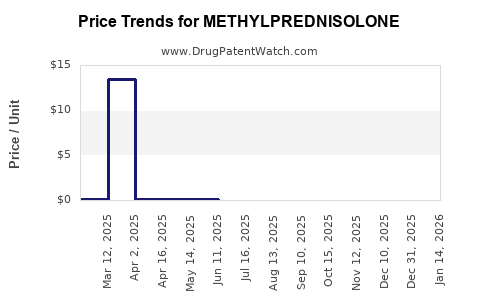
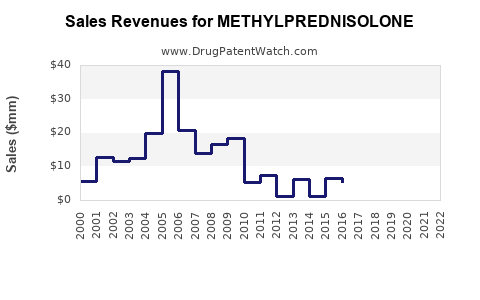
No major originator reports methylprednisolone as a separate revenue line. Public company filings generally combine it with broader hospital products, sterile injectables, corticosteroids or established medicines. Published market-research estimates vary widely because they use different definitions of the market, including or excluding combination products, local injections, hospital sales and non-U.S. formulations.
The relevant financial conclusion is that methylprednisolone is a large-volume, low-value generic market rather than a high-growth specialty pharmaceutical market. Its economics have four defining characteristics:
- Oral tablets generate substantial unit volume but limited revenue per prescription.
- Sterile injectable products generate higher revenue per unit and have more concentrated manufacturing capacity.
- Brand revenue is constrained by generic substitution and long-standing off-patent status.
- Market-wide revenue growth is usually tied to price, shortage conditions and channel mix.
The product is economically important to manufacturers with broad generic portfolios, but it is not a major standalone growth asset for diversified pharmaceutical companies.
What companies manufacture or market methylprednisolone?
The supply base includes originator-affiliated products, generic finished-dose manufacturers, contract manufacturers and regional pharmaceutical companies. Supplier participation varies by dosage form and country.
Key commercial categories
| Supplier category |
Products |
Competitive advantage |
| Originator-affiliated manufacturers |
Solu-Medrol and Depo-Medrol |
Established labeling, hospital familiarity and supply history |
| U.S. generic manufacturers |
Tablets, dose packs and injections |
Formulary access and low pricing |
| Global generic manufacturers |
Oral and injectable products |
Geographic reach and tender participation |
| Contract manufacturers |
Sterile injectable presentations |
Specialized facilities and regulatory compliance |
| Regional manufacturers |
Local tablets and injections |
National registration and distribution relationships |
Pfizer identifies established pharmaceutical products as a separate business area but does not publicly disclose standalone global sales for methylprednisolone brands (Pfizer Inc., 2024). The practical competitive set includes manufacturers selling methylprednisolone sodium succinate, methylprednisolone acetate and oral methylprednisolone under abbreviated new drug applications, national generic registrations or legacy branded registrations.
Hospital buyers generally evaluate:
- FDA or equivalent regulatory status
- Sterile manufacturing capacity
- Back-order history
- vial and package configuration
- contract price
- product availability during shortages
- wholesaler and group purchasing organization coverage
For tablets, the lowest sustainable acquisition cost is often decisive. For injectable products, reliability can outweigh a small price difference.
When did methylprednisolone lose patent exclusivity?
The original composition-of-matter and early product protection for methylprednisolone expired decades ago. There is no current core-molecule exclusivity blocking generic entry in the United States.
Methylprednisolone is listed in FDA’s Approved Drug Products with Therapeutic Equivalence Evaluations, commonly called the Orange Book, through multiple dosage forms and reference products. The Orange Book identifies reference-listed drugs and generic-equivalent pathways, but it does not indicate a current monopoly for methylprednisolone products (FDA, 2024c).
Exclusivity and patent position
| Protection category |
Current position |
| New chemical entity exclusivity |
Expired |
| Original composition patent |
Expired |
| Core product patent |
Expired |
| Oral tablet exclusivity |
None of economic significance |
| Injectable product exclusivity |
No current core exclusivity |
| Pediatric exclusivity |
No material current barrier identified |
| Orphan exclusivity |
Not applicable to methylprednisolone as a broad product |
| Biosimilar exclusivity |
Not applicable because methylprednisolone is a small molecule |
Any remaining patent rights would need to relate to a particular formulation, device, manufacturing process or use. Those rights would not restore exclusivity to the underlying methylprednisolone market.
What is the Orange Book status of methylprednisolone?
The FDA Orange Book includes methylprednisolone reference products and generic equivalents across relevant dosage forms. Solu-Medrol is associated with methylprednisolone sodium succinate, while Depo-Medrol is associated with methylprednisolone acetate. Oral Medrol products are associated with methylprednisolone tablets.
The Orange Book’s commercial significance is greater for injectable competition than for tablets. A listed generic can enter only after meeting the applicable FDA approval requirements, including pharmaceutical equivalence and bioequivalence where required. Injectable products must also satisfy sterility, stability, container-closure and manufacturing controls.
The absence of current meaningful exclusivity allows multiple generic entrants. Product-level competition can still be limited when only a small number of manufacturers maintain approved sterile facilities or when suppliers experience manufacturing failures.
Are there Paragraph IV challenges against methylprednisolone?
Paragraph IV litigation is not a major current market driver for ordinary methylprednisolone products. The basic products have been generic for many years, and the principal commercial question is supply capacity rather than patent validity.
A generic applicant may certify against listed patents under the Hatch-Waxman framework, but the existence of an Orange Book listing does not establish that the listed patent blocks all methylprednisolone competition. For a mature product, any litigation is more likely to concern a specific presentation, formulation or use than the active ingredient itself.
The market has no known current Paragraph IV event comparable to litigation around recently launched specialty drugs. Generic entry risk is therefore high for any remaining brand-priced oral product and moderate to high for standard injectable presentations, subject to manufacturing readiness.
What formulations are protected by methylprednisolone patents?
Historically, commercial differentiation has centered on salt form, ester form, dosage form and route of administration:
- Methylprednisolone tablets
- Methylprednisolone sodium succinate for injectable use
- Methylprednisolone acetate injectable suspension
- Dose-pack oral taper products
- Vial and package configurations for hospital use
These differences affect regulatory approval and manufacturing requirements. They do not create broad, durable market exclusivity today.
Injectable formulation barriers
Methylprednisolone sodium succinate products require sterile manufacturing and control of reconstitution, stability and particulate matter. Methylprednisolone acetate suspension products require control of particle size, suspension uniformity, sterility and injection performance. These technical requirements can limit the number of dependable suppliers even when patents are expired.
This creates a distinction between legal entry and operational entry. A company may have no patent obstacle but still face high capital expenditure, lengthy process validation and hospital qualification requirements.
How does methylprednisolone compare with prednisone and dexamethasone?
Methylprednisolone competes primarily on route, clinical familiarity and hospital availability. Prednisone is often preferred for lower-cost oral systemic therapy, while dexamethasone has strong use in oncology, cerebral edema, antiemetic protocols and selected respiratory or inflammatory settings.
| Attribute |
Methylprednisolone |
Prednisone |
Dexamethasone |
| Main commercial strength |
Oral tapers and injectable hospital therapy |
Low-cost oral therapy |
High-potency oral and injectable therapy |
| Mineralocorticoid activity |
Lower than prednisone |
Higher than methylprednisolone |
Very low |
| Hospital injectable role |
Strong |
More limited in injectable form |
Strong |
| Generic competition |
Extensive |
Extensive |
Extensive |
| Brand pricing power |
Low |
Low |
Low to moderate in selected channels |
| Manufacturing barrier |
Highest for sterile forms |
Highest for sterile forms where applicable |
Highest for sterile forms |
| Substitution risk |
High across corticosteroid class |
High |
High, but indication-specific |
Dose conversion does not mean clinical interchangeability. Prescribers must account for potency, duration, route, disease state and patient-specific risks. FDA product labeling and clinical guidance remain the relevant basis for substitution decisions (FDA, 2024a; FDA, 2024b).
What is the financial trajectory for methylprednisolone?
The medium-term financial trajectory is stable to mildly declining in real terms for oral products and more volatile for injectables.
Revenue drivers
- Generic prescription volume
- Hospital injectable demand
- Shortages affecting competing corticosteroids
- Price increases after supplier exits
- Higher-cost sterile presentations
- Tender wins and group purchasing contracts
- Demand in emerging markets
- Seasonal respiratory and allergic disease patterns
Revenue constraints
- Generic substitution
- Low switching costs
- Multiple approved suppliers
- Therapeutic alternatives
- Hospital purchasing pressure
- Limited physician loyalty to a particular manufacturer
- No meaningful molecule-level exclusivity
A reasonable base-case commercial outlook is:
| Period |
Expected market behavior |
| Near term |
Stable volume with pricing volatility in injectables |
| Medium term |
Low nominal growth or decline in oral revenue |
| Longer term |
Continued commoditization, with value concentrated in sterile supply |
| Upside case |
Supplier shortages, new geographic registrations and injectable contract wins |
| Downside case |
Additional generic entrants, price erosion and manufacturing exits |
Revenue exposure is asymmetric. A company with a small oral methylprednisolone product may generate limited sales and face rapid price erosion. A manufacturer with validated sterile injectable capacity can obtain higher revenue per unit, but it also bears greater compliance, quality and shortage-related risk.
What generic launch risks exist for methylprednisolone?
Generic launch risk is high for oral methylprednisolone and moderate to high for injectable products.
Oral products
The main risks are:
- immediate price competition
- pharmacy substitution
- low brand retention
- wholesaler inventory pressure
- limited opportunity to differentiate
- low return on regulatory and commercial investment
An entrant can generally compete through price, availability and package configuration. Market share can change rapidly after wholesaler or payer contracting decisions.
Injectable products
Injectable entry is more difficult because the applicant must establish dependable sterile production. Risks include:
- FDA inspection findings
- contamination or sterility failures
- limited vial capacity
- raw-material or container shortages
- stability failures
- hospital qualification delays
- supply interruption after approval
For incumbents, these barriers support better pricing than in oral tablets. They do not provide patent protection.
What manufacturing and intellectual-property barriers affect the market?
Methylprednisolone’s main barriers are manufacturing and regulatory, not intellectual property.
Manufacturing barriers
The most important barriers include:
- sterile fill-finish capacity
- validated aseptic processing
- control of endotoxins and particulate matter
- suspension uniformity for acetate products
- compatibility with reconstitution diluents
- reliable API sourcing
- regulatory inspection readiness
- packaging and vial availability
API supply is typically sourced through global pharmaceutical supply chains, with substantial production capacity in Asia. Finished-dose manufacturers must manage quality agreements, supplier qualification and regulatory documentation across jurisdictions.
Geographic coverage
The United States, Europe, Japan and other developed markets have mature generic competition. Emerging markets can show greater brand persistence, variable substitution rules and more fragmented distribution. Registration requirements differ by jurisdiction, particularly for injectable products and local administration routes.
The commercial value of a product can therefore depend on country-specific registration status rather than global patent rights.
What is the litigation and settlement outlook?
Methylprednisolone does not have the litigation profile of a protected specialty medicine. The likely legal issues are product liability, manufacturing quality, labeling, supply contracts and regulatory compliance rather than molecule-level patent litigation.
No major current settlement structure is central to the commercial outlook of standard methylprednisolone products. Any settlement involving a particular formulation or manufacturer would likely have limited impact on the broader active-ingredient market unless it affected a high-volume sterile product.
Is there biosimilar risk for methylprednisolone?
Biosimilar risk is not applicable. Methylprednisolone is a chemically synthesized small molecule, not a biologic. Competition occurs through generic drug applications and equivalent national approval pathways, not through the biosimilar framework.
The relevant competitive risk is therapeutic substitution. Prednisone, dexamethasone, hydrocortisone and other corticosteroids can reduce demand when clinicians select based on potency, duration, route or disease-specific evidence.
What licensing deals affect methylprednisolone?
Methylprednisolone has limited current licensing value because the active ingredient is off patent and broadly available from generic manufacturers. Commercial arrangements are more likely to involve:
- contract manufacturing
- authorized-generic distribution
- regional marketing rights
- hospital supply agreements
- API procurement
- sterile fill-finish partnerships
A licensing transaction involving a specific delivery system or combination product would not necessarily affect the standard methylprednisolone market.
How strong is the methylprednisolone patent estate?
The patent estate is weak at the molecule level and commercially limited at the product level.
| Patent factor |
Assessment |
| Core molecule |
Expired |
| Broad product protection |
Expired |
| Oral tablets |
Highly vulnerable to generic competition |
| Injectable salts and esters |
Legally open, operationally more difficult |
| Formulation innovation |
Potentially protectable but narrow |
| Manufacturing process claims |
Possible, but generally limited in market scope |
| Method-of-use claims |
Narrow and vulnerable to label and prescribing workarounds |
| Biosimilar protection |
Not applicable |
For investors and business-development teams, the value lies in manufacturing reliability, regulatory execution and distribution access. Patent exclusivity is not the primary asset.
Key Takeaways
- Methylprednisolone is a mature, off-patent corticosteroid with extensive generic competition.
- Oral products are highly commoditized and have weak pricing power.
- Injectable products have stronger commercial economics because sterile manufacturing is difficult.
- No current core-molecule patent or exclusivity materially blocks generic entry.
- The market has no meaningful biosimilar issue because methylprednisolone is a small molecule.
- Financial performance depends on volume, hospital contracts, supply continuity and shortages.
- The strongest commercial positions belong to manufacturers with FDA-compliant sterile capacity and broad hospital distribution.
- Long-term market growth is likely to be low, with revenue shifting toward injectable and specialized presentations.
FAQs About Methylprednisolone Market and Exclusivity
Does methylprednisolone still have patent protection?
No. The original molecule and principal commercial products have been off patent for decades. Any remaining rights would be narrow and product-specific.
Is Solu-Medrol still commercially protected?
Solu-Medrol is not protected by meaningful molecule-level exclusivity. Generic methylprednisolone sodium succinate products compete with the brand, although sterile manufacturing and hospital supply requirements limit the practical number of dependable suppliers.
Can a generic company launch methylprednisolone immediately?
A company must still obtain regulatory approval and meet quality, bioequivalence, sterility and manufacturing requirements. Patent barriers are generally limited, but regulatory and operational barriers remain.
Which methylprednisolone product has the highest commercial value?
Injectable products generally have greater value per unit than oral tablets because of sterile manufacturing requirements, hospital procurement and supply constraints.
Is methylprednisolone revenue expected to grow?
The base case is stable to low growth in nominal terms, with oral revenue under continuing price pressure. Injectable revenue can rise temporarily during shortages or after supplier exits, but the market lacks a durable patent-driven growth mechanism.
References
-
Pfizer Inc. (2024). 2023 annual report. https://www.pfizer.com/investors/financial-reports
-
U.S. Food and Drug Administration. (2024a). Solu-Medrol (methylprednisolone sodium succinate) prescribing information. https://www.accessdata.fda.gov
-
U.S. Food and Drug Administration. (2024b). Depo-Medrol (methylprednisolone acetate injectable suspension) prescribing information. https://www.accessdata.fda.gov
-
U.S. Food and Drug Administration. (2024c). Approved drug products with therapeutic equivalence evaluations. https://www.fda.gov/drugs/drug-approvals-and-databases/orange-book-data-files