Last updated: September 1, 2026
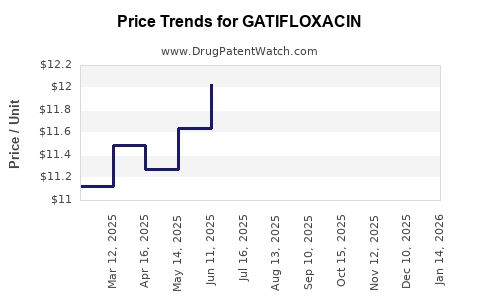
Gatifloxacin is a mature fluoroquinolone with limited commercial value. Its systemic product, Tequin, was withdrawn from the U.S. market in 2006 after safety concerns involving dysglycemia. Ophthalmic gatifloxacin remains commercially available as a generic antibiotic, while branded products such as Zymar and Zymaxid have lost most or all meaningful exclusivity. The market is now driven by low-cost generic supply, institutional purchasing, ophthalmic procedure volumes, and regional regulatory demand rather than innovative pricing.
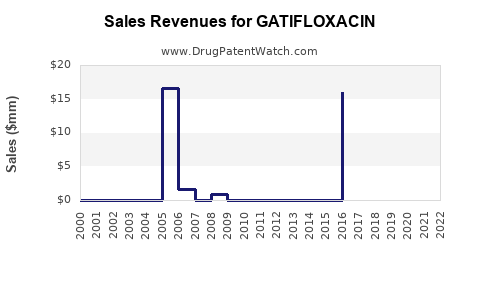
Public filings do not report gatifloxacin revenue as a standalone product. The financial trajectory is therefore best measured through product withdrawals, generic entry, declining branded exposure, and the absence of material patent barriers.
What is gatifloxacin and which products contain it?
Gatifloxacin is a fourth-generation fluoroquinolone antibacterial that inhibits bacterial DNA gyrase and topoisomerase IV. It was developed for systemic and ophthalmic use.
| Product |
Active ingredient |
Formulation |
Commercial status |
| Tequin |
Gatifloxacin |
Oral tablets and intravenous injection |
Withdrawn from the U.S. market in 2006 |
| Zymar |
Gatifloxacin 0.3% |
Ophthalmic solution |
Legacy branded product; generic competition |
| Zymaxid |
Gatifloxacin 0.5% |
Ophthalmic solution |
FDA-approved branded ophthalmic product; generic competition |
| Generic gatifloxacin |
Gatifloxacin |
Primarily ophthalmic solution; selected international oral products |
Available in multiple markets, subject to local regulation |
The systemic product was associated with abnormal blood-glucose events, including both hypoglycemia and hyperglycemia. The FDA stated that the risks of Tequin outweighed its benefits for the approved indications and announced withdrawal from the U.S. market in 2006.[1]
Ophthalmic gatifloxacin has a different risk profile because ocular dosing produces substantially lower systemic exposure than oral or intravenous administration. Its principal commercial uses have been bacterial conjunctivitis and postoperative ophthalmic infection management.
When did gatifloxacin lose market exclusivity?
Gatifloxacin lost practical market exclusivity in stages rather than on a single date.
Systemic gatifloxacin
The systemic product entered the U.S. market under Bristol-Myers Squibb. Its commercial life was shortened by safety concerns before patent expiry became the primary competitive issue. The FDA’s 2006 withdrawal eliminated Tequin’s U.S. commercial opportunity even though the underlying active ingredient had remaining demand in some international markets.[1]
The product’s systemic patents were based on earlier research and development filings. Patent protection for the active compound and core antibacterial use would have expired before the present period under the standard U.S. patent-term framework, subject to patent-term adjustments, extensions, and jurisdiction-specific rules. No meaningful U.S. systemic exclusivity remains.
Ophthalmic gatifloxacin
Ophthalmic gatifloxacin initially obtained brand protection through product patents, regulatory exclusivity, trademarks, and formulation-related rights. The FDA approved Zymar in 2003 and Zymaxid in 2010.[2][3]
The relevant ophthalmic exclusivity has expired or is no longer commercially effective in the United States. Generic gatifloxacin ophthalmic products are marketed, and the product is treated commercially as an off-patent small molecule. Any remaining country-specific patent rights would not restore broad global pricing power.
What is the FDA regulatory status of gatifloxacin?
The FDA regulatory status differs sharply between systemic and ophthalmic products.
| Regulatory issue |
Systemic gatifloxacin |
Ophthalmic gatifloxacin |
| U.S. approval |
Historically approved as Tequin |
Approved as Zymar and Zymaxid |
| Current U.S. commercial position |
Tequin withdrawn |
Generic and branded ophthalmic products available historically and currently through approved suppliers |
| Main safety issue |
Dysglycemia and other fluoroquinolone risks |
Local ocular tolerability and class-related warnings |
| FDA pathway |
Original NDA |
Original NDA followed by ANDA competition |
| Biosimilar pathway |
Not applicable |
Not applicable |
| Primary current competition |
Therapeutic substitution and international generic products |
Generic ophthalmic solutions and alternative topical antibiotics |
The withdrawal of Tequin was a commercial and regulatory endpoint for the systemic franchise. It did not remove ophthalmic gatifloxacin from the market because ophthalmic use was evaluated under a different exposure profile and risk-benefit framework.
FDA labeling for Zymaxid identifies gatifloxacin as a topical ophthalmic antibacterial indicated for bacterial conjunctivitis.[3] Generic products may be approved through the abbreviated new drug application pathway if they demonstrate pharmaceutical equivalence and bioequivalence or meet the applicable ophthalmic requirements.
What patents protect gatifloxacin products?
Current U.S. commercial protection is weak. The core compound, systemic formulation, and principal ophthalmic product rights are mature.
Core compound patents
Core gatifloxacin patents were filed during the original quinolone development cycle. Those rights are now outside their principal commercial life in the United States. They do not create a meaningful barrier to generic ophthalmic supply.
Ophthalmic formulation patents
Ophthalmic products may have relied on patents covering:
- Concentration of gatifloxacin in the ophthalmic solution
- Formulation pH and buffering
- Solubilization and excipient selection
- Preservative systems
- Manufacturing and sterilization processes
- Specific indications or dosing regimens
Formulation patents can delay generic entry when they remain listed in the FDA Orange Book and are enforceable. That mechanism no longer appears to support durable branded pricing for gatifloxacin. The presence of generic products is evidence that any historically relevant blocking rights have expired, been licensed, been circumvented, or ceased to be commercially material.
Orange Book status
The Orange Book is the controlling U.S. source for listed patents and regulatory exclusivity. Historically, branded gatifloxacin ophthalmic products were subject to Orange Book patent and exclusivity analysis. The present commercial market is dominated by generic products, indicating that no active Orange Book listing is preventing broad ANDA competition for the principal ophthalmic presentations.[4]
Patent numbers should be assessed against the current FDA Orange Book rather than historical product labels because listings can be delisted, expire, or change with product ownership.
How many patents cover gatifloxacin today?
No commercially meaningful U.S. patent estate remains for the core gatifloxacin molecule. Historical patents may still appear in global databases or may cover narrow formulations, manufacturing processes, or specific uses in jurisdictions with different filing and term rules.
The practical answer is:
| Patent category |
Current commercial significance |
| Core molecule |
Low or expired |
| Systemic formulation |
Low following Tequin withdrawal |
| Ophthalmic formulation |
Historically relevant; no longer a broad market barrier |
| Method of use |
Narrow and generally weak against routine generic substitution |
| Manufacturing process |
Potentially relevant for individual suppliers, but not a market-wide barrier |
| Trademark rights |
Brand protection may remain, but does not block generic entry |
For investors and generic manufacturers, the key issue is not the number of historical patent documents. It is whether a live, enforceable right blocks an approved generic presentation. For gatifloxacin ophthalmic products, that barrier is generally absent.
Which companies are challenging gatifloxacin exclusivity?
Generic competition has come from multiple manufacturers and private-label suppliers rather than from a single high-profile challenger. Depending on the jurisdiction and period, suppliers have included generic ophthalmic manufacturers, specialty ophthalmology companies, contract manufacturers, and regional pharmaceutical distributors.
The competitive structure is fragmented:
- Branded originators lost share after generic ophthalmic approvals.
- Generic manufacturers competed primarily on supply reliability and contract price.
- Hospitals, clinics, pharmacies, and surgical centers purchased through wholesalers, group purchasing organizations, and regional tenders.
- International markets continued to support oral or ophthalmic products in jurisdictions where regulatory restrictions and clinical practice differed from the United States.
The market does not have the concentrated challenger profile seen in high-value small-molecule launches. There is no significant biosimilar or authorized-generic event because gatifloxacin is a conventional synthetic small molecule.
What is the financial trajectory for gatifloxacin?
Gatifloxacin’s financial trajectory is characterized by a sharp decline in branded revenue followed by a low-price generic tail.
Revenue phases
| Period |
Commercial phase |
Financial effect |
| Initial systemic launch |
Tequin launched as a branded fluoroquinolone |
High branded pricing and sales force support |
| Safety deterioration |
Dysglycemia concerns increased regulatory and physician resistance |
Prescription decline and rising risk costs |
| 2006 withdrawal |
U.S. systemic product removed |
Near-total loss of U.S. systemic revenue |
| Ophthalmic expansion |
Zymar and later Zymaxid supported topical use |
Smaller, more specialized branded revenue |
| Generic entry |
ANDA products entered ophthalmic markets |
Rapid price erosion and share fragmentation |
| Current mature market |
Generic ophthalmic supply |
Low unit prices, limited margin, volume-dependent revenue |
Public companies do not generally disclose gatifloxacin sales separately. Bristol-Myers Squibb’s discontinued Tequin business no longer represents a continuing revenue source. Allergan’s ophthalmic portfolio historically included branded gatifloxacin, but the company did not report a standalone gatifloxacin revenue line. Allergan was acquired by AbbVie in 2020, and gatifloxacin is not identified as a material driver of AbbVie’s consolidated revenue.[5][6]
Revenue exposure
The commercial exposure is now concentrated in:
- Generic ophthalmic solution sales
- International formulations
- Hospital and clinic tenders
- Contract manufacturing
- Distribution margins
- Combination or procedure-related ophthalmic demand
The revenue pool is small relative to branded ophthalmology products, injectable anti-infectives, and newer specialty medicines. Gatifloxacin does not have the pricing characteristics required to support major R&D investment or a large commercial organization.
What drives demand for gatifloxacin?
Demand is tied to bacterial eye infections and ophthalmic procedures. The principal market drivers are:
Ophthalmic procedure volumes
Cataract surgery and other ocular procedures can support demand for topical antibiotics. However, gatifloxacin competes with moxifloxacin, ofloxacin, ciprofloxacin, besifloxacin, and combination products. Clinical guidelines and surgeon preference can shift demand among these agents.
Generic price
Low acquisition cost is a major advantage. Pharmacy benefit managers, hospitals, wholesalers, and public-sector procurement organizations generally favor the lowest-cost therapeutically acceptable product.
Antimicrobial stewardship
Fluoroquinolone stewardship can reduce routine use where narrower-spectrum antibiotics are appropriate. In ophthalmology, prescribing decisions also depend on local resistance patterns, postoperative protocols, and the availability of preservative-free or lower-irritation alternatives.
Regional regulation
Some markets continue to sell oral gatifloxacin, although systemic use is restricted or discouraged in many jurisdictions because of dysglycemia and other fluoroquinolone safety concerns. Regulatory divergence creates a fragmented international market rather than a unified global franchise.
How does gatifloxacin compare with moxifloxacin and other ophthalmic antibiotics?
Gatifloxacin competes in a crowded ophthalmic anti-infective category.
| Product |
Market position |
Competitive advantage |
Principal limitation |
| Gatifloxacin |
Mature generic ophthalmic antibiotic |
Low price and established clinical familiarity |
Weak differentiation and limited branded support |
| Moxifloxacin |
Strong ophthalmic generic and branded history |
Broad use and strong physician familiarity |
Generic price erosion |
| Ofloxacin |
Older low-cost fluoroquinolone |
Price and availability |
Older molecule and narrower commercial positioning |
| Ciprofloxacin |
Established generic antibiotic |
Broad supply and low cost |
Formulation and tolerability considerations |
| Besifloxacin |
More differentiated ophthalmic product |
Ophthalmic-specific development and positioning |
Higher price and branded dependence |
Gatifloxacin’s main competitive advantage is cost. It does not have a durable patent or clinical differentiation that supports premium pricing against moxifloxacin or other generic fluoroquinolones.
What generic entry risks exist for gatifloxacin?
Generic entry risk is high because the product is already commercially mature and the main U.S. formulations are available through generic channels.
Generic launch scenarios
The likely scenarios are:
- Continued low-price supply: Multiple manufacturers maintain ophthalmic availability, with periodic supplier exits and re-entry.
- Price compression: Additional ANDA approvals or aggressive tendering reduce average selling prices.
- Shortages from supplier concentration: Low margins can cause manufacturers to leave the market, creating temporary supply disruptions.
- Therapeutic substitution: Physicians and institutions shift to moxifloxacin, ofloxacin, ciprofloxacin, or non-fluoroquinolone products.
- Regional persistence: Oral gatifloxacin remains available in selected international markets despite limited U.S. relevance.
Generic risk is therefore less about a future launch event than about ongoing erosion and intermittent supply competition.
What patent litigation affects gatifloxacin?
No major current U.S. patent litigation appears to shape the gatifloxacin market. The product has no active litigation profile comparable with high-value oncology, immunology, or rare-disease drugs.
Historical disputes, if any, would have centered on:
- ANDA Paragraph IV certifications
- Orange Book formulation patents
- Infringement claims involving ophthalmic concentrations
- Settlement terms governing generic launch dates
- Licensing of branded ophthalmic rights
Paragraph IV risk is now largely historical for the core market. A new entrant would more likely face regulatory, manufacturing, quality, and commercial barriers than a high-value patent injunction.
Were there licensing deals or settlement agreements for gatifloxacin?
Gatifloxacin’s original commercial history involved development and commercialization arrangements associated with the originator and ophthalmic product owners. The relevant business relationships changed as products moved from originator control to generic supply.
No publicly material, market-defining current settlement agreement is known to determine U.S. gatifloxacin entry. Any historical settlement would have limited residual value after patent expiry and widespread generic competition.
The most relevant transaction for corporate ownership was AbbVie’s acquisition of Allergan, which transferred Allergan’s ophthalmic portfolio into AbbVie’s business. Gatifloxacin was not a central asset in the transaction.[6]
How strong is the gatifloxacin patent estate?
The patent estate is weak from a current commercial perspective.
| Strength factor |
Assessment |
| Core compound protection |
Expired or commercially obsolete |
| Product-specific protection |
Mature and no longer sufficient to prevent generic supply |
| Formulation protection |
Potentially narrow; limited current market impact |
| Method-of-use rights |
Weak against routine substitution |
| Manufacturing rights |
Supplier-specific and unlikely to block the market |
| Regulatory exclusivity |
Expired |
| Biosimilar protection |
Not applicable |
| Litigation leverage |
Low |
| Pricing power |
Low |
A company evaluating gatifloxacin should treat it as a supply-chain and regulatory-compliance opportunity, not an exclusivity-driven pharmaceutical asset.
What geographic markets still support gatifloxacin?
The United States supports primarily ophthalmic generic use. International markets are more variable.
North America
The U.S. systemic market ended with the withdrawal of Tequin. Ophthalmic products remain the relevant commercial segment, but competition is generic and price-sensitive.
Europe
Systemic fluoroquinolone use is constrained by safety and stewardship policies. Ophthalmic demand may continue through generic products, subject to national reimbursement and authorization decisions.
Asia-Pacific and other emerging markets
Gatifloxacin may have greater commercial persistence in selected countries because of broader generic availability and differing prescribing practices. Oral products may remain marketed in some jurisdictions, but local regulatory restrictions and safety warnings materially affect demand.
Geographic patent coverage
Any remaining patent value must be evaluated country by country. Historical filing families may have different expiration dates, legal status, and enforcement outcomes. No global patent position supports a premium gatifloxacin strategy.
Key Takeaways
- Gatifloxacin is a mature, low-value fluoroquinolone with no meaningful U.S. systemic franchise.
- Bristol-Myers Squibb’s Tequin was withdrawn from the U.S. market in 2006 because of dysglycemia concerns.
- Ophthalmic gatifloxacin remains the commercially relevant segment.
- Zymar and Zymaxid lost practical exclusivity as generic ophthalmic products entered the market.
- The current market has low pricing power, fragmented suppliers, and limited standalone revenue.
- No biosimilar risk exists because gatifloxacin is a synthetic small molecule.
- Patent, Paragraph IV, and litigation risk are low compared with high-value branded medicines.
- The principal business risks are price erosion, therapeutic substitution, manufacturing quality, supplier exits, and regional regulatory restrictions.
- Public-company filings do not provide a reliable standalone gatifloxacin revenue series.
- Commercial upside is limited to efficient generic manufacturing, niche international supply, and dependable ophthalmic distribution.
FAQs
Is gatifloxacin still sold in the United States?
Yes. Ophthalmic gatifloxacin products remain the relevant U.S. category. The systemic product Tequin was withdrawn from the U.S. market in 2006.
Is gatifloxacin more profitable than moxifloxacin?
Generally no. Both products face generic competition, but moxifloxacin has broader market recognition and a larger commercial footprint. Gatifloxacin is usually positioned as a low-cost mature generic.
Can a generic company obtain exclusivity for gatifloxacin today?
A new applicant would not normally obtain meaningful market exclusivity for the old active ingredient. Any exclusivity would depend on a new formulation, delivery system, pediatric indication, or other qualifying regulatory innovation.
Does gatifloxacin have an active Orange Book patent?
The practical market evidence indicates that no Orange Book patent is blocking broad generic ophthalmic competition. Current legal status should be confirmed through the FDA Orange Book for the specific product and dosage form.
Why was oral gatifloxacin withdrawn while eye drops remained available?
Oral dosing produces higher systemic exposure and was associated with clinically significant glucose abnormalities. Ophthalmic dosing produces lower systemic exposure, and the FDA evaluated the topical product under a separate risk-benefit profile.[1][3]
References
- U.S. Food and Drug Administration. (2006). FDA issues public health advisory on Tequin (gatifloxacin).
- U.S. Food and Drug Administration. (2003). Zymar ophthalmic solution approval information.
- U.S. Food and Drug Administration. (2010). Zymaxid (gatifloxacin ophthalmic solution) prescribing information.
- U.S. Food and Drug Administration. (2024). Approved drug products with therapeutic equivalence evaluations, Orange Book.
- Bristol-Myers Squibb Company. (2006). Annual report.
- AbbVie Inc. (2020). Annual report and Allergan acquisition disclosures.