Last Updated: May 10, 2026

CHLORHEXIDINE GLUCONATE - Generic Drug Details


✉ Email this page to a colleague

« Back to Dashboard


What are the generic sources for chlorhexidine gluconate and what is the scope of freedom to operate?

Chlorhexidine gluconate is the generic ingredient in thirty branded drugs marketed by Xttrium, Sage Prods, Medline Industries, Bajaj, Chartwell Rx, Lyne, Pharm Assoc, Pharmobedient, Sciegen Pharms, Sunstar Americas, 3M, Colgate Palmolive Co, Colgate-palmolive Co, Soapco, Ecolab, Molnlycke Hlth, J And J, Matrix Medcl, Griffen, Becton Dickinson, Kendall Il, Carefusion 2200, Dexcel Pharma, 3m Health Care, Becton Dickinson Co, and Prof Dspls, and is included in thirty-six NDAs. There are three patents protecting this compound. Additional information is available in the individual branded drug profile pages.

Chlorhexidine gluconate has three patent family members in one country.

There are twenty-seven drug master file entries for chlorhexidine gluconate. Fifty-five suppliers are listed for this compound.

Summary for CHLORHEXIDINE GLUCONATE
International Patents:3
US Patents:3
Tradenames:30
Applicants:26
NDAs:36
Drug Master File Entries: 27
Finished Product Suppliers / Packagers: 55
Raw Ingredient (Bulk) Api Vendors: 42
Clinical Trials: 179
Drug Prices: Drug price trends for CHLORHEXIDINE GLUCONATE
What excipients (inactive ingredients) are in CHLORHEXIDINE GLUCONATE?CHLORHEXIDINE GLUCONATE excipients list
DailyMed Link:CHLORHEXIDINE GLUCONATE at DailyMed
Drug Prices for CHLORHEXIDINE GLUCONATE

See drug prices for CHLORHEXIDINE GLUCONATE

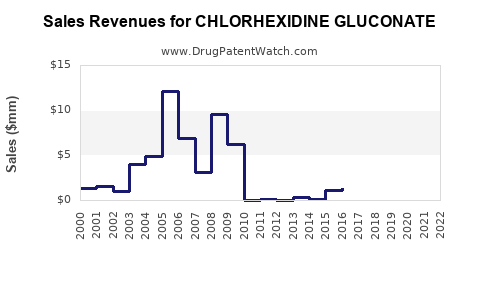
Drug Sales Revenue Trends for CHLORHEXIDINE GLUCONATE

See drug sales revenues for CHLORHEXIDINE GLUCONATE

Recent Clinical Trials for CHLORHEXIDINE GLUCONATE

Identify potential brand extensions & 505(b)(2) entrants

SponsorPhase
Mariam Hesham Mahmoud Abdelfattah EissaNA
Aydin Adnan Menderes UniversityPHASE4
Harran UniversityNA

See all CHLORHEXIDINE GLUCONATE clinical trials

Pharmacology for CHLORHEXIDINE GLUCONATE
Physiological EffectDecreased Cell Wall Integrity
Medical Subject Heading (MeSH) Categories for CHLORHEXIDINE GLUCONATE

US Patents and Regulatory Information for CHLORHEXIDINE GLUCONATE

Applicant Tradename Generic Name Dosage NDA Approval Date TE Type RLD RS Patent No. Patent Expiration Product Substance Delist Req. Exclusivity Expiration
Becton Dickinson Co CHLORAPREP ONE-STEP SEPP chlorhexidine gluconate; isopropyl alcohol SWAB;TOPICAL 021555-001 Oct 7, 2002 OTC Yes Yes ⤷  Start Trial ⤷  Start Trial ⤷  Start Trial
3m PERIDEX chlorhexidine gluconate SOLUTION;DENTAL 019028-001 Aug 13, 1986 AT RX Yes Yes ⤷  Start Trial ⤷  Start Trial ⤷  Start Trial
Molnlycke Hlth HIBICLENS chlorhexidine gluconate SOLUTION;TOPICAL 017768-001 Approved Prior to Jan 1, 1982 OTC Yes Yes ⤷  Start Trial ⤷  Start Trial ⤷  Start Trial
Molnlycke Hlth HIBISTAT chlorhexidine gluconate SOLUTION;TOPICAL 018300-001 Approved Prior to Jan 1, 1982 OTC Yes Yes ⤷  Start Trial ⤷  Start Trial ⤷  Start Trial
>Applicant >Tradename >Generic Name >Dosage >NDA >Approval Date >TE >Type >RLD >RS >Patent No. >Patent Expiration >Product >Substance >Delist Req. >Exclusivity Expiration

Expired US Patents for CHLORHEXIDINE GLUCONATE

Applicant Tradename Generic Name Dosage NDA Approval Date Patent No. Patent Expiration
Sage Prods CHLORHEXIDINE GLUCONATE chlorhexidine gluconate CLOTH;TOPICAL 021669-001 Apr 25, 2005 7,595,021 ⤷  Start Trial
Sage Prods CHLORHEXIDINE GLUCONATE chlorhexidine gluconate CLOTH;TOPICAL 021669-001 Apr 25, 2005 7,066,916 ⤷  Start Trial
Molnlycke Hlth HIBICLENS chlorhexidine gluconate SOLUTION;TOPICAL 017768-001 Approved Prior to Jan 1, 1982 3,960,745 ⤷  Start Trial
Molnlycke Hlth HIBICLENS chlorhexidine gluconate SPONGE;TOPICAL 018423-001 Approved Prior to Jan 1, 1982 3,886,277 ⤷  Start Trial
>Applicant >Tradename >Generic Name >Dosage >NDA >Approval Date >Patent No. >Patent Expiration

International Patents for CHLORHEXIDINE GLUCONATE

Country Patent Number Title Estimated Expiration
Canada 2467155 DISPOSITIF D'ADMINISTRATION DE DESINFECTANT ET METHODE DE DESINFECTION SANS ALCOOL (DISINFECTANT DELIVERY SYSTEM AND METHOD OF PROVIDING ALCOHOL-FREE DISINFECTION) ⤷  Start Trial
Canada 2551688 DEBARBOUILLETTE NON TISSEE AMELIOREE (IMPROVED NON-WOVEN WASH CLOTH) ⤷  Start Trial
Canada 2467150 DISPOSITIF D'ADMINISTRATION DE DESINFECTANT ET METHODE DE DESINFECTION SANS ALCOOL (DISINFECTANT DELIVERY SYSTEM AND METHOD OF PROVIDING ALCOHOL-FREE DISINFECTION) ⤷  Start Trial
>Country >Patent Number >Title >Estimated Expiration

Chlorhexidine Gluconate: Market Dynamics and Financial Trajectory

Last updated: April 24, 2026

What is the market footprint for chlorhexidine gluconate (CG)?

Chlorhexidine gluconate is a generic, multi-indication antiseptic used in mouthwashes, oral gels, skin cleansers, surgical skin preparation, wound care products, and related healthcare settings. Commercial dynamics are shaped by (1) mature demand from infection prevention and dental use, (2) broad availability of generics and private-label products, and (3) regulatory and formulation-level competition rather than patent-driven exclusivity.

Demand anchors

  • Dental and oral care: over-the-counter antiseptic mouthrinses and professional formulations used to reduce plaque-related gingival inflammation and manage oral microbial load.
  • Healthcare-associated infection prevention: pre-procedural skin antisepsis and decolonization-adjacent workflows in hospitals and outpatient surgery.
  • Wound and skin antisepsis: OTC and clinician-directed products, often positioned against colonization and biofilm formation.

Supply and competition

  • The product category is largely generic and cross-manufactured globally, creating price pressure and margin compression.
  • Differentiation typically comes from formulation (concentration, excipients, delivery system), presentation (sizes, single-use formats), and regulatory status (OTC vs. prescription; medical device/antiseptic vs. drug labeling in specific jurisdictions).

How do pricing and margin dynamics typically behave?

CG’s pricing and profitability are driven by generic market structure and buyer behavior.

Buyer power

  • Hospitals and health systems prefer contract pricing and standardized supply, which pushes down unit prices over time.
  • Dental retail buyers are price-sensitive and brand loyalty is limited in antiseptic categories after generics proliferate.

Impacts on financial trajectory

  • Gross margin tends to compress as market share shifts toward low-cost entrants and private-label variants.
  • Operating margins are often supported by scale (high-volume plants), logistics optimization, and portfolio mix (combining CG with other antiseptic SKUs).

Competitive pricing pattern

  • Expect net price erosion as new suppliers enter or as tenders re-bid for hospital formularies.
  • Value capture shifts toward service and supply reliability (guaranteed supply, standardized packaging, tender compliance) more than toward IP.

What drives volume growth or decline?

CG volume is influenced by infection control policies and dental utilization, but growth is capped by generic saturation.

Key demand drivers

  • Healthcare infection control protocols: surgical preparation and skin antisepsis are durable standard practices.
  • Dental utilization: routine dental visits support ongoing mouthwash and oral antiseptic use, though the frequency depends on consumer behavior and reimbursement/coverage norms.
  • Clinical guideline updates: recommendations for oral antisepsis and surgical skin preparation can shift adoption intensity.

Key headwinds

  • Alternative antiseptics and antiseptic strategies: iodine-based products, quaternary ammonium compounds, hydrogen peroxide formulations, and other oral antiseptics can substitute based on local preference and tolerability.
  • Safety and stewardship constraints: mucosal irritation and taste disturbance can limit adherence for certain oral formats, steering clinicians toward intermittent or alternative regimens.
  • Regulatory and labeling friction: specific indications and concentration ranges can vary by geography, affecting how widely products are marketed for particular claims.

What is the financial trajectory implied by the market structure?

Given CG’s generic status, the financial trajectory is typically characterized by:

  • Stable to slow-growing top line in mature markets, with growth concentrated in developing regions or emerging channel formats.
  • Declining margins as competitive pricing intensifies and as distribution channels consolidate around contract winners.
  • Cash flow durability from high turnover, but with limited upside unless a firm holds scale advantages or differentiated formulations that sustain favorable pricing.

How financials tend to evolve

  • Early in a product lifecycle post-brand exclusivity: price erosion begins as generics ramp.
  • Middle to late maturity: volume growth is modest; profitability depends on cost leadership and bundling across antiseptic portfolios.
  • Late maturity: growth increasingly comes from geographic expansion, channel expansion (e-commerce, private label), and incremental formulation changes rather than from new clinical endpoints.

Which segments matter most for revenue?

Revenue for CG-based businesses is typically split across:

  • Oral antiseptic segment: mouthwashes and gels used in dental care, often OTC.
  • Hospital antisepsis segment: surgical skin prep and pre-procedural cleansing, typically tender-driven.
  • Wound/skin antisepsis segment: clinician-directed products with variable share by region and reimbursement/clinical protocols.

Segment economics

  • Hospital/tender segment often delivers volume but at lower margins and with more frequent price resets.
  • Retail oral segment can deliver steadier sell-through but is exposed to promotional cycles and private-label substitution.
  • Wound/skin segment can vary widely by local standards, supply chains, and procurement policies.

How does competition shape share and durability?

In antiseptic categories, competitive durability often tracks manufacturing capability and distribution relationships rather than R&D differentiation.

Mechanisms that preserve share

  • Long-term hospital contracts and established formularies
  • Supply reliability and compliance with GMP and QA standards
  • Product line breadth (multiple concentrations and package sizes)
  • Regulatory coverage of multiple indications and label claims (where permitted)

Mechanisms that erode share

  • Tender re-bids and benchmark price declines
  • Private-label retail entrants
  • Substitution toward alternative antiseptics with better tolerability or better procurement terms

What role do regulatory and formulation changes play?

For CG, product differentiation is often formulation and labeling, not active ingredient novelty.

Formulation levers

  • Concentration control and vehicle design (to manage irritation and taste for oral products)
  • Delivery form optimization (mouthwash vs. gel vs. single-use wipes)
  • Preservative and excipient decisions that affect stability and patient tolerability

Regulatory levers

  • Jurisdiction-specific approval frameworks for antiseptics and OTC drug monographs
  • Label claim scope for infection prevention, gingivitis/periodontal support, and wound indications
  • Packaging and instructions for use that align with stewardship and safety requirements

Are there identifiable “event-driven” market shifts?

CG does not typically exhibit patent-based event spikes. Market shifts are instead policy- and procurement-driven.

Recurring event types

  • Hospital tender cycles: periodic re-pricing and re-assignment of preferred suppliers
  • Seasonality: higher antiseptic demand around winter respiratory illness peaks can support oral and OTC volumes
  • Guideline revisions: small adoption shifts when local medical societies update perioperative or oral infection guidance

How do investors and strategists typically underwrite CG?

Given its generic nature, underwriting focuses on:

  • Unit economics: manufacturing cost position, yield, and bulk procurement of input materials
  • Channel coverage: contracts in hospitals, penetration in retail, and distributor relationships
  • Operational execution: scale, regulatory compliance, supply continuity
  • Portfolio strategy: use CG as a cash-generating anchor within a broader antiseptic portfolio

Valuation implication

  • CG businesses usually trade on throughput and margin stability rather than on staged clinical development or IP monetization.
  • Upside is tied to share gains via procurement outcomes and cost leadership, not to transformative clinical data.

What does the overall financial trajectory look like over time?

For CG, the trajectory is best characterized as:

  • Top line: stable, with growth dependent on volume expansion in receptive geographies and channels.
  • Margins: pressured by generic competition; improved only by cost advantage or differentiated formulations that hold price.
  • Cash flow: typically resilient due to high demand consistency and repeat purchasing patterns.

Key Takeaways

  • Chlorhexidine gluconate operates as a mature, largely generic antiseptic with durable demand from dental care and healthcare infection prevention.
  • Market dynamics are driven by procurement cycles, private-label substitution, and formulation-level differentiation rather than patent exclusivity.
  • Financial trajectory generally follows a pattern of steady or modest revenue growth paired with margin compression, with profitability sustained by scale, low manufacturing costs, and contract wins.
  • Strategic upside comes from share capture in tenders, geographic/channel expansion, and maintaining differentiated formulations that protect price.

FAQs

  1. Is chlorhexidine gluconate patent-protected in major markets?
    CG is widely available as a generic active ingredient, so commercial outcomes typically depend on formulation, regulatory, and distribution advantages rather than new patent exclusivity.

  2. What markets provide the most reliable demand?
    Dental antiseptic use and hospital surgical skin preparation workflows are the most durable demand anchors.

  3. What drives margin most: price or cost?
    In CG, margins are primarily pressured by price competition, so cost leadership and scale are decisive.

  4. How do hospital procurement cycles affect CG businesses?
    Tender cycles can reset net pricing and shift volumes among suppliers, producing periodic step-changes in revenue and margin.

  5. What is the most common basis for product differentiation?
    Concentration, vehicle/excipient selection, and packaging format (including single-use presentations) are the primary differentiators.

References

[1] WHO. WHO Guidelines on Hand Hygiene in Health Care (infection prevention context). World Health Organization.
[2] FDA. OTC Drug Monograph and Oral Antiseptic/Drug Product Frameworks (regulatory context). U.S. Food and Drug Administration.
[3] EMA. Guideline/Regulatory Framework for Antiseptics and Medical Products (European regulatory context). European Medicines Agency.

More… ↓

⤷  Start Trial

Make Better Decisions: Try a trial or see plans & pricing

Drugs may be covered by multiple patents or regulatory protections. All trademarks and applicant names are the property of their respective owners or licensors. Although great care is taken in the proper and correct provision of this service, thinkBiotech LLC does not accept any responsibility for possible consequences of errors or omissions in the provided data. The data presented herein is for information purposes only. There is no warranty that the data contained herein is error free. We do not provide individual investment advice. This service is not registered with any financial regulatory agency. The information we publish is educational only and based on our opinions plus our models. By using DrugPatentWatch you acknowledge that we do not provide personalized recommendations or advice. thinkBiotech performs no independent verification of facts as provided by public sources nor are attempts made to provide legal or investing advice. Any reliance on data provided herein is done solely at the discretion of the user. Users of this service are advised to seek professional advice and independent confirmation before considering acting on any of the provided information. thinkBiotech LLC reserves the right to amend, extend or withdraw any part or all of the offered service without notice.