Last updated: August 26, 2026
Hibiclens is a branded over-the-counter antiseptic skin cleanser containing 4% chlorhexidine gluconate. Its commercial position is supported by hospital and preoperative skin-preparation use, consumer brand recognition, retail availability, and clinical familiarity. The product has limited conventional pharmaceutical exclusivity risk because chlorhexidine is an old active ingredient and Hibiclens is marketed as an OTC drug rather than an FDA-approved prescription product.
Mölnlycke Health Care owns the Hibiclens brand. The company does not publicly report Hibiclens revenue, gross margin, operating income, or unit volume as a standalone product. Its financial trajectory must therefore be assessed through category growth, distribution, pricing, regulatory exposure, and Mölnlycke’s broader wound-care and surgical portfolio.
What is Hibiclens and how is it positioned?
Hibiclens is a topical antiseptic cleanser with chlorhexidine gluconate as its active ingredient. The standard consumer product contains 4% chlorhexidine gluconate and is labeled for use as a skin cleanser and antiseptic. It is sold in retail pharmacies, hospitals, outpatient facilities, online channels, and institutional procurement systems.
| Attribute |
Hibiclens position |
| Brand |
Hibiclens |
| Active ingredient |
Chlorhexidine gluconate |
| Standard concentration |
4% |
| Dosage form |
Liquid topical cleanser |
| Primary uses |
Skin cleansing, preoperative preparation, healthcare antisepsis |
| Prescription status |
OTC |
| Brand owner |
Mölnlycke Health Care |
| Core competitors |
Betadine, Dyna-Hex, generic chlorhexidine, alcohol-based antiseptics |
| Principal commercial channels |
Hospitals, surgery centers, pharmacies, e-commerce, distributors |
| Biosimilar exposure |
None |
| Conventional ANDA exposure |
Limited, because the product is OTC rather than a prescription drug |
The product benefits from the persistence of chlorhexidine in the skin and from established hospital protocols. Its principal commercial limitation is that chlorhexidine is available from multiple manufacturers in generic and private-label forms.
How large is the Hibiclens market?
Public sources do not disclose a separate global or U.S. revenue figure for Hibiclens. Mölnlycke reports at the corporate and business-area level rather than by individual brand. This prevents a precise calculation of Hibiclens market share, revenue growth, or product-level profitability.
The relevant market is broader than the retail chlorhexidine cleanser segment. Hibiclens competes across several overlapping categories:
- Preoperative and pre-procedure skin preparation.
- Hospital antiseptic bathing.
- Consumer antibacterial and antimicrobial skin cleansing.
- Wound-care and infection-prevention products.
- Institutional healthcare products used in central-line and surgical-site infection protocols.
Demand is influenced by surgical volumes, hospital infection-control policies, healthcare staffing, consumer awareness, and procurement contracts. Hospitals generally prioritize validated protocols, supply continuity, and total procedure cost. Consumers are more sensitive to price, brand visibility, package size, and retailer availability.
What drives Hibiclens demand?
The main demand drivers are:
- Surgical and outpatient procedure volumes.
- Hospital adoption of chlorhexidine bathing protocols.
- Surgical-site infection prevention programs.
- Continued use in catheter, line-care, and preoperative settings.
- Retail demand for acne, wound, and skin-cleansing applications, subject to label restrictions.
- Online availability and search-driven consumer purchasing.
- Institutional preference for established brands where product substitution creates training or protocol concerns.
The product has a mixed demand profile. Institutional demand is relatively protocol-driven and can be less price-sensitive. Retail demand is more exposed to generic substitution, private-label competition, promotional discounting, and changes in consumer health behavior.
What is the financial trajectory of Hibiclens?
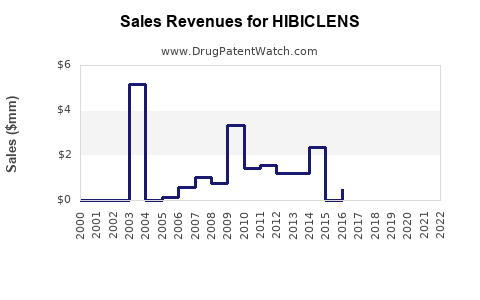
Hibiclens revenue is not separately disclosed by Mölnlycke, and no public filing provides a reliable product-level earnings history. The product’s financial trajectory is therefore best described as a mature branded antiseptic business with stable underlying demand and moderate pricing pressure.
Revenue trajectory
The likely revenue pattern has four characteristics:
- Volume is tied to healthcare utilization and recurring consumer demand.
- Price increases can support nominal sales growth where the brand retains distribution strength.
- Generic chlorhexidine limits long-term price expansion.
- Institutional contracts can create periodic revenue changes when accounts are won, lost, renewed, or converted to lower-cost alternatives.
Hibiclens is unlikely to have the growth profile of a patented specialty pharmaceutical. Its commercial value comes from recurring demand, brand equity, manufacturing scale, distribution, and customer retention rather than exclusivity-driven price expansion.
Margin trajectory
A mature antiseptic cleanser can generate attractive gross margins when manufacturing is efficient and the brand maintains premium pricing. Margin pressure can arise from:
- Chlorhexidine active-ingredient costs.
- Packaging and logistics costs.
- Retailer and distributor discounts.
- Hospital contracting.
- Product liability and regulatory compliance costs.
- Increased private-label penetration.
- Promotional spending in e-commerce channels.
Mölnlycke’s broader business has a large hospital and professional-care component. Hibiclens can benefit from shared distribution, sales infrastructure, regulatory capabilities, and procurement relationships. Those shared costs may improve the product’s economic contribution even without rapid unit growth.
What would indicate financial acceleration?
The strongest observable indicators would be:
- Expansion of hospital chlorhexidine bathing protocols.
- Increased procedure volumes.
- Greater penetration of ambulatory surgery centers.
- Retail expansion or stronger online rankings.
- New package sizes or institutional formats.
- Reduced stockouts and broader distributor availability.
- Price realization above category inflation.
- Contract wins with hospital systems or group purchasing organizations.
When does Hibiclens lose exclusivity?
Hibiclens has no meaningful patent-expiration event comparable to a prescription drug patent cliff. Chlorhexidine gluconate is an old active ingredient, and the commercial protection of the product rests primarily on branding, formulation know-how, manufacturing controls, regulatory compliance, and distribution.
| Exclusivity type |
Hibiclens position |
| Active-ingredient patent |
Historical patents are expired or commercially irrelevant |
| Core formulation patent |
No publicly prominent current patent barrier is central to the brand |
| Orange Book patent listing |
No conventional branded-prescription Orange Book strategy is central to Hibiclens |
| Regulatory exclusivity |
No prescription-drug exclusivity period |
| Trademark protection |
Important continuing protection for the Hibiclens name |
| Trade dress and packaging |
Potential commercial protection, subject to competition-law limits |
| Manufacturing know-how |
Relevant but not publicly quantified |
| Hospital protocol lock-in |
Commercial barrier rather than statutory exclusivity |
The practical loss of exclusivity occurred long ago at the active-ingredient level. Generic chlorhexidine products can compete on price, while Hibiclens retains a premium through brand recognition and perceived consistency.
What is the FDA regulatory status of Hibiclens?
Hibiclens is marketed as an OTC topical antiseptic cleanser. Its labeling contains the FDA Drug Facts format and identifies chlorhexidine gluconate as the active ingredient.
The regulatory environment is more complex than a standard prescription product because FDA has separately evaluated consumer antiseptic washes and healthcare antiseptics. FDA’s rulemaking has required manufacturers to support the safety and effectiveness of certain active ingredients through data on both antimicrobial performance and clinical benefit. Chlorhexidine gluconate has remained subject to regulatory scrutiny, particularly for consumer antiseptic wash claims and systemic or severe allergic reactions. [1][2]
FDA has warned that chlorhexidine can cause serious allergic reactions, including anaphylaxis, although such events are rare. Product labeling includes warnings against use in the eyes, ears, mouth, and on certain sensitive or damaged areas. [3]
What are the principal FDA risks?
The main regulatory risks are:
- Labeling changes related to allergic reactions.
- Restrictions on unsupported consumer claims.
- Requirements affecting healthcare antiseptic products.
- Manufacturing and quality-system findings.
- Adverse-event reporting.
- Product recalls caused by contamination, packaging defects, or labeling errors.
- Enforcement against off-label promotional claims.
A major regulatory shift affecting the entire chlorhexidine category could increase compliance costs or reduce consumer-facing claims. It could also favor larger manufacturers with stronger regulatory and quality infrastructure.
Does Hibiclens have Orange Book-listed patents?
Hibiclens is not principally an Orange Book-protected prescription product. The Orange Book is designed primarily for approved prescription and certain other FDA-approved drug products, including patent and exclusivity information relevant to abbreviated new drug applications. An OTC product marketed under the applicable regulatory framework does not receive the same commercial protection structure as an NDA-approved prescription brand. [4]
No Paragraph IV strategy is central to Hibiclens. Generic manufacturers do not need to wait for a branded prescription patent to expire before competing in the same way they would with an NDA product. Their main barriers are regulatory compliance, product quality, manufacturing capability, channel access, and customer acceptance.
Which companies challenge Hibiclens?
Hibiclens faces competition from branded, generic, private-label, and non-chlorhexidine products.
| Competitor |
Active ingredient or category |
Competitive position |
| Betadine |
Povidone-iodine |
Strong hospital and consumer antiseptic brand |
| Dyna-Hex |
Chlorhexidine gluconate |
Direct branded and institutional competitor |
| Generic chlorhexidine |
Chlorhexidine gluconate |
Price-focused substitution |
| Private-label CHG washes |
Chlorhexidine gluconate |
Retail and institutional value segment |
| Alcohol-based preparations |
Isopropyl alcohol or ethyl alcohol |
Fast-acting procedural alternative |
| Octenidine products |
Octenidine, in selected markets |
Geographic and institutional alternative |
| PCMX products |
Chloroxylenol |
Consumer antiseptic alternative |
| Povidone-iodine generics |
Povidone-iodine |
Broad low-cost antiseptic competition |
Direct CHG competitors are the most relevant in hospital protocols. Betadine and alcohol-based preparations create category-level substitution risk when institutions change protocols or prioritize rapid drying, lower cost, or broader procedural compatibility.
How strong is the Hibiclens patent estate?
The Hibiclens patent estate is weak as a source of market exclusivity but stronger as a commercial system built around brand, quality, and distribution.
Patent strength
The active ingredient and basic antiseptic use are not proprietary. Any historical patents covering chlorhexidine chemistry or basic formulations are generally too old to provide meaningful current protection.
Formulation protection
Potential formulation protection could relate to:
- Surfactant systems.
- Skin-conditioning ingredients.
- Preservatives.
- Viscosity and foaming characteristics.
- Packaging compatibility.
- Stability and microbial-control specifications.
These elements may be protected by trade secrets, know-how, or limited patent rights. They do not appear to create a clear barrier preventing competent manufacturers from selling alternative 4% chlorhexidine cleansers.
Method-of-use protection
Hibiclens is not dependent on a patented method of use. Hospitals may have proprietary protocols, but those protocols are not equivalent to enforceable product exclusivity. Method-of-use patent risk is therefore low relative to prescription drugs with narrow FDA-approved indications.
What generic entry risks exist for Hibiclens?
Generic entry is already a structural feature of the category. The commercial risk is not a future launch cliff but gradual substitution.
| Risk |
Impact on Hibiclens |
| Low-cost generic CHG |
Compresses retail and institutional pricing |
| Private-label expansion |
Reduces brand visibility and shelf space |
| Hospital contract conversion |
Can cause rapid volume loss in large accounts |
| Online price comparison |
Exposes premium pricing |
| Distributor substitution |
Increases switching risk during shortages or tenders |
| Alternative antiseptics |
Reduces category demand for CHG |
| Regulatory restrictions |
Could limit claims or target populations |
The most plausible generic-entry scenario is incremental share erosion rather than a sudden revenue collapse. A sharp decline could occur if a major hospital system or group purchasing organization standardizes on a lower-cost chlorhexidine product.
What licensing deals affect Hibiclens?
No major publicly disclosed licensing transaction appears to define Hibiclens economics. Mölnlycke’s ownership and distribution structure are more important than external licensing.
Potential commercial arrangements may include distributor agreements, hospital contracts, group purchasing organization terms, private-label supply arrangements, and regional commercialization relationships. These agreements are generally not disclosed at product level and should not be treated as equivalent to patent licenses.
What litigation affects Hibiclens?
No major patent litigation comparable to a Hatch-Waxman dispute is central to Hibiclens. The most relevant litigation exposure would involve:
- Product liability claims involving allergic reactions.
- Personal-injury allegations involving misuse.
- False-advertising claims.
- Contract disputes with distributors or healthcare customers.
- Regulatory or quality-related enforcement.
- Trademark or trade-dress disputes.
Allergic-reaction warnings are a continuing risk area because chlorhexidine can cause severe hypersensitivity in some users. The commercial impact of litigation would depend on claim frequency, insurance coverage, settlement values, labeling changes, and whether healthcare institutions alter protocols.
What geographic markets offer the most opportunity?
Hibiclens has the strongest economic logic in markets with:
- High surgical volumes.
- Developed hospital procurement systems.
- Broad outpatient and ambulatory surgery networks.
- Established chlorhexidine bathing protocols.
- Strong pharmacy and e-commerce distribution.
- Regulatory systems that permit branded OTC antiseptic products.
Geographic expansion is constrained by local antiseptic rules, approved claims, concentration limits, labeling requirements, and competition from povidone-iodine or locally established products. The same 4% CHG formulation cannot be assumed to have identical regulatory or commercial status in every country.
What generic launch scenarios should investors consider?
Base case: stable mature-brand performance
Hibiclens retains distribution and institutional recognition. Revenue grows modestly through pricing, procedure volumes, and selective channel expansion. Generic products gain share gradually.
Downside case: institutional conversion
Large hospital systems shift to lower-cost CHG products or alternative antiseptics. Hibiclens loses contracted volume, forcing price reductions and higher trade spending.
Regulatory downside case
FDA or other regulators impose tighter requirements on consumer antiseptic claims or warnings. The product remains available but incurs higher compliance costs and reduced promotional flexibility.
Upside case: protocol expansion
More hospitals and outpatient facilities adopt CHG bathing or preoperative cleansing. Hibiclens gains volume in institutional channels while maintaining retail premium pricing.
Key Takeaways
- Hibiclens is a mature OTC chlorhexidine gluconate brand, not a patent-protected specialty pharmaceutical.
- Mölnlycke does not publicly disclose standalone Hibiclens revenue or profit.
- The product’s financial trajectory depends on healthcare utilization, hospital protocols, pricing, distribution, and brand retention.
- Generic and private-label chlorhexidine products create ongoing price and share pressure rather than a future patent cliff.
- Orange Book, Paragraph IV, biosimilar, and conventional prescription exclusivity risks are not central to the product.
- The strongest commercial defenses are brand recognition, hospital procurement relationships, manufacturing quality, regulatory compliance, and channel availability.
- The principal regulatory exposure involves antiseptic claims, adverse-event labeling, allergic reactions, and healthcare antiseptic rulemaking.
- The most important downside scenario is institutional substitution by lower-cost CHG or alternative antiseptic products.
FAQs
Is Hibiclens a prescription drug?
No. Hibiclens is marketed as an OTC topical antiseptic cleanser containing 4% chlorhexidine gluconate.
Can a generic company launch a product equivalent to Hibiclens?
Yes. Generic and private-label 4% chlorhexidine products already compete with Hibiclens, subject to FDA requirements for manufacturing, labeling, quality, and permitted claims.
Does Hibiclens have a patent cliff?
No conventional patent cliff is apparent. Its active ingredient is old, and commercial competition already exists. Revenue risk is gradual substitution rather than a single post-expiration event.
Is chlorhexidine safer than povidone-iodine?
Neither product is universally preferable. Choice depends on procedure, site, patient factors, protocol, contraindications, and institutional policy. Chlorhexidine can cause severe allergic reactions in rare cases. [3]
Who owns the Hibiclens brand?
Mölnlycke Health Care owns the Hibiclens brand and markets the product through healthcare, retail, and distribution channels.
References
-
U.S. Food and Drug Administration. (2016). Safety and effectiveness of consumer antiseptic washes; final rule. Federal Register, 81 Fed. Reg. 61106.
-
U.S. Food and Drug Administration. (2018). Safety and effectiveness of health care antiseptics; final rule. Federal Register, 83 Fed. Reg. 926.
-
U.S. Food and Drug Administration. (2017). FDA warns about rare but serious allergic reactions with chlorhexidine gluconate. https://www.fda.gov/
-
U.S. Food and Drug Administration. (2024). Approved drug products with therapeutic equivalence evaluations: Orange Book. https://www.fda.gov/
-
Mölnlycke Health Care. (2024). Hibiclens antiseptic skin cleanser product information. https://www.molnlycke.us/