Last updated: July 30, 2025
Introduction
Sarepta Therapeutics Inc., headquartered in Cambridge, Massachusetts, stands as a pioneering entity within the biotechnology sector, specializing predominantly in the development of targeted therapies for rare neuromuscular diseases. With a focus on Duchenne muscular dystrophy (DMD), inheritable myopathies, and other genetic disorders, Sarepta has positioned itself at the forefront of gene therapy and exon-skipping modalities. This analysis evaluates Sarepta’s market position, core strengths, competitive landscape, and strategic opportunities, providing actionable insights for stakeholders engaged in pharmaceutical innovation and investment decision-making.
Market Position Overview
Leadership in Rare Neuromuscular Disorders
Sarepta’s market dominance centers on its flagship drug, Exondys 51 (eteplirsen), approved by the FDA in 2016 for DMD patients amenable to exon 51 skipping. This therapeutic leap positioned Sarepta as a first-mover in genetic exon-skipping therapy for DMD, setting a precedent in precision medicine approaches.
Building on this foundation, Sarepta expanded its pipeline with therapies like Viltolarsen and Casimersen, targeting additional exon variants, thus broadening its treatment capacity. Its late-stage pipeline includes promising candidates like SRP-9001 (delandistrogene moxeparvovec), a gene therapy for DMD, currently under regulatory review.
Market Share and Financial Performance
For FY2022, Sarepta reported revenues exceeding $600 million, primarily from Duchenne therapies, reflecting robust growth driven by increased patient access and new indications. The company's market cap, hovering around $8 billion, underscores investor confidence in its pipeline and commercialization potential.
While competition from large pharmaceutical players like Pfizer, PTC Therapeutics, and Roche persists, Sarepta’s early-mover advantage, combined with a focused pipeline, sustains its competitive edge in the niche genetic disorder market.
Core Strengths
Innovative Scientific Platform
Sarepta's expertise in exon skipping and gene therapy technologies positions it uniquely among rivals. Its proprietary phosphorodiamidate morpholino oligomers (PMO) platform underpins the development of exon-skipping drugs, granting specificity and safety advantages.
Regulatory Milestones and Approvals
The company has consistently achieved pivotal regulatory milestones, including accelerated and conditional approvals, enhancing credibility. Its recent filing for SRP-9001 aims to revolutionize DMD treatment, potentially capturing a significant market share upon approval.
Strategic Collaborations and Partnerships
Sarepta’s collaborations with entities such as Nationwide Children’s Hospital and the Catalan Institute of Bioengineering extend R&D capabilities and access to cutting-edge science. Strategic licensing, including a recent partnership with LianBio for expansion in Asian markets, amplifies its geographic reach.
Focus on Rare Diseases Market
The niche focus aligns with favorable regulatory pathways like Orphan Drug Designation, granting market exclusivity and incentivized development. This focus mitigates competitive pressures faced by companies targeting broader indications.
Competitive Landscape Analysis
Major Competitors
- Pfizer: Developer of Translarna (ataluren); targeting nonsense mutation DMD, with a broader focus on genetic disorders.
- PTC Therapeutics: Holds approvals for Translarna and Emflaza, and has multiple pipeline candidates in exon skipping and nonsense mutation therapies.
- Roche: Engaged via its Genentech division in rare neurodegenerative diseases, including potential gene therapies.
- Viral Vector Players: Companies like Solid Biosciences and Folding@home are advancing gene therapy candidates challenging Sarepta’s SRP-9001.
Competitive Advantages & Challenges
Sarepta’s early entry into exon skipping confers first-mover advantages, including a strong clinical track record and regulatory relationships. However, competitors are rapidly advancing gene therapy platforms, with some leveraging different delivery mechanisms or broader indications, posing potential market share erosion.
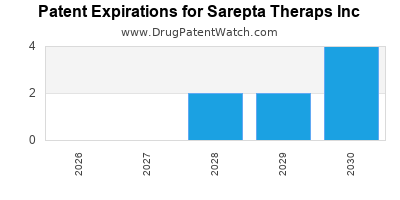
Regulatory hurdles remain significant, especially concerning long-term safety assessments of gene therapies. Fast-growing competition and patent expirations threaten Sarepta’s market exclusivity, necessitating continual innovation.
Strategic Insights
Pipeline Diversification
To sustain growth, Sarepta should prioritize diversifying beyond DMD, expanding into other neuromuscular conditions and systemic genetic disorders. Investing in gene editing technologies like CRISPR could provide a competitive edge in editing mutations directly.
Global Market Expansion
Strategic partnerships in Asia, Latin America, and emerging markets are vital for accessing underserved patient populations. Local regulatory know-how and manufacturing scale-up will be critical to successful expansion.
Cost Optimization & Pricing Strategies
Balancing drug pricing with reimbursement requirements remains imperative. Innovative demonstration of value through real-world evidence (RWE) can bolster payer acceptance and facilitate access.
Regulatory Engagement & Risk Management
Active engagement with regulatory agencies to define clear approval endpoints for gene therapies will mitigate approval risks. Investing in robust pharmacovigilance will ensure long-term safety profiles.
Intellectual Property (IP) Strategy
Aggressive patent filings around exon-skipping and gene delivery platforms will safeguard market position. Licenses and collaborations should focus on securing rights in emerging territories.
Conclusion
Sarepta Therapeutics Inc. has established itself as a leader within the niche of rare neuromuscular disease therapeutics, leveraging its scientific expertise, regulatory successes, and strategic collaborations. However, the rapidly evolving competitive landscape necessitates ongoing innovation, pipeline diversification, and global expansion to sustain its market position. Strategic investments in gene therapy platforms, combined with an emphasis on regulatory agility and intellectual property, will be critical to maintaining competitive advantage amid intensifying rivalry.
Key Takeaways
- Sarepta’s pioneering exon-skipping therapies position it as a leader in DMD treatment but face threats from emerging gene editing approaches.
- Its focus on rare disorders provides competitive advantages via orphan drug incentives and specialized patient populations.
- Expansion into gene therapies like SRP-9001 could unlock significant growth but requires navigating complex regulatory pathways.
- Partnerships and global expansion efforts will be essential for accessing new markets and maximizing revenue potential.
- Sustained innovation and IP protection remain vital for defending market share in an increasingly competitive environment.
FAQs
1. What distinguishes Sarepta’s exon-skipping technology from competitors?
Sarepta's proprietary PMO platform offers high specificity and safety, enabling targeted exon skipping to restore dystrophin production in DMD. Its early development and regulatory milestones provide a competitive edge over rivals.
2. How does Sarepta plan to address long-term safety concerns associated with gene therapies?
The company is investing in extensive clinical trials and real-world evidence collection to assess long-term safety, alongside close collaboration with regulatory agencies to ensure compliance with evolving standards.
3. What are the key risks facing Sarepta’s pipeline and market position?
Risks include regulatory delays, safety issues related to gene therapies, patent challenges, and increased competition from emerging biotech firms and established pharma players deploying alternative approaches.
4. How important are global markets for Sarepta’s growth?
Extremely. Expansion into Asian, Latin American, and European markets offers access to sizable patient populations and revenue streams, especially as orphan drug designations vary across jurisdictions.
5. What strategic moves should Sarepta consider to stay ahead?
Diversifying its pipeline into broader genetic disorders, investing in gene editing technologies, strengthening global partnerships, and maintaining leadership in regulatory engagement are crucial for sustained growth.
Sources:
[1] Sarepta Therapeutics Inc. Annual Report 2022.
[2] FDA Drug Approvals and Regulatory Filings.
[3] Market Intelligence Reports on Rare Disease Therapeutics.
[4] Industry Competitive Analyses of Gene Therapy Sector.