Last updated: September 24, 2026
Vivelle was Novartis’ transdermal estradiol product for menopausal hormone therapy. Its commercial trajectory followed a standard branded-to-generic pattern: clinical differentiation through low-dose patch delivery, followed by patent and regulatory exclusivity loss, generic entry, price compression, and declining brand relevance. Vivelle-Dot remained the principal commercial formulation, while generic estradiol transdermal systems now supply most U.S. demand.
Public filings do not provide a reliable, stand-alone revenue series for Vivelle or Vivelle-Dot. The brands were not separately reported as material products in later Novartis financial disclosures. The available evidence supports a qualitative financial trajectory rather than a precise product-level revenue model.
What is Vivelle and how does Vivelle-Dot work?
Vivelle is a transdermal estradiol system used to deliver 17β-estradiol through the skin for hormone replacement therapy. Indications included treatment of moderate-to-severe vasomotor symptoms associated with menopause and prevention of postmenopausal osteoporosis when other options were unsuitable, subject to the product label and applicable regulatory conditions.
Vivelle-Dot is a smaller patch formulation of estradiol. It was designed to improve patch size and convenience while maintaining transdermal delivery. Available strengths historically included:
| Product |
Typical estradiol delivery strengths |
| Vivelle |
0.025, 0.0375, 0.05, 0.075 and 0.1 mg/day |
| Vivelle-Dot |
0.025, 0.0375, 0.05, 0.075 and 0.1 mg/day |
| Generic estradiol patches |
Generally equivalent strength tiers |
Transdermal delivery became commercially attractive because it avoids gastrointestinal absorption and first-pass hepatic metabolism. Prescribers also used patch therapy to provide lower systemic estrogen exposure than some oral regimens. The clinical value of the route supported demand after generic competition began, but route-of-administration advantages did not prevent substantial price erosion.
When did Vivelle lose exclusivity?
Vivelle’s principal commercial protection expired before the current market structure formed. Generic estradiol transdermal systems entered the U.S. market during the late 2000s, eliminating durable brand-level pricing power.
The relevant exclusivity sequence was:
| Event |
Approximate timing |
Commercial effect |
| Original Vivelle FDA approval |
1990s |
Established branded estradiol patch franchise |
| Vivelle-Dot development and approval |
Late 1990s to early 2000s |
Extended product life through a smaller patch |
| Generic estradiol patch approvals |
Late 2000s onward |
Reduced branded market share and reimbursement leverage |
| Wider generic substitution |
2010s |
Shifted volume toward lower-cost suppliers |
| Brand contraction or discontinuation in many channels |
2010s onward |
Reduced direct commercial importance of Vivelle |
The exact patent-expiration analysis is complicated by multiple patents covering patch construction, adhesive systems, drug reservoirs, and manufacturing processes. Many formulation and delivery patents did not create long-term exclusivity after the core product had been commercialized. FDA substitution and generic approval activity became more important than the residual patent estate.
What patents protect Vivelle and Vivelle-Dot?
Vivelle’s protection was based on a combination of drug-delivery patents, formulation patents, and regulatory exclusivity. The relevant intellectual-property categories included:
- Estradiol transdermal delivery systems.
- Adhesive matrices and layered patch construction.
- Controlled-release systems.
- Patch dimensions and skin-contact designs.
- Manufacturing methods for drug-in-adhesive systems.
- Method-of-use claims for menopausal symptoms and osteoporosis prevention.
The main commercial barrier was the integrated product design rather than a single high-value composition-of-matter patent. Estradiol is an established hormone, so the patent estate did not have the durability associated with a new molecular entity.
Public FDA records and product-label histories should be used to reconcile individual patent numbers and expiration dates because Vivelle, Vivelle-Dot, and later generic products were associated with different applications and formulation histories. The Orange Book did not create a continuing barrier to generic entry once the relevant listed patents and exclusivity periods ceased to block abbreviated new drug applications.
What is the FDA and Orange Book status of Vivelle?
Vivelle and Vivelle-Dot were approved through the FDA’s new-drug application pathway as prescription transdermal estradiol products. Generic competitors were approved through abbreviated new drug applications referencing the relevant estradiol patch products.
The commercial status has changed over time:
- Vivelle was an older branded product with limited current commercial visibility.
- Vivelle-Dot was the more important successor formulation.
- Generic estradiol patches are widely available in the United States.
- The market includes both therapeutically substitutable generic patches and branded alternatives with different patch sizes, dosing intervals, or delivery technologies.
- Current availability can differ by strength, manufacturer, wholesaler inventory, and pharmacy benefit formulary.
FDA labeling for systemic estrogen products carries boxed warnings relating to endometrial cancer, cardiovascular events, breast cancer, and probable dementia risk in certain populations. Those warnings apply to prescribing and market access decisions across the systemic estrogen class, not solely to Vivelle. [1]
How many patents cover Vivelle compared with competing estradiol patches?
Vivelle had a broader commercial lifecycle than its underlying molecule justified because it used product-line and formulation differentiation. Competing products pursued similar strategies.
| Product |
Company associated with brand commercialization |
Differentiation |
| Vivelle-Dot |
Novartis and later commercial partners |
Small estradiol patch |
| Climara |
Bayer |
Once-weekly estradiol patch |
| Minivelle |
Noven, later associated with broader Endo portfolio |
Small patch and low-dose positioning |
| Alora |
3M and later specialty-product owners |
Matrix patch technology |
| Lyllana |
Noven |
Generic or branded low-dose patch positioning |
| Dotti |
Generic and specialty manufacturers |
Small estradiol patch |
| Generic estradiol transdermal system |
Multiple manufacturers |
Price and formulary access |
Patent strength across this class is moderate to weak after core patent expiry. A manufacturer may protect a particular adhesive, patch geometry, or manufacturing process, but those rights generally do not prevent alternative estradiol patches from entering the market.
Which companies challenged Vivelle through generic entry?
Generic competition came from multiple manufacturers over time, including major generic suppliers such as Mylan, Sandoz, Teva and other FDA-approved manufacturers. The exact manufacturer mix changed as suppliers entered, exited, transferred applications, or experienced manufacturing interruptions.
The principal competitive mechanism was abbreviated new drug application approval rather than prolonged Paragraph IV litigation. Estradiol patches are technically more complex than conventional oral tablets because generic sponsors must demonstrate appropriate delivery, adhesion, dose performance, and product quality. Even so, the products did not retain the pricing power of a protected specialty pharmaceutical.
What Paragraph IV challenges and patent litigation affected Vivelle?
There is no widely reported, continuing patent litigation campaign comparable to those surrounding high-value small-molecule blockbusters. Generic entry appears to have been driven primarily by the expiration or non-blocking status of relevant patents and FDA approval of alternative estradiol patches.
The litigation risk profile was therefore lower than for products with:
- A single dominant composition-of-matter patent.
- High annual sales before loss of exclusivity.
- Numerous Paragraph IV filers.
- A large settlement value tied to delayed generic entry.
For Vivelle, the more important legal issues were likely product-specific patent scope, formulation equivalence, and generic approval requirements. Those issues affected individual launches but did not preserve a durable brand monopoly.
What financial trajectory did Vivelle have?
Vivelle’s financial trajectory can be divided into four phases.
1. Branded expansion
During the initial branded period, Vivelle benefited from physician familiarity, prescription estrogen demand, and the clinical convenience of transdermal delivery. Revenue was supported by branded reimbursement and limited direct competition among comparable patches.
2. Lifecycle extension through Vivelle-Dot
Vivelle-Dot extended the franchise by reducing patch size and improving user convenience. This was a product-line defense rather than a new active-ingredient strategy. The smaller patch helped preserve prescriber and patient demand, but it did not establish durable exclusivity against all estradiol delivery systems.
3. Generic erosion
After generic estradiol patches entered, pharmacy substitution and formulary pressure reduced average selling prices. The brand could preserve some demand among patients stable on a particular patch, but retention became less valuable as payers prioritized generic alternatives.
4. Mature low-margin market
The market shifted toward generic supply, contract manufacturing, and formulary-based volume allocation. Revenue became sensitive to:
- Generic supplier count.
- Manufacturing reliability.
- Wholesale acquisition cost.
- Pharmacy benefit manager reimbursement.
- Product shortages.
- Prescriber preference for patch size and adhesion.
- Patient persistence with transdermal therapy.
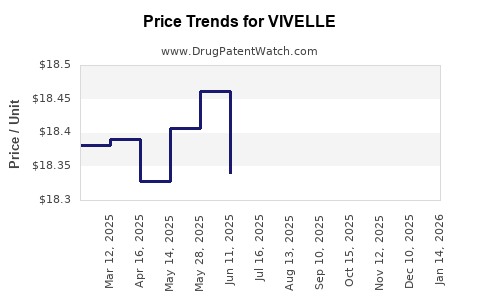
A defensible product-level revenue estimate is not available from public company filings. Novartis’ reporting structure did not disclose Vivelle revenue as a distinct line item in later periods. The product’s financial importance declined as the portfolio shifted toward larger patented medicines and as generic estradiol products captured market volume.
How does Vivelle compare with oral estrogen and newer menopause products?
Vivelle competes within a broad hormone-therapy market rather than only against other estradiol patches.
| Segment |
Competitive advantage |
Main limitation |
| Estradiol patches |
Transdermal delivery, broad dose range, established use |
Adhesion, skin reactions, generic price pressure |
| Oral estradiol |
Low cost and simple administration |
First-pass metabolism and oral tolerability |
| Estradiol gels and sprays |
Flexible application and no patch adhesion issue |
Application complexity and transfer concerns |
| Vaginal estrogen |
Local treatment for genitourinary symptoms |
Limited role for systemic vasomotor symptoms |
| Nonhormonal menopause therapies |
Avoid systemic estrogen exposure |
May have different efficacy and tolerability profiles |
The 2002 Women’s Health Initiative results initially reduced demand for systemic hormone therapy. Later evidence and clinical guidance supported more individualized use, particularly in younger postmenopausal patients and those near menopause onset, but the class did not return to its earlier commercial position. [2,3]
What generic launch risks exist for Vivelle?
The principal launch risk is not patent blocking. It is market access and operating execution.
A generic estradiol patch must manage:
- FDA approval and bioequivalence requirements.
- Adhesion and wear-time performance.
- Multiple strengths.
- Manufacturing scale.
- Shortage risk.
- Pharmacy substitution.
- Formulary placement.
- Price competition among suppliers.
Generic entry can produce rapid unit growth but weak margins. A supplier with only one or two strengths may capture limited volume, while a broad portfolio with dependable supply can obtain preferred wholesaler and payer positions.
What licensing deals affected Vivelle?
Vivelle’s commercial history included collaboration and rights arrangements associated with the transfer or commercialization of women’s-health products. The product’s later economics were influenced more by brand ownership, commercialization rights, and generic competition than by royalty-bearing innovation.
No publicly disclosed licensing arrangement appears to have created a continuing, high-value exclusivity position for Vivelle comparable to a co-developed specialty medicine. The commercial value of any rights transfer declined as generic estradiol patches became available.
What is the outlook for the Vivelle market?
Vivelle itself has limited growth potential because the market is mature and genericized. The stronger opportunities are in:
- Reliable generic supply.
- Low-dose patch strengths.
- Improved adhesion and skin tolerability.
- Alternative application technologies.
- Specialty pharmacy distribution.
- Products positioned around individualized menopause care.
- Combination or adjacent therapies for genitourinary and vasomotor symptoms.
The main risks are low pricing, fragmented manufacturing, regulatory scrutiny of systemic hormone therapy, and limited willingness among payers to reimburse legacy brands.
Key Takeaways
- Vivelle was a branded transdermal estradiol product developed by Novartis.
- Vivelle-Dot extended the franchise through a smaller patch design.
- Generic estradiol patches entered the U.S. market in the late 2000s and materially weakened brand economics.
- The product’s patent estate covered delivery systems and formulations rather than a new molecular entity.
- No major continuing Paragraph IV litigation defines the product’s current market.
- Public filings do not provide a dependable stand-alone Vivelle revenue series.
- Current competition is driven by generic price, supply reliability, formulary status, patch size, and adhesion.
- The commercial opportunity is concentrated in generic supply and improved delivery technology, not recovery of the legacy Vivelle brand.
FAQs About Vivelle Market Position and Exclusivity
Is Vivelle still sold as a brand?
Vivelle has limited current commercial relevance compared with generic estradiol transdermal systems. Availability varies by market and product strength.
Is Vivelle-Dot interchangeable with generic estradiol patches?
Generic patches may be therapeutically substitutable when approved for the relevant reference product and strength, but patch size, adhesive performance, labeling, and pharmacy substitution rules can differ.
Does Vivelle have biologic or biosimilar competition?
No. Vivelle contains estradiol, a chemically synthesized small-molecule hormone. Its competitors are generic drugs, not biosimilars.
What is the main manufacturing barrier for estradiol patches?
The principal barrier is consistent transdermal delivery and adhesion performance across production batches. Manufacturing complexity is higher than for a conventional oral tablet.
Can a new estradiol patch still obtain patent protection?
Yes. A new patch may receive patents for its adhesive, matrix, reservoir, delivery profile, device design, or manufacturing process. Those patents would generally protect the specific technology, not estradiol itself.
References
- U.S. Food and Drug Administration. (2023). Vivelle-Dot (estradiol transdermal system) prescribing information. FDA.
- Rossouw, J. E., Anderson, G. L., Prentice, R. L., et al. (2002). Risks and benefits of estrogen plus progestin in healthy postmenopausal women: Principal results from the Women’s Health Initiative randomized controlled trial. JAMA, 288(3), 321-333.
- The North American Menopause Society. (2022). The 2022 hormone therapy position statement of The North American Menopause Society. Menopause, 29(7), 767-794.
- U.S. Food and Drug Administration. (2024). Approved drug products with therapeutic equivalence evaluations: Orange Book. FDA.
- Novartis AG. (Various years). Annual reports and financial reports. Novartis.