Last updated: August 17, 2026
VEVYE, Bausch + Lomb’s perfluorohexyloctane ophthalmic solution, entered the U.S. dry-eye market in 2023 as a prescription treatment for the signs and symptoms of dry eye disease. Its commercial thesis is based on a differentiated, preservative-free mechanism, the size of the evaporative dry-eye population, and a market structure dominated by chronic therapies with substantial repeat-purchase potential.
The product has meaningful commercial upside, but its financial trajectory depends on formulary access, physician adoption, reimbursement, patient persistence, and competition from established prescription products such as Restasis, Xiidra, Miebo and generic cyclosporine.
What is VEVYE and what disease does it treat?
VEVYE contains perfluorohexyloctane, a semifluorinated alkane designed to reduce tear-film evaporation. The FDA approved VEVYE on May 18, 2023, under NDA 217582 for the treatment of the signs and symptoms of dry eye disease. The product is supplied as a preservative-free ophthalmic solution in a multidose bottle. [1]
How does VEVYE differ from competing dry-eye drugs?
VEVYE is positioned primarily around evaporative dry eye and meibomian gland dysfunction, although its FDA indication covers dry eye disease generally. Unlike immunomodulatory products such as cyclosporine and lifitegrast, VEVYE does not depend on suppression of ocular inflammation as its primary commercial message.
| Product |
Active ingredient |
Primary commercial positioning |
FDA approval status |
| VEVYE |
Perfluorohexyloctane |
Tear-film evaporation reduction |
Approved |
| Miebo |
Perfluorohexyloctane |
Tear-film evaporation reduction |
Approved |
| Xiidra |
Lifitegrast |
Ocular surface inflammation and dry-eye symptoms |
Approved |
| Restasis |
Cyclosporine |
Increased tear production in certain patients |
Approved |
| Generic cyclosporine |
Cyclosporine |
Lower-cost immunomodulatory alternative |
Approved |
| Tyrvaya |
Varenicline nasal spray |
Stimulation of natural tear production |
Approved |
VEVYE and Miebo contain the same active pharmaceutical ingredient. The principal market distinction is commercial rather than molecular. VEVYE is marketed by Bausch + Lomb in the United States and Canada, while Miebo is commercialized by a different company under a separate arrangement.
When was VEVYE approved and launched?
The FDA approved VEVYE in May 2023. Bausch + Lomb began U.S. commercialization later in 2023. The launch followed the company’s licensing agreement with Novaliq, the developer of perfluorohexyloctane ophthalmic products. [2]
What company owns and commercializes VEVYE?
Novaliq retains ownership of the underlying product and technology outside the licensed commercial territory. Bausch + Lomb has commercialization rights for VEVYE in the United States and Canada. The agreement gives Bausch + Lomb access to a prescription dry-eye product while allowing Novaliq to retain an asset-light development and royalty structure.
The companies have not publicly disclosed the full economic terms of the agreement. Publicly available disclosures indicate that the arrangement includes commercial rights, potential milestone economics and royalties, but do not provide a complete product-level forecast or guaranteed payment schedule. [2]
How large is the VEVYE market opportunity?
The commercial opportunity is large because dry eye disease is prevalent, chronic and frequently undertreated. The prescription market includes patients with aqueous-deficient disease, evaporative disease, mixed disease and meibomian gland dysfunction.
The most relevant commercial segments for VEVYE are:
- Patients inadequately controlled on artificial tears.
- Patients who cannot tolerate or do not respond adequately to cyclosporine or lifitegrast.
- Patients with evaporative dry eye and meibomian gland dysfunction.
- Patients seeking a preservative-free prescription product.
- Patients managed by ophthalmologists and optometrists who already prescribe chronic ocular-surface therapies.
The market is competitive. VEVYE must gain share from both branded prescriptions and lower-cost nonprescription products. Artificial tears remain the first-line treatment for many patients, limiting the conversion rate from diagnosis to prescription therapy.
What market dynamics are driving VEVYE demand?
Evaporative dry-eye treatment
Perfluorohexyloctane gives VEVYE a mechanism directly associated with tear evaporation. This allows Bausch + Lomb to target a clinical segment that has historically relied on artificial tears, warm compresses, lid hygiene, thermal therapies and other supportive measures.
Preservative-free formulation
The preservative-free presentation is commercially important for chronic users and patients with ocular-surface sensitivity. Preservative-free positioning can support use in patients who require frequent dosing or who have failed preserved products.
Physician education
Dry-eye treatment is highly dependent on diagnosis, disease subtype and physician familiarity. VEVYE’s growth requires clinicians to recognize evaporative disease and to prescribe a product with a distinct mechanism rather than defaulting to lubricants or established immunomodulators.
Reimbursement and copay exposure
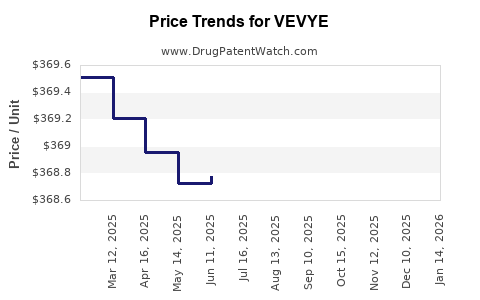
Commercial adoption will depend on payer coverage and patient out-of-pocket cost. A branded prescription product competes with generic cyclosporine and low-priced over-the-counter products. High copays can result in prescription abandonment, substitution or lower refill persistence.
What is the financial trajectory of VEVYE?
Bausch + Lomb does not report VEVYE revenue as a separately audited line item in its primary public financial statements. The company reports results by business segment and product category, which limits external visibility into product-level sales, gross margin and profitability.
The product’s financial trajectory can therefore be assessed through launch timing, commercial commentary and the performance of Bausch + Lomb’s ophthalmic pharmaceutical portfolio rather than through a complete standalone income statement.
| Financial factor |
Current implication |
| Launch timing |
Initial revenue base began in late 2023 |
| Product maturity |
Early-stage branded growth product |
| Revenue profile |
Recurring prescription opportunity, subject to refill persistence |
| Gross-margin potential |
Likely favorable relative to commodity ophthalmic products, but not publicly disclosed |
| Commercial costs |
High early spending for sales force deployment, sampling, payer access and physician education |
| Royalty burden |
Applicable under the Novaliq licensing arrangement; exact rate not publicly disclosed |
| Main risk |
Slow conversion from artificial tears and established prescription brands |
| Main upside |
Expansion in evaporative dry eye and meibomian gland dysfunction |
Bausch + Lomb’s broader ophthalmic pharmaceutical business provides distribution, sales infrastructure and physician relationships. That infrastructure lowers the incremental commercial burden compared with a standalone launch. It also creates cross-selling opportunities with contact-lens, surgical and eye-care products.
Does VEVYE have blockbuster potential?
VEVYE has a credible path to a meaningful specialty-pharmaceutical franchise, but a blockbuster outcome is not established by the public data available through the product’s early commercial period.
A $1 billion annual sales outcome would require substantial prescription volume, strong payer access, sustained refill rates and significant share against Restasis, Xiidra, generic cyclosporine, Miebo and nonprescription alternatives. The same-active-ingredient competition from Miebo is a material constraint on category expansion and pricing power.
A more realistic near-term commercial objective is to establish VEVYE as a differentiated prescription option in evaporative dry eye, then expand use through ophthalmology and optometry channels.
How does VEVYE compare with Miebo?
VEVYE and Miebo are direct product-level competitors because both use perfluorohexyloctane. Their competitive separation is likely to depend on commercial execution, payer contracts, physician preference, formulary placement, patient support and geographic rights rather than on a fundamental active-ingredient difference.
| Factor |
VEVYE |
Miebo |
| Active ingredient |
Perfluorohexyloctane |
Perfluorohexyloctane |
| Disease area |
Dry eye disease |
Dry eye disease |
| Mechanism |
Reduces tear evaporation |
Reduces tear evaporation |
| U.S. commercial company |
Bausch + Lomb |
Different commercial sponsor |
| Key advantage |
Bausch + Lomb’s ophthalmic platform and distribution |
First-mover positioning in the U.S. perfluorohexyloctane category |
| Main commercial issue |
Differentiation from a same-ingredient product |
Same-ingredient competition from VEVYE |
| Pricing pressure |
High relative to generic and OTC alternatives |
High relative to generic and OTC alternatives |
The same-ingredient dynamic may limit category-level pricing expansion. It also increases the importance of sales-force coverage and payer execution.
What patents protect VEVYE?
VEVYE is protected by patents and proprietary know-how covering perfluorohexyloctane ophthalmic compositions, formulations, delivery and therapeutic use. The relevant intellectual-property estate is associated with Novaliq and related entities, with Bausch + Lomb holding commercial rights in its territory.
What formulation patents protect perfluorohexyloctane products?
The most commercially relevant patent categories include:
- Ophthalmic compositions containing perfluorohexyloctane.
- Use of semifluorinated alkanes for treating dry eye.
- Formulation stability and purity.
- Multidose delivery systems.
- Container and dispensing technology.
- Treatment of tear-film evaporation and ocular-surface disorders.
The enforceability of this estate depends on claim scope, patent-term adjustments, prosecution history, written-description support and the ability to distinguish VEVYE from Miebo and other perfluoroalkyl-based products.
Because the FDA’s publicly available Orange Book and patent records can change through patent listing, corrections and litigation, product-level conclusions should be tied to the current FDA listing rather than to third-party patent summaries. The public record does not establish a broad, permanent exclusivity period equivalent to a conventional small-molecule composition-of-matter monopoly.
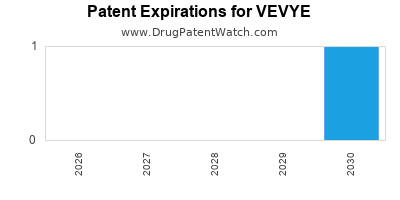
When does VEVYE lose exclusivity?
VEVYE’s regulatory exclusivity began with its May 2023 approval, but the product’s commercial protection is not defined by one single expiration date.
Potential protection periods include:
- New chemical entity exclusivity, if applicable under FDA classification.
- Five-year new drug exclusivity for an eligible active ingredient.
- Three-year exclusivity for certain applications containing new clinical investigations.
- Listed patents covering formulation, method of use or delivery.
- Patent-term adjustment or patent-term extension, if granted.
- Contractual territorial rights under the Novaliq-Bausch + Lomb agreement.
The FDA approval date establishes the starting point for regulatory exclusivity analysis, but patent expiration must be determined from the specific Orange Book-listed patents and their calculated expiration dates. A generic applicant could seek approval before patent expiry through a Paragraph IV certification.
What generic entry risks exist for VEVYE?
The main generic-entry risks are:
- A Paragraph IV challenge to a listed formulation or method-of-use patent.
- A generic product with a different formulation that avoids the listed claims.
- Competing products using the same active ingredient under a separate commercial label.
- Physician substitution driven by payer pressure.
- Nonprescription alternatives that reduce prescription conversion.
- Patent invalidity or noninfringement findings in litigation.
Because VEVYE is a topical ophthalmic product, generic competition may involve complex formulation, device and bioequivalence issues. Those barriers can delay entry but do not eliminate it.
What is the FDA regulatory status of VEVYE?
VEVYE is FDA-approved for dry eye disease. It is a prescription ophthalmic product, not a biologic, so biosimilar regulation does not apply.
| Regulatory item |
Status |
| Product |
VEVYE |
| Active ingredient |
Perfluorohexyloctane |
| FDA pathway |
New drug application |
| NDA |
217582 |
| Approval date |
May 18, 2023 |
| Dosage form |
Ophthalmic solution |
| Therapeutic area |
Dry eye disease |
| Biosimilar pathway |
Not applicable |
| Generic pathway |
Potential future ANDA pathway, subject to patents and exclusivity |
Which companies are challenging VEVYE commercially?
VEVYE faces competition from several classes of products rather than from one direct substitute.
Direct active-ingredient competition
Miebo is the closest competitor because it also contains perfluorohexyloctane. This competition may restrain pricing and force both companies to compete for the same evaporative-dry-eye population.
Branded prescription competition
Xiidra and Restasis have established physician awareness and long commercial histories. Their clinical positioning is more closely associated with inflammation and tear production, but they compete for the same chronic dry-eye prescription budget.
Generic competition
Generic cyclosporine has a lower-cost profile and can be favored by payers. Generic entrants may capture patients who would otherwise receive a branded product after diagnosis.
Over-the-counter competition
Artificial tears, lipid-based lubricants, gels and ointments are the largest practical competitive group. They create a high threshold for prescription initiation, particularly for patients with mild or intermittent symptoms.
What litigation and settlement risks affect VEVYE?
No major public Paragraph IV litigation involving VEVYE had been established in the early post-launch period covered by the cited company and FDA materials. The more immediate legal risk is potential patent litigation involving perfluorohexyloctane formulations, use claims, delivery systems or later generic applications.
Potential settlement structures could include:
- Delayed generic entry.
- Authorized generic rights.
- Royalty-bearing licenses.
- Narrow carve-outs for patented indications.
- Restrictions tied to formulation or device claims.
No publicly disclosed settlement agreement establishing a generic launch date was identified in the cited materials.
How strong is the VEVYE patent estate?
The estate is commercially useful but should be viewed as layered rather than dependent on one irreplaceable composition-of-matter patent.
Strengths include:
- A differentiated active ingredient and mechanism.
- Specialized ophthalmic formulation requirements.
- Potential protection around evaporation-reduction use.
- Delivery-system and multidose-device claims.
- Manufacturing know-how involving purity, handling and packaging of semifluorinated alkanes.
Weaknesses include:
- Same-active-ingredient competition from Miebo.
- Potential design-around opportunities.
- The possibility that some method-of-use claims are narrow.
- Generic challenges to formulation or device patents.
- Limited public visibility into the complete patent family and licensing chain.
The estate is strongest if multiple claim types remain enforceable through the period when the product achieves peak prescription penetration.
What manufacturing and intellectual-property barriers protect VEVYE?
Perfluorohexyloctane is not a conventional aqueous ophthalmic active ingredient. Manufacturing and commercialization require control of raw-material purity, packaging compatibility, delivery performance and product stability.
Relevant barriers include:
- Qualified supply of pharmaceutical-grade perfluorohexyloctane.
- Control of impurities and residual contaminants.
- Compatibility between the formulation and dispensing container.
- Consistent multidose delivery.
- Regulatory validation of manufacturing processes.
- Protection of production, purification and filling know-how.
These barriers can slow generic development, but they are not equivalent to a permanent manufacturing monopoly. A well-capitalized generic ophthalmic company could replicate the product if it resolves formulation, device and regulatory requirements.
Key Takeaways
- VEVYE is an FDA-approved prescription treatment for dry eye disease containing perfluorohexyloctane.
- Bausch + Lomb commercializes VEVYE in the United States and Canada under rights obtained from Novaliq.
- The principal growth opportunity is evaporative dry eye and meibomian gland dysfunction.
- Miebo is the most direct commercial competitor because it contains the same active ingredient.
- Bausch + Lomb does not publicly disclose a complete standalone VEVYE revenue or profit series.
- Financial performance will depend on prescription adoption, payer coverage, refill persistence and differentiation from Miebo.
- Generic and patent risks are likely to emerge through formulation, method-of-use, device and Paragraph IV challenges.
- VEVYE is a small-molecule ophthalmic product, so biosimilar risk does not apply.
- The patent estate is layered, but same-ingredient competition limits pricing power.
- Bausch + Lomb’s established ophthalmic platform improves launch efficiency and distribution reach.
FAQs
Is VEVYE the same drug as Miebo?
Yes. Both products contain perfluorohexyloctane and target tear-film evaporation. They are marketed by different commercial companies.
Is VEVYE covered by Medicare?
Coverage depends on the specific Medicare Part D plan, formulary placement and patient eligibility. Coverage can differ materially by payer and plan year.
Is VEVYE a biologic or a small-molecule drug?
VEVYE is a small-molecule ophthalmic drug. It is not subject to the biosimilar approval pathway.
Can pharmacies automatically substitute VEVYE with Miebo?
Automatic substitution depends on state law, payer rules, product equivalence and pharmacy practice. Same active ingredient alone does not establish automatic substitution.
Does Bausch + Lomb disclose VEVYE sales separately?
Bausch + Lomb’s public financial reporting does not provide a consistently reported, audited standalone VEVYE revenue line in the cited materials.
References
-
U.S. Food and Drug Administration. (2023). VEVYE prescribing information and NDA approval materials. https://www.accessdata.fda.gov/
-
Bausch + Lomb Corporation. (2023). Annual report and Form 10-K. https://ir.bausch.com/
-
Novaliq GmbH. (2022). Novaliq and Bausch + Lomb commercialization agreement announcements. https://www.novaliq.com/
-
U.S. Food and Drug Administration. (2024). Orange Book: Approved drug products with therapeutic equivalence evaluations. https://www.accessdata.fda.gov/scripts/cder/ob/index.cfm