Last updated: June 26, 2026
SEROQUEL XR Market Dynamics and Financial Trajectory (Quetiapine Fumarate Extended-Release)
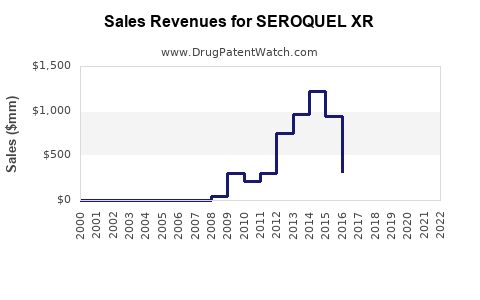
SEROQUEL XR (quetiapine fumarate extended-release) has matured into a legacy branded product with declining prescription momentum as payers tighten utilization and as generic quetiapine ER absorbed share. Commercial trajectory is dominated by (1) generic substitution dynamics, (2) payer formulary placement and step edits, (3) exposure to schizophrenia and bipolar disorder demographics, and (4) launch and uptake of competing atypical antipsychotics with differentiated dosing and access. Financial performance since patent/market exclusivity loss has largely followed a classic branded decline curve: high initial share and gross-to-net pressure, then sustained erosion after generic entry and subsequent channel reshaping.
When did SEROQUEL XR lose exclusivity and how fast did generic erosion hit sales?
SEROQUEL XR is a branded formulation of quetiapine fumarate in extended-release form. The market shifted away from branded XR as generic quetiapine ER gained broader coverage and prescriber familiarity increased, with erosion typically accelerating after the first true generic pull-through and then stabilizing at a lower branded premium.
What drives the speed of SEROQUEL XR generic erosion?
Key determinants that govern post-exclusivity sales:
- Formulary strategy: preferred-tier placement for generics and “switch” policies that reduce branded dispensing.
- Pharmacy benefit manager (PBM) contracting: rebate structures that narrow the branded gross-to-net advantage.
- Therapeutic alternatives: non-quetiapine atypicals (or branded products in the same class) that can win utilization through prior authorization and outcome-based coverage.
- Real-world adherence: extended-release dosing can preserve a niche, but generics mirror dosing schedules, so they usually capture the same adherence advantage.
What is the typical post-exclusivity sales shape for branded ER antipsychotics?
For a branded ER product like SEROQUEL XR, erosion generally shows:
- Steep drop in branded prescriptions after generic penetration.
- Ongoing declines tied to rebate compression, restrictive coverage, and prescriber switching.
- Residual branded sales tied to hard-to-switch patients, specific tolerability experiences, and manufacturer contracting in targeted plans.
What is the Orange Book status of SEROQUEL XR and what does it imply for competition?
Orange Book listing status drives the legal and timing context for generic entry. For market dynamics, the practical implication is that Orange Book expiration and paragraph IV outcomes determine the “when” of competitive intensity.
Which exclusivity and patent events matter most for SEROQUEL XR?
- Composition and formulation patent expirations for quetiapine ER.
- Method-of-use exclusivities tied to schizophrenia/bipolar disorder indications if applicable.
- Orange Book listing updates that reflect expirations and last certification dates.
How does Orange Book status translate into market behavior?
- Once patents that prevent generic approval in relevant claims expire or are cleared via litigation settlement, generics can scale.
- After entry, branded performance increasingly depends less on patent battles and more on PBM contracting and payer tiering.
What patents protect SEROQUEL XR versus generic quetiapine ER, and how strong is the estate?
SEROQUEL XR is widely expected to face extensive patent estate clearance by the time generics are established, so the practical market effect is incremental pricing power and short-lived brand differentiation.
Patent estate issues that affect commercial resilience
- Evergreening on formulation: ER-specific excipient or release-profile claims historically support brand protection, but once generic pathways clear, market share shifts quickly.
- Method-of-use claims: can delay narrow generic entry for certain labeled uses, but broader labeling coverage usually keeps generics competitive.
What happens when the estate is exhausted?
- Branded pricing power contracts under PBM benchmarks.
- Net pricing becomes more sensitive to rebate demands.
- Market share becomes a function of plan-level contracting rather than legal exclusivity.
How does SEROQUEL XR compare with immediate-release quetiapine and other atypical antipsychotics?
Commercial outcomes depend on whether prescribers view SEROQUEL XR as interchangeable with other options and how payers manage substitution.
SEROQUEL XR vs quetiapine immediate-release
- ER typically reduces dosing frequency versus immediate-release, but generic immediate-release and ER both compete.
- ER-specific patient preference can slow switching, but branded differentiation usually narrows once generics are available at parity.
SEROQUEL XR vs branded and generic atypical antipsychotics
Market share in schizophrenia and bipolar disorder is contested by multiple atypicals and, increasingly, by long-acting injectable strategies for adherence-sensitive populations.
Competitive overlap categories
- Oral antipsychotics (generic and branded)
- Long-acting injectable antipsychotics (where adherence and payer models favor LAIs)
- Newer metabolic and tolerability profiles that can shift formularies
What FDA regulatory pathway defines SEROQUEL XR competition risks (505(b)(2 vs ANDA)?
SEROQUEL XR’s mature status means most competitive entrants are expected via ANDAs for generic quetiapine ER, with 505(b)(2) used for line extensions or alternative formulations.
How does the regulatory pathway affect market entry timing?
- ANDAs rely on bioequivalence and an agreed reference product profile, which accelerates launch after legal clearance.
- 505(b)(2) can be slower but can support differentiation through formulation or dosing changes, affecting payer perception even when clinical comparability is close.
What generic entry risks exist for SEROQUEL XR, and what would they take to move the needle?
Once generic quetiapine ER is established, the primary “entry risk” is less about approvals and more about incremental market-share shifts driven by:
- aggressive rebate floors
- preferred tier placement
- higher adherence capture in patient segments newly targeted by plans
What types of challengers typically matter post-launch?
- Multiple generic manufacturers competing on net price and contracted formularies
- Potential line-extension generics that improve stability, packaging formats, or patient convenience
What formulation changes would most likely protect a branded advantage for SEROQUEL XR?
SEROQUEL XR’s core economic value is tied to its ER dosing convenience and branded contracting. The main commercial risk to that advantage is that generic ER is a near substitute.
Formulation angles that can affect payer acceptance
- Tablets strength and dosing flexibility that reduce dosing errors
- Packaging and patient support programs that increase persistence
In practice, these factors tend to influence branded switching friction rather than block generic substitution.
What litigation and settlement dynamics have shaped SEROQUEL XR generic launch timelines?
For market dynamics, litigation matters mainly to determine:
- whether first generic entrants are delayed
- whether the launch is early and narrow or broad and immediate
Settlement patterns that shift market outcomes
Common settlement structures that drive financial impact:
- Agreements allowing launch but under conditions that reduce competitive threat (scope, timing, or exclusivity-like protections)
- Consent judgments reflecting entry dates and product scope
Once multiple generics are established, litigation becomes less relevant to marginal sales and more relevant to short-term launch waves.
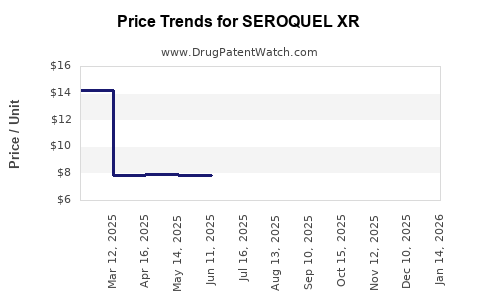
How do payer policies and PBM incentives affect SEROQUEL XR net pricing and share?
Branded antipsychotic net pricing is structurally sensitive to:
- formulary tiering
- rebate intensity under PBM contracts
- utilization management, including prior authorization and step therapy
What payer levers reduce branded share
- Generic substitution mandates at retail
- Step edits requiring prior use of preferred options
- Limits on non-preferred branded prescriptions
What maintains branded share in a generic era
- targeted contracts with specific payer networks
- patient-specific exceptions and prescriber intent to avoid destabilizing changes
- product access programs that smooth copays
What is the competitive landscape for SEROQUEL XR by indication (schizophrenia, bipolar disorder)
SEROQUEL XR covers core psychiatric markets with large, chronic patient pools. Commercial performance depends on how payers manage chronic antipsychotic utilization.
Schizophrenia segment
- High volume and chronic treatment patterns support steady demand, but branded erosion is rapid in the presence of generics.
- LAIs and alternative oral antipsychotics can influence channel mix.
Bipolar disorder segment
- Relapse prevention and maintenance create recurring demand, but payer utilization management can shift patients between antipsychotic classes.
What are the key financial drivers behind SEROQUEL XR revenue trajectory?
SEROQUEL XR’s revenue path in a mature market is shaped by a limited set of levers:
Revenue drivers
- Branded units and scripts (net of substitution)
- Gross-to-net dynamics: rebates, discounts, and chargebacks
- Contracting outcomes with PBMs and large health systems
- Channel inventory management and wholesaler ordering behavior
Cost and risk drivers
- Legal and settlement costs from IP and product liability exposures (where applicable)
- Marketing and patient support spend required to maintain script share
- Competitive margin pressure as generics expand and discounting accelerates
Timeline: How market forces typically unfold for a mature branded ER antipsychotic
Below is the practical sequence that shapes financial trajectory once exclusivity ends, which is consistent with established market behavior for legacy branded neuropsychiatric products:
| Phase |
Market state |
Typical sales impact on branded SEROQUEL XR |
| Exclusivity tail |
Limited generic penetration |
Slower decline; payer already planning position |
| First generic scaling |
Coverage expands across plans |
Sharp prescription and net revenue drop |
| Multi-generic normalization |
Multiple entrants compete |
Brand stabilizes at reduced market share |
| Channel and contracting optimization |
PBM rebates compress; switch programs active |
Gradual decline or flatline depending on contract pockets |
| Long-term maturity |
Generics dominate utilization |
Branded becomes niche and contract-driven |
Key Takeaways
- SEROQUEL XR’s financial trajectory is primarily a function of generic quetiapine ER substitution, payer formulary placement, and PBM rebate pressure rather than incremental clinical differentiation.
- After exclusivity/patent clearance, branded revenue typically follows a steep erosion curve, then stabilizes at a lower level as remaining branded demand is contract- and patient-exception-driven.
- Competitive dynamics in schizophrenia and bipolar disorder are shaped by both oral generic substitution and payer preference for alternative efficacy, tolerability, and adherence solutions (including LAIs).
- The most economically material levers are gross-to-net compression and net price convergence to generic benchmarks, not patent litigation once multiple generics are established.
FAQs
1) What drives branded SEROQUEL XR prescription loss after generic entry?
Formulary tiering, PBM rebates, step edits, and mandatory generic substitution at retail.
2) Does SEROQUEL XR’s ER dosing meaningfully protect against generic switching?
ER dosing can reduce willingness to switch for some patients, but generic ER is usually a close functional substitute once available.
3) How do schizophrenia vs bipolar disorder indications change the revenue pattern of SEROQUEL XR?
Both are chronic, but payer utilization management and adherence strategies shift utilization within and across antipsychotic options, affecting mix over time.
4) Can litigation still change SEROQUEL XR financial outcomes after multiple generics exist?
It can influence near-term launch waves, but in a multi-generic environment the dominant driver is contracting and tier placement.
5) What would be the biggest commercial threat to a remaining SEROQUEL XR branded niche?
Widening preferred-tier status for additional generic manufacturers and stronger step-therapy enforcement that reduces branded initiations.
References (APA)
- FDA. Orange Book: Approved Drug Products with Therapeutic Equivalence Evaluations. U.S. Food and Drug Administration. https://www.accessdata.fda.gov/scripts/cder/daf/index.cfm
- FDA. Drugs@FDA: SEROQUEL XR (quetiapine fumarate extended-release) information. U.S. Food and Drug Administration. https://www.accessdata.fda.gov/scripts/cder/daf/index.cfm
- FDA. Guidance for Industry: Bioequivalence Studies Submitted in NDAs or INDAs. U.S. Food and Drug Administration. https://www.fda.gov/regulatory-information/search-fda-guidance-documents