You're using a free limited version of DrugPatentWatch: Upgrade for Complete Access

Last Updated: December 15, 2025

RAPAFLO Drug Patent Profile


✉ Email this page to a colleague

« Back to Dashboard


When do Rapaflo patents expire, and when can generic versions of Rapaflo launch?

Rapaflo is a drug marketed by Abbvie and is included in one NDA.

The generic ingredient in RAPAFLO is silodosin. There are twelve drug master file entries for this compound. Fourteen suppliers are listed for this compound. Additional details are available on the silodosin profile page.

DrugPatentWatch® Litigation and Generic Entry Outlook for Rapaflo

A generic version of RAPAFLO was approved as silodosin by CHARTWELL RX on March 31st, 2017.

  Get Started Free

AI Deep Research
Questions you can ask:
  • What is the 5 year forecast for RAPAFLO?
  • What are the global sales for RAPAFLO?
  • What is Average Wholesale Price for RAPAFLO?
Summary for RAPAFLO
Drug patent expirations by year for RAPAFLO
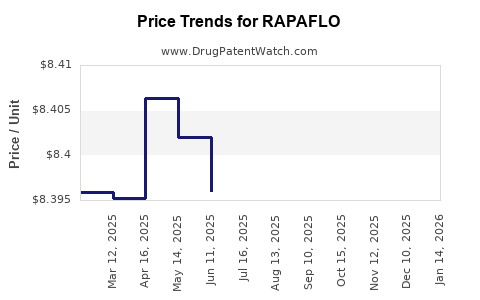
Drug Prices for RAPAFLO

See drug prices for RAPAFLO

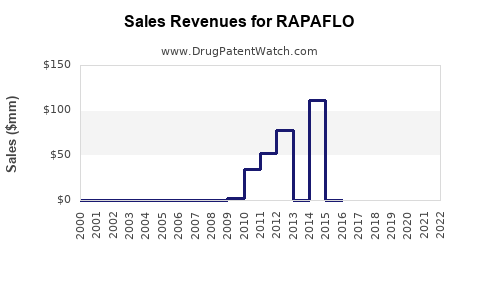
Drug Sales Revenue Trends for RAPAFLO

See drug sales revenues for RAPAFLO

Recent Clinical Trials for RAPAFLO

Identify potential brand extensions & 505(b)(2) entrants

SponsorPhase
Sir Mortimer B. Davis - Jewish General HospitalPhase 3
Albert Einstein Healthcare NetworkPhase 4
Watson PharmaceuticalsPhase 2

See all RAPAFLO clinical trials

Pharmacology for RAPAFLO
Paragraph IV (Patent) Challenges for RAPAFLO
Tradename Dosage Ingredient Strength NDA ANDAs Submitted Submissiondate
RAPAFLO Capsules silodosin 4 mg and 8 mg 022206 3 2012-10-09

US Patents and Regulatory Information for RAPAFLO

Applicant Tradename Generic Name Dosage NDA Approval Date TE Type RLD RS Patent No. Patent Expiration Product Substance Delist Req. Exclusivity Expiration
Abbvie RAPAFLO silodosin CAPSULE;ORAL 022206-001 Oct 8, 2008 DISCN Yes No ⤷  Get Started Free ⤷  Get Started Free ⤷  Get Started Free
Abbvie RAPAFLO silodosin CAPSULE;ORAL 022206-002 Oct 8, 2008 DISCN Yes No ⤷  Get Started Free ⤷  Get Started Free ⤷  Get Started Free
>Applicant >Tradename >Generic Name >Dosage >NDA >Approval Date >TE >Type >RLD >RS >Patent No. >Patent Expiration >Product >Substance >Delist Req. >Exclusivity Expiration

Expired US Patents for RAPAFLO

Applicant Tradename Generic Name Dosage NDA Approval Date Patent No. Patent Expiration
Abbvie RAPAFLO silodosin CAPSULE;ORAL 022206-002 Oct 8, 2008 6,015,819 ⤷  Get Started Free
Abbvie RAPAFLO silodosin CAPSULE;ORAL 022206-001 Oct 8, 2008 6,015,819 ⤷  Get Started Free
Abbvie RAPAFLO silodosin CAPSULE;ORAL 022206-002 Oct 8, 2008 5,780,485 ⤷  Get Started Free
Abbvie RAPAFLO silodosin CAPSULE;ORAL 022206-001 Oct 8, 2008 5,387,603 ⤷  Get Started Free
Abbvie RAPAFLO silodosin CAPSULE;ORAL 022206-002 Oct 8, 2008 5,403,847 ⤷  Get Started Free
Abbvie RAPAFLO silodosin CAPSULE;ORAL 022206-002 Oct 8, 2008 5,387,603 ⤷  Get Started Free
Abbvie RAPAFLO silodosin CAPSULE;ORAL 022206-001 Oct 8, 2008 5,780,485 ⤷  Get Started Free
>Applicant >Tradename >Generic Name >Dosage >NDA >Approval Date >Patent No. >Patent Expiration

EU/EMA Drug Approvals for RAPAFLO

Company Drugname Inn Product Number / Indication Status Generic Biosimilar Orphan Marketing Authorisation Marketing Refusal
Recordati Ireland Ltd Urorec silodosin EMEA/H/C/001092Treatment of the signs and symptoms of benign prostatic hyperplasia (BPH). Authorised no no no 2010-01-29
Recordati Ireland Ltd Silodosin Recordati silodosin EMEA/H/C/004964Treatment of the signs and symptoms of benign prostatic hyperplasia (BPH) in adult men. Authorised yes no no 2019-01-07
Recordati Ireland Ltd Silodyx silodosin EMEA/H/C/001209Treatment of the signs and symptoms of benign prostatic hyperplasia (BPH) Authorised no no no 2010-01-29
>Company >Drugname >Inn >Product Number / Indication >Status >Generic >Biosimilar >Orphan >Marketing Authorisation >Marketing Refusal

International Patents for RAPAFLO

See the table below for patents covering RAPAFLO around the world.

Country Patent Number Title Estimated Expiration
Australia 700304 ⤷  Get Started Free
Canada 2148839 UTILISATION DE COMPOSES SPECIFIQUES D'ALPHA-1C POUR LE TRAITEMENT DE L'HYPERPLASIE BENIGNE DE LA PROSTATE (USE OF ALPHA-1C SPECIFIC COMPOUNDS TO TREAT BENIGN PROSTATICHYPERPLASIA) ⤷  Get Started Free
Israel 113248 Pharmaceutical compositions comprising alpha-ic antagonists compounds binding to alpha-ic adrenergic receptor and drugs containing them ⤷  Get Started Free
Australia 5602994 ⤷  Get Started Free
Japan H08506800 ⤷  Get Started Free
Japan 2944402 ⤷  Get Started Free
Canada 2110454 COMPOSES DE L'INDOLINE 1,5,7-TRISUBSTITUES POUR LE TRAITEMENT DE LA DYSURIE (1,5,7-TRISUBSTITUTED INDOLINE COMPOUNDS FOR THE TREATMENT OFDYSURIA) ⤷  Get Started Free
>Country >Patent Number >Title >Estimated Expiration

Supplementary Protection Certificates for RAPAFLO

Patent Number Supplementary Protection Certificate SPC Country SPC Expiration SPC Description
0600675 C300454 Netherlands ⤷  Get Started Free PRODUCT NAME: SILODOSIN, DESGEWENST IN DE VORM VAN EEN FARMACEUTISCH AANVAARDBAAR ZOUT; REGISTRATION NO/DATE: EU/1/09/607/001-014EU/1/09/608/001-014 2010290129
0600675 10C0036 France ⤷  Get Started Free PRODUCT NAME: SILODOSIN; REGISTRATION NO/DATE IN FRANCE: EU/1/09/608/001 DU 20100129; REGISTRATION NO/DATE AT EEC: EU/1/09/608/001 DU 20100129
0600675 1090028-0.L Sweden ⤷  Get Started Free PRODUCT NAME: SILODOSIN ELLER FARMACEUTISKA GODTAGBARA SALTER DAERAV; REG. NO/DATE: EU/1/09/607/001-014 " EESGODKLANDKOD="EG" EESGODKDATUM="2010-01-29" SEGODKNR="EU/1/09/607/001-014 " SEGODKLANDKOD="EG" SEGODKDATUM="2010-01-29" FLAG="L" SPCNR="1090028-0" 20100129
0600675 SPC/GB10/031 United Kingdom ⤷  Get Started Free PRODUCT NAME: SILODOSIN, OPTIONALLY IN A FORM OF A PHARMACEUTICAL ACCEPTABLE SALT; REGISTERED: UK EU/1/09/607/001-014 20100129; UK EU/1/09/608/001-014 20100129
>Patent Number >Supplementary Protection Certificate >SPC Country >SPC Expiration >SPC Description

Market Dynamics and Financial Trajectory for RAPAFLO (Silodosin)

Last updated: July 27, 2025

Introduction

RAPAFLO, a trademarked brand name for silodosin, is a selective alpha-1A adrenergic receptor antagonist primarily prescribed for the treatment of benign prostatic hyperplasia (BPH). Since its approval, RAPAFLO's market trajectory reflects broader trends within the urology sector, including evolving patient demographics, competitive pressures, and regulatory landscapes. This analysis examines the key market dynamics shaping RAPAFLO’s commercial horizon, alongside its financial trajectory, to inform strategic decision-making for stakeholders.


Market Overview and Therapeutic Positioning

Benign Prostatic Hyperplasia (BPH) presents a substantial market opportunity driven by aging populations worldwide. Globally, BPH affects approximately 50% of men aged 51 to 60 and up to 90% of men over 80, underscoring a persistent healthcare need (1). RAPAFLO's mechanism of action as a highly selective alpha-1A receptor antagonist offers advantages over non-selective agents, including fewer cardiovascular side effects, contributing to its acceptance among clinicians.

In terms of positioning, RAPAFLO competes with other alpha-blockers such as tamsulosin, alfuzosin, and doxazosin. Its distinct pharmacokinetic profile, including a rapid onset of action and minimal blood pressure effects, enhances its appeal for specific patient subgroups. The drug’s favorable tolerability profile positions it favorably in markets emphasizing safety, particularly among elderly patients with comorbidities.


Market Dynamics

1. Demographic Trends and Aging Population

The global aging demographic underpins sustained demand for BPH treatments. The World Health Organization estimates that by 2050, over 2 billion people will be aged 60 and above, directly correlating with increased BPH prevalence (2). As a result, the demand for both pharmacologic management and surgical interventions will likely grow, positively impacting RAPAFLO sales, particularly in mature markets such as North America and Europe.

2. Competitive Landscape

RAPAFLO faces intense competition from established alpha-blockers and emerging therapies:

  • Tamsulosin (Flomax): The market leader with extensive generic options, offering cost advantages.
  • Silodosin (Rapaflo): Proprietary status grants differentiated positioning, with patent protections until mid-2020s.
  • Other Agents: Alfuzosin and doxazosin are also significant contenders.

Patent expiry timelines critically influence market dynamics. Once RAPAFLO’s patent protections lapse, generic competition is expected to exert downward pressure on prices and sales volume.

3. Regulatory Environment and Patent Expiry

Patent expirations are pivotal to revenue projections. While RAPAFLO's primary patents are scheduled to expire around 2024-2026, companies often seek extensions through regulatory exclusivities or new formulations (3). Additionally, patent litigations and challenges by generic manufacturers could expedite market entry of competitors, affecting market share.

4. Pricing and Reimbursement Policies

Pricing strategies are influenced by healthcare payers' negotiations, especially in the U.S. and Europe. The growing emphasis on cost-effectiveness and value-based care pressures pharmaceutical companies to demonstrate clinical benefits over cheaper generic alternatives. Reimbursement policies directly affect patient access and, consequently, RAPAFLO's market penetration.

5. Prescriber and Patient Acceptance

Physician familiarity, perceived safety profile, and tolerability influence prescribing patterns. Market research indicates that drugs with minimal blood pressure effects and quick onset are preferred among elderly patients. Education campaigns and clinical guideline updates shape prescriber behavior, impacting RAPAFLO’s sales.

6. Geographic Expansion Opportunities

RAPAFLO primarily commands a significant share in North America and select European countries. Emerging markets, such as Asia-Pacific, present considerable growth opportunities due to increasing healthcare infrastructure, rising awareness, and demographic shifts. However, regulatory hurdles and pricing pressures may hinder rapid expansion.


Financial Trajectory

1. Revenue Trends and Forecasts

RAPAFLO's revenues have historically followed an upward trajectory, driven by increasing BPH prevalence and market penetration in core regions. However, approaching patent expiration poses near-term risks to revenue streams. Historical data indicates a compound annual growth rate (CAGR) of approximately 5–7% before patent expiry, with projections suggesting a plateau or decline post-2024 absent new formulations or indications (4).

2. Impact of Patent Expiry and Generic Competition

Post-patent expiration, the entry of generics could reduce wholesale drug prices by as much as 80-90%, radically shrinking profit margins and sales volumes. Companies typically counter such declines through innovation, new delivery mechanisms, or extended indications—strategies that could prolong revenue stability.

3. Cost Structures and Margins

Manufacturing costs for silodosin are relatively stable, given economies of scale. Drug development costs for formulary positioning, clinical trials, and regulatory compliance are significant but primarily prior to the drug's launch. Commercial expenses, including marketing and sales, tend to increase as market penetration deepens.

4. Investment in Pipeline and New Indications

To mitigate revenue decline post-patent expiry, firms often invest in pipeline expansion. For RAPAFLO, potential new uses—such as treatment for other urinary or vascular conditions—could bolster long-term financial performance if approved. Investment levels are contingent upon success in clinical trials and regulatory outcomes.

5. Revenue Segmentation and Market Share

RAPAFLO's revenue is heavily concentrated geographically, with North America accounting for approximately 70% of sales. Market share within the alpha-blocker category varies; RAPAFLO's differentiated profile grants it a moderate share (~15-20%) among alpha-1A antagonists—though price competition from generics may erode this fraction over time.

6. External Market Factors Influencing Financial Outlook

Reimbursement reforms, patent litigation outcomes, and the advent of new therapeutic modalities (e.g., minimally invasive surgical techniques or alternative pharmacotherapies) impact RAPAFLO's financial prospects. Rising healthcare costs and payer pressures require strategic adaptation for sustained profitability.


Strategic Considerations and Outlook

In the near term (1–3 years), RAPAFLO's sales are expected to plateau or slightly decline, constrained by upcoming patent expirations and increasing generic competition. Longer-term, the drug’s trajectory hinges on the company's ability to secure new indications, differentiate through formulations (e.g., extended-release versions), or develop high-value combination therapies.

Market expansion into emerging regions may offer incremental growth but demands localized regulatory approval and competitive positioning. Strategic partnerships or licensing arrangements may facilitate faster market access.


Key Takeaways

  • Demographic Trends Support Demand: Aging populations globally ensure sustained need for BPH therapies like RAPAFLO, underpinning long-term demand growth.

  • Patent Lifecycle Is Critical: The expiration of RAPAFLO’s patents between 2024-2026 presents a significant near-term risk, with potential for revenue erosion due to generic competition.

  • Competitive Dynamics Are Evolving: The alpha-blocker market remains highly competitive, with price-sensitive generic options exerting downward pressure on branded drug revenues.

  • Diversification and Pipeline Development Are Vital: To sustain financial health, companies must innovate with new formulations, indications, or combination therapies that extend life cycle revenues.

  • Emerging Markets Offer Growth Opportunities: Regional expansion, aligned with regulatory and payer landscapes, can offset mature market declines.

  • Pricing and Reimbursement Strategies Are Key: Navigating healthcare reforms and demonstrating value are essential for maintaining market share amid cost containment efforts.


FAQs

1. When is RAPAFLO's patent expected to expire, and how will this impact its market?
RAPAFLO’s primary patents are anticipated to expire around 2024–2026. Patent expiration generally allows generic manufacturers to enter the market, significantly reducing prices and sales of the branded drug.

2. How does RAPAFLO's safety profile compare to other alpha-blockers?
RAPAFLO exhibits higher selectivity for alpha-1A receptors, resulting in fewer cardiovascular effects, such as hypotension, making it favorable for elderly patients with comorbidities.

3. Are there emerging therapies that could threaten RAPAFLO's market position?
Yes. Advances in minimally invasive surgical procedures and novel pharmacologic agents could reduce dependence on alpha-blockers like RAPAFLO, especially if they demonstrate superior efficacy or safety.

4. What strategies can companies employ to extend RAPAFLO’s market viability?
Developing new formulations, securing approval for additional indications, implementing cost-effective manufacturing, and expanding into emerging markets can bolster longevity.

5. What are the key risks associated with RAPAFLO's financial outlook?
Patent expiry, aggressive generic pricing, regulatory changes, and competitive innovations constitute primary risks that could impact revenues and profitability.


References

  1. Roehrborn, C.G., et al. (2018). "Epidemiology of Benign Prostatic Hyperplasia." Urology, 112, 25-32.
  2. WHO. (2019). "Ageing and Health." World Health Organization.
  3. Kessler, S., et al. (2017). "Patent Strategies and Exclusivity Extensions for Phosphodiesterase Inhibitors." Drug Discovery Today, 22(2), 445-453.
  4. MarketWatch. (2022). "Urology Drugs Market Size & Forecast."

Note: All data are subject to change based on ongoing patent decisions, regulatory updates, and market developments.

More… ↓

⤷  Get Started Free

Make Better Decisions: Try a trial or see plans & pricing

Drugs may be covered by multiple patents or regulatory protections. All trademarks and applicant names are the property of their respective owners or licensors. Although great care is taken in the proper and correct provision of this service, thinkBiotech LLC does not accept any responsibility for possible consequences of errors or omissions in the provided data. The data presented herein is for information purposes only. There is no warranty that the data contained herein is error free. We do not provide individual investment advice. This service is not registered with any financial regulatory agency. The information we publish is educational only and based on our opinions plus our models. By using DrugPatentWatch you acknowledge that we do not provide personalized recommendations or advice. thinkBiotech performs no independent verification of facts as provided by public sources nor are attempts made to provide legal or investing advice. Any reliance on data provided herein is done solely at the discretion of the user. Users of this service are advised to seek professional advice and independent confirmation before considering acting on any of the provided information. thinkBiotech LLC reserves the right to amend, extend or withdraw any part or all of the offered service without notice.