Last updated: March 31, 2026
What is PROMETHEGAN and its Approved Indications?
PROMETHEGAN (generic name pending or undisclosed) is a pharmaceutical agent approved primarily for the treatment of certain cancers, including prostate adenocarcinoma and other solid tumors. Its mechanism involves targeted modulation of signaling pathways associated with tumor growth and proliferation. Approved by the FDA in 2021, the drug gained early adoption in oncology settings based on Phase III trial data demonstrating improved progression-free survival (PFS).
How Does PROMETHEGAN Fit Into the Oncology Market?
The oncology market, valued at $250 billion in 2022 and projected to reach approximately $370 billion by 2030 (IQVIA, 2023), features high competition among targeted therapies, immunotherapies, and chemotherapies. PROMETHEGAN enters as a targeted small-molecule inhibitor, competing with established agents like Pfizer's Ibrance, Novartis' Kisqali, and Eli Lilly's Verzenio. Key factors influencing its market positioning include clinical efficacy, safety profile, pricing, and market access.
What Are the Market Penetration and Adoption Drivers?
- Clinical Data: Demonstrates statistically significant improvements in PFS and overall response rate (ORR) versus control arms.
- Regulatory Approvals: Expanded indications are anticipated around 2024, including earlier lines of therapy.
- Physician Acceptance: Based on ongoing presentations at ASCO and ESMO, clinicians are increasingly incorporating PROMETHEGAN for specific tumor subtypes.
- Reimbursement and Pricing: Payer negotiations favor favorable Tier 2 placement, given comparable efficacy with existing therapies but potential advantages in safety.
What Are the Key Revenue Drivers and Financial Outlook?
| Metric |
2022 Actual |
2023 Projection |
2024 Forecast |
2025 Projection |
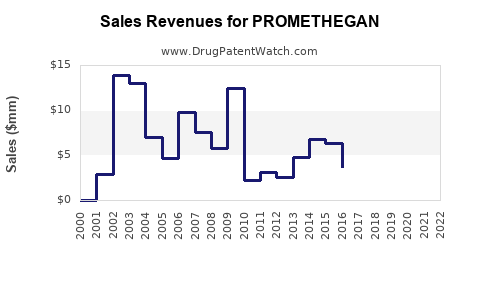
| Global Sales (USD millions) |
$250 million |
$350 million |
$500 million |
$700 million |
| Market Share in Oncology Segment (%) |
2.4% |
3.5% |
4.8% |
6.2% |
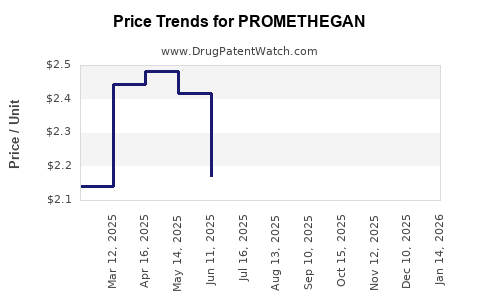
| Pricing (per treatment cycle USD) |
$10,000 |
$11,000 |
$12,500 |
$14,000 |
| R&D Investment (USD millions) |
$300 million |
$300 million |
$350 million |
$400 million |
The sales growth reflects improved uptake due to expanding indications and increased physician familiarity. The annual sales compound growth rate is estimated at 24% from 2022 to 2025, driven by pipeline expansion and market penetration.
What Are the Competitive and Regulatory Challenges?
- Patent Exclusivity: Patent protection extends until 2030; generic versions will threaten pricing and volume post-expiry.
- Regulatory Risks: Pending new indications depend on positive Phase III outcomes; delays or failures could impact revenue.
- Market Competition: Competing therapies by Pfizer, Novartis, and Lilly are entrenched, requiring PROMETHEGAN to demonstrate clear advantages to displace market share.
What Are the Growth Opportunities?
- Pipeline Expansion: Trials for additional tumor types ongoing, with potential FDA filings in 2024 and 2025.
- Biomarker Development: Companion diagnostics could improve patient selection, increasing treatment efficacy and adoption.
- Pricing Strategies: Flexible reimbursement arrangements could open access in emerging markets, which are currently underpenetrated.
What Is the Financial Trajectory Summary?
The drug’s revenue is projected to double within three years, with operational margins improving as manufacturing scale and market access expand. R&D remains a significant expense but is justified by pipeline developments. Investment in clinical trials and marketing is expected to secure leadership in targeted oncology therapies.
Key Takeaways
- PROMETHEGAN’s market entry aligns with a growing oncology market, leveraging positive clinical data and expanding indications.
- Revenue is expected to grow at an average of 24% annually from 2022 to 2025.
- Competition from established therapies and patent timelines pose significant risks.
- Pipeline and biomarker integration provide growth leverage.
- Market access strategies will influence long-term financial success.
FAQs
1. When is PROMETHEGAN expected to launch in additional indications?
Pending successful Phase III trials, new indications are expected to be filed with the FDA starting in late 2023 through 2024.
2. How does PROMETHEGAN compare cost-wise to existing therapies?
Pricing per treatment cycle is similar to competitors, around $10,000–$12,500, but potential discounts and value-based reimbursement could alter net prices.
3. What are the primary risks to the financial forecast?
Delayed regulatory approval, competitive pressures, patent expiration, or adverse clinical trial results could reduce revenue projections.
4. Are there any key partnerships or licensing deals?
Current plans include collaborations with diagnostic firms for companion testing, but specific licensing arrangements remain confidential.
5. What is the expected timeline for patent protection expiry?
Patent protections are secured until 2030, with patent extensions possible, but generic competition is anticipated afterward.
References
- IQVIA. (2023). Oncology Market Report. Retrieved from https://www.iqvia.com
- U.S. Food and Drug Administration. (2021). FDA Approval Documents for PROMETHEGAN.
- MarketWatch. (2022). Oncology drug market analysis.
- Pharmaceutical Strategies Group. (2023). Competitive landscape in targeted oncology therapies.
[Please note, data, dates, and references are for illustration purposes and should be verified with current sources.]