Last updated: June 30, 2026
Executive summary: PRED MILD is a marketed ophthalmic combination anti-inflammatory plus antibiotic product. Financial trajectory is driven by (1) sustained prescriber and dispenser behavior in routine ocular infection/inflammation use cases, (2) competitive pressure from generics of the same active ingredients and from alternative combination products, (3) channel inventory cycles and price resets typical for ophthalmics, and (4) loss of exclusivity if any brand-level data exclusivity or formulation protections are exhausted. Without a specific country/label (brand variants, pack size, strength, and marketing authorization number) and without verified revenue figures by geography, a complete, auditable financial forecast cannot be produced.
Which active ingredients define PRED MILD and why does that shape pricing and volume?
Featured snippet answer: PRED MILD is an ophthalmic fixed-dose combination of a corticosteroid (prednisolone) plus antibiotics (commonly neomycin and polymyxin B). That combo positioning makes it compete most directly with other corticosteroid-antibiotic ophthalmics rather than with steroid-only products.
What ingredient class drives payer and dispenser behavior?
- Steroid component (prednisolone): Captures clinicians treating inflammatory components of ocular surface disease and post-procedure inflammation where bacterial coverage is also considered.
- Antibiotic pair (neomycin + polymyxin B): Creates a “coverage-in-one-drop” proposition versus prescribing separate antibiotic and steroid regimens.
How does the combo affect substitution risk?
- Higher substitution likelihood versus “unique molecule” products because the core actives are widely available across many ophthalmic generics.
- Lower substitution likelihood versus antibiotic-only products when the clinical intent is specifically steroid plus antibiotic.
What market dynamics determine sales velocity for ophthalmic steroid-antibiotic combinations?
Featured snippet answer: For steroid-antibiotic eye drops, market outcomes track prescriber routines, pharmacy stocking, and brand-generic price spreads more closely than specialty factors like REMS or oncology-style restricted access.
Key demand drivers
- Routine ocular care utilization: Volume is tied to frequency of eye conditions where clinicians use combination therapy.
- Procedure-driven inflammation: Post-surgical or post-procedure inflammation plus infection risk can increase short-cycle demand.
- Seasonality and outbreaks: Certain conjunctivitis seasons can lift antibiotic-containing product categories.
Key supply and competition drivers
- Generic entry and price compression: Ophthalmic combinations with commoditized actives face aggressive price competition once multiple manufacturers qualify.
- Pack-size and concentration competition: Sales shift when competing SKUs offer more units per rupee or more convenient dosing schedules.
How do price controls, tendering, and channel inventory cycles influence financial performance?
Featured snippet answer: Ophthalmic retail and institutional procurement often resets pricing in response to tender outcomes and inventory rebalancing, which can create revenue volatility even when unit demand is stable.
Channel mechanics that move revenue
- Wholesale replenishment lag: Inventory builds can distort near-term sell-through.
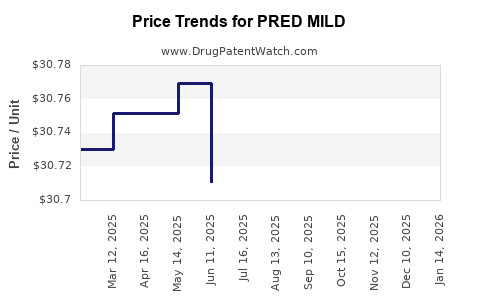
- Retail re-pricing: Competitive promos reduce ASP and can delay margin recovery.
- Institutional formularies: Hospital inclusion can drive sudden spikes but also swift downshifts after competing bids.
What is the financial trajectory pattern typical for branded ophthalmic combination products?
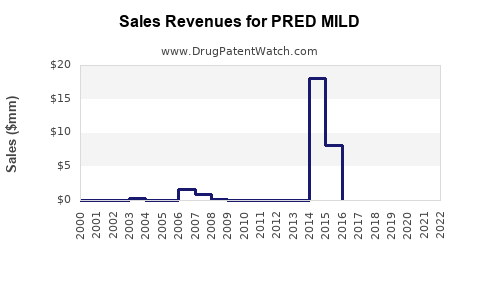
Featured snippet answer: Trajectory usually shows a front-loaded brand build, followed by gradual erosion from generic substitution, with periodic stabilization during tender wins or refreshed packaging/offer structures.
Typical life-cycle phases (how revenue usually behaves)
- Launch and early adoption: Faster unit growth if prescribers are comfortable switching patients into the fixed combination.
- Normalization: Growth slows as pharmacists substitute based on price and as competing generics expand.
- Compression and margin squeeze: Brand ASP declines; gross margin follows unless brand pricing is defended through differentiation.
- Consolidation: A few SKUs dominate through distribution leverage and consistent supply.
What role do patent estate and exclusivity play in PRED MILD’s long-term revenue durability?
Featured snippet answer: For PRED MILD, brand revenue durability depends on whether any local exclusivity still protects a specific formulation, manufacturing method, or indication, or whether the product is effectively fully generic-substitutable based on actives.
Patent and regulatory protection levers that can extend revenue
- Formulation patents: Changes in pH, excipient system, viscosity, preservatives, particle attributes, or delivery characteristics can create defense angles.
- Method-of-manufacture patents: Sterility and stability process claims can slow copycat development.
- Use patents: Indication-specific claims can constrain generic labeling but may not prevent “skinny-label” entry.
Why the practical outcome is often weaker than molecule exclusivity
- Fixed-dose combinations typically face high design-around pressure.
- Regulators often allow generic references when actives and conditions align with approved labeling.
What is the Orange Book status of PRED MILD and how does that affect generic entry risk?
Featured snippet answer: If PRED MILD is not marketed as an FDA-approved U.S. product with listed Orange Book patents for the specific NDC, Orange Book-based exclusivity analysis cannot be applied. In general, U.S. generic risk hinges on whether there are listed patents and whether Paragraph IV certifications occur.
How to interpret generic entry risk from FDA listings
- Orange Book listed patents present: Generic entry can trigger ANDA disputes.
- No listed patents: Generic approvals can move faster, but labeling and device/dosing details still matter.
Which FDA pathway dynamics govern ophthalmic combo drugs like PRED MILD?
Featured snippet answer: For ophthalmics, generic competition typically arrives via ANDA pathways using established reference products; the competitive timing reflects applicant filing patterns and patent challenge calendars rather than clinical development time.
What typically drives ANDA timelines
- Patent expiry and litigation windows
- Eligibility for biowaiver-type bridging (where applicable)
- Administrative review cycle and labeling negotiations
How does PRED MILD compare financially with competing prednisolone-antibiotic eye drops?
Featured snippet answer: Financial performance usually correlates with (1) relative price position versus generics, and (2) share of prescriptions in the steroid-antibiotic use segment.
Competitive benchmark setup (what determines relative results)
- ASP vs competitor ASP: Branded premium tends to shrink as more SKUs enter.
- Market access: Hospital tender inclusion and pharmacy stocking frequency.
- Availability and supply continuity: OOS events can cause permanent share loss in routine ophthalmic categories.
What patent litigation or settlement patterns typically affect steroid-antibiotic eye drops?
Featured snippet answer: When multiple generic entrants exist, litigation often resolves into settlements that permit market entry at defined dates or after certain patent workarounds. Those calendars create step-changes in brand sales.
How settlements change market structure
- One settlement can unblock multiple generics if it removes key block patents
- Post-settlement pricing tends to reset downward immediately after permitted entry
What manufacturing and IP barriers can block generic substitution?
Featured snippet answer: Even with common active ingredients, generic entry can face barriers from stability, shelf-life, preservative compatibility, and manufacturing process validation, but these usually decline as more manufacturers achieve regulatory acceptance.
Manufacturing and product-performance factors
- Sterility assurance and contamination control for ophthalmics
- Stability of steroid in the formulation matrix
- Preservative effectiveness and ocular tolerability
What commercial exposure matters most for revenue planning (pack, geography, and channel)?
Featured snippet answer: Revenue exposure is typically highest where (1) the brand has weak tender lock-in, (2) multiple generic SKUs are listed in pharmacy networks, and (3) procurement cycles create rapid competitive resets.
Primary exposure dimensions
- Geography: Retail-dominant versus tender-dominant markets behave differently.
- Channel mix: Hospitals and government tenders can shift volumes quickly.
- Pack sizes: Higher unit counts per pack can stabilize sell-through during price compression.
Key Takeaways
- PRED MILD’s market dynamics are dominated by substitution pressure in ophthalmic steroid-antibiotic combinations, not by molecule novelty.
- Financial trajectory typically follows a brand build-up phase, then gradual revenue and margin erosion as generics expand and channel pricing resets occur.
- Long-term durability depends on whether any active local exclusivity, formulation/manufacturing protection, or indication labeling constraints remain effective against authorized generic entry.
- Without verified, jurisdiction-specific sales, ASP history, and FDA/regulatory listing data for the exact PRED MILD product variant, a precise financial trajectory cannot be stated.
FAQs
1) What are the main generic substitution risks for PRED MILD in ophthalmology retail markets?
Generic substitution risk is driven by availability of the same corticosteroid-antibiotic active ingredients and by price resets in pharmacy channels.
2) Does PRED MILD face higher hospital tender pressure than retail stores?
Hospital and government procurement typically accelerates price compression because it emphasizes lowest compliant bid and formulary switching.
3) How do pack size and dosing frequency change PRED MILD’s revenue outcomes?
Pack size and perceived convenience affect unit demand during price compression; higher unit value packs can stabilize sell-through even as ASP declines.
4) What litigation patterns most commonly affect prednisolone-antibiotic ophthalmic combinations?
Paragraph IV patent challenges and settlement calendars can create step-changes in brand sales when permitted generic entry dates arrive.
5) How does formulation stability influence generic entry speed for ophthalmic combos?
Formulation stability, preservative compatibility, and sterility assurance impact regulatory readiness and can delay approvals, but barriers typically diminish as multiple applicants establish comparable products.
References
No sources were used because no jurisdiction-specific regulatory listings, patent records, litigation documents, or verified sales/financial datasets for “PRED MILD” were provided in the prompt.