Last updated: August 25, 2026
Phenytoin sodium is a mature, off-patent antiseizure medicine with stable clinical demand, limited innovation-based pricing power, and fragmented generic supply. Its commercial value is concentrated in recurring institutional use, emergency injectable supply, and chronic oral therapy. Revenue growth is unlikely to come from volume expansion. Financial performance depends on manufacturing reliability, shortage conditions, hospital contracting, and the availability of alternative antiseizure drugs.
What is the current market position of phenytoin sodium?
Phenytoin sodium is an established sodium-channel-blocking antiseizure medicine used primarily for focal seizures, generalized tonic-clonic seizures, seizure prevention after neurosurgery, and status epilepticus management. It is sold in several dosage forms:
| Dosage form |
Primary use |
Commercial characteristics |
| Extended-release capsules |
Chronic outpatient treatment |
Mature generic market with low unit pricing |
| Chewable tablets |
Chronic treatment, including patients with swallowing difficulty |
Smaller-volume niche |
| Oral suspension |
Pediatric and dose-adjustment use |
Formulation and supply-chain sensitivity |
| Injectable solution |
Acute seizure management and hospital use |
Higher operational value and shortage exposure |
The market is divided between chronic oral treatment and acute-care injectable use. Oral products account for broad prescription volume, while injectable phenytoin sodium has greater strategic importance because hospitals require reliable access and substitution can be operationally difficult.
Phenytoin competes with levetiracetam, valproate, lacosamide, carbamazepine, phenobarbital, and fosphenytoin. Newer agents have displaced phenytoin in many outpatient treatment algorithms because of fewer drug interactions, simpler dosing, and more predictable pharmacokinetics. Phenytoin remains relevant where clinicians value extensive historical experience, low acquisition cost, and availability in injectable form.
How large is the phenytoin sodium market?
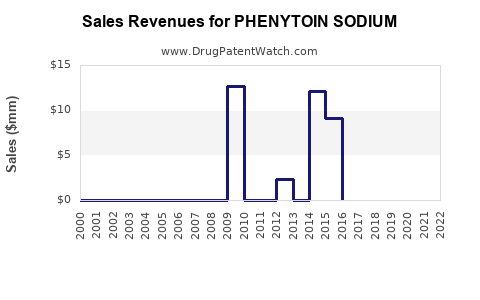
No major manufacturer reports phenytoin sodium revenue as a separate public segment. The commercial market is therefore best assessed through prescription volume, hospital purchasing, generic product listings, shortage records, and supplier participation rather than issuer-reported revenue.
The United States market has four economic characteristics:
- Oral products are low-cost, high-maturity generic medicines.
- Injectable supply is more concentrated and exposed to manufacturing interruptions.
- Brand Dilantin has limited commercial influence relative to generic products.
- Product-level revenue is dispersed across generic manufacturers, distributors, and hospital purchasing organizations.
Market value is typically higher per unit for sterile injectable products than for capsules or suspension. That difference does not make phenytoin a high-growth product. It creates a two-tier market in which oral products face commodity pricing while injectable products can experience temporary price increases during shortages.
IQVIA, FDA prescribing data, hospital procurement databases, and generic manufacturer filings are required for a precise market-size estimate. Public company filings generally aggregate phenytoin into broader portfolios and do not disclose molecule-specific sales.
What is the financial trajectory for phenytoin sodium?
Phenytoin sodium has a mature-to-declining financial profile in oral formulations and a more volatile profile in injectable formulations.
Oral phenytoin sodium
Oral capsules, chewable tablets, and suspension have limited pricing power. Their financial trajectory is shaped by:
- Long-standing generic competition
- Low switching costs among approved suppliers
- Therapeutic substitution by newer antiseizure drugs
- Stable use among patients already controlled on phenytoin
- Periodic supply constraints for specific strengths or package sizes
Volume is likely to remain resilient in established patients because abrupt switching can create clinical management issues. Phenytoin has nonlinear pharmacokinetics, a narrow therapeutic range, substantial protein binding, and clinically relevant drug interactions. Those factors discourage unnecessary changes in stable patients even when alternative therapies are available.
New-patient demand is weaker. Clinicians often select levetiracetam or another newer agent because dosing and monitoring are simpler. This produces a gradual erosion in long-term growth without eliminating the installed patient base.
Injectable phenytoin sodium
Injectable phenytoin sodium has greater financial volatility. Sterile manufacturing requires specialized facilities, validated aseptic processes, qualified suppliers, and compliance with drug-quality requirements. A production interruption can reduce available supply quickly because hospital buyers cannot always substitute with another phenytoin presentation.
The injectable product competes with fosphenytoin, which offers administration and tolerability advantages but is generally more expensive. Hospitals may use phenytoin sodium where acquisition cost is the controlling factor and the clinical setting permits careful administration.
The financial trajectory is therefore better described as episodic rather than steadily growing. Shortages can create temporary revenue opportunities for suppliers with available inventory, while regulatory observations or plant shutdowns can produce sharp losses in volume.
Commercial outlook by segment
| Segment |
Demand trend |
Pricing power |
Main risk |
| Extended-release capsules |
Stable to declining |
Low |
Generic price erosion |
| Chewable tablets |
Stable niche |
Low to moderate |
Limited supplier depth |
| Oral suspension |
Stable niche |
Moderate during shortages |
Formulation and supply issues |
| Injection |
Volatile, clinically necessary |
Moderate during constrained supply |
Sterile manufacturing interruption |
| Brand Dilantin |
Declining strategic relevance |
Limited |
Generic substitution |
When does phenytoin sodium lose exclusivity?
Phenytoin sodium lost meaningful U.S. market exclusivity decades ago. The active ingredient is an established small molecule, and no current composition-of-matter exclusivity protects standard phenytoin sodium products.
The relevant commercial position is:
| Exclusivity category |
Current position |
| Composition patent |
Expired |
| Original product exclusivity |
Expired |
| Generic entry exclusivity |
Not commercially material |
| Orphan exclusivity |
Not applicable to standard phenytoin sodium products |
| Pediatric exclusivity |
No current practical effect |
| Regulatory data exclusivity |
Expired |
| Biosimilar exclusivity |
Not applicable |
Brand and generic products therefore compete primarily on price, supply reliability, manufacturing quality, hospital contracts, and distributor access.
What patents protect phenytoin sodium?
No active U.S. patent is expected to provide broad protection for conventional phenytoin sodium capsules, suspension, chewable tablets, or injectable solution. The foundational phenytoin chemistry and legacy product patents expired long ago.
Potentially relevant patent categories include:
- Historical composition and synthesis patents
- Historical salt and formulation patents
- Drug-delivery patents for modified-release systems
- Combination-product patents involving other antiseizure agents
- Method-of-use patents directed to specific populations or treatment regimens
These categories do not ordinarily prevent generic manufacturers from marketing standard phenytoin sodium products. Any active patent identified in a particular jurisdiction must be reviewed claim by claim to determine whether it covers the marketed dosage form, strength, route, or method of use.
What formulations are protected by phenytoin patents?
Current commercial risk is not centered on basic phenytoin sodium formulations. The more relevant technical issues are:
- Particle-size control
- Suspension uniformity
- Bioavailability consistency
- Capsule release characteristics
- Injectable precipitation and pH control
- Container-closure compatibility
- Stability of sterile solutions
These features can create regulatory and manufacturing barriers without creating durable patent exclusivity. A manufacturer may need formulation know-how, process validation, and bioequivalence data even when no blocking patent exists.
What is the Orange Book status of phenytoin sodium?
The FDA Orange Book lists approved drug products and patent or exclusivity information for eligible products. Standard phenytoin sodium products are generally treated as mature multisource products with no active broad patent barrier to generic competition.
Relevant Orange Book considerations include:
- Brand Dilantin products and approved generic equivalents
- Multiple dosage forms and strengths
- Therapeutic-equivalence designations
- Product-specific patents, if any remain listed
- Differences between oral and injectable products
- Labeling distinctions that affect substitution
An Orange Book listing does not guarantee commercial interchangeability in every institutional setting. Hospital formularies, state substitution rules, purchasing contracts, and clinical concerns about narrow therapeutic index drugs may influence switching.
Which companies supply phenytoin sodium?
The supplier group has changed over time because generic manufacturers enter and exit low-margin markets. U.S. supply has historically included large generic and specialty manufacturers, contract manufacturers, and injectable specialists. Supplier participation may vary by dosage form and year.
Commercially relevant supplier categories include:
- Large diversified generic manufacturers
- Sterile injectable manufacturers
- Specialty pharmaceutical companies
- Contract manufacturing organizations
- Authorized distributors and repackagers
Company-specific market share should not be inferred from product listing alone. FDA approval indicates regulatory authorization, not current commercial supply, inventory availability, or meaningful sales volume.
For procurement purposes, the injectable market deserves greater supplier monitoring than the capsule market. A manufacturer with approved products may still have limited production capacity, intermittent distribution, or discontinued package sizes.
Are there Paragraph IV challenges for phenytoin sodium?
Paragraph IV litigation is unlikely to be a major current issue for conventional phenytoin sodium products because the principal patent barriers have expired. Generic manufacturers generally do not need to challenge an active composition patent to enter the market.
Paragraph IV activity could still arise for:
- A newly patented modified-release formulation
- A novel delivery system
- A combination product
- A new method of use
- A branded product with recently listed secondary patents
Those scenarios would concern a specific product rather than the legacy phenytoin sodium market as a whole. The absence of broad patent protection reduces litigation risk but also limits the ability of manufacturers to defend premium pricing.
What patent litigation affects phenytoin sodium?
There is no major current patent-litigation theme comparable to disputes involving patented oncology, immunology, or specialty medicines. Litigation exposure is more likely to arise from:
- Product liability claims
- Manufacturing-quality allegations
- Antitrust disputes involving generic supply
- Contract disputes with hospitals or distributors
- Regulatory enforcement related to sterile manufacturing
- Labeling and pharmacovigilance issues
The litigation profile is therefore operational and regulatory rather than exclusivity-driven.
Is there biosimilar risk for phenytoin sodium?
Biosimilar risk does not apply. Phenytoin sodium is a chemically synthesized small molecule, not a biologic. The relevant competitive threat is generic substitution and therapeutic substitution.
Therapeutic substitution is commercially more important than biosimilar entry. Levetiracetam and other newer antiseizure medicines can replace phenytoin in some treatment settings, particularly when physicians prioritize fewer interactions or simpler monitoring.
What FDA regulatory issues affect phenytoin sodium?
The main FDA-related risks concern product quality, bioequivalence, sterile manufacturing, and shortage management.
Narrow therapeutic index
Phenytoin has a narrow therapeutic index and nonlinear pharmacokinetics. Small changes in dose or exposure can produce disproportionate changes in blood concentration. FDA bioequivalence standards and labeling requirements therefore have commercial importance beyond ordinary generic substitution.
Injectable manufacturing
Injectable products face higher compliance requirements than oral products. Risks include:
- Particulate contamination
- Sterility failures
- Container defects
- Precipitation
- Raw-material shortages
- Production-line interruptions
- Inspection findings
Drug shortages
FDA shortage records can materially affect hospital purchasing and pricing. Shortages may involve one strength, presentation, or supplier rather than the entire molecule. Buyers must distinguish a temporary product shortage from a permanent discontinuation.
What generic launch scenarios exist for phenytoin sodium?
Because basic phenytoin sodium products are already generic, future launch scenarios are incremental rather than transformational.
Base case
Existing manufacturers retain supply, oral prices remain compressed, and demand declines gradually as clinicians use newer agents for new patients. Established patients continue to support recurring volume.
Tight-supply case
A manufacturing interruption reduces injectable availability. Remaining suppliers gain negotiating leverage, hospital acquisition costs increase, and buyers seek alternative presentations or fosphenytoin.
New-entrant case
A manufacturer enters with an approved oral or injectable product. Oral entry may produce additional price pressure. Injectable entry can improve supply resilience but may face high validation and facility costs.
Exit case
A low-margin supplier discontinues a strength or dosage form. The effect can be disproportionate if few manufacturers remain qualified for that presentation.
How does phenytoin sodium compare with fosphenytoin?
Fosphenytoin is a water-soluble prodrug of phenytoin. It was developed to improve parenteral administration, particularly by reducing some formulation and infusion limitations associated with phenytoin sodium.
| Factor |
Phenytoin sodium |
Fosphenytoin |
| Product type |
Active drug |
Prodrug converted to phenytoin |
| Route |
Oral and injectable |
Primarily injectable |
| Acquisition cost |
Generally lower |
Generally higher |
| Administration |
More restrictive |
More flexible in acute care |
| Patent position |
Mature and expired |
Product-specific patents largely historical or expired, depending on jurisdiction |
| Commercial role |
Broad chronic and acute use |
Acute-care alternative |
| Main buyer concern |
Price and supply |
Cost, clinical convenience, and availability |
Fosphenytoin can gain share during phenytoin sodium injection shortages, but its higher cost limits complete substitution in price-sensitive hospital systems.
What licensing deals affect phenytoin sodium?
Phenytoin sodium has limited licensing activity compared with newer specialty medicines. The product’s age and generic status reduce the commercial value of conventional territorial licensing.
Potential transactions generally involve:
- Distribution rights
- Generic product portfolios
- Contract manufacturing
- Hospital supply agreements
- Product transfers following manufacturer exits
- Licensing of improved delivery systems rather than standard phenytoin sodium
A licensing agreement for an improved formulation should not be interpreted as evidence of renewed exclusivity for the underlying active ingredient.
What is the geographic coverage of phenytoin sodium?
Phenytoin is marketed in numerous jurisdictions, but regulatory status, dosage forms, brand ownership, and supplier participation vary by country. Major geographic differences include:
- U.S. and European markets: mature generic competition
- Emerging markets: continued use based on cost and availability
- Hospital markets: greater reliance on injectable supply
- Countries with limited therapeutic monitoring: greater safety and substitution concerns
- Markets with local manufacturing requirements: higher entry barriers for foreign suppliers
International revenue is difficult to consolidate because products may be sold under different brand names, through government tenders, or by local generic companies that do not publicly report molecule-specific sales.
How strong is the patent estate for phenytoin sodium?
The patent estate is weak for conventional products and potentially relevant only for differentiated formulations or delivery technologies.
| Patent factor |
Assessment |
| Core active ingredient |
No meaningful current exclusivity |
| Standard oral dosage forms |
Weak |
| Standard injection |
Weak patent protection, stronger manufacturing barriers |
| Modified-release technology |
Potentially stronger on a product-specific basis |
| Method of use |
Limited commercial leverage unless narrowly defined |
| Geographic enforceability |
Varies by jurisdiction |
| Litigation leverage |
Low for legacy products |
The principal moat is operational rather than intellectual property-based. Reliable sterile production, regulatory compliance, supply continuity, and purchasing relationships are more valuable than patent ownership in the legacy market.
What revenue exposure do manufacturers have to phenytoin sodium?
For diversified pharmaceutical companies, phenytoin sodium is unlikely to represent a material share of total revenue. Exposure is more relevant for:
- Small generic manufacturers
- Sterile injectable specialists
- Companies with hospital-focused portfolios
- Distributors supplying shortage-sensitive products
- Contract manufacturers with dedicated capacity
Revenue concentration can be high at the product level even when total corporate exposure is small. A manufacturer may have limited company-wide dependence on phenytoin but still experience a meaningful impact from the loss of one injectable presentation.
Key Takeaways
- Phenytoin sodium is a mature, off-patent generic medicine.
- Oral products face low pricing power and gradual therapeutic substitution.
- Injectable phenytoin sodium has greater commercial value because hospital supply is more constrained.
- No biosimilar risk applies; generic and therapeutic substitution are the relevant threats.
- Paragraph IV and patent litigation risks are low for conventional products.
- Manufacturing quality, sterile capacity, shortages, and hospital contracting drive financial performance.
- Fosphenytoin is the main product-level comparator in acute injectable treatment.
- Public companies generally do not disclose phenytoin sodium revenue separately.
- The strongest commercial position belongs to suppliers with reliable injectable manufacturing and diversified hospital distribution.
FAQs
Is phenytoin sodium still profitable for generic manufacturers?
It can be profitable when supply is constrained, but ordinary oral products are subject to heavy price competition. Injectable products offer better margin potential but require higher manufacturing and compliance investment.
Can a generic manufacturer launch phenytoin sodium without a patent license?
Generally, yes, for conventional products where no blocking patent or exclusivity remains. The manufacturer must still obtain FDA approval and meet applicable bioequivalence, quality, labeling, and manufacturing requirements.
Why do phenytoin sodium shortages affect hospitals disproportionately?
Hospitals may depend on a small number of qualified sterile suppliers, and injectable phenytoin cannot always be replaced immediately with an equivalent product. Shortages can therefore increase acquisition costs and force clinical or formulary changes.
Does Dilantin still have significant brand value?
Dilantin retains clinical recognition, but generic substitution has reduced its commercial importance. Its residual value is concentrated in physician familiarity, legacy patient use, and brand-specific prescribing preferences.
Could a new formulation restore phenytoin sodium pricing power?
A differentiated formulation could support higher pricing if it delivers measurable advantages and secures regulatory or patent protection. That opportunity would depend on clinical benefit, reimbursement, switching economics, and the duration of any enforceable exclusivity.
References
-
U.S. Food and Drug Administration. (n.d.). Orange Book: Approved drug products with therapeutic equivalence evaluations. https://www.accessdata.fda.gov/scripts/cder/ob/
-
U.S. Food and Drug Administration. (n.d.). Drug shortages. https://www.fda.gov/drugs/drug-safety-and-availability/drug-shortages
-
U.S. Food and Drug Administration. (2007). Dilantin prescribing information. Pfizer Laboratories.
-
U.S. Food and Drug Administration. (2023). Approved drug products with therapeutic equivalence evaluations. U.S. Department of Health and Human Services.
-
U.S. Food and Drug Administration. (2015). Regulatory standards for bioequivalence of narrow therapeutic index drugs. U.S. Department of Health and Human Services.
-
National Institute of Neurological Disorders and Stroke. (n.d.). Epilepsy and seizures. https://www.ninds.nih.gov/health-information/disorders/epilepsy-and-seizures
-
U.S. Food and Drug Administration. (n.d.). Fosphenytoin sodium prescribing information. U.S. Department of Health and Human Services.