Last updated: February 19, 2026
LOTREL, a combination medication containing benazepril hydrochloride and amlodipine besylate, is positioned at a critical juncture concerning its patent landscape and market dynamics. Developed by Novartis, LOTREL is primarily prescribed for the treatment of hypertension. Understanding its patent expiry, the emergence of generics, and the ongoing market performance is essential for evaluating future R&D investment and strategic market positioning.
What is LOTREL's Current Patent Status and Expiry Timeline?
LOTREL's composition patent has expired in major markets, paving the way for generic competition.
- US Patent Expiry: The primary patents covering the LOTREL formulation and its use have expired. For instance, U.S. Patent No. 5,276,028, which claims the combination of benazepril and amlodipine, expired in 2013. Subsequent patents related to specific manufacturing processes or formulations have also expired or are nearing expiry.
- European Patent Expiry: Similar patent expiry timelines are observed in European countries, with the main substance and formulation patents having lapsed.
- Other International Markets: Patent expiries in other key pharmaceutical markets globally have followed comparable timelines, generally aligned with US and European expirations.
The expiry of these foundational patents signifies the end of market exclusivity for LOTREL as a branded product, enabling generic manufacturers to introduce bioequivalent versions. This transition typically leads to significant price erosion and a shift in market share dynamics.
How Has Generic Competition Impacted LOTREL's Market Share and Pricing?
The introduction of generic benazepril/amlodipine has fundamentally altered LOTREL's market position and pricing.
- Market Share Erosion: Following patent expiry, the market share held by branded LOTREL has steadily declined as generic alternatives gain traction. Payers and healthcare providers often favor lower-cost generic options, especially for medications treating chronic conditions like hypertension.
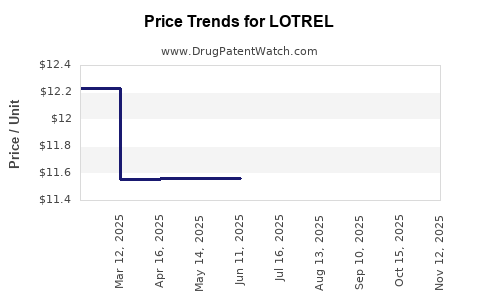
- Price Reductions: Generic entry triggers substantial price reductions. The average selling price (ASP) of LOTREL has fallen significantly from its peak during the period of market exclusivity. This price pressure is a direct consequence of increased competition and the commoditization of the drug's active pharmaceutical ingredients (APIs).
- Market Access: While branded LOTREL may retain a portion of its market share due to established physician and patient relationships, or through specific formulary agreements, the overall market is now heavily influenced by the availability and cost-effectiveness of generic benazepril/amlodipine combinations.
What are the Key Therapeutic Benefits and Current Clinical Use of LOTREL?
LOTREL's therapeutic value lies in its dual-acting mechanism for hypertension management.
- Mechanism of Action: LOTREL combines benazepril, an angiotensin-converting enzyme (ACE) inhibitor, and amlodipine, a dihydropyridine calcium channel blocker. This combination targets different pathways to lower blood pressure. Benazepril inhibits the conversion of angiotensin I to angiotensin II, a potent vasoconstrictor, leading to vasodilation and reduced aldosterone secretion. Amlodipine blocks the influx of calcium ions into vascular smooth muscle and myocardial cells, causing vasodilation and reducing peripheral resistance.
- Clinical Efficacy: Clinical trials have demonstrated the efficacy of the benazepril/amlodipine combination in achieving significant reductions in systolic and diastolic blood pressure, often superior to monotherapy with either agent alone [1]. The combination offers a synergistic effect, providing more comprehensive blood pressure control.
- Treatment Guidelines: The benazepril/amlodipine combination is recognized in hypertension treatment guidelines as an effective option for patients requiring dual therapy to reach their blood pressure goals [2]. It is particularly useful for patients who have not achieved adequate control with ACE inhibitors or calcium channel blockers alone.
- Patient Population: LOTREL is prescribed to adult patients with essential hypertension. The specific dosage is adjusted based on individual patient response and tolerance.
Who are the Major Generic Competitors for LOTREL?
A range of pharmaceutical companies have entered the market with generic versions of benazepril/amlodipine.
- Key Generic Manufacturers:
- Teva Pharmaceuticals
- Sun Pharmaceutical Industries
- Aurobindo Pharma
- Mylan (now Viatris)
- Dr. Reddy's Laboratories
- Lupin
- Product Offerings: These companies offer generic benazepril hydrochloride and amlodipine besylate tablets in various dosage strengths, mirroring those of branded LOTREL. The availability of multiple generic manufacturers intensifies price competition.
- Market Entry Strategy: Generic manufacturers typically aim for rapid market entry upon patent expiry, leveraging their established manufacturing capabilities and distribution networks to capture market share quickly.
What is the Current Market Size and Projected Growth for Benazepril/Amlodipine Combinations?
The market for benazepril/amlodipine combinations, encompassing both branded LOTREL and its generics, is substantial but characterized by mature growth dynamics.
- Market Size: While precise figures for the benazepril/amlodipine combination market specifically are often embedded within broader antihypertensive drug market reports, it represents a significant segment of the ACE inhibitor/calcium channel blocker combination market. The global antihypertensive market is valued in the tens of billions of dollars annually.
- Growth Drivers:
- Aging Population: The increasing global elderly population, a demographic with a higher prevalence of hypertension, continues to drive demand for antihypertensive medications.
- Disease Prevalence: The persistent high prevalence of hypertension worldwide, linked to lifestyle factors and obesity, ensures a consistent patient base.
- Guidelines and Physician Practice: Established clinical guidelines and physician preference for combination therapies to achieve target blood pressure levels support sustained demand.
- Growth Restraints:
- Genericization: The primary restraint is the impact of generic competition, which caps revenue growth for branded products and limits overall market value expansion in dollar terms.
- Competition from Newer Agents: The development and market introduction of novel antihypertensive drug classes or fixed-dose combinations with potentially improved efficacy, safety profiles, or dosing convenience can draw market share away from older, established therapies.
- Focus on Value-Based Healthcare: Increasing emphasis on cost-effectiveness and value-based care may favor the most economical treatment options, further pressuring pricing.
- Projected Trajectory: The market for benazepril/amlodipine combinations is expected to experience low single-digit growth, largely driven by volume increases due to population demographics and disease prevalence, rather than significant price appreciation. The overall value of the market will be constrained by intense generic competition.
What are the Key Regulatory Considerations and Quality Standards for Generic LOTREL?
The approval and market availability of generic LOTREL are governed by stringent regulatory processes ensuring safety, efficacy, and quality.
- Abbreviated New Drug Application (ANDA): In the United States, generic drug manufacturers must file an ANDA with the Food and Drug Administration (FDA). This application requires demonstrating that the generic product is bioequivalent to the reference listed drug (RLD), which is branded LOTREL in this case.
- Bioequivalence: Bioequivalence studies show that the rate and extent of absorption of the drug are not significantly different between the generic and the RLD. This is the cornerstone of generic drug approval.
- Quality Standards: Generic manufacturers must adhere to Current Good Manufacturing Practices (cGMP) as mandated by regulatory bodies like the FDA and the European Medicines Agency (EMA). This ensures consistent product quality, purity, and potency.
- Labeling and Indication: Generic drug labeling must include the same indications, contraindications, warnings, precautions, and side effects as the RLD.
- Post-Market Surveillance: Regulatory agencies monitor the safety of generic drugs once they are on the market through adverse event reporting systems.
What is the Competitive Landscape for Fixed-Dose Combinations in Hypertension?
The hypertension market is highly competitive, with a multitude of fixed-dose combination (FDC) products available.
- Other ACE Inhibitor/Calcium Channel Blocker Combinations: LOTREL competes directly with other FDCs of ACE inhibitors and calcium channel blockers, such as:
- Ramipril/amlodipine
- Lisinopril/amlodipine
- Perindopril/amlodipine
- Other Combination Classes: The market also includes FDCs from different drug classes, such as:
- Angiotensin II Receptor Blocker (ARB)/Diuretic combinations (e.g., losartan/hydrochlorothiazide)
- ARB/Calcium Channel Blocker combinations (e.g., olmesartan medoxomil/amlodipine)
- Beta Blocker/Diuretic combinations (e.g., atenolol/chlorthalidone)
- Monotherapy Options: Despite the prevalence of FDCs, monotherapy with ACE inhibitors, ARBs, calcium channel blockers, diuretics, and beta-blockers remains a significant part of the treatment landscape, particularly for initial hypertension management or in patients with specific contraindications to certain classes.
- Newer Therapies: Emerging drug classes and combination therapies, such as those involving mineralocorticoid receptor antagonists (e.g., spironolactone in resistant hypertension), represent areas of innovation and potential future competition.
What are the Financial Performance Trends for Branded LOTREL?
Branded LOTREL's financial performance has been significantly impacted by genericization.
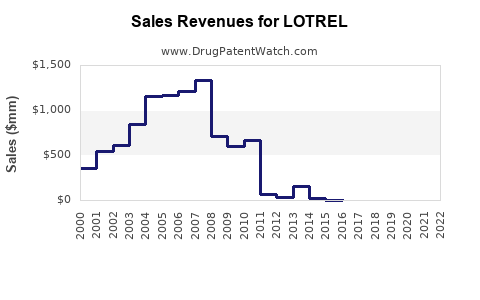
- Sales Decline: Following patent expiries, sales of branded LOTREL have experienced a steep decline year-over-year. Revenue generation from the branded product is now primarily derived from its remaining market share in specific regions or through patient adherence to prescriptions filled before generic entry or for those who continue to receive the brand-name drug.
- Contribution to Parent Company Revenue: For Novartis, LOTREL's contribution to overall revenue has become minimal. The company has shifted its strategic focus and R&D investments towards newer, patent-protected blockbuster drugs in areas like oncology, immunology, and neuroscience.
- Generic Revenue vs. Branded Revenue: The total revenue generated by benazepril/amlodipine combinations in the market is now dominated by generic sales, which are significantly lower in price per unit compared to branded LOTREL. While the volume of prescriptions for the combination remains substantial, the aggregate dollar value is driven by the lower cost of generics.
What are the Opportunities and Challenges for Continued Market Presence?
The market for benazepril/amlodipine combinations presents both opportunities and challenges for manufacturers.
- Opportunities:
- Sustained Demand: The persistent high prevalence of hypertension globally and an aging population ensure continued demand for effective antihypertensive treatments.
- Cost-Effectiveness: Generic benazepril/amlodipine offers a highly cost-effective treatment option, making it attractive to healthcare systems, payers, and patients with limited budgets.
- Established Efficacy and Safety: The combination has a well-established track record of efficacy and a known safety profile, making it a reliable choice for many physicians.
- Market Penetration in Emerging Economies: In developing markets where cost is a primary concern, generic benazepril/amlodipine can achieve significant penetration.
- Challenges:
- Intense Price Competition: The market is characterized by aggressive pricing strategies among multiple generic manufacturers, leading to low profit margins.
- Innovation Pressure: The pharmaceutical industry is constantly seeking novel treatments with improved outcomes or convenience. Newer drug classes or more advanced FDCs could eventually displace older therapies.
- Physician Prescribing Habits: While generics are widely available, some physicians may continue to prescribe branded LOTREL based on habit or perceived brand reliability, but this trend is diminishing.
- Regulatory Hurdles for New Formulations: Developing new, differentiated formulations or delivery systems for an already genericized molecule presents significant R&D and regulatory challenges with a potentially limited return on investment.
What is the Outlook for Benazepril/Amlodipine Combinations Beyond Generics?
The future trajectory of benazepril/amlodipine combinations will largely be shaped by market dynamics within the generic space and the evolution of hypertension treatment paradigms.
- Dominance of Generic Market: The market will continue to be dominated by generic versions. Price wars are likely to persist, driving down margins for manufacturers. Consolidation among generic players may occur to achieve economies of scale.
- Focus on Manufacturing Efficiency: Companies will focus on optimizing manufacturing processes to reduce production costs and maintain competitiveness. Supply chain reliability will be crucial.
- Limited Scope for Branded Product: Branded LOTREL's market presence will likely be confined to niche segments or specific regions where generic penetration is slower or where brand loyalty persists.
- Potential for Combination Therapy Evolution: While benazepril/amlodipine is a well-established combination, future innovations in hypertension management may involve FDCs with different API combinations or drugs with novel mechanisms of action. However, the cost-effectiveness of generic benazepril/amlodipine ensures its continued relevance for a significant patient population.
- Strategic Considerations for Generic Manufacturers: Generic manufacturers will focus on market access, supply chain efficiency, and maintaining high-quality production standards to compete effectively. Differentiation might come through specific packaging, patient support programs, or ultra-low-cost offerings.
Key Takeaways
- LOTREL's primary patents have expired, enabling widespread generic competition.
- Generic entry has led to significant price erosion and market share decline for the branded product.
- The benazepril/amlodipine combination remains a cornerstone therapy for hypertension due to its dual-acting mechanism and established efficacy.
- The market for benazepril/amlodipine combinations is expected to grow minimally, driven by volume and population demographics, with profit margins heavily influenced by generic competition.
- The competitive landscape is crowded with numerous generic manufacturers, intensifying price pressure.
- Future market presence will be dominated by cost-effective generic versions, with a focus on manufacturing efficiency and supply chain reliability for generic players.
FAQs
- Will branded LOTREL be discontinued?
Branded LOTREL may not be formally discontinued but will likely see its market share and availability significantly reduced as generic benazepril/amlodipine dominates. Manufacturers may cease active promotion and focus resources elsewhere.
- Are there any new patents or exclusivity periods for LOTREL that could extend its market life?
The primary patents have expired. Any remaining patents are likely to be for specific polymorphs, manufacturing processes, or delivery systems, which typically offer limited market exclusivity and are often challenged by generic manufacturers.
- What is the typical price difference between branded LOTREL and its generic equivalents?
Generic benazepril/amlodipine is typically priced 50-90% lower than branded LOTREL, depending on the specific market, payer contracts, and the number of generic competitors.
- Can physicians still prescribe branded LOTREL?
Yes, physicians can continue to prescribe branded LOTREL. However, payers and pharmacy benefit managers often incentivize the use of generics through formularies and co-pay structures, making generics the more common prescription.
- What therapeutic alternatives exist for patients who cannot tolerate or do not respond to generic benazepril/amlodipine?
Alternatives include other fixed-dose combinations of antihypertensives (e.g., ARB/diuretic, ARB/calcium channel blocker), monotherapy with different drug classes (e.g., ACE inhibitors, ARBs, calcium channel blockers, diuretics, beta-blockers), or multi-drug regimens adjusted by a healthcare professional.
Citations
[1] Chrysant, S. G. (2006). The combination of benazepril and amlodipine for the treatment of hypertension. Vascular Health and Risk Management, 2(4), 483–488.
[2] James, P. A., Oparil, S., Carter, B. L., Cushman, W. C., Dennison-Himmelfarb, C. R., Handler, J., Levy, P. D., Mancia, G., Mangione, C. M., Morris, P. B., Srinivas, S., Unick, J., & for the ACC/AHA Task Force Members. (2014). 2014 evidence-based guideline for the management of high blood pressure in adults: report of the panel members appointed to the Eighth Joint National Committee (JNC 8). JAMA, 311(5), 507–520. https://doi.org/10.1001/jama.2013.284427