LINZESS Drug Patent Profile
✉ Email this page to a colleague
Which patents cover Linzess, and what generic alternatives are available?
Linzess is a drug marketed by Abbvie and is included in one NDA. There are seven patents protecting this drug and two Paragraph IV challenges.
The generic ingredient in LINZESS is linaclotide. There is one drug master file entry for this compound. Two suppliers are listed for this compound. Additional details are available on the linaclotide profile page.
DrugPatentWatch® Generic Entry Outlook for Linzess
Linzess was eligible for patent challenges on August 30, 2016.
By analyzing the patents and regulatory protections it appears that the earliest date
for generic entry will be April 30, 2032. This may change due to patent challenges or generic licensing.
Annual sales in 2022 were $1.6bn, indicating a strong incentive for generic entry.
There have been thirteen patent litigation cases involving the patents protecting this drug, indicating strong interest in generic launch. Recent data indicate that 63% of patent challenges are decided in favor of the generic patent challenger and that 54% of successful patent challengers promptly launch generic drugs.
Indicators of Generic Entry
AI Deep Research
Questions you can ask:
- What is the 5 year forecast for LINZESS?
- What are the global sales for LINZESS?
- What is Average Wholesale Price for LINZESS?
Summary for LINZESS
| US Patents: | 7 |
| Applicants: | 1 |
| NDAs: | 1 |
| Finished Product Suppliers / Packagers: | 2 |
| Raw Ingredient (Bulk) Api Vendors: | 1 |
| Clinical Trials: | 19 |
| Drug Prices: | Drug price information for LINZESS |
| Drug Sales Revenues: | Drug sales revenues for LINZESS |
| Patent Litigation and PTAB cases: | See patent lawsuits and PTAB cases for LINZESS |
| What excipients (inactive ingredients) are in LINZESS? | LINZESS excipients list |
| DailyMed Link: | LINZESS at DailyMed |
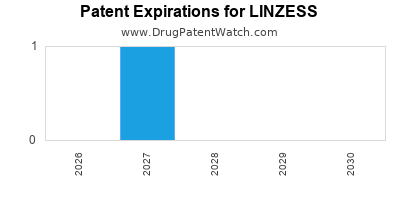
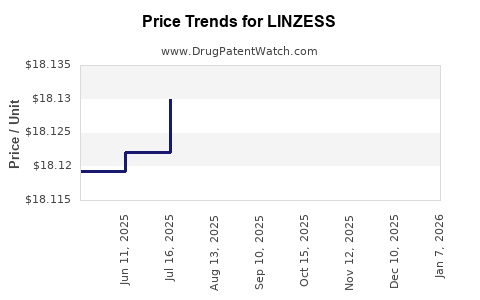
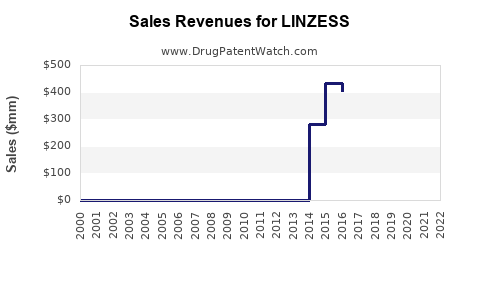
DrugPatentWatch® Estimated Loss of Exclusivity (LOE) Date for LINZESS
Generic Entry Date for LINZESS*:
Constraining patent/regulatory exclusivity:
NDA:
Dosage:
CAPSULE;ORAL |
*The generic entry opportunity date is the latter of the last compound-claiming patent and the last regulatory exclusivity protection. Many factors can influence early or later generic entry. This date is provided as a rough estimate of generic entry potential and should not be used as an independent source.
Recent Clinical Trials for LINZESS
Identify potential brand extensions & 505(b)(2) entrants
| Sponsor | Phase |
|---|---|
| AbbVie | Phase 2 |
| National Cancer Institute (NCI) | Early Phase 1 |
| RenJi Hospital | Phase 4 |
Pharmacology for LINZESS
| Drug Class | Guanylate Cyclase-C Agonist |
| Mechanism of Action | Guanylate Cyclase Activators |
Paragraph IV (Patent) Challenges for LINZESS
| Tradename | Dosage | Ingredient | Strength | NDA | ANDAs Submitted | Submissiondate |
|---|---|---|---|---|---|---|
| LINZESS | Capsules | linaclotide | 72 mcg | 202811 | 1 | 2017-11-07 |
| LINZESS | Capsules | linaclotide | 145 mcg and 290 mcg | 202811 | 4 | 2016-08-30 |
US Patents and Regulatory Information for LINZESS
LINZESS is protected by seven US patents and four FDA Regulatory Exclusivities.
Based on analysis by DrugPatentWatch, the earliest date for a generic version of LINZESS is ⤷ Start Trial.
This potential generic entry date is based on patent ⤷ Start Trial.
Generics may enter earlier, or later, based on new patent filings, patent extensions, patent invalidation, early generic licensing, generic entry preferences, and other factors.
| Applicant | Tradename | Generic Name | Dosage | NDA | Approval Date | TE | Type | RLD | RS | Patent No. | Patent Expiration | Product | Substance | Delist Req. | Exclusivity Expiration |
|---|---|---|---|---|---|---|---|---|---|---|---|---|---|---|---|
| Abbvie | LINZESS | linaclotide | CAPSULE;ORAL | 202811-003 | Jan 25, 2017 | RX | Yes | Yes | ⤷ Start Trial | ⤷ Start Trial | Y | ⤷ Start Trial | |||
| Abbvie | LINZESS | linaclotide | CAPSULE;ORAL | 202811-002 | Aug 30, 2012 | RX | Yes | No | ⤷ Start Trial | ⤷ Start Trial | Y | ⤷ Start Trial | |||
| Abbvie | LINZESS | linaclotide | CAPSULE;ORAL | 202811-003 | Jan 25, 2017 | RX | Yes | Yes | ⤷ Start Trial | ⤷ Start Trial | ⤷ Start Trial | ||||
| Abbvie | LINZESS | linaclotide | CAPSULE;ORAL | 202811-003 | Jan 25, 2017 | RX | Yes | Yes | ⤷ Start Trial | ⤷ Start Trial | Y | ⤷ Start Trial | |||
| Abbvie | LINZESS | linaclotide | CAPSULE;ORAL | 202811-001 | Aug 30, 2012 | RX | Yes | Yes | ⤷ Start Trial | ⤷ Start Trial | Y | ⤷ Start Trial | |||
| Abbvie | LINZESS | linaclotide | CAPSULE;ORAL | 202811-002 | Aug 30, 2012 | RX | Yes | No | ⤷ Start Trial | ⤷ Start Trial | Y | ⤷ Start Trial | |||
| Abbvie | LINZESS | linaclotide | CAPSULE;ORAL | 202811-001 | Aug 30, 2012 | RX | Yes | Yes | ⤷ Start Trial | ⤷ Start Trial | Y | ⤷ Start Trial | |||
| >Applicant | >Tradename | >Generic Name | >Dosage | >NDA | >Approval Date | >TE | >Type | >RLD | >RS | >Patent No. | >Patent Expiration | >Product | >Substance | >Delist Req. | >Exclusivity Expiration |
Expired US Patents for LINZESS
| Applicant | Tradename | Generic Name | Dosage | NDA | Approval Date | Patent No. | Patent Expiration |
|---|---|---|---|---|---|---|---|
| Abbvie | LINZESS | linaclotide | CAPSULE;ORAL | 202811-002 | Aug 30, 2012 | ⤷ Start Trial | ⤷ Start Trial |
| Abbvie | LINZESS | linaclotide | CAPSULE;ORAL | 202811-003 | Jan 25, 2017 | ⤷ Start Trial | ⤷ Start Trial |
| Abbvie | LINZESS | linaclotide | CAPSULE;ORAL | 202811-002 | Aug 30, 2012 | ⤷ Start Trial | ⤷ Start Trial |
| Abbvie | LINZESS | linaclotide | CAPSULE;ORAL | 202811-002 | Aug 30, 2012 | ⤷ Start Trial | ⤷ Start Trial |
| Abbvie | LINZESS | linaclotide | CAPSULE;ORAL | 202811-002 | Aug 30, 2012 | ⤷ Start Trial | ⤷ Start Trial |
| Abbvie | LINZESS | linaclotide | CAPSULE;ORAL | 202811-003 | Jan 25, 2017 | ⤷ Start Trial | ⤷ Start Trial |
| Abbvie | LINZESS | linaclotide | CAPSULE;ORAL | 202811-001 | Aug 30, 2012 | ⤷ Start Trial | ⤷ Start Trial |
| >Applicant | >Tradename | >Generic Name | >Dosage | >NDA | >Approval Date | >Patent No. | >Patent Expiration |
EU/EMA Drug Approvals for LINZESS
| Company | Drugname | Inn | Product Number / Indication | Status | Generic | Biosimilar | Orphan | Marketing Authorisation | Marketing Refusal |
|---|---|---|---|---|---|---|---|---|---|
| AbbVie Deutschland GmbH & Co. KG | Constella | linaclotide | EMEA/H/C/002490Constella is indicated for the symptomatic treatment of moderate to severe irritable-bowel syndrome with constipation (IBS-C) in adults. | Authorised | no | no | no | 2012-11-26 | |
| >Company | >Drugname | >Inn | >Product Number / Indication | >Status | >Generic | >Biosimilar | >Orphan | >Marketing Authorisation | >Marketing Refusal |
International Patents for LINZESS
When does loss-of-exclusivity occur for LINZESS?
Based on analysis by DrugPatentWatch, the following patents block generic entry in the countries listed below:
Argentina
Patent: 3075
Estimated Expiration: ⤷ Start Trial
Patent: 8601
Estimated Expiration: ⤷ Start Trial
Australia
Patent: 09282446
Estimated Expiration: ⤷ Start Trial
Brazil
Patent: 0917807
Estimated Expiration: ⤷ Start Trial
Canada
Patent: 32892
Estimated Expiration: ⤷ Start Trial
Patent: 70077
Estimated Expiration: ⤷ Start Trial
Chile
Patent: 11000314
Estimated Expiration: ⤷ Start Trial
China
Patent: 2186490
Estimated Expiration: ⤷ Start Trial
Patent: 5168114
Estimated Expiration: ⤷ Start Trial
Patent: 9010254
Estimated Expiration: ⤷ Start Trial
Patent: 4668711
Estimated Expiration: ⤷ Start Trial
Patent: 7530912
Estimated Expiration: ⤷ Start Trial
Colombia
Patent: 51746
Estimated Expiration: ⤷ Start Trial
Croatia
Patent: 0200512
Estimated Expiration: ⤷ Start Trial
Cyprus
Patent: 22801
Estimated Expiration: ⤷ Start Trial
Denmark
Patent: 28601
Estimated Expiration: ⤷ Start Trial
Ecuador
Patent: 11010897
Estimated Expiration: ⤷ Start Trial
Eurasian Patent Organization
Patent: 1170337
Estimated Expiration: ⤷ Start Trial
European Patent Office
Patent: 28601
Estimated Expiration: ⤷ Start Trial
Patent: 01962
Estimated Expiration: ⤷ Start Trial
Georgia, Republic of
Patent: 0156209
Estimated Expiration: ⤷ Start Trial
Hong Kong
Patent: 61978
Estimated Expiration: ⤷ Start Trial
Patent: 19062
Estimated Expiration: ⤷ Start Trial
Hungary
Patent: 49023
Estimated Expiration: ⤷ Start Trial
Israel
Patent: 1028
Estimated Expiration: ⤷ Start Trial
Japan
Patent: 70629
Estimated Expiration: ⤷ Start Trial
Patent: 34327
Estimated Expiration: ⤷ Start Trial
Patent: 73532
Estimated Expiration: ⤷ Start Trial
Patent: 12500196
Estimated Expiration: ⤷ Start Trial
Patent: 13501071
Estimated Expiration: ⤷ Start Trial
Patent: 14139246
Estimated Expiration: ⤷ Start Trial
Patent: 15098476
Estimated Expiration: ⤷ Start Trial
Patent: 16190870
Estimated Expiration: ⤷ Start Trial
Patent: 18104468
Estimated Expiration: ⤷ Start Trial
Patent: 18104469
Estimated Expiration: ⤷ Start Trial
Patent: 19163340
Estimated Expiration: ⤷ Start Trial
Patent: 21073297
Estimated Expiration: ⤷ Start Trial
Patent: 22132383
Estimated Expiration: ⤷ Start Trial
Patent: 24015361
Estimated Expiration: ⤷ Start Trial
Patent: 25109853
Estimated Expiration: ⤷ Start Trial
Lithuania
Patent: 28601
Estimated Expiration: ⤷ Start Trial
Mexico
Patent: 3366
Estimated Expiration: ⤷ Start Trial
Patent: 5591
Estimated Expiration: ⤷ Start Trial
Patent: 0359
Estimated Expiration: ⤷ Start Trial
Patent: 11001620
Estimated Expiration: ⤷ Start Trial
Patent: 12001660
Estimated Expiration: ⤷ Start Trial
Patent: 19012939
Estimated Expiration: ⤷ Start Trial
Patent: 19013628
Estimated Expiration: ⤷ Start Trial
Patent: 20005326
Estimated Expiration: ⤷ Start Trial
New Zealand
Patent: 1713
Estimated Expiration: ⤷ Start Trial
Paraguay
Patent: 028558
Estimated Expiration: ⤷ Start Trial
Peru
Patent: 110543
Estimated Expiration: ⤷ Start Trial
Patent: 151205
Estimated Expiration: ⤷ Start Trial
Philippines
Patent: 015501579
Estimated Expiration: ⤷ Start Trial
Poland
Patent: 28601
Estimated Expiration: ⤷ Start Trial
Portugal
Patent: 28601
Estimated Expiration: ⤷ Start Trial
San Marino
Patent: 02000179
Estimated Expiration: ⤷ Start Trial
Serbia
Patent: 101
Estimated Expiration: ⤷ Start Trial
Singapore
Patent: 3801
Estimated Expiration: ⤷ Start Trial
Slovenia
Patent: 28601
Estimated Expiration: ⤷ Start Trial
South Africa
Patent: 1101523
Estimated Expiration: ⤷ Start Trial
South Korea
Patent: 1704832
Estimated Expiration: ⤷ Start Trial
Patent: 120008017
Estimated Expiration: ⤷ Start Trial
Patent: 170016522
Estimated Expiration: ⤷ Start Trial
Patent: 170138580
Estimated Expiration: ⤷ Start Trial
Patent: 180137043
Estimated Expiration: ⤷ Start Trial
Patent: 200000462
Estimated Expiration: ⤷ Start Trial
Patent: 200105730
Estimated Expiration: ⤷ Start Trial
Patent: 210043728
Estimated Expiration: ⤷ Start Trial
Patent: 210145307
Estimated Expiration: ⤷ Start Trial
Patent: 220100101
Estimated Expiration: ⤷ Start Trial
Patent: 230025926
Estimated Expiration: ⤷ Start Trial
Patent: 240025699
Estimated Expiration: ⤷ Start Trial
Spain
Patent: 85980
Estimated Expiration: ⤷ Start Trial
Taiwan
Patent: 1023874
Estimated Expiration: ⤷ Start Trial
Patent: 31374
Estimated Expiration: ⤷ Start Trial
Ukraine
Patent: 4870
Estimated Expiration: ⤷ Start Trial
Uruguay
Patent: 054
Estimated Expiration: ⤷ Start Trial
Generics may enter earlier, or later, based on new patent filings, patent extensions, patent invalidation, early generic licensing, generic entry preferences, and other factors.
See the table below for additional patents covering LINZESS around the world.
| Country | Patent Number | Title | Estimated Expiration |
|---|---|---|---|
| Austria | E365174 | ⤷ Start Trial | |
| Austria | E477268 | ⤷ Start Trial | |
| Australia | 2004210161 | Methods and compositions for the treatment of gastrointestinal disorders | ⤷ Start Trial |
| Australia | 2005222387 | Methods and compositions for the treatment of gastrointestinal disorders | ⤷ Start Trial |
| Australia | 2009235993 | Methods and compositions for the treatment of gastrointestinal disorders | ⤷ Start Trial |
| Belgium | 2013C032 | ⤷ Start Trial | |
| Brazil | 122018074353 | composição farmacêutica, polipeptídeo e métodos para a produção dos mesmos | ⤷ Start Trial |
| >Country | >Patent Number | >Title | >Estimated Expiration |
Supplementary Protection Certificates for LINZESS
| Patent Number | Supplementary Protection Certificate | SPC Country | SPC Expiration | SPC Description |
|---|---|---|---|---|
| 1594517 | 300593 | Netherlands | ⤷ Start Trial | PRODUCT NAME: LINACLOTIDE; REGISTRATION NO/DATE: EU/1/12/801/001-004 20121128 |
| 1594517 | C300593 | Netherlands | ⤷ Start Trial | PRODUCT NAME: LINACLOTIDE; REGISTRATION NO/DATE: EU/1/12/801/001-004 20121126 |
| 1594517 | CA 2013 00026 | Denmark | ⤷ Start Trial | |
| 1594517 | PA2013013 | Lithuania | ⤷ Start Trial | PRODUCT NAME: LINACLOTIDUM; REGISTRATION NO/DATE: EU/1/12/801/001 - EU/1/12/801/004 20121126 |
| 1594517 | 92200 | Luxembourg | ⤷ Start Trial | PRODUCT NAME: LINACLOTIDE ET TOUTE FORME THERAPEUTIQUE EQUIVALENTE DE CELUI-CI, PROTEGE PAR LE BREVET DE BASE, Y COMPRIS DES SELS PHARMACEUTIQUEMENT ACCEPTABLES; AUTHORISATION NUMBER AND DATE: EU/1/12/801/001-004 20121126 |
| 1594517 | 1390024-6 | Sweden | ⤷ Start Trial | PRODUCT NAME: LINAKLOTID; FIRST MARKETING AUTHORIZATION NUMBER SE: EG EU/1/12/801, 2012-11-28 |
| 2246360 | C300594 | Netherlands | ⤷ Start Trial | PRODUCT NAME: LINACLOTIDE; REGISTRATION NO/DATE: EU/1/12/801/001-004 20121126 |
| >Patent Number | >Supplementary Protection Certificate | >SPC Country | >SPC Expiration | >SPC Description |
LINZESS (linaclotide) market dynamics and financial trajectory: exclusivity, competitive threats, and revenue outlook
More… ↓
Make Better Decisions: Try a trial or see plans & pricing
Drugs may be covered by multiple patents or regulatory protections. All trademarks and applicant names are the property of their respective owners or licensors. Although great care is taken in the proper and correct provision of this service, thinkBiotech LLC does not accept any responsibility for possible consequences of errors or omissions in the provided data. The data presented herein is for information purposes only. There is no warranty that the data contained herein is error free. We do not provide individual investment advice. This service is not registered with any financial regulatory agency. The information we publish is educational only and based on our opinions plus our models. By using DrugPatentWatch you acknowledge that we do not provide personalized recommendations or advice. thinkBiotech performs no independent verification of facts as provided by public sources nor are attempts made to provide legal or investing advice. Any reliance on data provided herein is done solely at the discretion of the user. Users of this service are advised to seek professional advice and independent confirmation before considering acting on any of the provided information. thinkBiotech LLC reserves the right to amend, extend or withdraw any part or all of the offered service without notice.
ISSN: 2162-2639

Privacy and Cookies
Terms & Conditions
Site Map
DrugPatentWatch Alternatives
LOE / Major Patent Expirations 2026 - 2027
NCE-1 Patent Challenge Dates 2026 - 2027
Friedman, Yali. "DrugPatentWatch" DrugPatentWatch, thinkBiotech, 2026, www.DrugPatentWatch.com.
See Primary Research Papers Citing DrugPatentWatch