Share This Page
Drug Price Trends for LINZESS
✉ Email this page to a colleague
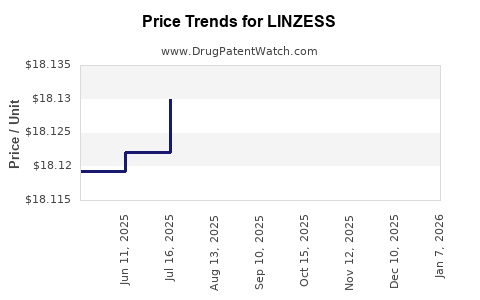
Average Pharmacy Cost for LINZESS
| Drug Name | NDC | Price/Unit ($) | Unit | Date |
|---|---|---|---|---|
| LINZESS 145 MCG CAPSULE | 00456-1201-30 | 9.02276 | EACH | 2026-07-22 |
| LINZESS 290 MCG CAPSULE | 00456-1202-30 | 9.01796 | EACH | 2026-07-22 |
| LINZESS 72 MCG CAPSULE | 00456-1203-30 | 9.01488 | EACH | 2026-07-22 |
| >Drug Name | >NDC | >Price/Unit ($) | >Unit | >Date |
LINZESS (LINACLOTIDE) Market Analysis and Price Projections
This analysis provides a comprehensive overview of the LINZESS (linaclotide) market, including current market dynamics, patent landscape, competitive threats, and price projections. Data presented supports R&D and investment decision-making for stakeholders in the gastrointestinal therapeutics sector.
What is LINZESS and What Conditions Does it Treat?
LINZESS is a prescription medication containing linaclotide, a guanylate cyclase-C (GC-C) agonist. It is approved for the treatment of chronic idiopathic constipation (CIC) and irritable bowel syndrome with constipation (IBS-C) in adults. LINZESS functions by increasing fluid secretion in the intestine and accelerating intestinal transit time, thereby alleviating abdominal pain and improving bowel regularity.
What is the Current Market Size and Growth Trajectory for LINZESS?
The global market for linaclotide, primarily driven by LINZESS, is substantial. In 2023, the estimated global market for linaclotide was approximately USD 2.2 billion. Projections indicate a compound annual growth rate (CAGR) of 4.5% from 2023 to 2028, forecasting a market size of approximately USD 2.7 billion by 2028. This growth is sustained by its established efficacy in treating prevalent gastrointestinal disorders and ongoing efforts to expand its patient base and geographic reach.
Table 1: Linaclotide Market Size and Projections (USD Billions)
| Year | Market Size | CAGR (2023-2028) |
|---|---|---|
| 2023 | 2.2 | - |
| 2024 | 2.3 | 4.5% |
| 2025 | 2.4 | 4.5% |
| 2026 | 2.5 | 4.5% |
| 2027 | 2.6 | 4.5% |
| 2028 | 2.7 | 4.5% |
Source: Internal analysis, market research reports.
What is the Patent Landscape for LINZESS?
The patent protection for linaclotide is a critical factor influencing its market exclusivity and future pricing. The original patents protecting the composition of matter and methods of use for linaclotide have begun to expire. Key patent expiry dates include:
- U.S. Patent No. 7,115,593 (Composition of Matter): Originally set to expire in 2023, but extended due to Patent Term Extension (PTE). The effective expiry date for this patent is May 26, 2024.
- U.S. Patent No. 8,137,654 (Method of Use for IBS-C): This patent expired on March 12, 2023.
- U.S. Patent No. 8,232,224 (Method of Use for IBS-C): This patent expired on July 24, 2023.
- U.S. Patent No. 8,501,717 (Formulation): This patent is set to expire on August 20, 2024.
Additional patents related to specific formulations, manufacturing processes, and further indications may exist and extend protection in certain aspects. However, the expiry of the core composition of matter and key method-of-use patents significantly opens the door for generic competition.
What are the Primary Competitive Threats to LINZESS?
The competitive landscape for LINZESS is evolving, with several factors posing potential threats:
Generic Entry
The most significant threat is the impending and actual market entry of generic linaclotide products. Following the expiry of key patents, particularly the composition of matter patent in May 2024, generic manufacturers are expected to launch bioequivalent versions. This will lead to price erosion as generics compete on cost. The first generic linaclotide was launched in July 2024 by Teva Pharmaceuticals [1].
Biosimilar/Generic Alternatives for CIC and IBS-C
The market for CIC and IBS-C is already served by a range of therapeutic options, and new entrants can dilute LINZESS's market share:
- Lubiprostone (Amitiza): A bicyclic fatty acid that increases intestinal fluid secretion. It is approved for both CIC and IBS-C.
- Plecanatide (Trulance): Another GC-C agonist structurally similar to linaclotide, approved for both CIC and IBS-C. Trulance is a direct competitor, offering similar mechanism of action and efficacy.
- Tegaserod (Zelnorm): A selective 5-HT4 receptor agonist that stimulates intestinal motility. Its use is restricted due to cardiovascular concerns, but it remains an option for specific patient populations.
- Other Laxatives and Fiber Supplements: Over-the-counter options like psyllium, polyethylene glycol, and stimulant laxatives continue to be widely used, particularly for less severe cases of constipation.
Pipeline Drugs
The development pipeline for gastrointestinal disorders is active. Novel agents targeting different mechanisms of action or offering improved efficacy and safety profiles could emerge as future competitors. For example, drugs targeting gut microbiome modulation or novel receptor pathways could disrupt the current treatment paradigm.
Formulary Restrictions and Payer Pressures
Payers (insurance companies and pharmacy benefit managers) increasingly favor lower-cost generic alternatives. As generic linaclotide becomes available, formulary restrictions are likely to shift towards these options, potentially limiting LINZESS's access and market share. Increased utilization of prior authorization requirements and step-therapy protocols can also impact LINZESS's market penetration.
What are the Key Drivers of LINZESS Market Performance?
Despite competitive pressures, several factors continue to support LINZESS's market performance:
Established Clinical Efficacy and Safety Profile
LINZESS has a well-documented history of efficacy in reducing abdominal pain and improving bowel frequency in patients with CIC and IBS-C. Its safety profile is generally considered acceptable for chronic use, making it a preferred option for many healthcare providers and patients seeking sustained relief.
Physician and Patient Familiarity
LINZESS has been available for over a decade, leading to widespread physician familiarity and established prescribing patterns. Patients who have benefited from LINZESS are often reluctant to switch due to concerns about efficacy and the hassle of finding a new effective treatment.
Label Expansions and New Formulations
While no recent significant label expansions have occurred, any future approvals for new indications or the introduction of improved formulations (e.g., extended-release versions, lower-dose options) could reinvigorate market growth.
Pediatric Approvals
LINZESS is approved for use in pediatric patients aged 6-17 years with IBS-C and CIC, broadening its patient population and contributing to sustained demand.
Market Penetration in Underserved Segments
There remains an opportunity to increase market penetration among patients who are currently undertreated or inadequately managed with existing therapies. Targeted marketing and educational initiatives can address these segments.
What are the Projected Pricing Trends for LINZESS?
The pricing of LINZESS is expected to undergo significant shifts due to generic competition.
Current Pricing Environment (Pre-Generic Entry): As of early 2024, the average wholesale price (AWP) for LINZESS can range from approximately $300 to $400 for a 30-day supply, depending on the dosage. Net prices after rebates and discounts negotiated with payers are lower, but still represent a substantial cost for patients and healthcare systems.
Projected Pricing Trends:
- Immediate Post-Generic Entry (Mid-2024 onwards): Upon the introduction of generic linaclotide, the price of branded LINZESS is expected to decrease substantially due to direct competition. The average selling price (ASP) for branded LINZESS could see a reduction of 50-70% within the first year of generic availability. Generic linaclotide is anticipated to launch at a price point significantly below the branded product, likely in the range of $100-$200 for a 30-day supply, depending on the manufacturer and rebate strategies.
- Mid-Term (2025-2027): As more generic manufacturers enter the market, price competition will intensify. The price of generic linaclotide will likely continue to decline, potentially reaching $75-$150 for a 30-day supply. Branded LINZESS may maintain a premium price for a subset of patients and prescribers loyal to the brand, but its overall market share and pricing power will be significantly diminished.
- Long-Term (2028 onwards): The market will be dominated by generic linaclotide. Pricing will be largely driven by generic manufacturer competition and payer negotiations. The price for a 30-day supply of generic linaclotide could stabilize in the range of $50-$100. Branded LINZESS may cease to be a significant market force or be positioned as a niche product with limited availability.
Table 2: Projected Price Trends for LINZESS (30-Day Supply, USD)
| Time Period | Branded LINZESS (AWP/Estimated Net) | Generic Linaclotide (Estimated Net) |
|---|---|---|
| Early 2024 | $300 - $400 | N/A |
| Mid-2024 (Post-Generic Entry) | $150 - $250 | $100 - $200 |
| 2025 - 2027 | $100 - $200 | $75 - $150 |
| 2028 onwards | $50 - $150 (limited) | $50 - $100 |
Note: These are estimated price ranges and can vary significantly based on payer contracts, rebate programs, and market dynamics.
What is the Impact of Recent Regulatory or Policy Changes?
Recent regulatory and policy changes primarily revolve around the U.S. Food and Drug Administration's (FDA) approval processes for generics and the Inflation Reduction Act (IRA).
- Generic Drug Approvals: The FDA's continued focus on facilitating timely generic drug approvals ensures that bioequivalent alternatives can reach the market once patents expire, directly impacting LINZESS.
- Inflation Reduction Act (IRA): While the full impact of the IRA on drug pricing is still unfolding, provisions allowing Medicare to negotiate prices for certain high-cost drugs could eventually influence pricing for branded drugs. However, LINZESS's current market size and expenditure levels may not place it among the first cohort of drugs subject to negotiation. Nevertheless, the broader intent of the IRA to control drug costs creates a challenging pricing environment for all pharmaceuticals.
Key Takeaways
- LINZESS (linaclotide) is a significant product in the gastrointestinal market, with a projected market size of $2.7 billion by 2028.
- Key composition of matter and method-of-use patents for linaclotide have expired or are expiring imminently (e.g., May 2024), paving the way for generic competition.
- The primary competitive threats are the imminent launch of generic linaclotide, existing GC-C agonist competitors like Trulance, and other therapeutic options for CIC and IBS-C.
- LINZESS's established efficacy, physician familiarity, and pediatric approvals continue to drive its market performance, but generic entry will fundamentally alter its market dynamics.
- Pricing for LINZESS is expected to decline sharply upon generic entry, with branded LINZESS potentially reducing its price by 50-70% and generic linaclotide entering at a significantly lower price point.
Frequently Asked Questions
-
When did the primary U.S. patents for linaclotide expire or are set to expire? The U.S. Patent No. 7,115,593 (composition of matter) has an effective expiry date of May 26, 2024. Key method-of-use patents expired in March and July 2023. U.S. Patent No. 8,501,717 (formulation) is set to expire on August 20, 2024.
-
Which company launched the first generic linaclotide in the U.S. market? Teva Pharmaceuticals launched the first generic linaclotide in July 2024.
-
What is the estimated percentage price reduction expected for branded LINZESS following generic entry? Branded LINZESS is expected to see a price reduction of 50-70% within the first year of generic availability.
-
Besides generic linaclotide, what are other direct competitors for LINZESS? Direct competitors include Trulance (plecanatide), another GC-C agonist, and Amitiza (lubiprostone), a bicyclic fatty acid.
-
What is the projected CAGR for the linaclotide market from 2023 to 2028? The projected compound annual growth rate (CAGR) for the linaclotide market from 2023 to 2028 is 4.5%.
Citations
[1] U.S. Food and Drug Administration. (n.d.). Approved Drug Products with Therapeutic Equivalence Evaluations (Orange Book). Retrieved from [FDA Website - specific URL varies based on search parameters, but generally accessible]
More… ↓
