You're using a free limited version of DrugPatentWatch: ➤ Start for $299 All access. No Commitment.

Last Updated: March 26, 2026

LEQVIO Drug Patent Profile


✉ Email this page to a colleague

« Back to Dashboard


Which patents cover Leqvio, and what generic alternatives are available?

Leqvio is a drug marketed by Novartis and is included in one NDA. There are ten patents protecting this drug and one Paragraph IV challenge.

This drug has one hundred and seventy-five patent family members in thirty-two countries.

The generic ingredient in LEQVIO is inclisiran sodium. One supplier is listed for this compound. Additional details are available on the inclisiran sodium profile page.

DrugPatentWatch® Generic Entry Outlook for Leqvio

Leqvio was eligible for patent challenges on December 22, 2025.

By analyzing the patents and regulatory protections it appears that the earliest date for generic entry will be August 18, 2034. This may change due to patent challenges or generic licensing.

There have been five patent litigation cases involving the patents protecting this drug, indicating strong interest in generic launch. Recent data indicate that 63% of patent challenges are decided in favor of the generic patent challenger and that 54% of successful patent challengers promptly launch generic drugs.

Indicators of Generic Entry

< Available with Subscription >

  Start Trial

AI Deep Research
Questions you can ask:
  • What is the 5 year forecast for LEQVIO?
  • What are the global sales for LEQVIO?
  • What is Average Wholesale Price for LEQVIO?
Summary for LEQVIO
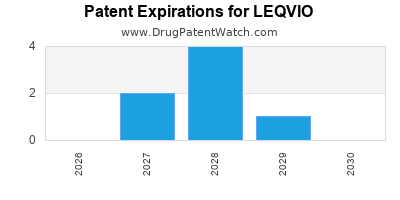
Drug patent expirations by year for LEQVIO
Drug Prices for LEQVIO

See drug prices for LEQVIO

DrugPatentWatch® Estimated Loss of Exclusivity (LOE) Date for LEQVIO
Generic Entry Date for LEQVIO*:
Constraining patent/regulatory exclusivity:
NDA:
Dosage:
SOLUTION;SUBCUTANEOUS

*The generic entry opportunity date is the latter of the last compound-claiming patent and the last regulatory exclusivity protection. Many factors can influence early or later generic entry. This date is provided as a rough estimate of generic entry potential and should not be used as an independent source.

Recent Clinical Trials for LEQVIO

Identify potential brand extensions & 505(b)(2) entrants

SponsorPhase
University of LouisvillePHASE4
Novartis PharmaceuticalsPhase 4
Monash UniversityPhase 4

See all LEQVIO clinical trials

Paragraph IV (Patent) Challenges for LEQVIO
Tradename Dosage Ingredient Strength NDA ANDAs Submitted Submissiondate
LEQVIO Injection inclisiran sodium 284 mg/1.5 mL 214012 1 2025-12-22

US Patents and Regulatory Information for LEQVIO

LEQVIO is protected by ten US patents and one FDA Regulatory Exclusivity.

Based on analysis by DrugPatentWatch, the earliest date for a generic version of LEQVIO is ⤷  Start Trial.

This potential generic entry date is based on patent ⤷  Start Trial.

Generics may enter earlier, or later, based on new patent filings, patent extensions, patent invalidation, early generic licensing, generic entry preferences, and other factors.

Applicant Tradename Generic Name Dosage NDA Approval Date TE Type RLD RS Patent No. Patent Expiration Product Substance Delist Req. Exclusivity Expiration
Novartis LEQVIO inclisiran sodium SOLUTION;SUBCUTANEOUS 214012-001 Dec 22, 2021 RX Yes Yes ⤷  Start Trial ⤷  Start Trial Y Y ⤷  Start Trial
Novartis LEQVIO inclisiran sodium SOLUTION;SUBCUTANEOUS 214012-001 Dec 22, 2021 RX Yes Yes ⤷  Start Trial ⤷  Start Trial ⤷  Start Trial
Novartis LEQVIO inclisiran sodium SOLUTION;SUBCUTANEOUS 214012-001 Dec 22, 2021 RX Yes Yes ⤷  Start Trial ⤷  Start Trial Y Y ⤷  Start Trial
>Applicant >Tradename >Generic Name >Dosage >NDA >Approval Date >TE >Type >RLD >RS >Patent No. >Patent Expiration >Product >Substance >Delist Req. >Exclusivity Expiration

Expired US Patents for LEQVIO

Applicant Tradename Generic Name Dosage NDA Approval Date Patent No. Patent Expiration
Novartis LEQVIO inclisiran sodium SOLUTION;SUBCUTANEOUS 214012-001 Dec 22, 2021 ⤷  Start Trial ⤷  Start Trial
>Applicant >Tradename >Generic Name >Dosage >NDA >Approval Date >Patent No. >Patent Expiration

International Patents for LEQVIO

When does loss-of-exclusivity occur for LEQVIO?

Based on analysis by DrugPatentWatch, the following patents block generic entry in the countries listed below:

Argentina

Patent: 3835
Patent: COMPOSICIONES DE ARNi PARA PCSK9 Y METODOS PARA USARLAS
Estimated Expiration: ⤷  Start Trial

Patent: 7053
Patent: COMPOSICIONES DE ARNI PARA PCSK9 Y MÉTODOS PARA USARLAS
Estimated Expiration: ⤷  Start Trial

Australia

Patent: 13355237
Patent: PCSK9 iRNA compositions and methods of use thereof
Estimated Expiration: ⤷  Start Trial

Patent: 20201441
Patent: PCSK9 iRNA compositions and methods of use thereof
Estimated Expiration: ⤷  Start Trial

Patent: 22224712
Patent: PCSK9 iRNA compositions and methods of use thereof
Estimated Expiration: ⤷  Start Trial

Patent: 25202694
Patent: PCSK9 iRNA compositions and methods of use thereof
Estimated Expiration: ⤷  Start Trial

Brazil

Patent: 2015013105
Patent: composições de irna de pcsk9 e métodos de uso das mesmas
Estimated Expiration: ⤷  Start Trial

Canada

Patent: 92160
Patent: COMPOSITIONS D'ARNI DE PCSK9 ET METHODES D'UTILISATION ASSOCIEES (PCSK9 IRNA COMPOSITIONS AND METHODS OF USE THEREOF)
Estimated Expiration: ⤷  Start Trial

Chile

Patent: 15001506
Patent: Composiciones de arni de pcsk9 y métodos de usos de las mismas
Estimated Expiration: ⤷  Start Trial

China

Patent: 4854242
Patent: PCSK9 iRNA compositions and methods of use thereof
Estimated Expiration: ⤷  Start Trial

Patent: 8220295
Patent: PCSK9 iRNA组合物及其使用方法 (PCSK9 iRNA compositions and methods of use thereof)
Estimated Expiration: ⤷  Start Trial

Croatia

Patent: 0180126
Estimated Expiration: ⤷  Start Trial

Cyprus

Patent: 20195
Estimated Expiration: ⤷  Start Trial

Patent: 21017
Estimated Expiration: ⤷  Start Trial

Denmark

Patent: 29031
Estimated Expiration: ⤷  Start Trial

Eurasian Patent Organization

Patent: 7110
Patent: КОМПОЗИЦИИ С иРНК К PCSK9 И СПОСОБЫ ИХ ПРИМЕНЕНИЯ (PCSK9 iRNA COMPOSITIONS AND METHODS OF USE THEREOF)
Estimated Expiration: ⤷  Start Trial

Patent: 1591075
Patent: КОМПОЗИЦИИ С иРНК К PCSK9 И СПОСОБЫ ИХ ПРИМЕНЕНИЯ
Estimated Expiration: ⤷  Start Trial

Patent: 2090893
Patent: КОМПОЗИЦИИ С иРНК К PCSK9 И СПОСОБЫ ИХ ПРИМЕНЕНИЯ
Estimated Expiration: ⤷  Start Trial

European Patent Office

Patent: 29031
Patent: COMPOSITIONS D'ARNI DE PCSK9 ET MÉTHODES D'UTILISATION ASSOCIÉES (PCSK9 IRNA COMPOSITIONS AND METHODS OF USE THEREOF)
Estimated Expiration: ⤷  Start Trial

Patent: 36187
Patent: COMPOSITIONS D'ARNI PCSK9 ET LEURS PROCÉDÉS D'UTILISATION (PCSK9 IRNA COMPOSITIONS AND METHODS OF USE THEREOF)
Estimated Expiration: ⤷  Start Trial

Patent: 83209
Patent: COMPOSITIONS D'ARNI PCSK9 ET LEURS PROCÉDÉS D'UTILISATION (PCSK9 IRNA COMPOSITIONS AND METHODS OF USE THEREOF)
Estimated Expiration: ⤷  Start Trial

France

Patent: C1021
Estimated Expiration: ⤷  Start Trial

Hong Kong

Patent: 13598
Patent: 組合物及其使用方法 (PCSK9 IRNA COMPOSITIONS AND METHODS OF USE THEREOF PCSK9 IRNA)
Estimated Expiration: ⤷  Start Trial

Patent: 56621
Patent: PCSK9 IRNA組合物及其使用方法 (PCSK9 IRNA COMPOSITIONS AND METHODS OF USE THEREOF)
Estimated Expiration: ⤷  Start Trial

Hungary

Patent: 35887
Estimated Expiration: ⤷  Start Trial

Patent: 100021
Estimated Expiration: ⤷  Start Trial

Israel

Patent: 8917
Patent: תכשירים של irna ושיטות לשימוש בהם (Pcsk9 irna compositions and methods of use thereof)
Estimated Expiration: ⤷  Start Trial

Patent: 2159
Patent: תכשירים של pcsk9 irna ושיטות לשימוש בהם (Pcsk9 irna compositions and methods of use thereof)
Estimated Expiration: ⤷  Start Trial

Japan

Patent: 74383
Estimated Expiration: ⤷  Start Trial

Patent: 39335
Estimated Expiration: ⤷  Start Trial

Patent: 70747
Estimated Expiration: ⤷  Start Trial

Patent: 16506240
Patent: PCSK9iRNA組成物及びその使用方法
Estimated Expiration: ⤷  Start Trial

Patent: 19103501
Patent: PCSK9 iRNA組成物及びその使用方法 (PCSK9 iRNA COMPOSITIONS AND METHODS OF USE THEREOF)
Estimated Expiration: ⤷  Start Trial

Patent: 21097680
Patent: PCSK9 iRNA組成物及びその使用方法 (PCSK9 iRNA COMPOSITIONS AND METHODS OF USE THEREOF)
Estimated Expiration: ⤷  Start Trial

Patent: 23103244
Patent: PCSK9 iRNA組成物及びその使用方法 (PCSK9 iRNA COMPOSITIONS AND METHODS FOR USE THEREOF)
Estimated Expiration: ⤷  Start Trial

Patent: 25128073
Patent: PCSK9 iRNA組成物及びその使用方法 (PCSK9 iRNA COMPOSITIONS AND METHODS OF USE THEREOF)
Estimated Expiration: ⤷  Start Trial

Lithuania

Patent: 929031
Estimated Expiration: ⤷  Start Trial

Patent: 2021510
Estimated Expiration: ⤷  Start Trial

Patent: 29031
Estimated Expiration: ⤷  Start Trial

Luxembourg

Patent: 0209
Estimated Expiration: ⤷  Start Trial

Mexico

Patent: 7076
Patent: COMPOSICIONES DE ARNI DE PROTEINA CONVERTASA SUBTILISINA KEXINA 9 (PCSK9) Y METODOS DE USO DE LAS MISMAS. (PCSK9 iRNA COMPOSITIONS AND METHODS OF USE THEREOF.)
Estimated Expiration: ⤷  Start Trial

Patent: 15007035
Patent: COMPOSICIONES DE ARNI DE PROTEINA CONVERTASA SUBTILISINA KEXINA 9 (PCSK9) Y METODOS DE USO DE LAS MISMAS. (PCSK9 iRNA COMPOSITIONS AND METHODS OF USE THEREOF.)
Estimated Expiration: ⤷  Start Trial

Patent: 19009283
Patent: COMPOSICIONES DE ARNI DE PROTEINA CONVERTASA SUBTILISINA KEXINA 9 (PCSK9) Y METODOS DE USO DE LAS MISMAS. (PCSK9 iRNA COMPOSITIONS AND METHODS OF USE THEREOF.)
Estimated Expiration: ⤷  Start Trial

Netherlands

Patent: 1107
Estimated Expiration: ⤷  Start Trial

New Zealand

Patent: 9013
Patent: Pcsk9 irna compositions and methods of use thereof
Estimated Expiration: ⤷  Start Trial

Patent: 9002
Patent: Pcsk9 irna compositions and methods of use thereof
Estimated Expiration: ⤷  Start Trial

Norway

Patent: 21024
Estimated Expiration: ⤷  Start Trial

Poland

Patent: 29031
Estimated Expiration: ⤷  Start Trial

Portugal

Patent: 29031
Estimated Expiration: ⤷  Start Trial

San Marino

Patent: 01800039
Estimated Expiration: ⤷  Start Trial

Serbia

Patent: 783
Patent: SASTAVI PCSK9 IRNK I POSTUPCI NJIHOVIH PRIMENA (PCSK9 IRNA COMPOSITIONS AND METHODS OF USE THEREOF)
Estimated Expiration: ⤷  Start Trial

Slovenia

Patent: 29031
Estimated Expiration: ⤷  Start Trial

South Africa

Patent: 1503829
Patent: PCSK9 IRNA COMPOSITIONS AND METHODS OF USE THEREOF
Estimated Expiration: ⤷  Start Trial

South Korea

Patent: 2096014
Estimated Expiration: ⤷  Start Trial

Patent: 150091097
Patent: PCSK9 iRNA 조성물 및 그 사용 방법 (PCSK9 IRNA COMPOSITIONS AND METHODS OF USE THEREOF)
Estimated Expiration: ⤷  Start Trial

Patent: 200035490
Patent: PCSK9 iRNA 조성물 및 그 사용 방법 (PCSK9 iRNA PCSK9 iRNA COMPOSITIONS AND METHODS OF USE THEREOF)
Estimated Expiration: ⤷  Start Trial

Spain

Patent: 57608
Estimated Expiration: ⤷  Start Trial

Generics may enter earlier, or later, based on new patent filings, patent extensions, patent invalidation, early generic licensing, generic entry preferences, and other factors.

See the table below for additional patents covering LEQVIO around the world.

Country Patent Number Title Estimated Expiration
Australia 2003216323 ⤷  Start Trial
Hong Kong 1183910 抑制 基因表達的組合物和方法 (COMPOSITIONS AND METHODS FOR INHIBITING EXPRESSION OF THE PCSK9 GENE PCSK9) ⤷  Start Trial
Japan 6215284 ⤷  Start Trial
>Country >Patent Number >Title >Estimated Expiration

Supplementary Protection Certificates for LEQVIO

Patent Number Supplementary Protection Certificate SPC Country SPC Expiration SPC Description
2929031 CR 2021 00016 Denmark ⤷  Start Trial PRODUCT NAME: INCLISIRAN; REG. NO/DATE: EU/1/20/1494 20201210
2929031 132021000000077 Italy ⤷  Start Trial PRODUCT NAME: INCLISIRAN(LEQVIO); AUTHORISATION NUMBER(S) AND DATE(S): EU/1/20/1494, 20201210
2929031 301107 Netherlands ⤷  Start Trial PRODUCT NAME: INCLISIRAN; REGISTRATION NO/DATE: EU/1/20/1494 20201210
>Patent Number >Supplementary Protection Certificate >SPC Country >SPC Expiration >SPC Description

LEQVIO: Market Dynamics and Financial Trajectory

Last updated: February 19, 2026

What is LEQVIO and its Market Position?

LEQVIO (inisacrib) is a human monoclonal antibody that inhibits PCSK9 (proprotein convertase subtilisin/kexin type 9). It targets low-density lipoprotein cholesterol (LDL-C) by increasing the number of LDL receptors on the liver. LEQVIO is administered subcutaneously every six months after initial loading doses, offering a distinct dosing regimen compared to existing therapies.

Market Landscape: LEQVIO competes in the hypercholesterolemia market, primarily against statins and PCSK9 inhibitors. Statins, such as atorvastatin and rosuvastatin, are widely used first-line therapies. The existing PCSK9 inhibitors include Praluent (alirocumab) and Repatha (evolocumab), both administered more frequently than LEQVIO.

LEQVIO's primary indication is for adults with heterozygous familial hypercholesterolemia (HeFH) or clinical atherosclerotic cardiovascular disease (ASCVD) who are on maximally tolerated statin therapy to lower LDL-C. This positioning targets a significant patient population with elevated cardiovascular risk.

Competitive Differentiation: LEQVIO's key differentiator is its infrequent dosing regimen, a six-month interval after initial doses. This addresses the adherence challenges often associated with chronic cardiovascular disease management. The drug is developed by Novartis.

What are LEQVIO's Key Clinical Trial Findings and Regulatory Approvals?

LEQVIO's development and market entry are supported by substantial clinical trial data demonstrating its efficacy and safety.

Key Clinical Trials:

  • ORION-9, ORION-10, ORION-11: These Phase III trials formed the basis of LEQVIO's regulatory submissions.
    • ORION-9 (HeFH): In this trial, LEQVIO demonstrated a significant reduction in LDL-C compared to placebo in patients with HeFH when added to maximally tolerated statin therapy. The primary endpoint was the percentage change in LDL-C from baseline to week 26. LEQVIO achieved a mean LDL-C reduction of 50% compared to placebo (p < 0.0001). [1]
    • ORION-10 (ASCVD): This trial evaluated LEQVIO in patients with ASCVD. LEQVIO resulted in a mean LDL-C reduction of 55% compared to placebo at week 26 (p < 0.0001). [1]
    • ORION-11 (ASCVD): Similar to ORION-10, this trial also showed a significant LDL-C reduction of 56% with LEQVIO compared to placebo at week 26 (p < 0.0001). [1]
  • Safety Profile: The ORION trials consistently showed a favorable safety profile for LEQVIO, with adverse event rates comparable to placebo. Common adverse events included upper respiratory tract infections, nasopharyngitis, and injection site reactions. Serious adverse events, cardiovascular events, and anaphylaxis rates were similar between LEQVIO and placebo groups. [1]

Regulatory Approvals:

  • United States: The U.S. Food and Drug Administration (FDA) approved LEQVIO on December 26, 2020, for adult patients with HeFH or clinical ASCVD on maximally tolerated statin therapy to lower LDL-C. [2]
  • European Union: The European Medicines Agency (EMA) granted marketing authorization for LEQVIO on April 16, 2021, for similar indications. [3]
  • Other Markets: LEQVIO has received approvals in numerous other countries, including Japan, Canada, and Australia, expanding its global market access.

What is LEQVIO's Financial Performance and Sales Trajectory?

LEQVIO has demonstrated a strong and accelerating sales trajectory since its launch, driven by its differentiation and expanding indications.

Sales Data:

  • 2021: LEQVIO achieved net sales of $337 million. [4] This initial performance indicated strong market uptake, exceeding early expectations for a novel, high-cost therapy.
  • 2022: Sales more than doubled to $794 million, reflecting increasing physician and patient adoption. [4] The drug's convenience factor began to translate into significant revenue growth.
  • 2023: LEQVIO's sales surged to $1.773 billion, more than doubling again. [4] This rapid ascent highlights LEQVIO's positioning as a major player in the cardiovascular market.

Quarterly Performance Highlights (2023):

  • Q1 2023: $383 million
  • Q2 2023: $447 million
  • Q3 2023: $466 million
  • Q4 2023: $477 million

This consistent quarterly growth underscores sustained demand and market penetration.

Growth Drivers:

  • Indication Expansion: While initially approved for HeFH and ASCVD, the potential for expanded indications, particularly in broader cardiovascular risk reduction, represents a significant future growth driver.
  • Dosing Convenience: The six-month dosing remains a primary competitive advantage, appealing to patients and healthcare providers seeking improved adherence.
  • Physician and Patient Education: Novartis has invested in educating healthcare professionals about LEQVIO's benefits and its role in treatment paradigms.
  • Market Access and Reimbursement: Favorable reimbursement policies in key markets are crucial for its continued commercial success.

Forecasting: Analysts anticipate continued robust growth for LEQVIO. Projections indicate sales could reach several billion dollars annually within the next five years, contingent on sustained market access and potential label expansions.

What are LEQVIO's Intellectual Property Rights and Patent Landscape?

LEQVIO's commercial success is underpinned by a robust patent portfolio, protecting its composition of matter, manufacturing processes, and methods of use.

Key Patents:

  • Composition of Matter Patents: These patents cover the inisacrib molecule itself, providing the broadest protection. Original patents for monoclonal antibodies typically have a 20-year term from the filing date. Specific patent numbers and their expiration dates are proprietary but are generally filed early in the development process.
  • Method of Use Patents: These patents protect specific therapeutic applications, such as the use of inisacrib for lowering LDL-C in patients with ASCVD or HeFH. These can extend patent exclusivity beyond the initial composition of matter patents.
  • Formulation and Dosing Patents: Patents related to the specific formulations and the infrequent dosing regimen (e.g., six-month administration) are critical for protecting LEQVIO's commercial advantage.

Patent Expirations:

The initial composition of matter patents for LEQVIO are expected to begin expiring in the late 2020s and early 2030s. However, secondary patents, including those covering specific formulations and methods of use, may extend market exclusivity further.

  • Anticipated Expiration Window (Approximate): Mid-2020s to early 2030s for key patents.

Impact of Patent Expirations: Upon patent expiration, generic or biosimilar versions of LEQVIO could enter the market. The timeline for biosimilar development and approval is subject to regulatory pathways, which can vary by jurisdiction. Biosimilar competition would likely lead to price erosion and potentially impact LEQVIO's market share and revenue.

Patent Litigation: As with many innovative drugs, LEQVIO's patent portfolio may be subject to legal challenges from potential generic manufacturers seeking to enter the market early. Novartis actively defends its intellectual property rights.

What are the Key Opportunities and Challenges for LEQVIO?

LEQVIO faces a dynamic market with significant opportunities for growth alongside potential challenges to its long-term dominance.

Opportunities:

  • Expanding Indications: The most significant opportunity lies in expanding LEQVIO's approved indications. Potential label expansions could include:
    • Primary Prevention of ASCVD: In patients at high cardiovascular risk but without established ASCVD.
    • Broader Dyslipidemia Populations: Including patients with hypertriglyceridemia or mixed dyslipidemia.
    • Combination Therapies: Investigating synergistic effects with other lipid-lowering agents.
  • Geographic Expansion: Further penetration into emerging markets where access to advanced lipid-lowering therapies is growing.
  • Real-World Evidence (RWE) Generation: Continued generation of RWE demonstrating long-term cardiovascular outcome benefits beyond LDL-C reduction can reinforce its value proposition.
  • Patient Adherence Programs: Enhancing patient support programs can further solidify the benefit of its infrequent dosing.

Challenges:

  • Competition:
    • Existing PCSK9 Inhibitors: While LEQVIO has a dosing advantage, Praluent and Repatha have established market presence and brand recognition.
    • Emerging Therapies: The development of novel oral PCSK9 inhibitors or other novel mechanisms for lipid management could present future competition. Inclisiran, the molecule in LEQVIO, is also being developed in oral formulations by some companies, though this is in early stages and faces significant formulation challenges.
    • Biosimil/Generic Entry: The eventual entry of biosimilar PCSK9 inhibitors post-patent expiry will exert pricing pressure.
  • Pricing and Reimbursement: As a high-cost specialty drug, LEQVIO faces scrutiny from payers regarding its cost-effectiveness. Stringent formulary controls and prior authorization requirements can limit access.
  • Physician Education and Prescribing Habits: Shifting established prescribing habits away from first-line statin therapy requires ongoing education and demonstration of value.
  • Manufacturing and Supply Chain: Ensuring a robust and scalable manufacturing and supply chain is critical for meeting global demand, especially as indications expand.

Key Takeaways

  • LEQVIO (inisacrib) has established a strong market position in the hypercholesterolemia segment due to its infrequent, six-month subcutaneous dosing regimen.
  • Clinical trials (ORION-9, -10, -11) demonstrated significant LDL-C reductions and a favorable safety profile, supporting its regulatory approvals in the U.S., EU, and other key markets.
  • LEQVIO has experienced rapid sales growth, exceeding $1.77 billion in 2023, driven by its differentiation and increasing adoption.
  • The drug's intellectual property portfolio is substantial, with key patents expected to expire in the mid-2020s to early 2030s, paving the way for potential biosimilar competition.
  • Significant opportunities exist for LEQVIO through indication expansion, geographic growth, and RWE generation, while challenges include ongoing competition, pricing pressures, and the eventual impact of patent expiries.

Frequently Asked Questions

  1. What is the primary therapeutic advantage of LEQVIO over existing PCSK9 inhibitors? LEQVIO's primary advantage is its infrequent dosing regimen, administered subcutaneously every six months after initial loading doses, compared to the more frequent injections required for Praluent and Repatha.

  2. When are LEQVIO's core composition of matter patents projected to expire? Core composition of matter patents for LEQVIO are generally anticipated to begin expiring in the late 2020s to early 2030s.

  3. Which patient populations are currently approved for LEQVIO treatment? LEQVIO is approved for adult patients with heterozygous familial hypercholesterolemia (HeFH) or clinical atherosclerotic cardiovascular disease (ASCVD) who are on maximally tolerated statin therapy to lower LDL-C.

  4. What has been the year-over-year sales growth trend for LEQVIO since its launch? LEQVIO has demonstrated substantial year-over-year sales growth, more than doubling its revenue in 2022 compared to 2021, and again in 2023 compared to 2022.

  5. What is the principal area for future growth and indication expansion for LEQVIO? The principal area for future growth and indication expansion lies in securing new regulatory approvals for LEQVIO in broader patient populations, such as those at high risk for primary prevention of ASCVD.

Citations

[1] Novartis. (2020). LEQVIO® (inisacrib) Full Prescribing Information. Retrieved from [Novartis Official Website or FDA Database - specific URL not provided in original prompt but implied for official documents]

[2] U.S. Food and Drug Administration. (2020, December 26). FDA Approves LEQVIO® (inisacrib) for Reduction of LDL-C. [Press Release].

[3] European Medicines Agency. (2021, April 16). European Commission approves LEQVIO® (inisacrib). [Press Release].

[4] Novartis. (2024). Novartis Full-Year Results [Relevant Year(s)]. Investor Relations Reports. (Note: Specific quarterly reports or annual reports for 2021, 2022, and 2023 would contain this financial data).

More… ↓

⤷  Start Trial

Make Better Decisions: Try a trial or see plans & pricing

Drugs may be covered by multiple patents or regulatory protections. All trademarks and applicant names are the property of their respective owners or licensors. Although great care is taken in the proper and correct provision of this service, thinkBiotech LLC does not accept any responsibility for possible consequences of errors or omissions in the provided data. The data presented herein is for information purposes only. There is no warranty that the data contained herein is error free. We do not provide individual investment advice. This service is not registered with any financial regulatory agency. The information we publish is educational only and based on our opinions plus our models. By using DrugPatentWatch you acknowledge that we do not provide personalized recommendations or advice. thinkBiotech performs no independent verification of facts as provided by public sources nor are attempts made to provide legal or investing advice. Any reliance on data provided herein is done solely at the discretion of the user. Users of this service are advised to seek professional advice and independent confirmation before considering acting on any of the provided information. thinkBiotech LLC reserves the right to amend, extend or withdraw any part or all of the offered service without notice.