Last updated: February 19, 2026
Ketoprofen, a nonsteroidal anti-inflammatory drug (NSAID), exhibits a mature market characterized by established generics and a consistent, albeit slow-growing, demand driven by its efficacy in pain and inflammation management. The compound's patent landscape is largely expired in major markets, leading to significant price competition among manufacturers. The financial trajectory of ketoprofen is predominantly shaped by volume sales rather than price appreciation, with incremental growth opportunities stemming from regional market penetration and specific therapeutic niche applications.
What is the global market size for ketoprofen?
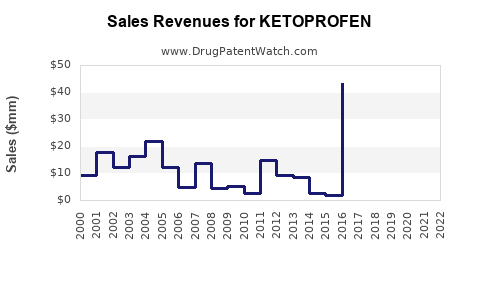
The global market for ketoprofen is estimated to be approximately $1.2 billion as of 2023. This figure encompasses both active pharmaceutical ingredient (API) and finished dosage forms. The market has demonstrated a compound annual growth rate (CAGR) of 1.8% between 2020 and 2023. Projections indicate a continued modest expansion, with an estimated CAGR of 1.9% anticipated for the period between 2024 and 2029, reaching an estimated $1.35 billion by 2029 [1, 2].
The market size is bifurcated by product type, with oral formulations representing the larger segment, accounting for roughly 70% of the total market value. Topical formulations, including gels and creams, constitute the remaining 30%, driven by localized pain relief applications [2]. Geographically, North America and Europe represent the largest markets, collectively holding an estimated 55% of the global share, attributed to established healthcare infrastructures and high prevalence of inflammatory conditions. Asia-Pacific is the fastest-growing region, with an estimated CAGR of 2.5%, fueled by increasing healthcare expenditure and a rising middle class [1, 3].
What is the patent landscape for ketoprofen?
Ketoprofen's primary compound patents expired in the early 2000s. The original patent for ketoprofen was filed by Rhône-Poulenc S.A. (now part of Sanofi) in 1966 [4]. Major market patents in the United States and Europe expired around 2006 [5].
While the core compound patents are expired, intellectual property activity continues in related areas. This includes:
- Formulation Patents: Development of novel delivery systems, such as sustained-release oral formulations or advanced topical preparations, can garner limited patent protection. For instance, patents might cover specific excipients, particle sizes, or manufacturing processes that enhance bioavailability or improve patient compliance.
- Combination Therapies: Patents may be filed for formulations that combine ketoprofen with other active pharmaceutical ingredients to achieve synergistic effects or broader therapeutic coverage.
- Method of Use Patents: While less common for a well-established drug, new indications or novel treatment regimens for ketoprofen could be patentable, though such opportunities are significantly constrained given its long history of use.
The majority of current patent filings related to ketoprofen are concentrated in emerging markets or focus on incremental improvements rather than fundamental therapeutic innovations [6]. The generic nature of ketoprofen's API means that the bulk of market competition is driven by manufacturing efficiency and cost of goods sold, rather than the exclusivity offered by new patents.
Who are the key manufacturers of ketoprofen?
The manufacturing landscape for ketoprofen is highly fragmented, dominated by generic API producers and finished dosage form manufacturers. Key players in the API segment include:
- Sunrise Pharmaceuticals
- Granules India Ltd.
- Lupin Limited
- Aarti Industries Limited
- Hetero Drugs
- Divi's Laboratories
These companies operate large-scale manufacturing facilities, often in India and China, to produce ketoprofen API cost-effectively for the global market [1, 7].
In the finished dosage form segment, numerous pharmaceutical companies produce and market ketoprofen products. These include both multinational corporations and regional generic manufacturers. Notable examples of companies marketing ketoprofen products include:
- Sanofi: The originator company, which still markets branded ketoprofen (e.g., Orudis, Fastum) in various regions.
- Teva Pharmaceutical Industries
- Mylan N.V. (now Viatris)
- Sandoz (Novartis)
- Hikma Pharmaceuticals
The competitive landscape is characterized by intense price pressure, with market share largely determined by production volume, distribution networks, and regulatory compliance [8].
What are the primary therapeutic applications and market drivers for ketoprofen?
Ketoprofen is primarily prescribed for the relief of pain and inflammation associated with:
- Osteoarthritis: Degenerative joint disease causing pain and stiffness [9].
- Rheumatoid Arthritis: An autoimmune disorder leading to chronic inflammation of the joints [9].
- Ankylosing Spondylitis: A type of inflammatory arthritis primarily affecting the spine [9].
- Acute Musculoskeletal Disorders: Including sprains, strains, and other soft tissue injuries.
- Post-operative Pain: Management of pain following surgical procedures.
- Dysmenorrhea: Painful menstrual periods.
The market drivers for ketoprofen are consistent with its therapeutic profile:
- Prevalence of Inflammatory Conditions: The aging global population and increasing incidence of chronic diseases like arthritis drive consistent demand for pain and inflammation management [1].
- Cost-Effectiveness: As a generic medication, ketoprofen offers a cost-effective alternative to newer, branded NSAIDs, making it a preferred choice in many healthcare systems, particularly in developing economies [8].
- Availability in Multiple Formulations: The availability of oral tablets, capsules, suppositories, and topical gels caters to diverse patient needs and preferences for localized vs. systemic relief [2].
- Established Safety and Efficacy Profile: Decades of clinical use have established ketoprofen's safety and efficacy, leading to physician confidence and patient familiarity [9].
What are the challenges and restraints in the ketoprofen market?
Despite its established position, the ketoprofen market faces several challenges and restraints:
- Competition from Other NSAIDs: Ketoprofen competes with a wide array of other NSAIDs, including ibuprofen, naproxen, diclofenac, and celecoxib. Newer selective COX-2 inhibitors offer potentially improved gastrointestinal safety profiles, posing a competitive threat, especially for long-term use [10].
- Side Effects and Safety Concerns: Like all NSAIDs, ketoprofen carries risks of gastrointestinal bleeding, cardiovascular events, and renal impairment, particularly with prolonged use or in susceptible individuals [11]. These risks can lead to prescribing hesitancy and a preference for alternative analgesics or pain management strategies.
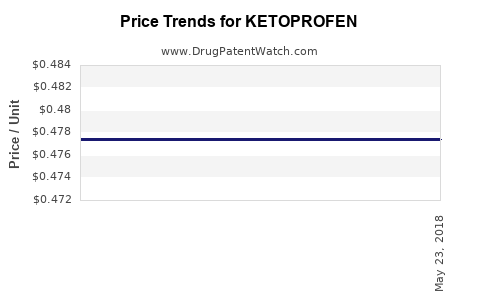
- Genericization and Price Erosion: The absence of patent protection has led to intense price competition, squeezing profit margins for manufacturers. This necessitates high-volume production and efficient supply chains to remain profitable [8].
- Regulatory Scrutiny: Regulatory bodies continuously monitor NSAID safety. Adverse event reporting and potential label changes can impact market perception and demand [11].
- Limited Innovation: The mature nature of the ketoprofen market offers limited scope for significant R&D investment in novel formulations or therapeutic indications. Growth is primarily driven by market share acquisition rather than product differentiation [6].
- Rise of Biologics and Advanced Therapies: For certain inflammatory conditions like rheumatoid arthritis, the advent of biologic drugs and other advanced therapies offers more targeted and effective treatments, potentially reducing reliance on traditional NSAIDs for severe cases [12].
What is the financial outlook and profitability for ketoprofen manufacturers?
The financial outlook for ketoprofen manufacturers is characterized by stable, volume-driven revenues with moderate profitability. Profitability is heavily influenced by:
- Cost of Goods Sold (COGS): Efficient API synthesis, bulk purchasing of raw materials, and optimized manufacturing processes are critical for maintaining competitive pricing and healthy margins [7, 8]. Manufacturers with vertically integrated supply chains often have an advantage.
- Economies of Scale: Large-scale production facilities enable lower per-unit manufacturing costs, directly impacting profitability. Companies with significant production capacity are better positioned to compete on price.
- Market Access and Distribution: Strong relationships with distributors, wholesalers, and hospital pharmacies are essential for securing market share and ensuring consistent sales volume. Regional market penetration and the establishment of robust distribution networks are key [1].
- Regulatory Compliance Costs: Maintaining compliance with Good Manufacturing Practices (GMP) and other regulatory standards across different markets adds to operational costs.
- Branding and Marketing (Limited): While primarily a generic market, some manufacturers leverage brand recognition and targeted marketing for specific formulations or patient demographics, which can support slightly higher price points and margins.
Overall, profitability in the ketoprofen market is measured in basis points rather than large percentage gains. Companies that can achieve high operational efficiency, secure low-cost raw materials, and maintain consistent, high-volume sales are likely to sustain their financial performance. The financial trajectory is not one of rapid growth but rather of steady, predictable revenue streams derived from a widely used, essential medication. Companies are more likely to achieve financial success through efficiency gains and market consolidation than through groundbreaking innovation.
Key Takeaways
- The global ketoprofen market is mature, valued at approximately $1.2 billion in 2023, with projected modest growth of 1.9% CAGR through 2029.
- Core compound patents have expired, leading to a highly competitive generic market dominated by API manufacturers primarily in Asia.
- Key market drivers include the prevalence of inflammatory conditions and ketoprofen's cost-effectiveness.
- Challenges include intense competition from other NSAIDs, potential side effects, price erosion due to genericization, and the rise of advanced therapies.
- Profitability for manufacturers relies heavily on economies of scale, efficient supply chains, cost control, and robust distribution networks rather than product innovation or pricing power.
Frequently Asked Questions
-
Are there any significant patent expirations expected in the near future that could impact ketoprofen availability or pricing?
No, the primary compound patents for ketoprofen expired decades ago. Any patent activity now focuses on novel formulations or delivery methods, which typically offer limited market exclusivity and do not significantly alter the overall pricing dynamics of the generic API.
-
What is the typical profit margin for generic ketoprofen manufacturers?
Profit margins for generic ketoprofen API are generally low, often in the 5-15% range, varying significantly based on manufacturing efficiency, raw material costs, and market competition. Finished dosage form margins can be higher but are also subject to intense retail and distributor pressures.
-
Are there any emerging therapeutic uses for ketoprofen that could drive future market growth?
While research continues on NSAID mechanisms, significant new therapeutic indications for ketoprofen are not anticipated. Its established role in pain and inflammation management is well-defined, and growth is expected to be incremental, driven by volume in existing applications.
-
What regulatory hurdles do ketoprofen manufacturers face when entering new markets?
Manufacturers must comply with each target market's specific regulatory requirements, including API registration, finished product approval, adherence to local GMP standards, and labeling regulations. Post-market surveillance and pharmacovigilance reporting are also mandatory.
-
How does the demand for topical ketoprofen formulations compare to oral formulations?
Oral formulations of ketoprofen represent the dominant segment, accounting for approximately 70% of the market. Topical formulations constitute the remaining 30%, driven by patient preference for localized pain relief with potentially reduced systemic side effects.
Citations
[1] Global Market Insights. (2023). Ketoprofen Market Analysis Report.
[2] Grand View Research. (2023). Ketoprofen Market Size, Share & Trends Analysis Report.
[3] Mordor Intelligence. (2023). Ketoprofen Market - Growth, Trends, COVID-19 Impact, and Forecasts (2023 - 2028).
[4] Rhône-Poulenc S.A. (1966). Patent US3361747A: Process for the preparation of 2-(3-benzoylphenyl)propionic acid.
[5] European Patent Office. (n.d.). Patent Search Database. Retrieved from espacenet.com
[6] Pharmaceutical Intellectual Property & Markets. (2022). Analysis of Pharmaceutical Patent Filings for NSAIDs.
[7] IndiaMART. (2023). Ketoprofen API Manufacturers. Retrieved from indiamart.com
[8] World Health Organization. (2021). The Pharmaceutical Landscape: Generic Competition and Access to Medicines.
[9] National Institute of Arthritis and Musculoskeletal and Skin Diseases. (2022). Osteoarthritis. Retrieved from niams.nih.gov
[10] Davies, N. M. (2005). Pharmacology and toxicity of non-steroidal anti-inflammatory drugs. British Journal of Clinical Pharmacology, 60(6), 571–577.
[11] Food and Drug Administration. (2021). NSAIDs: Consumer Information. Retrieved from fda.gov
[12] Smolen, J. S., Aletaha, D., & McInnes, I. B. (2014). Rheumatoid arthritis treatment targets: recommendations from the American College of Rheumatology and the European League Against Rheumatism. Annals of the Rheumatic Diseases, 73(1), 3–10.