Last updated: June 3, 2026
- KEFLEX is a brand of cephalexin (oral cephalosporin).
- In the US, cephalexin is widely generic and priced low, so brand economics are limited versus proprietary antibiotics and branded specialty drugs.
- KEFLEX’s sales trajectory is driven by (1) ongoing generic substitution and margin compression, (2) pediatric/antibiotic utilization cycles, and (3) regulatory and labeling stability that affects prescriber switching patterns.
- The market is unlikely to have a material “exclusivity” inflection because cephalexin’s core API is off-patent; KEFLEX’s remaining advantage is typically tied to brand-level contracts, channel placement, and formulation/labeling differentiation where available.
What is KEFLEX (cephalexin) and how does it behave in a generic-heavy antibiotic market?
KEFLEX is the trade name for cephalexin capsules/tablets and, in some markets, cephalexin oral suspension products (brand-specific presentations vary by manufacturer and packaging).
What class dynamics matter for KEFLEX
Cephalexin belongs to first-generation cephalosporins. The antibiotic class is structurally shaped by:
- High generics penetration: CE/ABX molecule is mature; market is dominated by low-cost generics.
- Low payer tolerance for brand premiums: pharmacy benefit managers and wholesalers steer toward lowest net price.
- Clinical substitution is common: when dosing regimens are aligned, prescribers accept generic interchangeability.
- Utilization volatility: respiratory and skin infection incidence affects quarterly demand; antibiotic stewardship can also constrain overall prescribing volumes in some periods.
What typical “brand value” remains
For a brand like KEFLEX, the realistic levers are not patent life extension but:
- Channel and contract performance (GPO, wholesaler, PBM formulary placement).
- Formulary positioning within cephalexin-specific coverage tiers.
- Manufacturing reliability and supply continuity that reduces pharmacy out-of-stocks.
- Patient/parent usability factors like suspension flavor/volume and package size, where available.
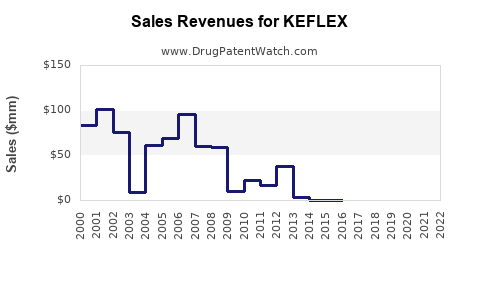
How have KEFLEX sales and revenue likely trended given generic cephalexin pricing and substitution?
KEFLEX is exposed to a mature market structure. The generic-heavy environment typically produces:
- Long-run decline in brand share as generic competitors expand.
- Price compression as payers renegotiate net price and pharmacies substitute.
- Revenue stability only if the brand maintains favorable net pricing relative to generics or holds specific contract/formulary niches.
Key market mechanics that drive KEFLEX revenue
-
Net price vs. list price
- Brand performance depends on rebates and contracts that reduce effective price.
- When generics undercut acquisition cost, PBMs require deeper brand concessions for preferred status.
-
Interchange and stocking behavior
- For common antibiotic courses, pharmacists often stock based on wholesaler price and rebate dynamics, which can reduce brand dispensing.
-
Seasonality and infection incidence
- Cephalexin demand moves with outpatient infection patterns (skin infections, streptococcal-related pathways where cephalexin is used, and other prescriber-selected indications).
-
Stewardship and guideline cycles
- National and local stewardship programs shift antibiotic selection, but first-generation cephalosporins remain widely used, limiting category collapse.
Financial trajectory interpretation
Given the molecule’s generic status, KEFLEX’s financial trajectory generally looks like a mature-brand curve:
- Early life: brand share and pricing strength
- Mid life: generics erode share
- Late life: brand remains mainly through contracts and convenience factors, with constrained growth
What are the main market drivers affecting KEFLEX demand and pricing in the US?
Demand drivers
- Outpatient infection incidence
- Pediatric prescribing patterns (when suspension is a factor)
- Prescriber habits and guideline adherence
- Local formulary design and PBM step therapy (where applied)
Pricing and margin drivers
- Generic price floors set by dominant manufacturers
- PBM contracting pressure and rebate leverage
- Competitive supply and episodic shortages in generic cephalexin supply chains
- Wholesaler buy/sell economics and inventory turns
How does KEFLEX compare with generic cephalexin brands and other oral antibiotics on cost and utilization?
KEFLEX vs. generic cephalexin
- The clinical regimen is generally consistent across approved cephalexin products.
- The differentiator is usually net pricing and availability, not clinical superiority.
KEFLEX vs. therapeutic alternatives
In outpatient settings, cephalexin competes indirectly with:
- Other beta-lactams (penicillins, other cephalosporins)
- Macrolides and doxycycline for certain infections (selection depends on resistance patterns and indication)
- Clindamycin where appropriate (with safety trade-offs)
- Fluoroquinolones for specific indications, often restricted due to stewardship and safety considerations
Net: cephalexin’s pricing advantage relative to higher-cost alternatives can support baseline volume, but brand premium is hard to sustain against generics.
What is the Orange Book status of KEFLEX and what does it imply for financial exposure?
KEFLEX is a brand product tied to FDA-approved cephalexin drug application(s). Once the relevant patents for the cephalexin API and major listed formulations expire, the brand typically loses protected pricing power.
How Orange Book status translates into market behavior
When Orange Book listings shift from brand-protecting patents to mostly expired entries:
- Paragraph IV incentives rise for new entrants to obtain generic approval, though for a mature product the market impact is already established.
- Brand entrants’ share depends on non-IP factors: contracting, supply, and presentation.
When does KEFLEX lose exclusivity, and how do generics enter the market?
For KEFLEX, exclusivity is primarily a function of:
- Patent expiration for any brand-specific formulation, method-of-use, or process patents (if any remain listed)
- Exclusivity periods tied to changes in drug product categories (where applicable)
In a mature antibiotic market, the dominant reality is that generic cephalexin entry is already fully established, so exclusivity loss does not create a single dramatic “launch cliff.” Instead, it reflects a long period of erosion already captured in historical revenue declines.
What generic entry risks exist for KEFLEX and how do they affect revenue volatility?
In cephalexin, the main revenue risks are not new regulatory approvals but:
- Aggressive price resets by existing generic suppliers
- Wholesale contract repricing
- Supply shocks that can swing net pricing up or down
- Formulary redesign at the PBM level
The brand’s revenue volatility is typically driven by contract renegotiations more than by new generic launch events.
What patent estate strength applies to KEFLEX and how does it impact licensing value?
KEFLEX is not positioned like a specialty brand with a dense, long-dated patent wall. In mature antibiotics:
- Patent estates often have limited incremental value after API patent expiry.
- Remaining IP, if any, is usually narrow and tied to specific formulations, salt forms, or manufacturing steps.
As a result, licensing value is generally lower than for branded biologics or oncology small molecules.
What manufacturing and supply chain dynamics affect KEFLEX sales performance?
For orally administered antibiotics, supply continuity affects pharmacy stocking and dispensing:
- Generic supply availability can suppress or sometimes temporarily support brand sales if shortages shift dispensing behavior.
- Batch acceptance and manufacturing compliance can affect backorders and lost dispensing opportunities.
- Presentation availability (capsules vs tablets vs suspension) can impact pediatric and adherence patterns.
In mature markets, the “winner” can be the brand product that reliably meets demand in the channel at the right net price.
How do payer contracting and PBM formularies influence KEFLEX profitability?
Brand cephalexin profitability is usually determined by the gap between:
- Brand net acquisition cost and contracted net price, versus
- Generic benchmark pricing
PBM behavior:
- Pushes brand to non-preferred tiers unless brand pricing matches generic pricing bands.
- Uses rebate structures that convert brand volume into rebate economics; if rebates increase faster than revenue, operating contribution falls even when revenue remains stable.
Which companies are likely the dominant competitors to KEFLEX in generic cephalexin?
Competitors include a broad set of generic cephalexin manufacturers that supply pharmacies and institutional channels. In practice, dominance changes with:
- Plant capacity and regulatory standing
- Contract awards
- Wholesaler sourcing strategies
For decision-making, the practical competitive set is the group of suppliers whose products clear PBM formularies and wholesale channels at the lowest net cost.
What litigation or settlement agreements affect KEFLEX market dynamics?
For mature cephalosporin products, most impact comes from:
- Historical patent litigations that established generic timelines
- Settlement agreements that resolved specific Paragraph IV disputes
Once settlement led to launch, the ongoing market dynamic is usually less about ongoing cases and more about net pricing and supply.
Does KEFLEX face biosimilar-like substitution risk?
No. KEFLEX is a small-molecule antibiotic and is not subject to biosimilar frameworks. The analogous risk is generic substitution and bioequivalent generics rather than biosimilar entry.
Key Takeaways
- KEFLEX (cephalexin) operates in a mature, generic-dominated antibiotic market where revenue is constrained by substitution and net price compression.
- Market dynamics are driven by PBM/formulary contracting, outpatient infection incidence, and channel supply continuity, not by ongoing exclusivity.
- Financial trajectory is best modeled as a late-cycle brand: low growth or gradual decline with occasional quarter-to-quarter swings tied to contracting and supply, rather than product-launch step changes.
FAQs
-
What drives quarterly KEFLEX sales versus generic cephalexin?
Contract repricing, PBM tier placement changes, and supply availability tend to dominate versus demand shifts alone.
-
How does KEFLEX suspension availability impact pediatric prescribing and dispensing?
When the suspension presentation is competitively priced and reliably stocked, it supports pediatric continuity; otherwise pharmacies may default to alternatives.
-
Do stewards and guideline updates reduce cephalexin use and affect KEFLEX?
Stewardship can shift antibiotic selection, but cephalexin remains a commonly used option, so impacts usually manifest as modest volume drift rather than category collapse.
-
What is the typical revenue structure for mature oral antibiotic brands like KEFLEX?
Revenue contribution is heavily influenced by rebate economics and preferred-tier contracting rather than premium pricing.
-
Can generic cephalexin shortages temporarily lift KEFLEX?
Yes. Shortfalls can increase dispensing of available products, but the magnitude depends on channel contracts and stocking decisions.
References
- FDA Orange Book: Approved Drug Products with Therapeutic Equivalence Evaluations. U.S. Food and Drug Administration.
- FDA Drug Shortages database. U.S. Food and Drug Administration.
- Centers for Disease Control and Prevention (CDC) antibiotic prescribing and stewardship resources.