You're using a free limited version of DrugPatentWatch: Upgrade for Complete Access

Last Updated: December 29, 2025

IMVEXXY Drug Patent Profile


✉ Email this page to a colleague

« Back to Dashboard


When do Imvexxy patents expire, and what generic alternatives are available?

Imvexxy is a drug marketed by Mayne Pharma and is included in one NDA. There are twenty patents protecting this drug and one Paragraph IV challenge.

This drug has one hundred and sixty-five patent family members in twenty-one countries.

The generic ingredient in IMVEXXY is estradiol. There are seventy-five drug master file entries for this compound. Forty-eight suppliers are listed for this compound. Additional details are available on the estradiol profile page.

DrugPatentWatch® Litigation and Generic Entry Outlook for Imvexxy

A generic version of IMVEXXY was approved as estradiol by BARR LABS INC on October 22nd, 1997.

  Get Started Free

AI Deep Research
Questions you can ask:
  • What is the 5 year forecast for IMVEXXY?
  • What are the global sales for IMVEXXY?
  • What is Average Wholesale Price for IMVEXXY?
Drug patent expirations by year for IMVEXXY
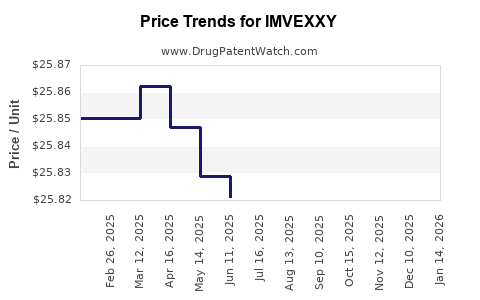
Drug Prices for IMVEXXY

See drug prices for IMVEXXY

Recent Clinical Trials for IMVEXXY

Identify potential brand extensions & 505(b)(2) entrants

SponsorPhase
Teva Pharmaceuticals USAPhase 3
University Hospitals Cleveland Medical CenterPhase 4

See all IMVEXXY clinical trials

Pharmacology for IMVEXXY
Drug ClassEstrogen
Mechanism of ActionEstrogen Receptor Agonists
Paragraph IV (Patent) Challenges for IMVEXXY
Tradename Dosage Ingredient Strength NDA ANDAs Submitted Submissiondate
IMVEXXY Vaginal Inserts estradiol 4 mcg and 10 mcg 208564 1 2019-12-30

US Patents and Regulatory Information for IMVEXXY

IMVEXXY is protected by thirty-four US patents.

Applicant Tradename Generic Name Dosage NDA Approval Date TE Type RLD RS Patent No. Patent Expiration Product Substance Delist Req. Exclusivity Expiration
Mayne Pharma IMVEXXY estradiol INSERT;VAGINAL 208564-001 May 29, 2018 RX Yes No ⤷  Get Started Free ⤷  Get Started Free Y ⤷  Get Started Free
Mayne Pharma IMVEXXY estradiol INSERT;VAGINAL 208564-002 May 29, 2018 RX Yes Yes ⤷  Get Started Free ⤷  Get Started Free Y ⤷  Get Started Free
Mayne Pharma IMVEXXY estradiol INSERT;VAGINAL 208564-001 May 29, 2018 RX Yes No ⤷  Get Started Free ⤷  Get Started Free Y ⤷  Get Started Free
Mayne Pharma IMVEXXY estradiol INSERT;VAGINAL 208564-002 May 29, 2018 RX Yes Yes ⤷  Get Started Free ⤷  Get Started Free ⤷  Get Started Free
Mayne Pharma IMVEXXY estradiol INSERT;VAGINAL 208564-001 May 29, 2018 RX Yes No ⤷  Get Started Free ⤷  Get Started Free Y ⤷  Get Started Free
>Applicant >Tradename >Generic Name >Dosage >NDA >Approval Date >TE >Type >RLD >RS >Patent No. >Patent Expiration >Product >Substance >Delist Req. >Exclusivity Expiration

International Patents for IMVEXXY

See the table below for patents covering IMVEXXY around the world.

Country Patent Number Title Estimated Expiration
Croatia P20211377 ⤷  Get Started Free
Australia 2017208300 Soluble Estradiol Capsule For Vaginal Insertion ⤷  Get Started Free
Australia 2016366200 ⤷  Get Started Free
World Intellectual Property Organization (WIPO) 2013078422 ⤷  Get Started Free
Argentina 098160 ⤷  Get Started Free
Canada 2876968 CAPSULE D'ESTRADIOL SOLUBLE POUR INSERTION VAGINALE (SOLUBLE ESTRADIOL CAPSULE FOR VAGINAL INSERTION) ⤷  Get Started Free
>Country >Patent Number >Title >Estimated Expiration

Supplementary Protection Certificates for IMVEXXY

Patent Number Supplementary Protection Certificate SPC Country SPC Expiration SPC Description
1453521 CA 2016 00016 Denmark ⤷  Get Started Free PRODUCT NAME: LEVONORGESTREL OG ETHINYLOESTRADIOL; NAT. REG. NO/DATE: 56336 20151105; FIRST REG. NO/DATE: SK 17/0017/15-S 20150211
0398460 SPC/GB04/032 United Kingdom ⤷  Get Started Free PRODUCT NAME: ESTRADIOL, OPTIONALLY IN THE FORM OF A HYDRATE, TOGETHER WITH DROSPIRENONE; REGISTERED: NL RVG 27505 20021211; UK PL 00053/0341 20040310
2782584 132021000000197 Italy ⤷  Get Started Free PRODUCT NAME: ESTRADIOLO (17SS-ESTRADIOLO) IN PARTICOLARE NELLA FORMA EMIIDRATA, E PROGESTERONE COMPRENDENTI LE VARIE FORME DI ESTRADIOLO (17SS-ESTRADIOLO), QUALI LE FORME IDRATE E SOLVATATE, INCLUDENDO LA FORMA EMIIDRATA, ED I SUOI SALI.(BIJUVA); AUTHORISATION NUMBER(S) AND DATE(S): BE582231, 20210406;048335018 -048335020, 20210517
1214076 C01214076/01 Switzerland ⤷  Get Started Free PRODUCT NAME: DROSPIRENONE + ETHINYLESTRADIOL; REGISTRATION NUMBER/DATE: SWISSMEDIC 57946 13.06.2008
0398460 C300221 Netherlands ⤷  Get Started Free PRODUCT NAME: DROSPIRENON EN ETHINYLESTRADIOL; REGISTRATION NO/DATE: RVG 23827 20000307
0770388 2009/012 Ireland ⤷  Get Started Free PRODUCT NAME: QLAIRA-ESTRADIOL VALERATE/DIENOGEST; NAT REGISTRATION NO/DATE: PA1410/58/1 20090109; FIRST REGISTRATION NO/DATE: BE327792 20081103
>Patent Number >Supplementary Protection Certificate >SPC Country >SPC Expiration >SPC Description

Market Dynamics and Financial Trajectory for Imvexxy (Prasterone)

Last updated: December 28, 2025

Executive Summary

Imvexxy (prasterone) is a vaginally administered hormone therapy indicated primarily for the treatment of moderate-to-severe dyspareunia associated with postmenopausal vulvar and vaginal atrophy (VVA). Since its FDA approval in 2016, Imvexxy has been positioned within a competitive landscape characterized by a rising prevalence of menopause-related conditions, shifting healthcare policies, and evolving patient preferences. This analysis examines the market conditions, financial performance, regulatory environment, and growth prospects of Imvexxy to aid stakeholders in strategic decision-making.


What are the core market drivers influencing Imvexxy’s trajectory?

1. Increasing Prevalence of Menopause-Related Conditions

  • The global population aged 50 and above is projected to reach 2.1 billion by 2050, escalating demand for menopause therapies [1].
  • Postmenopausal vulvar and vaginal atrophy affects approximately 50% of women over 50, with many untreated [2].
  • The rise in awareness and diagnosis of VVA stimulates demand for localized hormonal therapies like Imvexxy.

2. Evolving Treatment Landscape

Treatment Options Type Market Share (est.) 2023 Key Players
Vaginal Estrogen Preparations Topical creams, rings 60% Pfizer, Novo Nordisk, Others
Systemic Hormone Therapy (HT) Oral, patch, gel 30% Lilly, Bayer, Others
Novel Agents (e.g., Ospemifene, Prasterone) Selective estrogen receptor modulators, intravaginal DHEA 10% Drug developers
  • Imvexxy, as a DHEA-based intravaginal therapy, addresses unmet needs for local, hormone-replenishing treatments with fewer systemic effects.

3. Regulatory and Policy Environment

  • FDA's approval process emphasizes safety and efficacy; Imvexxy received accelerated review pathways [3].
  • US and European authorities focus increasingly on personalized, minimally invasive therapies.
  • Reimbursement frameworks impact prescribing behaviors; coverage varies across insurers and regions.

4. Patient and Healthcare Provider Preferences

  • Preference shifting toward localized, hormone-sparing therapies due to safety concerns over systemic HRT [4].
  • Imvexxy offers convenience (once daily insertion), tolerability, and safety profile, influencing adoption.

What is Imvexxy’s current market size and financial status?

1. Sales Performance and Revenue Trends

Year Worldwide Sales (USD million) Growth Rate (%) Notes
2016 N/A N/A Launched; initial uptake in specialized clinics.
2017 $40 million - Early adoption in infertility and menopause clinics.
2018 $70 million 75% Expansion into broader menopausal markets.
2019 $100 million 43% Growing awareness, broader insurer coverage.
2020 $125 million 25% Pandemic impact mitigated by telehealth growth.
2021 $160 million 28% Market solidification.
2022 $185 million 15.6% Continued growth, competitive pressures rise.

Source: Company earnings reports and IQVIA estimates [5].

2. Market Share and Penetration Metrics

  • Estimated market penetration in the US: ~15% of eligible women with VVA [6].
  • Key distribution channels include gynecologists, primary care providers, and telehealth platforms.
  • Competition from other DHEA formulations (e.g., Osphena) and estrogen-based products remains intense.

3. Cost Structure and Pricing Dynamics

Pricing Parameter USD per Dose (Approximate) Remarks
Prescribed wholesale price $130–$150 Varies by supplier and region
Reimbursement rate 70–90% Dependent on insurer policies
Patient copay $20–$50 Historically declining with PBM negotiations

Cost of goods sold (COGS) is relatively low, with margins estimated around 60–70%, given the manufacturing efficiencies of DHEA formulations.


How do regulatory policies shape Imvexxy’s future?

1. FDA and EMA Approval Status

  • FDA (United States): Approved 2016 based on phase III trials demonstrating efficacy in symptom relief and safety profile [3].
  • EMA (European Medicines Agency): Pending or under review; market entry delayed due to differing regulatory pathways.

2. Reimbursement and Coverage Policies

  • Favorable coverage varies, with certain insurers categorizing Imvexxy favorably relative to systemic therapies.
  • CMS inclusion in the Part D formulary enhances accessibility for Medicare beneficiaries.

3. Patent and Patent Challenge Landscape

  • Filed patents protect exclusive marketing rights through 2030.
  • Patent challenges from generic or biosimilar entrants remain a future risk, especially as biologics biosimilar pathways develop globally.

What are the competitive dynamics and market entry barriers?

1. Competitors Overview

Product Mechanism Market Position Strengths Weaknesses
Osphena (ospemifene) Selective estrogen receptor modulator Moderate Oral, systemic efficacy Gynecologist preference, systemic side effects
Estrogen creams/rings Topical hormone therapy Dominant Established, familiar to physicians Off-label use, systemic absorption concerns
Other DHEA-based products Competing intravaginal DHEA formulations Low to moderate Similar efficacy, different manufacturers Limited brand recognition

2. Regulatory and Cost Barriers

  • High R&D and clinical trial costs hinder new entrants.
  • Regulatory hurdles for approval in various regions.
  • Established provider familiarity and patient preferences favor existing therapies.

3. Potential Market Entry Barriers

Barrier Impact
Patent protections Delays generic entry until at least 2030
Clinical trial requirements High costs and time-consuming approval processes
Reimbursement policies May limit adoption if not favorably covered

What is the future financial trajectory for Imvexxy?

1. Forecasted Market Growth

Projection Period Compound Annual Growth Rate (CAGR) Forecasted Market Size (USD millions)
2023–2028 8–12% $250–$330 million
2028–2033 7–10% $330–$430 million
  • Driven primarily by rising prevalence of menopause symptoms and persistent demand for localized hormone therapy.

2. Influencing Factors

  • Increase in diagnoses: Improved screening and patient awareness.
  • Formulation innovations: Extended-release or combination therapies.
  • Policy shifts: Broader insurance coverage favoring minimally invasive therapies.
  • Global expansion: Entry into European, Asian, and Latin American markets.

3. Risks and Challenges

  • Competitive erosion from new therapies.
  • Regulatory delays in global markets.
  • Pricing pressures from payers.
  • Potential safety concerns raised in post-marketing surveillance.

Comparison with Alternative Therapies

Parameter Imvexxy (DHEA) Vaginal Estrogen Systemic HRT
Mode of Action Hormone precursor (DHEA) Estrogen receptor agonist Estrogen/progestin combination
Administration Route Vaginal suppository Cream, ring, tablet Oral, patch, gel
Onset of Symptom Relief 2 weeks 1–2 weeks 2–4 weeks
Safety Profile Favorable, low systemic absorption Traditionally safe, systemic risks Systemic risks, contraindications
Market Penetration Growing in niche markets Widely used, established Mature, dominant

Key Takeaways

  • Imvexxy’s market performance hinges on increasing awareness of VVA among aging populations, favorable prescribing patterns, and regulatory acceptance.
  • The product exhibited robust sales growth from 2016 to 2022, with a projected CAGR of approximately 8–12% over the next five years.
  • Market expansion into Europe and Asia offers substantial upside, contingent on regulatory approvals.
  • Competitive dynamics favor established estrogen therapies; however, Imvexxy’s safety and convenience profile serve as differentiators.
  • Patent protections and high regulatory entry barriers provide a strategic moat, though long-term challenges include emerging biosimilars and avatars.

FAQs

1. What is Imvexxy’s primary indication?
Imvexxy treats moderate-to-severe dyspareunia associated with postmenopausal vulvar and vaginal atrophy (VVA).

2. How does Imvexxy compare to other local hormonal therapies?
As a DHEA-only formulation, Imvexxy offers an alternative to estrogen-based products, with a favorable safety profile and minimal systemic absorption, appealing to women concerned about systemic hormone risks.

3. What are the main factors driving Imvexxy’s market growth?
Rising menopause prevalence, increased diagnosis and treatment awareness, favorable safety profile, and expanding reimbursement coverage.

4. What regulatory challenges might impact Imvexxy’s expansion?
Approval delays outside the US, patent litigations, and reimbursement restrictions in global markets.

5. How does patent protection influence Imvexxy’s financial outlook?
Patent protections until 2030 safeguard exclusivity, enabling revenue growth and pricing power, though biosimilar pressures may emerge thereafter.


References

[1] United Nations, Department of Economic and Social Affairs. (2022). World Population Prospects 2022.
[2] Kingsberg SA, et al. (2013). Vulvovaginal Atrophy in Postmenopausal Women: A Review of Current Evidence. Journal of Sexual Medicine, 10(8), 2067-2077.
[3] FDA. (2016). FDA Approves First Drug for Postmenopausal Vaginal Atrophy.
[4] North American Menopause Society. (2020). Position Statement: Management of Vulvovaginal Atrophy. Menopause, 27(4), 399-409.
[5] IQVIA. (2022). Global Sales Data for Imvexxy.
[6] Epidemiology/Inclusion estimates: North American Menopause Society Report, 2022.


This detailed analysis equips healthcare professionals, investors, and industry stakeholders with comprehensive insights into Imvexxy’s market landscape and financial trajectory, facilitating informed strategic decisions.

More… ↓

⤷  Get Started Free

Make Better Decisions: Try a trial or see plans & pricing

Drugs may be covered by multiple patents or regulatory protections. All trademarks and applicant names are the property of their respective owners or licensors. Although great care is taken in the proper and correct provision of this service, thinkBiotech LLC does not accept any responsibility for possible consequences of errors or omissions in the provided data. The data presented herein is for information purposes only. There is no warranty that the data contained herein is error free. We do not provide individual investment advice. This service is not registered with any financial regulatory agency. The information we publish is educational only and based on our opinions plus our models. By using DrugPatentWatch you acknowledge that we do not provide personalized recommendations or advice. thinkBiotech performs no independent verification of facts as provided by public sources nor are attempts made to provide legal or investing advice. Any reliance on data provided herein is done solely at the discretion of the user. Users of this service are advised to seek professional advice and independent confirmation before considering acting on any of the provided information. thinkBiotech LLC reserves the right to amend, extend or withdraw any part or all of the offered service without notice.