Farxiga Drug Patent Profile
✉ Email this page to a colleague
Which patents cover Farxiga, and what generic alternatives are available?
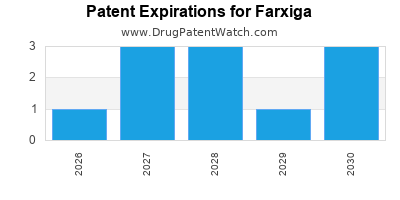
Farxiga is a drug marketed by Astrazeneca Ab and is included in one NDA. There are seventeen patents protecting this drug and one Paragraph IV challenge.
The generic ingredient in FARXIGA is dapagliflozin. There is one drug master file entry for this compound. Twenty-five suppliers are listed for this compound. Additional details are available on the dapagliflozin profile page.
DrugPatentWatch® Litigation and Generic Entry Outlook for Farxiga
A generic version of Farxiga was approved as dapagliflozin by AIZANT on April 6th, 2026.
AI Deep Research
Questions you can ask:
- What is the 5 year forecast for Farxiga?
- What are the global sales for Farxiga?
- What is Average Wholesale Price for Farxiga?
Summary for Farxiga
| US Patents: | 17 |
| Applicants: | 1 |
| NDAs: | 1 |
| Finished Product Suppliers / Packagers: | 5 |
| Raw Ingredient (Bulk) Api Vendors: | 2 |
| Clinical Trials: | 50 |
| Patent Applications: | 1 |
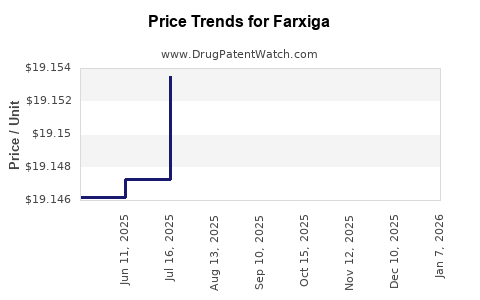
| Drug Prices: | Drug price information for Farxiga |
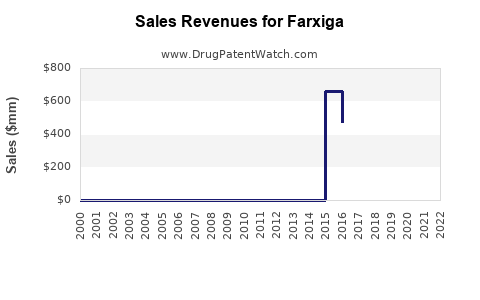
| Drug Sales Revenues: | Drug sales revenues for Farxiga |
| Patent Litigation and PTAB cases: | See patent lawsuits and PTAB cases for Farxiga |
| What excipients (inactive ingredients) are in Farxiga? | Farxiga excipients list |
| DailyMed Link: | Farxiga at DailyMed |
Recent Clinical Trials for Farxiga
Identify potential brand extensions & 505(b)(2) entrants
| Sponsor | Phase |
|---|---|
| Han Xu, M.D., Ph.D., FAPCR, Sponsor-Investigator, IRB Chair | PHASE2 |
| UnitedHealthcare | PHASE2 |
| The University of Hong Kong | Phase 2 |
Pharmacology for Farxiga
| Drug Class | Sodium-Glucose Cotransporter 2 Inhibitor |
| Mechanism of Action | Sodium-Glucose Transporter 2 Inhibitors |
Paragraph IV (Patent) Challenges for FARXIGA
| Tradename | Dosage | Ingredient | Strength | NDA | ANDAs Submitted | Submissiondate |
|---|---|---|---|---|---|---|
| FARXIGA | Tablets | dapagliflozin | 5 mg and 10 mg | 202293 | 20 | 2018-01-08 |
US Patents and Regulatory Information for Farxiga
Farxiga is protected by seventeen US patents and four FDA Regulatory Exclusivities.
| Applicant | Tradename | Generic Name | Dosage | NDA | Approval Date | TE | Type | RLD | RS | Patent No. | Patent Expiration | Product | Substance | Delist Req. | Exclusivity Expiration |
|---|---|---|---|---|---|---|---|---|---|---|---|---|---|---|---|
| Astrazeneca Ab | FARXIGA | dapagliflozin | TABLET;ORAL | 202293-002 | Jan 8, 2014 | AB | RX | Yes | Yes | ⤷ Start Trial | ⤷ Start Trial | Y | ⤷ Start Trial | ||
| Astrazeneca Ab | FARXIGA | dapagliflozin | TABLET;ORAL | 202293-002 | Jan 8, 2014 | AB | RX | Yes | Yes | ⤷ Start Trial | ⤷ Start Trial | Y | ⤷ Start Trial | ||
| Astrazeneca Ab | FARXIGA | dapagliflozin | TABLET;ORAL | 202293-002 | Jan 8, 2014 | AB | RX | Yes | Yes | ⤷ Start Trial | ⤷ Start Trial | ⤷ Start Trial | |||
| Astrazeneca Ab | FARXIGA | dapagliflozin | TABLET;ORAL | 202293-002 | Jan 8, 2014 | AB | RX | Yes | Yes | ⤷ Start Trial | ⤷ Start Trial | Y | ⤷ Start Trial | ||
| Astrazeneca Ab | FARXIGA | dapagliflozin | TABLET;ORAL | 202293-001 | Jan 8, 2014 | AB | RX | Yes | No | ⤷ Start Trial | ⤷ Start Trial | Y | ⤷ Start Trial | ||
| Astrazeneca Ab | FARXIGA | dapagliflozin | TABLET;ORAL | 202293-002 | Jan 8, 2014 | AB | RX | Yes | Yes | ⤷ Start Trial | ⤷ Start Trial | Y | ⤷ Start Trial | ||
| >Applicant | >Tradename | >Generic Name | >Dosage | >NDA | >Approval Date | >TE | >Type | >RLD | >RS | >Patent No. | >Patent Expiration | >Product | >Substance | >Delist Req. | >Exclusivity Expiration |
Expired US Patents for Farxiga
| Applicant | Tradename | Generic Name | Dosage | NDA | Approval Date | Patent No. | Patent Expiration |
|---|---|---|---|---|---|---|---|
| Astrazeneca Ab | FARXIGA | dapagliflozin | TABLET;ORAL | 202293-002 | Jan 8, 2014 | ⤷ Start Trial | ⤷ Start Trial |
| Astrazeneca Ab | FARXIGA | dapagliflozin | TABLET;ORAL | 202293-002 | Jan 8, 2014 | ⤷ Start Trial | ⤷ Start Trial |
| Astrazeneca Ab | FARXIGA | dapagliflozin | TABLET;ORAL | 202293-001 | Jan 8, 2014 | ⤷ Start Trial | ⤷ Start Trial |
| Astrazeneca Ab | FARXIGA | dapagliflozin | TABLET;ORAL | 202293-001 | Jan 8, 2014 | ⤷ Start Trial | ⤷ Start Trial |
| Astrazeneca Ab | FARXIGA | dapagliflozin | TABLET;ORAL | 202293-002 | Jan 8, 2014 | ⤷ Start Trial | ⤷ Start Trial |
| Astrazeneca Ab | FARXIGA | dapagliflozin | TABLET;ORAL | 202293-001 | Jan 8, 2014 | ⤷ Start Trial | ⤷ Start Trial |
| >Applicant | >Tradename | >Generic Name | >Dosage | >NDA | >Approval Date | >Patent No. | >Patent Expiration |
EU/EMA Drug Approvals for Farxiga
| Company | Drugname | Inn | Product Number / Indication | Status | Generic | Biosimilar | Orphan | Marketing Authorisation | Marketing Refusal |
|---|---|---|---|---|---|---|---|---|---|
| AstraZeneca AB | Forxiga | dapagliflozin | EMEA/H/C/002322Type 2 diabetes mellitusForxiga is indicated in adults and children aged 10 years and above for the treatment of insufficiently controlled type 2 diabetes mellitus as an adjunct to diet and exerciseas monotherapy when metformin is considered inappropriate due to intolerance.in addition to other medicinal products for the treatment of type 2 diabetes.For study results with respect to combination of therapies, effects on glycaemic control, cardiovascular and renal events, and the populations studied, see sections 4.4, 4.5 and 5.1.Heart failureForxiga is indicated in adults for the treatment of symptomatic chronic heart failure.Chronic kidney diseaseForxiga is indicated in adults for the treatment of chronic kidney disease. | Authorised | no | no | no | 2012-11-11 | |
| AstraZeneca AB | Edistride | dapagliflozin | EMEA/H/C/004161Type 2 diabetes mellitusEdistride is indicated in adults and children aged 10 years and above for the treatment of insufficiently controlled type 2 diabetes mellitus as an adjunct to diet and exerciseas monotherapy when metformin is considered inappropriate due to intolerance.in addition to other medicinal products for the treatment of type 2 diabetes.For study results with respect to combination of therapies, effects on glycaemic control, cardiovascular and renal events, and the populations studied, see sections 4.4, 4.5 and 5.1.Heart failureEdistride is indicated in adults for the treatment of symptomatic chronic heart failure.Chronic kidney diseaseEdistride is indicated in adults for the treatment of chronic kidney disease. | Authorised | no | no | no | 2015-11-09 | |
| Viatris Limited | Dapagliflozin Viatris | dapagliflozin | EMEA/H/C/006006Type 2 diabetes mellitusDapagliflozin Viatris is indicated in adults and children aged 10 years and above for the treatment of insufficiently controlled type 2 diabetes mellitus as an adjunct to diet and exercise- as monotherapy when metformin is considered inappropriate due to intolerance.- in addition to other medicinal products for the treatment of type 2 diabetes.For study results with respect to combination of therapies, effects on glycaemic control, cardiovascular and renal events, and the populations studied, see sections 4.4, 4.5 and 5.1.Heart failureDapagliflozin Viatris is indicated in adults for the treatment of symptomatic chronic heart failure with reduced ejection fraction.Chronic kidney diseaseDapagliflozin Viatris is indicated in adults for the treatment of chronic kidney disease. | Authorised | yes | no | no | 2023-03-24 | |
| >Company | >Drugname | >Inn | >Product Number / Indication | >Status | >Generic | >Biosimilar | >Orphan | >Marketing Authorisation | >Marketing Refusal |
International Patents for Farxiga
When does loss-of-exclusivity occur for Farxiga?
Based on analysis by DrugPatentWatch, the following patents block generic entry in the countries listed below:
Canada
Patent: 53344
Estimated Expiration: ⤷ Start Trial
Chile
Patent: 07001915
Estimated Expiration: ⤷ Start Trial
Denmark
Patent: 69374
Estimated Expiration: ⤷ Start Trial
European Patent Office
Patent: 57918
Estimated Expiration: ⤷ Start Trial
Japan
Patent: 19059779
Estimated Expiration: ⤷ Start Trial
Mexico
Patent: 7155
Estimated Expiration: ⤷ Start Trial
Patent: 08015377
Estimated Expiration: ⤷ Start Trial
Serbia
Patent: 638
Patent: KRISTALNI SOLVATI DERIVATA (1S)-1,5-ANHIDRO-1-C-(3-((FENIL) METIL) FENIL)-D-GLUCITOLA SA ALKOHOLIMA KAO INHIBITORI SGLT2 ZA TRETMAN DIJABETESA (CRYSTALLINE SOLVATES OF (1S)-1,5-ANHYDRO-1-C-(3-((PHENYL) METHYL) PHENYL)-D-GLUCITOL DERIVATIVES WITH ALCOHOLS AS SGLT2 INHIBITORS FOR THE TREATMENT OF DIABETES)
Estimated Expiration: ⤷ Start Trial
Slovenia
Patent: 69374
Estimated Expiration: ⤷ Start Trial
Taiwan
Patent: 1406743
Patent: Crystal structures of SGLT2 inhibitors and processes for preparing same
Estimated Expiration: ⤷ Start Trial
Patent: 1546054
Patent: Crystal structures of SGLT2 inhibitors and processes for preparing same
Estimated Expiration: ⤷ Start Trial
Patent: 21245
Estimated Expiration: ⤷ Start Trial
Generics may enter earlier, or later, based on new patent filings, patent extensions, patent invalidation, early generic licensing, generic entry preferences, and other factors.
See the table below for additional patents covering Farxiga around the world.
| Country | Patent Number | Title | Estimated Expiration |
|---|---|---|---|
| Argentina | 026024 | COMPUESTOS INHIBIDORES SGLT2 DE GLUCOSIDOS DE C-ARILO Y METODO, LAS COMPOSICIONES FARAMCEUTICAS QUE LOS CONTIENEN Y LOS INTERMEDIARIOS DE SINTESIS DEDICHOS COMPUESTOS | ⤷ Start Trial |
| Argentina | 040032 | C-ARIL-GLUCOSIDOS COMO INHIBIDORES DE SGLT2 Y METODO | ⤷ Start Trial |
| Austria | 295848 | ⤷ Start Trial | |
| Austria | 353334 | ⤷ Start Trial | |
| Australia | 2003237886 | C-ARYL GLUCOSIDE SGLT2 INHIBITORS AND METHOD | ⤷ Start Trial |
| Australia | 781009 | ⤷ Start Trial | |
| >Country | >Patent Number | >Title | >Estimated Expiration |
Supplementary Protection Certificates for Farxiga
| Patent Number | Supplementary Protection Certificate | SPC Country | SPC Expiration | SPC Description |
|---|---|---|---|---|
| 1506211 | C300585 | Netherlands | ⤷ Start Trial | PRODUCT NAME: DAPAGLIFLOZINE, DESGEWENST IN DE VORM VAN EEN FARMACEUTISCH AANVAARDBAAR ZOUT; REGISTRATION NO/DATE: EU/1/12/795/001-010 20121112 |
| 1506211 | PA2013008 | Lithuania | ⤷ Start Trial | PRODUCT NAME: DAPAGLIFLOZINUM; REGISTRATION NO/DATE: EU/1/12/795/001 - EU/1/12/795/010 20121112 |
| 1506211 | 122013000033 | Germany | ⤷ Start Trial | PRODUCT NAME: DAPAGLIFLOZIN UND PHARMAZEUTISCH VERTRAEGLICHE SALZE DAVON; REGISTRATION NO/DATE: EU/1/12/795/001-010 20121112 |
| 1506211 | C20130006 00074 | Estonia | ⤷ Start Trial | PRODUCT NAME: DAPAGLIFLOZIN;REG NO/DATE: K(2012)8378 12.11.2012 |
| 1506211 | 92182 | Luxembourg | ⤷ Start Trial | PRODUCT NAME: DAPAGLIFLOZINE ET SES SELS PHARMACEUTIQUEMENT ACCEPTABLES |
| 1506211 | 2013/013 | Ireland | ⤷ Start Trial | PRODUCT NAME: DAPAGLIFLOZIN AND PHARACEUTICALLY ACCEPTABLE SALTS THREOF; REGISTRATION NO/DATE: EU/1/12/795/001-010 20121112 |
| >Patent Number | >Supplementary Protection Certificate | >SPC Country | >SPC Expiration | >SPC Description |
FARXIGA Market Dynamics, Financial Trajectory, Patent Exclusivity, and Generic Entry Risk
More… ↓
Make Better Decisions: Try a trial or see plans & pricing
Drugs may be covered by multiple patents or regulatory protections. All trademarks and applicant names are the property of their respective owners or licensors. Although great care is taken in the proper and correct provision of this service, thinkBiotech LLC does not accept any responsibility for possible consequences of errors or omissions in the provided data. The data presented herein is for information purposes only. There is no warranty that the data contained herein is error free. We do not provide individual investment advice. This service is not registered with any financial regulatory agency. The information we publish is educational only and based on our opinions plus our models. By using DrugPatentWatch you acknowledge that we do not provide personalized recommendations or advice. thinkBiotech performs no independent verification of facts as provided by public sources nor are attempts made to provide legal or investing advice. Any reliance on data provided herein is done solely at the discretion of the user. Users of this service are advised to seek professional advice and independent confirmation before considering acting on any of the provided information. thinkBiotech LLC reserves the right to amend, extend or withdraw any part or all of the offered service without notice.
ISSN: 2162-2639

Privacy and Cookies
Terms & Conditions
Site Map
DrugPatentWatch Alternatives
LOE / Major Patent Expirations 2026 - 2027
NCE-1 Patent Challenge Dates 2026 - 2027
Friedman, Yali. "DrugPatentWatch" DrugPatentWatch, thinkBiotech, 2026, www.DrugPatentWatch.com.
See Primary Research Papers Citing DrugPatentWatch