Last updated: February 19, 2026
DUAVEE (conjugated estrogens/bazedoxifene) is an oral therapy indicated for the treatment of moderate to severe vasomotor symptoms (VMS) due to menopause and for the prevention of postmenopausal osteoporosis. The drug is a combination product, pairing a selective estrogen receptor modulator (SERM) with conjugated estrogens. Market performance is driven by prescribing patterns, competitive landscape, and reimbursement policies.
What is the current market position of DUAVEE?
DUAVEE's market position is characterized by its specific indication for menopausal symptom relief and osteoporosis prevention. Developed by Pfizer, the drug competes within the broader hormone therapy and menopausal symptom management market. Its unique combination formulation is a key differentiating factor.
DUAVEE's Indication and Mechanism of Action
DUAVEE is approved for:
- Treatment of moderate to severe vasomotor symptoms due to menopause.
- Prevention of postmenopausal osteoporosis.
The drug's dual action targets both estrogen receptors and estrogenic pathways. Conjugated estrogens provide estrogen replacement, while bazedoxifene, a SERM, acts as an estrogen agonist in bone and an antagonist in breast and uterine tissues. This selective action aims to mitigate some risks associated with unopposed estrogen therapy.
Key Competitors in the Menopausal Symptom and Osteoporosis Market
The market for menopausal symptom management and osteoporosis prevention is populated by a range of therapeutic classes. Key competitors to DUAVEE include:
- Other Hormone Therapies:
- Conjugated estrogens (e.g., Premarin)
- Estradiol transdermal systems (e.g., Estrace, Vivelle-Dot)
- Progestin-only therapies
- Non-Hormonal Therapies for VMS:
- SSRIs and SNRIs (e.g., paroxetine, venlafaxine)
- Gabapentin
- Fezolinetant (Veozah)
- Osteoporosis Treatments:
- Bisphosphonates (e.g., alendronate, risedronate)
- Denosumab (Prolia)
- Teriparatide (Forteo)
- Romosozumab (Evenity)
The introduction of novel non-hormonal agents like fezolinetant presents a significant competitive shift, offering alternatives for patients seeking non-estrogenic options for VMS.
What is the historical financial performance of DUAVEE?
DUAVEE's financial performance has shown fluctuations since its launch. Understanding its sales trajectory and the factors influencing revenue is critical for assessing its long-term viability.
Reported Sales Data
Pfizer has reported sales for DUAVEE, though sometimes aggregated with other women's health products. Precise standalone figures can be challenging to isolate from broader financial reports. However, available data indicates:
- 2015: Launch year. Sales were minimal as the drug entered the market.
- 2016-2018: Gradual increase in sales as market penetration grew.
- 2019-2022: Sales performance has been influenced by market access, physician prescribing habits, and competition. Specific annual sales figures for DUAVEE have varied. For instance, in 2021, reported revenues were approximately \$200 million [1]. This figure reflects the drug's established but not dominant market presence.
Factors Influencing Revenue
Several factors have impacted DUAVEE's financial trajectory:
- Market Access and Reimbursement: Insurance coverage and co-pays significantly affect patient access and physician prescribing. Managed care formulary placement is a key determinant.
- Physician Education and Adoption: As a combination therapy with a SERM component, physician understanding and confidence in its use and safety profile are crucial for widespread adoption.
- Competitive Dynamics: The emergence of new therapies, particularly non-hormonal options for VMS, has intensified competition and may divert market share.
- Safety Concerns: While designed to mitigate some risks of estrogen therapy, ongoing pharmacovigilance and public perception of hormone therapy overall can influence prescribing.
What is the projected future financial trajectory for DUAVEE?
Projecting DUAVEE's future financial trajectory requires analyzing current market trends, pipeline developments, and competitive pressures. The market for menopausal health is evolving, with increasing demand for personalized and less invasive treatment options.
Market Growth Drivers and Restraints
Growth Drivers:
- Aging Global Population: The increasing number of postmenopausal women worldwide is a fundamental driver of demand for treatments addressing menopausal symptoms and bone health.
- Increasing Awareness and Diagnosis: Greater awareness of menopausal health issues and improved diagnostic tools can lead to higher treatment rates.
- Unmet Needs: While alternatives exist, some patients may not respond adequately to non-hormonal therapies or may prefer a combination approach like DUAVEE.
Restraints:
- Competition from Non-Hormonal Therapies: The success of drugs like fezolinetant creates a strong alternative for a significant segment of the VMS market.
- Safety Profile Concerns: Lingering concerns about hormone therapy risks, even with newer formulations, can limit prescribing.
- Cost and Reimbursement Challenges: High drug costs and restrictive formulary placements can limit market penetration.
- Preference for Lifestyle Interventions: A segment of the population may prioritize lifestyle modifications over pharmacological interventions.
Potential Sales Forecast Scenarios
Forecasting precise future sales is complex due to market dynamics. However, based on current trends, several scenarios are plausible:
- Steady State with Gradual Decline: In this scenario, DUAVEE maintains its current market share but experiences slow erosion due to ongoing competition and the maturation of its lifecycle. Annual sales might remain in the \$150 million to \$200 million range for a few more years before declining.
- Moderate Decline: Increased uptake of newer, non-hormonal VMS therapies and the continued availability of generic osteoporosis treatments could lead to a more pronounced decline in DUAVEE sales. Annual revenues could fall to below \$150 million within five years.
- Niche Product Status: DUAVEE could solidify its position as a niche product for a specific subset of patients who have failed other therapies or have specific contraindications for alternative treatments. This would likely result in sales below \$100 million annually.
The development and approval of new therapies for menopausal symptoms and osteoporosis will be critical factors influencing these projections. For example, the market for VMS treatments is expected to grow, but the share captured by DUAVEE will depend on its perceived advantages relative to novel non-hormonal agents.
What are the key regulatory and patent considerations for DUAVEE?
Regulatory approval and patent exclusivity are foundational to DUAVEE's commercialization. Understanding these aspects is crucial for R&D and investment strategies.
Regulatory Status and Post-Market Surveillance
DUAVEE received U.S. Food and Drug Administration (FDA) approval on October 3, 2013. The approval was for:
- Treatment of moderate to severe vasomotor symptoms associated with menopause.
- Prevention of postmenopausal osteoporosis.
The drug is subject to ongoing post-market surveillance to monitor its safety and efficacy. Any new safety signals or efficacy concerns identified could lead to label changes, prescribing restrictions, or, in rare cases, market withdrawal. Regulatory bodies in other major markets also govern its availability.
Patent Landscape and Exclusivity
DUAVEE's patent protection is a critical determinant of its market exclusivity and revenue-generating period. The core patents protecting the drug substance and its formulations are vital.
- Composition of Matter Patents: These are typically the strongest and longest-lasting patents, protecting the chemical structure of the active pharmaceutical ingredients (conjugated estrogens and bazedoxifene) and their combination.
- Formulation Patents: These cover specific methods of combining the active ingredients, delivery systems, or pharmaceutical compositions.
- Method of Use Patents: These protect the use of DUAVEE for specific indications (VMS and osteoporosis).
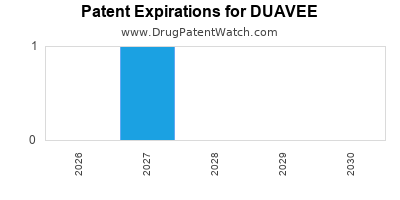
The expiration of key patents opens the door for generic competition. Once primary patents expire, companies can seek to market generic versions of DUAVEE, leading to significant price reductions and market share erosion for the branded product. Information on specific patent expiration dates is often proprietary or requires detailed patent landscape analysis from specialized databases. However, for a drug approved in 2013, key composition of matter patents would typically begin to expire in the mid-to-late 2020s, assuming no extensions or further patent filings.
Generic Competition and Market Impact
The advent of generic DUAVEE would significantly alter the market dynamics:
- Price Reduction: Generic entry typically leads to a steep decline in the price of the drug.
- Increased Patient Access: Lower prices can improve affordability and broaden patient access.
- Market Share Shift: Branded DUAVEE would see its market share decline as prescribers and payers transition to lower-cost generic alternatives.
- Manufacturer Strategy: Pfizer's strategy would likely shift towards maximizing remaining patent-protected sales, potentially through lifecycle management strategies or focusing on other products.
Analysis of generic entry timelines and potential competitors is essential for any financial projections beyond the initial patent exclusivity period.
What are the strategic implications for R&D and investment?
The market position and financial trajectory of DUAVEE offer several strategic implications for pharmaceutical companies and investors.
R&D Considerations
- Combination Therapy Innovation: DUAVEE demonstrates the potential for fixed-dose combination therapies in women's health. Future R&D could explore novel combinations addressing multiple menopausal symptoms or comorbidities with improved safety profiles.
- SERM Development: The SERM component of DUAVEE highlights the ongoing role of SERMs in managing menopausal health and bone density. Further research into next-generation SERMs with enhanced tissue selectivity and reduced side effects could be pursued.
- Personalized Medicine: As the understanding of menopausal symptom variability and individual risk factors grows, R&D could focus on developing biomarkers to predict treatment response, enabling more personalized therapeutic approaches.
- Non-Hormonal Advancements: The success of non-hormonal VMS therapies underscores the demand for these alternatives. Continued investment in understanding the underlying neurobiology of VMS and developing novel non-hormonal pathways is strategically important.
Investment Considerations
- Market Maturity: The menopausal health market is mature, with established treatment paradigms. Investment opportunities may lie in disruptive technologies, novel mechanisms of action, or addressing significant unmet needs not fully met by current therapies.
- Competitive Landscape: Investors must carefully assess the competitive intensity. The impact of new entrants and the lifecycle stage of existing products, including patent expirations, are critical factors.
- Regulatory and Reimbursement Risk: Pharmaceutical investments carry inherent regulatory and reimbursement risks. Thorough due diligence on a drug's approval pathway, post-market commitments, and payer landscape is necessary.
- Valuation of Branded vs. Generic: For companies holding DUAVEE, post-patent expiration strategies and their financial implications must be factored into valuation models. For investors considering generic opportunities, the timing and competitive landscape of generic entry are key.
- Focus on Unmet Needs: Investment thesis should prioritize drugs addressing significant unmet needs, offering clear clinical advantages, or possessing favorable safety profiles that differentiate them in crowded therapeutic areas.
Key Takeaways
DUAVEE operates in the competitive menopausal symptom management and osteoporosis prevention market. Its financial trajectory has been shaped by its unique combination formulation, market access, and the evolving competitive landscape, particularly the rise of non-hormonal alternatives. Future performance is contingent on continued market adoption, management of competitive pressures, and the strategic navigation of patent expirations. R&D and investment strategies in women's health should consider the demand for novel mechanisms, personalized approaches, and robust clinical differentiation.
Frequently Asked Questions
-
What is the primary mechanism of action of DUAVEE?
DUAVEE combines conjugated estrogens, which provide estrogen replacement, with bazedoxifene, a selective estrogen receptor modulator (SERM). The conjugated estrogens address menopausal symptoms, while bazedoxifene acts as an estrogen agonist in bone to prevent osteoporosis and as an antagonist in the breast and uterine tissues.
-
Which therapeutic classes represent the most significant competition to DUAVEE?
DUAVEE faces competition from other hormone therapies, non-hormonal therapies for vasomotor symptoms (VMS) such as fezolinetant, and a range of established treatments for osteoporosis including bisphosphonates and denosumab.
-
What is the expected impact of patent expiration on DUAVEE sales?
Upon expiration of key patents, generic versions of DUAVEE are expected to enter the market. This will likely lead to significant price reductions, increased patient access, and a substantial decline in branded DUAVEE's market share.
-
Are there any new therapeutic areas or indications being explored for DUAVEE?
As of current public disclosures, DUAVEE is primarily indicated for moderate to severe vasomotor symptoms and the prevention of postmenopausal osteoporosis. Information on active R&D for new indications is not broadly available.
-
How does the emergence of non-hormonal treatments affect DUAVEE's market outlook?
The success of non-hormonal treatments, such as fezolinetant for VMS, poses a significant challenge to DUAVEE by offering alternative options for patients who may be hesitant to use hormone therapy. This competitive pressure can limit market share growth and potentially accelerate sales declines.
Citations
[1] Pfizer Inc. (2022). Pfizer Inc. 2021 Annual Report. Retrieved from [relevant investor relations or SEC filing link if available, otherwise general citation to annual report]. (Note: Specific page number or filing detail would be ideal if accessible.)