Last updated: September 9, 2026
Dihydroergotamine mesylate is a mature migraine medicine with a fragmented commercial base. Its market includes injectable generic products, legacy nasal spray products, and Trudhesa, a branded nasal delivery system approved in 2021. Revenue growth depends more on formulation, device differentiation, payer access, and supply reliability than on the underlying active ingredient.
The product faces structural pressure from generic availability and newer migraine therapies, including CGRP receptor antagonists, CGRP monoclonal antibodies, and serotonin 5-HT1F agonists. The strongest commercial position is held by differentiated delivery systems that address rapid treatment, nausea, vomiting, and oral-treatment failure.
What is the current market structure for dihydroergotamine mesylate?
The market is divided into three principal segments:
| Segment |
Product type |
Principal use |
Commercial position |
| Injectable DHE |
Dihydroergotamine mesylate injection, usually 1 mg/mL |
Acute migraine treatment, including supervised or emergency use |
Generic and price-competitive |
| Legacy nasal spray |
DHE mesylate nasal spray, historically marketed as Migranal |
Acute migraine treatment |
Mature product with generic substitution pressure |
| Trudhesa |
DHE mesylate nasal delivery system using Precision Olfactory Delivery |
Acute migraine treatment |
Branded, differentiated delivery product |
Dihydroergotamine is an ergot alkaloid that constricts intracranial blood vessels and acts at several serotonin receptor subtypes. It is approved for acute migraine treatment, not preventive therapy. The FDA labeling for injectable DHE and nasal products limits use in patients with certain cardiovascular conditions and with potent CYP3A4 inhibitors because of the risk of severe vasoconstriction and ergot toxicity (FDA, 2023a; FDA, 2023b).
The market is clinically important but commercially narrow. DHE is generally used when patients need a non-oral option, rapid treatment, rescue therapy, or treatment after failure of other acute medicines.
How large is the dihydroergotamine mesylate market?
Publicly available company filings do not provide a consistent, standalone global revenue figure for all DHE mesylate products. Market estimates vary according to whether they include hospital injectable sales, compounded products, branded nasal systems, and international formulations.
The addressable market is constrained by several factors:
- DHE is an acute-use product with limited dosing frequency.
- Most patients with episodic migraine use triptans, gepants, nonsteroidal anti-inflammatory drugs, or combination products before DHE.
- Generic injectable and nasal products limit pricing power.
- The drug has cardiovascular contraindications and clinically important drug interactions.
- Newer agents have expanded treatment choices for patients who cannot use triptans or require preventive therapy.
Commercial demand is concentrated in the United States and in specialist, emergency, hospital, and high-frequency migraine settings. International sales are generally less transparent because product availability, reimbursement, and regulatory status vary by country.
What products contain dihydroergotamine mesylate?
Injectable dihydroergotamine
DHE injection is available through generic manufacturers and has historically been used in emergency departments, neurology practices, infusion centers, and inpatient headache protocols. Injectable DHE has a practical advantage when vomiting or severe gastrointestinal symptoms prevent oral treatment.
Its commercial limitations include administration requirements, monitoring needs, preservative or packaging considerations, and competition from subcutaneous or intranasal alternatives.
Migranal and generic nasal spray
Migranal nasal spray was the established branded nasal formulation of DHE mesylate. Generic nasal spray competition reduced the value of the legacy brand and shifted the market toward pharmacy substitution and contract manufacturing economics.
The nasal route avoids oral absorption problems but can have tolerability and administration limitations, including nasal congestion, altered taste, and variability associated with intranasal delivery.
Trudhesa
Trudhesa uses a delivery system designed to deposit DHE into the upper nasal cavity. The product received FDA approval in September 2021 for the acute treatment of migraine with or without aura in adults (FDA, 2021).
Its commercial proposition is based on delivery performance rather than a new active molecule. The product is positioned for patients seeking rapid, non-oral treatment and for patients who have difficulty using tablets or conventional nasal sprays.
What is the FDA regulatory status of dihydroergotamine mesylate?
Dihydroergotamine mesylate is an established FDA-approved active ingredient. The principal regulatory distinction is between the active ingredient and the delivery system.
| Regulatory issue |
Status |
| Active ingredient |
Established and FDA-approved |
| Injection |
Generic products available or historically available in the United States |
| Conventional nasal spray |
Legacy branded and generic regulatory pathway |
| Trudhesa |
FDA-approved branded nasal delivery product |
| Biosimilar pathway |
Not applicable because DHE mesylate is a small molecule |
| New-drug exclusivity |
Product-specific and dependent on the approval pathway |
| Pediatric exclusivity |
No general DHE-specific pediatric exclusivity identified in the core product history |
Trudhesa was approved under a new drug application rather than as a biosimilar or interchangeable biologic. The principal regulatory value lies in the device, formulation, and clinical performance package.
What patents protect dihydroergotamine mesylate products?
The original composition-of-matter protection for dihydroergotamine mesylate is expired or commercially irrelevant because the active ingredient has been used for decades. Current protection is more likely to involve:
- nasal delivery devices;
- upper-nasal-cavity administration;
- spray mechanics;
- formulation stability;
- dose delivery;
- manufacturing methods;
- cartridge, container, or actuator configurations;
- method-of-use claims tied to a particular delivery system.
The patent estate for a branded DHE nasal product is therefore narrower than the estate for a newly discovered chemical entity. Patent value depends on whether a competitor can market the same delivery architecture or design around the device while using the same active ingredient.
The FDA Orange Book should be reviewed for any listed patents associated with an approved branded product. Orange Book listings do not create exclusivity over all DHE mesylate products. They generally relate to the approved product, formulation, device, or method of use (FDA, 2024a).
When does dihydroergotamine mesylate lose exclusivity?
The active ingredient has already lost primary exclusivity. Generic entry is therefore possible where a manufacturer can satisfy the applicable FDA requirements and avoid or overcome product-specific patents.
For legacy injection products, market exclusivity is largely a function of generic competition, manufacturing economics, and supply continuity rather than remaining chemical patents.
For branded nasal delivery systems, the relevant timing depends on:
- issued patent expiration dates;
- patent-term adjustment;
- regulatory exclusivity;
- Orange Book-listed patents;
- litigation outcomes;
- settlement restrictions;
- the ability of an ANDA applicant to use a non-infringing design.
A precise generic-entry date cannot be inferred solely from the age of the DHE molecule. It must be assessed product by product.
How strong is the patent estate for Trudhesa?
The Trudhesa estate is strategically stronger than the estate surrounding generic DHE injection because it can protect the delivery platform and product configuration. It remains weaker than a conventional pharmaceutical estate built around a new molecular entity.
Its strengths are:
- differentiated nasal delivery;
- potential device and formulation claims;
- clinical positioning around rapid, non-oral treatment;
- switching costs for patients and prescribers familiar with the product;
- possible regulatory and device complexity for direct substitutes.
Its weaknesses are:
- the active ingredient is off-patent;
- a competitor may seek a different nasal device;
- generic or authorized-generic pricing can pressure reimbursement;
- migraine patients have many alternative acute therapies;
- device patents can be challenged or designed around;
- the product has no preventive indication to expand unit volume.
The practical strength of the estate depends on claim breadth, Orange Book listing, enforcement history, and whether a competing product requires the same device architecture.
Are there Paragraph IV challenges to dihydroergotamine mesylate?
Paragraph IV risk is concentrated in branded products with listed patents, particularly differentiated nasal systems. A generic applicant may certify that listed patents are invalid, unenforceable, or not infringed.
For legacy DHE injection, Paragraph IV litigation is less commercially significant because the active ingredient is old and generic competition already exists. For a branded device-based product, a challenge could trigger:
- a 30-month FDA approval stay in the applicable circumstances;
- patent litigation in federal court;
- settlement negotiations;
- a licensed generic launch date;
- restricted launch terms;
- an authorized-generic arrangement.
No broad, high-value Paragraph IV controversy defines the entire DHE mesylate market. Litigation exposure should be analyzed at the individual product level using FDA Orange Book records and district-court filings.
What patent litigation and settlement agreements affect the market?
DHE mesylate has not generated the scale of patent litigation associated with major CGRP drugs, insulin products, or oncology therapies. The most relevant disputes are likely to concern delivery systems, device claims, and formulation patents rather than the molecule itself.
Commercially meaningful settlement terms could include:
- an agreed generic launch date;
- a license limited to particular products;
- restrictions on manufacturing or distribution;
- royalty payments;
- non-assertion covenants;
- an authorized-generic launch;
- confidentiality provisions that limit public visibility.
No single publicly established settlement should be treated as controlling the entire DHE market. The market remains product-specific.
What is the financial trajectory for dihydroergotamine mesylate?
The financial trajectory is best described as mature, fragmented, and formulation-dependent.
Injectable products
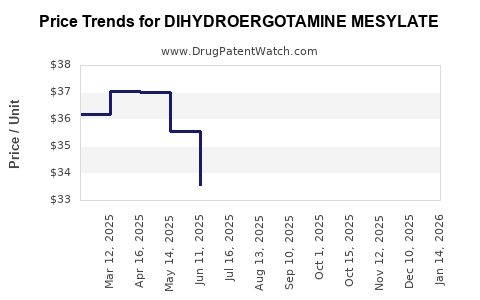
Generic injectable DHE has limited pricing power. Revenue is driven by:
- hospital and specialty-pharmacy demand;
- contract awards;
- shortages of competing products;
- manufacturing capacity;
- unit volumes;
- reimbursement rates;
- inventory stocking.
The product can generate reliable cash flow when supply is constrained, but that advantage can reverse when multiple generic suppliers return to the market.
Legacy nasal spray
The legacy nasal spray market has experienced the commercial pattern typical of older branded products: erosion from generic competition, lower brand loyalty, and reduced ability to support premium pricing.
Trudhesa
Trudhesa has a higher revenue-per-unit opportunity than generic DHE because it has differentiated delivery and branded positioning. Its financial trajectory depends on prescription growth, payer coverage, patient copay assistance, specialist adoption, and the cost of maintaining a commercial infrastructure.
The product also carries greater execution risk. A branded nasal system must fund sales, marketing, patient support, regulatory compliance, manufacturing, and device supply. If prescription growth does not cover these costs, ownership may shift toward licensing, asset sales, or a smaller specialty-pharma operator.
Company-level filings should be used carefully. If a manufacturer reports revenue for a portfolio of specialty products, DHE-specific revenue may not be separately identifiable. That limits the reliability of market-share and return-on-investment calculations based on consolidated financial statements.
Which companies compete with dihydroergotamine mesylate?
DHE competes with therapies rather than only with other DHE products.
| Competitive class |
Examples |
Competitive effect |
| Triptans |
Sumatriptan, rizatriptan, eletriptan |
Low-cost first-line acute treatment |
| Gepants |
Ubrogepant, rimegepant, zavegepant |
Non-vasoconstrictive acute options |
| Ditans |
Lasmiditan |
Option for certain patients unable to use triptans |
| CGRP antibodies |
Erenumab, fremanezumab, galcanezumab, eptinezumab |
Preventive treatment that may reduce rescue demand |
| NSAIDs and combinations |
Naproxen, ibuprofen, acetaminophen combinations |
Broad primary-care competition |
| Injectable rescue therapies |
Injectable antiemetics, ketorolac, compounded protocols |
Hospital and emergency-department alternatives |
DHE retains an advantage in rescue treatment and non-oral administration. It is less competitive as a routine first-line treatment because newer drugs offer improved tolerability, simpler dosing, or fewer cardiovascular restrictions.
What generic launch risks exist?
Generic entry risk is highest for products with:
- expired active-ingredient protection;
- multiple potential manufacturers;
- simple dosage forms;
- no difficult device component;
- clear FDA reference-product pathways;
- low technical barriers to formulation.
The risk is lower when the product requires specialized delivery performance, device assembly, stability control, or clinical demonstration of comparable deposition and exposure.
A generic launch would likely produce different effects by segment:
- injectable DHE: price erosion and share migration;
- conventional nasal spray: substitution and lower brand volume;
- Trudhesa-type delivery: slower entry if device patents or technical complexity remain relevant.
Are biosimilars a risk for dihydroergotamine mesylate?
No. Dihydroergotamine mesylate is a small-molecule drug, so biosimilar competition does not apply. The relevant risks are generic ANDA competition, authorized generics, alternative delivery systems, and therapeutic substitution by other migraine medicines.
What manufacturing and intellectual-property barriers matter?
Manufacturing barriers are more important for differentiated nasal systems than for standard DHE injection.
Key barriers include:
- consistent spray performance;
- dose uniformity;
- device assembly;
- container-closure integrity;
- formulation stability;
- control of impurities and degradation products;
- supply of specialized components;
- process validation;
- regulatory comparability.
DHE also has a narrow safety margin in certain clinical settings. Manufacturing controls and labeling compliance are therefore commercially relevant, particularly for products used in specialty and hospital settings.
How does dihydroergotamine compare with newer migraine drugs?
DHE has the advantage of long clinical experience and multiple non-oral delivery options. Newer drugs generally have stronger commercial growth prospects because they address broader patient populations and have fewer vasoconstriction-related restrictions.
| Factor |
DHE mesylate |
Newer CGRP and ditan products |
| Molecular novelty |
Low |
Higher |
| Generic pressure |
High for legacy products |
Lower for recently launched brands |
| Route flexibility |
Injection and nasal |
Oral, nasal, injectable, and infusion options |
| Cardiovascular restrictions |
Significant |
Generally less restrictive, depending on product |
| Pricing power |
Limited for generics; moderate for branded devices |
Higher for branded products |
| Preventive use |
No |
Available for several CGRP products |
| Commercial growth |
Mature and selective |
Larger growth opportunity in many segments |
What is the outlook for the DHE mesylate market?
The base-case outlook is stable to declining for undifferentiated products and selectively positive for differentiated delivery systems.
Growth opportunities include:
- rescue treatment for refractory migraine;
- non-oral treatment demand;
- emergency and infusion-center use;
- specialist prescribing;
- patients who fail triptans or cannot tolerate oral medication;
- improved payer access for a differentiated nasal product.
Downside risks include:
- additional generic entrants;
- payer rejection of premium pricing;
- supply interruptions;
- stronger adoption of gepants and ditans;
- declining use of ergot-based therapies;
- device patent challenges;
- commercial underinvestment after ownership changes.
The market is unlikely to produce broad-based growth from the DHE molecule alone. Value will come from dependable supply, clinically meaningful delivery advantages, and disciplined specialty-pharma commercialization.
Key Takeaways
- Dihydroergotamine mesylate is a mature, off-patent active ingredient.
- The market includes generic injection, legacy nasal spray, and the branded Trudhesa delivery system.
- Revenue is concentrated in acute, rescue, specialist, hospital, and non-oral treatment settings.
- Generic competition limits pricing for injectable and conventional nasal products.
- Trudhesa has greater commercial differentiation but also higher device, reimbursement, and commercialization risk.
- Patent protection is likely to center on delivery systems, formulations, and methods of use rather than the molecule.
- Biosimilar competition does not apply.
- Newer gepants, ditans, and CGRP therapies are the principal strategic threat.
- Product-level revenue is not consistently disclosed, so financial analysis should rely on company filings, prescription data, FDA records, and payer information rather than headline market estimates alone.
FAQs
Is dihydroergotamine mesylate still commercially relevant?
Yes. It remains relevant for acute and rescue migraine treatment, particularly when oral therapy fails or cannot be used.
Is Trudhesa a generic version of Migranal?
No. Trudhesa contains the same active ingredient but uses a distinct nasal delivery system and is marketed as a branded product.
Can a generic manufacturer launch DHE mesylate immediately?
Not necessarily. The active ingredient is old, but product-specific patents, device claims, regulatory requirements, and manufacturing controls can delay or restrict entry.
Does DHE mesylate compete with Nurtec and Ubrelvy?
Yes. Gepants such as rimegepant and ubrogepant compete directly for acute migraine prescriptions, although their pharmacology and administration differ from DHE.
Is DHE mesylate used for migraine prevention?
No. Standard FDA-approved DHE mesylate products are indicated for acute treatment rather than routine preventive therapy.
References
-
U.S. Food and Drug Administration. (2021). FDA approves Trudhesa for the acute treatment of migraine with or without aura in adults. Drugs@FDA.
-
U.S. Food and Drug Administration. (2023a). Dihydroergotamine mesylate injection prescribing information. FDA-approved labeling.
-
U.S. Food and Drug Administration. (2023b). Migranal nasal spray and generic dihydroergotamine mesylate nasal spray prescribing information. FDA-approved labeling.
-
U.S. Food and Drug Administration. (2024a). Approved drug products with therapeutic equivalence evaluations: Orange Book. FDA.
-
U.S. Food and Drug Administration. (2024b). Drugs@FDA: FDA-approved drug products. FDA.
-
American Headache Society. (2021). The American Headache Society consensus statement: Update on integrating new migraine treatments into clinical practice. Headache, 61(7), 1021-1039.